


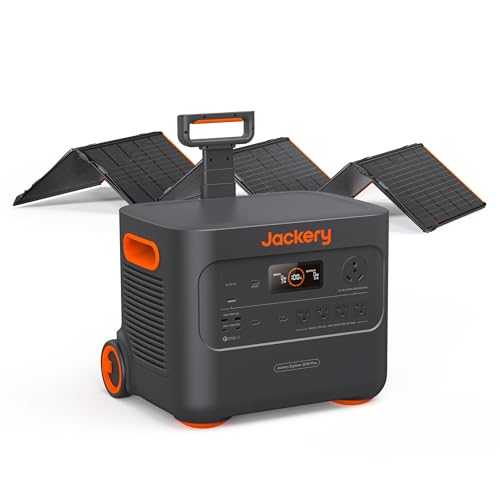


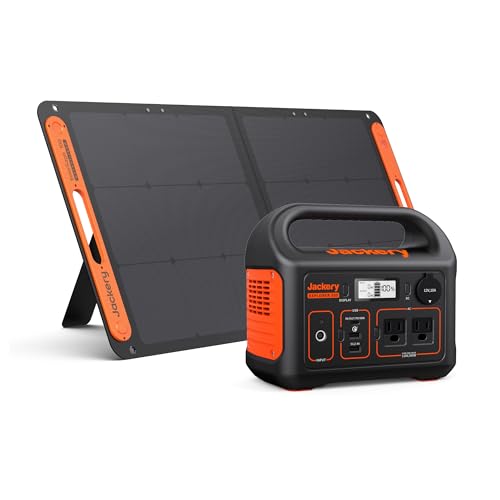


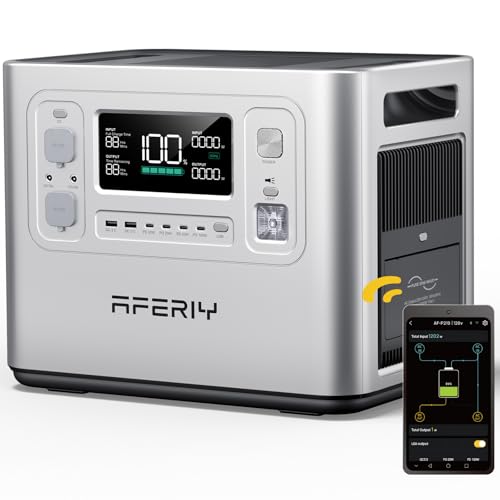

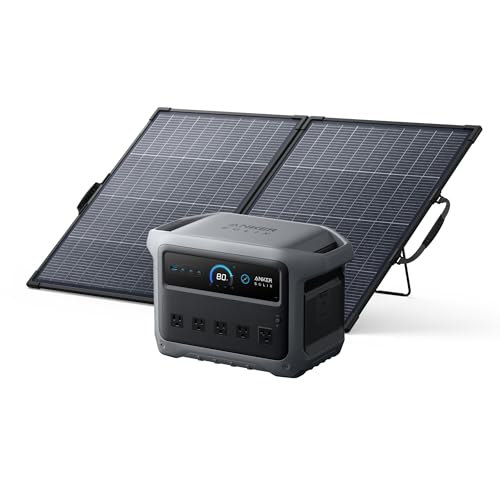

Ready to buy? Let’s take a quick look at the top portable solar generators available today.
- Best Overall: EcoFlow DELTA Pro 3 (4096Wh LFP Battery) Portable Power Station
- Best High-Power System: Anker SOLIX F3800 Plus Portable Power Station
- Best for Camping & Off-Grid: Jackery Solar Generator 2000 Plus Portable Power Station
- Best Midsize Power Station: EcoFlow DELTA 3 Classic (1,024Wh) Power Station
- Best Compact: Anker SOLIX C300 DC (288Wh) Power Bank Station
- Best Budget: Bluetti EB3A 268Wh Solar Generator LiFePO4 Battery Backup
These power stations are designed to be compact, easy to carry, and reliable for outdoor or emergency use. Some offer large battery capacity for home backup, while others focus on portability for camping and RV travel.
The models below balance power, battery life, and convenience, making them some of the best portable solar generators you can buy right now.

What Is a Portable Solar Generator?
A portable solar generator is a compact power system that stores electricity in a battery and can be recharged using solar panels. Despite the name, it doesn’t actually “generate” power like a traditional engine generator. Instead, it captures solar energy and stores it so you can use it later to run appliances, charge devices, or provide backup power during outages.
Most portable solar generators consist of three main components:
- Portable power station: the battery unit that stores energy and provides AC or DC output.
- Solar panels: used to collect sunlight and convert it into electricity.
- Charge controller: regulates the power coming from the solar panels to safely charge the battery.
Compared with traditional fuel generators, solar generators operate very differently. Because they are quiet, clean, and easy to use, portable solar generators have become a popular solution for home backup power, camping trips, and off-grid living.
In-Depth Review of the Best Portable Solar Generators
The following portable solar generators offer a solid mix of solar charging, reliable battery capacity, and practical portability.
Best Overall Portable Solar Generators
After using a few different solar generators over the past year, the EcoFlow DELTA Pro 3 (4096Wh LFP Battery) Portable Power Station is one of the few that actually feels like a real backup power system while still technically portable.
The unit carries a 4096Wh LFP battery and about 4000W continuous output, which is enough to run a refrigerator, lights, Wi-Fi equipment, and even small appliances at the same time.

What impressed me most in real use is the solar charging capability. The station supports up to 2600W solar input, so if you pair it with a few decent panels you can realistically recharge it during the day and run essential loads through the night. In a weekend off-grid setup, it easily handled laptops, a portable fridge, and lighting without needing any fuel at all.
It is not a tiny device though. At around 113 pounds, you will not casually carry it with one hand. Fortunately the design includes wheels and a pull handle, so moving it from the garage to the patio or into an RV is manageable.
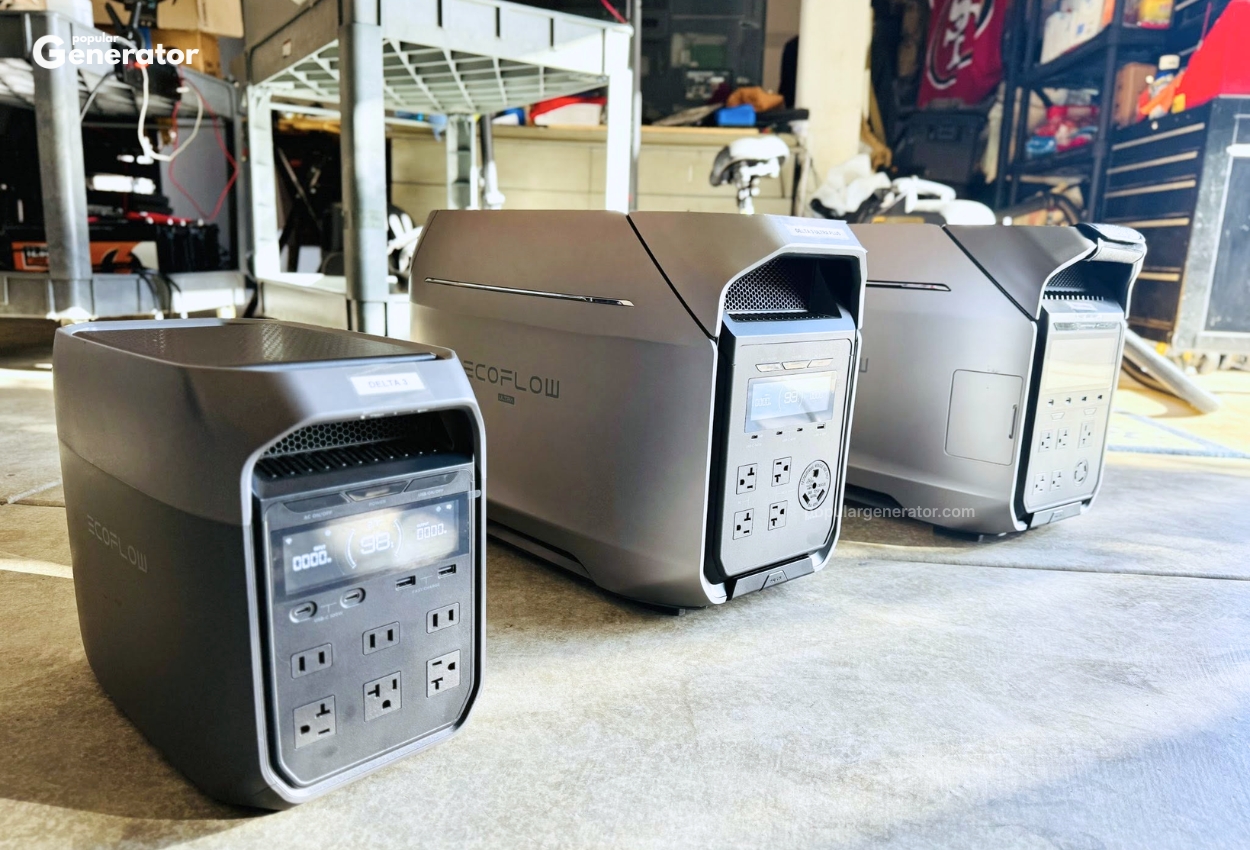
For people who want a serious solar generator that can actually support home backup while still remaining portable, this is easily one of the strongest options available.
Best High-Power System
It feels like a portable power station designed for people who actually run heavy equipment. The first thing you notice is the sheer output. This system delivers massive inverter capacity and expandable battery storage, making it capable of powering large appliances, workshop tools, or even partial home circuits.
Despite the power, the design still tries to keep portability in mind. Anker SOLIX F3800 Plus has large wheels, strong handles, and a rugged frame that feels built for frequent movement. I would not call it lightweight, but compared to installing a permanent battery system in your house, this is still far more flexible.

Solar charging is another area where this system shines. With high solar input capacity, it can absorb a large amount of sunlight during the day and refill surprisingly fast when paired with multiple panels.
In a real off-grid setup, this means you can keep a steady energy cycle going instead of relying on grid charging. For people building a serious off-grid or RV setup, this unit behaves more like a portable solar energy system than a simple battery.
Best for Camping & Off-Grid
Jackery Solar Generator 2000 Plus Portable Power Station sits right in the sweet spot between power and portability. With about 2042Wh of battery capacity and expandable storage, it provides enough energy for serious camping trips or remote work setups.
What I like about this system is how simple it feels to use. The layout is straightforward, the display is easy to read, and pairing it with Jackery’s SolarSaga panels takes only a few minutes. During an off-grid weekend test, it handled a portable fridge, camera batteries, phones, and lighting without any issue.

Portability is decent for its size. At around 60 pounds, you can still lift it into a vehicle without needing wheels. The recessed handles help a lot when moving it around camp.
In real use this generator feels designed for outdoor life. Quiet operation, zero fumes, and the ability to recharge directly from solar panels make it a much nicer experience compared to carrying a gas generator into the woods.
Best Midsize Power Station
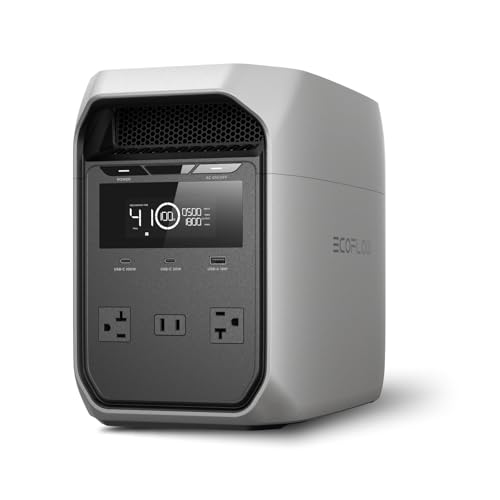
With around 1024Wh capacity and strong inverter output, it has enough power for most real-world situations without becoming bulky.
What stands out is the balance between portable size and real power capability. You can easily move it around the house or throw it in the trunk for a trip. At the same time it can run things like a mini fridge, laptops, lights, and small kitchen appliances without struggling.
During off-grid testing at a multi-day event, units in this class proved surprisingly useful. One reviewer ran phones, fans, and lighting for several days while still retaining plenty of battery capacity. That kind of performance makes this category ideal for campers, van life setups, or emergency backup kits.
Solar charging works well here too. With a couple of mid-size panels you can keep the station topped up during the day, which makes it a realistic portable solar generator rather than just a large battery pack.
Best Compact& Lightweight
The Anker SOLIX C300 DC (288Wh) Power Bank Station is the kind of solar generator you keep around simply because it is so easy to carry. With a 288Wh battery, it is clearly designed for small electronics rather than large appliances, but portability is where it shines.
You can literally grab it with one hand and move it anywhere. That makes it perfect for travel, camping, or emergency kits where weight matters. It is also quiet, maintenance-free, and extremely simple to operate.

Paired with a small folding solar panel, the station can recharge during the day while powering devices like cameras, drones, phones, or laptops. I have used units like this on hiking trips where having a reliable solar charging setup made a huge difference for keeping gear alive.
It is not meant to run refrigerators or heaters. But for portable solar power on the go, this size category is incredibly convenient.
Best Budget and Value
The Bluetti EB3A power station is often one of the first solar generators people try because it offers a lot of features at a lower price. Even though the battery is only around 268Wh, it still includes useful things like AC outlets, USB ports, and solar charging support.

The portability here is excellent. It is small enough to carry easily and fits nicely in a vehicle or emergency kit. For camping or short power outages, it can keep phones, lights, routers, and small electronics running for several hours.
Another advantage is the LiFePO4 battery chemistry, which typically lasts much longer than older lithium batteries. That makes it a solid entry-level choice for someone who wants a solar generator without spending a huge amount upfront.
For basic off-grid setups, weekend camping trips, or emergency backup for small devices, the EB3A delivers a surprisingly practical balance of portable size, solar charging capability, and affordability.

Why Solar Generators Are Perfect for Camping & RV Use
Portable solar generators have become a favorite power solution for camping and RV travel. They provide electricity without fuel, engine noise, or complicated setup. For outdoor trips where portability, convenience, and quiet operation matter most, these compact power stations are often a better choice than traditional generators.
1. Silent Operation
Camping is about enjoying nature, and loud generators can quickly ruin that experience. Portable solar generators run silently because they use batteries instead of gasoline engines. This makes them ideal for campgrounds, national parks, and RV parks where noise restrictions are common.
2. Clean Renewable Energy
Solar generators recharge using sunlight, so there’s no need to carry gasoline or propane. This makes them a cleaner and more convenient power source when you’re traveling or staying off-grid for several days.
3. Safe for Indoor Use
Unlike gas generators that produce exhaust fumes, solar generators create no emissions. That means they can safely be used inside a tent, camper van, or RV to power lights, charge electronics, or run small appliances.
4. Low Maintenance
Gas generators require oil changes, fuel management, and engine maintenance.
Portable solar generators have no engine, which means far fewer things can break. In most cases, you simply recharge the battery and it’s ready to use.
5. Perfect for Portable Power
Portability is the biggest advantage. Many units are compact, lightweight, and easy to carry, while still providing enough power for essentials like portable fridges, lights, laptops, cameras, and phone chargers. Paired with foldable solar panels, they allow you to stay powered even when you’re far from electrical outlets.
FAQs About Portable Solar Generators
1. How long do portable solar generators last?
Portable solar generators typically last between 5 and 15 years, heavily dependent on battery type, usage, and maintenance.
Modern units using LiFePO4 (Lithium Iron Phosphate) batteries offer the longest lifespan, often lasting over 10 years or 2,000 – 3,000+ charge cycles before capacity drops to 80%.
2. Are portable solar generators waterproof?
Most portable solar generators (the power station/battery unit) are not fully waterproof, but rather water-resistant (IP65-rated or lower). While they can handle light rain or splashes, they should not be submerged or left in heavy, direct rain. Portable solar panels are generally more water-resistant than the stations themselves.
3. Do portable solar generators work at night?
Portable solar generators work at night by using stored energy in their batteries, which are charged during the day. While the solar panels themselves stop producing electricity, the inverter/battery system allows you to power devices throughout the night. They are effective for off-grid power, camping, and emergencies.
4. Do portable solar generators need maintenance?
Portable solar generators require minimal, yet regular, maintenance to ensure longevity and efficiency. Key tasks include cleaning panels every 4–6 months to remove debris, keeping the unit in a dry/cool environment, and cycling the battery (charging/discharging) every 3 – 6 months to prevent capacity loss.
-
Regularly charge the unit to 100% from time to time and avoid leaving the battery completely empty for long periods, as this helps maintain battery health and capacity. For long-term storage, keep the battery level between 40% and 60%.
-
Clean the solar panels occasionally using a soft, damp cloth or sponge to remove dust, dirt, and debris that may reduce charging efficiency.
-
Periodically inspect the charging cables and connectors to make sure there are no signs of wear, cuts, or sharp bends, and check the ports for dust or corrosion.
-
Store the power station in a cool, dry place to protect the battery and electronic components from extreme heat or humidity.
-
Check the manufacturer’s app or website for firmware updates, as software updates can improve performance and optimize battery management.
Unlike traditional gas generators, these units do not require oil changes or engine maintenance.


Write Your Review
No reviews yet. Be the first to share your experience!