




Rated Portable Generators for Home Backup
Portable generators for home backup (typically 3,000 – 10,000+ watts) provide essential power during outages, with options ranging from inverter models for sensitive electronics to dual-fuel units for extended runtimes.
- Best Overall: Honda EU7000IS 7000 Watt Inverter Portable Backup Generator
- Best Quiet Inverter: Cummins Onan P4500i Inverter Portable Generator
- Best Budget: Champion Power Equipment 4375/3500 Watt Dual Fuel Generator
- Best Premium: Briggs & Stratton Q6500 QuietPower Portable Inverter Generator
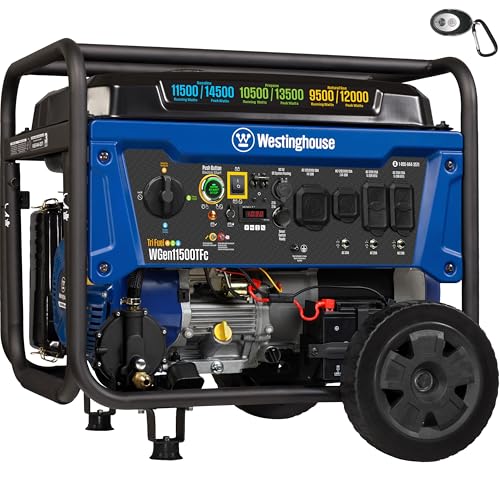
- Best Tri-Fuel: Westinghouse WGen11500TFc (Gas/LP/NG) Tri-Fuel Portable Generator
- Best for Whole-Home: EcoFlow DELTA Pro 3 Power Stations & Generators
The generators listed above are widely considered some of the best portable generators for home backup thanks to their strong performance, reliability, and versatility. Depending on your power needs, you may prefer a quiet portable generator, a budget-friendly dual-fuel model, or a high-capacity generator capable of supporting most essential household appliances during outages.
Below, we’ll break down each option in detail to help you choose the right portable generator for your home backup setup.

What Size Portable Generator Do You Need for Home Backup?
Choosing the right portable generator size for home backup depends on how many appliances you plan to run during a power outage. Instead of powering the entire house, most homeowners use portable generators to keep essential devices running, such as refrigerators, lights, internet routers, and a few small appliances.
To determine the right generator size, you need to understand two key numbers:
- Running watts: Continuous power an appliance needs to operate
- Starting watts: Extra surge power required when an appliance first turns on (especially for devices with motors like refrigerators or air conditioners)
A good rule is to add up the running watts of all essential appliances and then include extra capacity to handle startup surges.
1. Typical power requirements for essential home appliances
Below is a general estimate of how much power common household devices require during a power outage:
| Appliance | Running Watts | Starting Watts |
|---|---|---|
| Refrigerator | 150 – 300W | 800 – 1200W |
| LED Lights (per bulb) | 8 – 12W | – |
| WiFi Router | 10 – 20W | – |
| Laptop | 50 – 100W | – |
| Television | 80 – 200W | – |
| Microwave | 800 – 1200W | 1000 – 1500W |
| Sump Pump | 800 – 1000W | 1300 – 2000W |
2. Generator size guide for home backup
For effective home backup, select a generator based on power needs:
- Essential Only (3,500 – 5,000 W): Powers a refrigerator, freezer, lights, and phone chargers.
- Medium/Partial Backup (5,000 – 10,000 W): Runs essential items plus a portable AC unit, microwave, or well pump.
- Whole-House Backup (15,000 – 25,000 k W): Covers major appliances, including central AC, electric dryer, and electric range.
Always calculate total starting watts for appliances with motors to avoid overloading.
3. How to calculate needed power (watts)
To calculate the needed generator wattage, list all appliances to be powered simultaneously, sum their running (continuous) watts, and add the highest single starting (surge) wattage to that total.
For motor-driven items (fridges, pumps), multiply running watts by 2-3 to estimate surge needs. Finally, add a 20-25% safety buffer for future needs.
For example, if you want to run:
- Refrigerator → 200W
- 5 LED lights → 50W
- WiFi router → 15W
- Laptop → 60W
Your total running power requirement is roughly 325W, but you should still account for the refrigerator’s starting surge. In this case, a generator with at least 1000W capacity would be a safer choice.
Tips for Using a Portable Generator Safely at Home
Using a portable generator can provide reliable backup power during outages, but it’s important to follow basic safety practices to protect your home and family. Improper use can lead to serious risks such as carbon monoxide poisoning, fire hazards, or electrical damage.
1. Never run a generator indoors
Portable generators should never be used inside the house, garage, basement, or enclosed spaces, even if doors or windows are open. Generators produce carbon monoxide (CO), a colorless and odorless gas that can be extremely dangerous in confined areas. Always operate the generator outdoors and far away from living spaces.
2. Place the generator at a safe distance
Position the generator at least 20 feet (about 6 meters) away from your home, with the exhaust pointing away from doors, windows, and vents. This helps prevent exhaust fumes from entering the house.
3. Use proper extension cords
Always use heavy-duty outdoor-rated extension cords designed to handle the generator’s power output. Damaged or undersized cords can overheat and create a fire hazard.
4. Keep the Generator dry
Generators should always be operated on a dry and stable surface. If you are using a gas generator outdoors during rain or snow, place it under a generator tent or canopy that allows ventilation while protecting it from moisture.
5. Avoid overloading
Do not connect too many appliances at once. Exceeding the generator’s rated capacity can cause overheating, shutdowns, or permanent damage. Always stay within the recommended load limit.
6. Turn off and cool down before refueling
If you are using a gasoline generator, turn off the engine and allow it to cool down before adding fuel. Refueling a hot generator can cause gasoline vapors to ignite.
7. Install carbon monoxide detectors
Even when the generator is placed outdoors, it’s a good safety measure to install carbon monoxide detectors inside your home. These alarms can alert you if dangerous gas levels are detected.
Detailed Reviews of Best Portable Generators for Home Backup
The following generators offer a solid balance of portability, stable power, and reliable home backup performance.
Best Overall for Home Backup
After testing several portable generators for home backup, the Honda EU7000iS stands out as one of the most balanced options you can own. It delivers enough power to run essential home appliances while still remaining portable enough to move around your property without too much effort.
At about 261 pounds it is not a small generator, but Honda solved that with a solid wheel kit and folding handles. Once it is on wheels, moving it from the garage to the backyard feels manageable for one person.
What makes this generator particularly good for home backup is the stability of its inverter output. The inverter system produces very clean electricity with a stable sine wave, which means it can safely power sensitive electronics like routers, laptops, televisions, and modern refrigerators without the risk of voltage fluctuations.
During testing, the power delivery remained steady even when switching between multiple appliances.
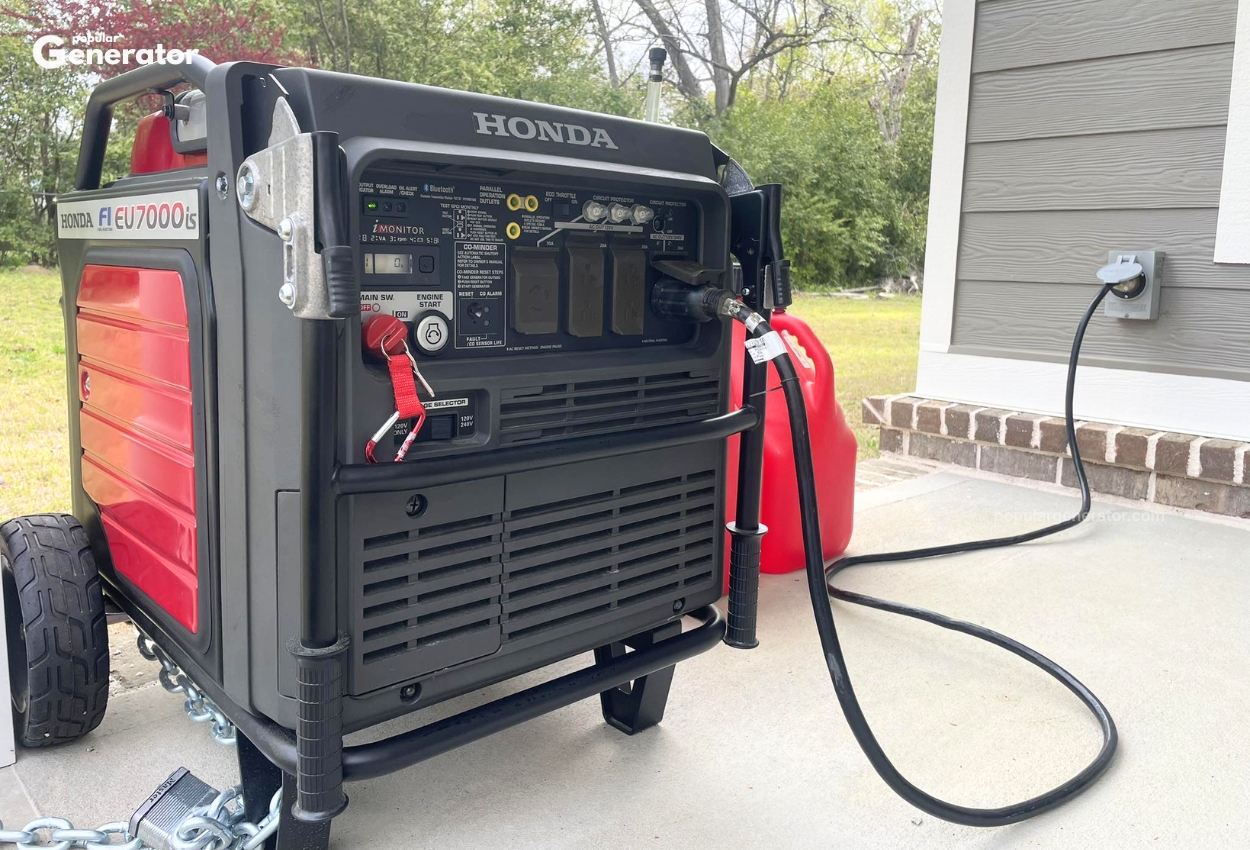
Runtime is another strong point. With its large fuel tank and Eco-Throttle system adjusting engine speed based on load, the generator can run close to 18 hours at lower loads.
That kind of runtime makes a real difference during overnight outages because you do not need to refuel constantly. For homeowners who want dependable backup power that is still technically portable, the EU7000iS hits a sweet spot between power, reliability, and quiet operation.
Best Quiet Portable Inverter Generator
The Cummins Onan P4500i is one of those generators that immediately feels designed for residential environments.
Noise is usually a big concern when running a generator near the house, and this model performs impressively well.
Even under moderate load it stays relatively quiet, which makes it much more comfortable to run overnight during an outage.
Portability is another advantage. At roughly 98 pounds with built-in wheels and a telescoping handle, it moves easily across driveways or patios. The design is compact enough that it can be stored in a garage corner without taking up much space, which is important for homeowners who only use a generator occasionally.
For home backup use, the inverter technology again plays a key role. The clean power output makes it safe for household electronics while still providing enough capacity to keep refrigerators, lights, Wi-Fi equipment, and small kitchen appliances running. The generator also supports parallel capability, meaning you can connect a second unit if you ever need more power later. That flexibility is useful if your backup power needs grow over time.
Best Budget Portable Inverter Generator
If the goal is reliable home backup without spending too much, the Champion 4375/3500 Dual Fuel generator is one of the most practical choices.
It is compact compared to larger backup generators, weighing just over 100 pounds, and the built-in wheels make it easy to roll around the yard or driveway. One of the biggest advantages here is the dual-fuel capability.
You can run it on gasoline or propane depending on what you have available. During real outages that flexibility can be extremely helpful. If gasoline becomes difficult to find, a standard propane tank can keep the generator running without much hassle.
In terms of backup performance, the generator produces enough power to run the basics of a small home. Refrigerators, lighting circuits, internet equipment, and even a few kitchen appliances can run comfortably at the same time. The engine design is straightforward and reliable, which often translates to easier maintenance and fewer surprises during long outages. For homeowners looking for a simple and affordable backup solution, this model covers the essentials without unnecessary complexity.
Best Premium High Output Generator
The Briggs & Stratton Q6500 QuietPower is built for homeowners who want strong backup performance but still prefer something portable rather than a permanent standby system.
Despite producing up to 6500 starting watts, the unit is designed with portability in mind. The integrated wheels and handle make it surprisingly manageable to move for a generator in this power range.
Where this generator really shines is efficiency and runtime. The QuietPower inverter system automatically adjusts engine speed based on the load, which helps stretch the runtime significantly. Under lighter household loads, the generator can run for many hours on a single tank.
That efficiency is especially valuable during extended outages where refueling opportunities might be limited.

The inverter output also keeps power stable for electronics, which is something older conventional generators often struggle with. During testing it handled refrigerators cycling on and off, microwave use, and multiple lights without noticeable voltage drops.
For homeowners who want strong backup capacity in a portable format, this model offers a very practical balance of power and quiet operation.
Best Tri-Fuel Options Generator
If flexibility is your top priority for home backup, the Westinghouse WGen11500TFc is one of the most practical portable generators available. The biggest advantage is its tri-fuel capability, meaning it can run on gasoline, propane, or natural gas. During a real power outage, that flexibility matters a lot. If gasoline becomes difficult to find, you can switch to a propane tank or connect it directly to a home natural gas line and keep the power running without interruption.
Models like the Westinghouse WGen11500TFc, DuroMax XP16000iHT, and Firman T09371 allow you to run the generator on gasoline, propane, or natural gas. That means you can adapt to whatever fuel source is easiest to access during a power outage.
In terms of output, this generator delivers serious backup power for a portable unit. It produces 11,500 running watts and up to 14,500 starting watts on gasoline, which is enough to run several key appliances in a house at the same time. Even when running on natural gas it still delivers about 9,500 running watts, which can comfortably support refrigerators, sump pumps, lighting circuits, and many household electronics during an outage.

Runtime is another strong point for home backup use. With a 9.5-gallon fuel tank, the generator can run roughly 9.5 hours at 50% load, and up to about 19 hours at lighter loads, which is ideal for overnight outages without constant refueling. When using propane, a standard 20-lb tank can keep the generator running for about 7 hours.
Although it weighs around 230 pounds, the generator is designed with large wheels and heavy-duty handles so it can still be moved around the house when needed. Features like remote electric start, CO safety shutdown, and a VFT display that shows voltage and runtime information make it easier to operate during emergencies.
Best for Whole-Home Backup Generator
For people who want a modern and extremely portable backup solution, the EcoFlow DELTA Pro 3 represents a completely different approach. Instead of using a traditional gasoline engine, it operates as a large battery power station that can be charged through wall outlets, solar panels, or compatible generators.
Portability is actually one of its biggest strengths. Despite having a large battery capacity, the unit includes wheels and a suitcase-style handle, making it easy to move between rooms or even transport in a vehicle. For indoor use during outages, the silent operation is a huge advantage compared to traditional generators.
From a home backup perspective, the system can power essential appliances such as refrigerators, lighting, networking equipment, and medical devices with perfectly stable electricity.
Because it produces pure inverter power from its battery system, it is extremely safe for sensitive electronics. When paired with additional battery modules or solar charging, the system can extend runtime significantly, making it a flexible backup option for modern homes that prioritize quiet operation and clean energy.
FAQs
Q: Are portable generators loud when running?
Noise levels vary depending on the generator type and size. Traditional gasoline generators usually produce 50 – 70 decibels, similar to the sound of normal conversation or a vacuum cleaner. Inverter generators and many solar generators are generally quieter, making them a better option for residential areas or overnight use.
Q: Do portable generators require regular maintenance?
Portable generators require regular maintenance to ensure reliability, efficiency, and longevity. Key tasks include changing the oil every 50–100 hours of use, replacing air filters, checking spark plugs, and using fuel stabilizer to prevent carburetor issues. Proper maintenance prevents overheating, safety hazards, and failure during emergencies
Q: Can I connect a portable generator directly to my home’s electrical system?
Yes, a portable generator can be connected to your home’s electrical system, but it must never be done by plugging the generator directly into a wall outlet. This unsafe method is known as “backfeeding.” Backfeeding sends electricity from the generator back through your home’s wiring and into the utility grid.
To safely connect a portable generator to your home, you should use proper equipment that prevents electricity from flowing back into the utility grid. Safe connection options include:
- Transfer switch: Lets you safely power selected home circuits (such as the refrigerator, lights, or heating system) during an outage.
- Generator inlet box: Provides a secure outdoor connection point for your generator.
- Interlock kit: Ensures the main breaker and generator breaker cannot run at the same time, preventing backfeeding.
These systems must comply with local electrical codes, so they should always be installed by a qualified electrician. When set up correctly, they allow your generator to safely power essential circuits in your home during a blackout without electrical hazards.
Q: How much fuel does a portable generator consume?
Fuel consumption depends on the generator size and load. Small portable generators may use 0.1–0.3 gallons of gasoline per hour, while larger models can consume 0.5 gallons per hour or more under heavier loads. Running the generator at lower loads can help extend runtime and reduce fuel consumption.
Q: Are inverter generators better for home backup?
Inverter generators are often preferred for home backup because they produce cleaner and more stable electricity, which is safer for sensitive electronics like laptops, routers, and televisions. They are also typically more fuel-efficient and quieter than conventional portable generators.
Q: How long can a portable generator last?
A typical portable generator lasts between 500 and 2,000 hours of total usage, or roughly 10–20 years with proper maintenance and occasional use. Heavy daily use can cause failure in 1–2 years, while sporadic use during outages can extend its life significantly.


Write Your Review
I have a Jackery 500 power station. So far, thats all Ive needed. Less expensive. No noise. Jackery.com
Generac are the best for a home generator. If you do a portable generator make sure you find at least 7550 or above install a transfer switch and hook up only the necessary things you will need to the generator.