





Top Lightweight Portable Generators
- Best Overall: Honda EU2200i 2200-Watt 120-Volt Portable Inverter Generator
- Best Dual-Fuel & Value: Champion 201183 2500-Watt Dual Fuel Ultralight Inverter Generator
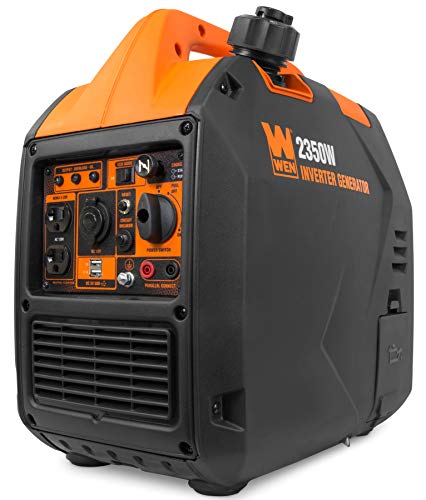
- Best Budget & Compact: Pulsar 2,200W Portable Dual Fuel Quiet Inverter Generator
- Best Ultra-Lightweight (Solar): BLUETTI Elite 100 V2 Portable Power Station
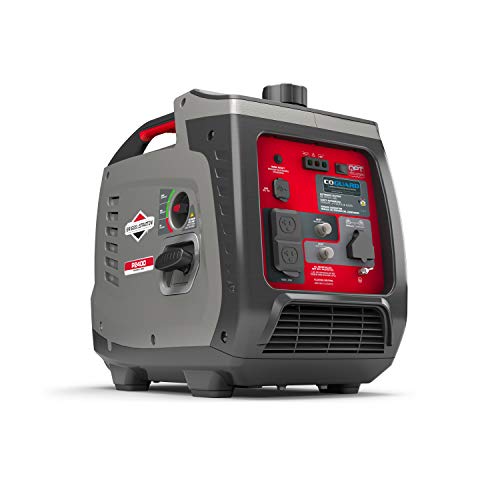
- Best High-Output Lightweight: Briggs & Stratton P2400 PowerSmart Series Inverter Generator
Most generators are labeled “portable,” but try lifting one on your own and you’ll quickly realize that’s not always true. A lot of them are simply too heavy, too bulky, and too impractical for real-world use, especially if you’re moving it in and out of storage or taking it on trips.
This guide focuses on what actually matters. Lightweight generators under 50 lbs that you can carry without a struggle, models that stay quiet enough for camping or home use, and most importantly, units that deliver usable power instead of just impressive numbers on paper.

What Counts as a “Lightweight Portable Generator”?
A lot of brands throw around the word “lightweight,” but in real use, there’s a clear line. If a generator is under 50 lbs, most people can carry it without much effort. That’s what truly portable looks like. Once you get into the 50 to 70 lb range, it starts to feel different. You can still move it, but it’s no longer something you casually pick up and carry across a campsite. At that point, wheels or a second person start to make more sense.
- Under 50 lbs → Truly portable
- 50 – 70 lbs → Borderline portable
This is where many buyers get it wrong. They focus too much on wattage and forget about the physical side of using the generator. On paper, more power always looks better. In reality, if the unit is too heavy to move easily, it becomes a hassle every time you use it. That defeats the whole purpose of going portable in the first place.
The smarter approach is to match the weight to how you plan to use it. If you are lifting it in and out of a vehicle, carrying it to campsites, or storing it in tight spaces, weight matters just as much as performance. Buying a generator you can’t comfortably handle is one of the most common and most frustrating mistakes people make.
In-dept Reviews Best Lightweight Portable Generators (Top Picks)
These picks are not about who has the highest numbers on paper. They are about what actually works when you need something light, reliable, and usable in real situations. Weight, noise, runtime, and startup behavior matter more here than peak watt claims.
Best Overall for Reliability (≈ 47 lbs)
If you want something you can rely on for years without thinking twice, this is it. The Honda EU2200i 2200-Watt 120-Volt Portable Inverter Generator has built a reputation the old-fashioned way by simply not failing when it matters.
In real use, it handles everyday loads effortlessly. Lights, fans, laptops, and small appliances run smoothly with clean, stable power. That stability is what makes it safe for sensitive electronics, something cheaper units often struggle with.

At around 47 lbs, it sits right at the edge of true portability but still feels manageable. Noise is where it really stands out. Under moderate load, it runs quietly enough that it blends into the background, which is exactly what you want in a campground.
Runtime is solid at partial load, and the engine response is smooth when loads kick in. No sudden strain, no aggressive revving. Honda EU2200i just does its job. It is not the cheapest option, but it is the one people end up keeping the longest.
Best Dual-Fuel and Value (≈ 39 lbs)
Champion 201183 2500-Watt Dual Fuel Ultralight Inverter Generator stands out because it gives you flexibility without adding weight. At roughly 39 lbs, it is noticeably easier to carry than most generators in this power range.
The real advantage here is dual fuel. You can run it on gasoline when you need full output, or switch to propane for cleaner operation and longer storage life. That makes it a practical choice if you do not use your generator all the time.

In real-world use, it feels more capable than a typical 2000W unit. You get enough headroom to run essentials plus small appliances without constantly worrying about overload. Startup performance is solid, and it handles short bursts better than most lightweight models.
The trade-off is simple. On propane, you lose a bit of power. But for most lightweight use cases, the convenience is worth it.
Best Budget and Compact (≈ 44 lbs)
If you want something affordable that still gets the job done, the Pulsar 2,200W Portable Dual Fuel Quiet Inverter Generator is a practical choice. It sits around 44 lbs, so it stays within the range of true portability while offering decent performance.
In real use, it handles basic loads without much issue. Lights, charging devices, and small appliances run fine as long as you are not pushing it too hard. The dual fuel option is a bonus at this price point, especially if you prefer propane for storage and cleaner operation.

Where it feels different is in refinement. The noise is a bit harsher, and the overall build does not feel as solid as premium models. But if your expectations are realistic, Pulsar 2,200W delivers solid value without forcing you to overspend.
Best Ultra-Lightweight (Solar Alternative) (≈ 25 lbs)
If carrying weight is your top concern, the BLUETTI Elite 100 V2 Portable Power Station changes the game completely.
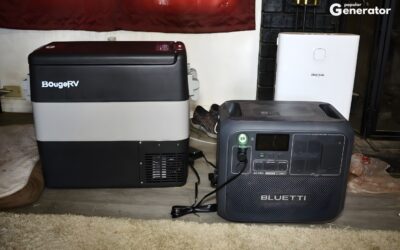
At around 25 lbs, it is in a different category. No engine, no fuel, no noise. You can carry it with one hand and use it anywhere without thinking about exhaust or maintenance.

- Perfect for lights, laptops, phones, and small electronics
- Silent operation makes it ideal for quiet environments
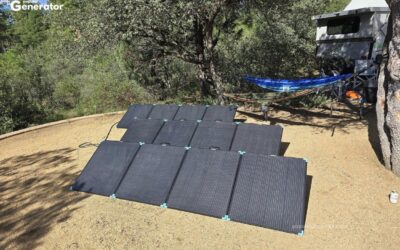
- Fast recharge and solar compatibility add flexibility
BLUETTI Elite 100 V2 delivers up to 1800W continuous output, which is enough for many small appliances, but not for heavy loads like air conditioners. That is the limitation of going this light.
This is not a replacement for a gas generator. It is a different tool for a different type of user. If your needs are light and you value silence and simplicity, it is hard to beat.
Best High-Output Lightweight (≈ 50.4 lbs)
Briggs & Stratton P2400 PowerSmart Series Inverter Generator pushes the upper limit of what can still be considered lightweight. At just over 50 lbs, you will feel the extra weight, but you also get more usable power in return.
In practice, that extra output gives you more breathing room. It handles heavier loads better, deals with startup surges more smoothly, and lets you run combinations that smaller units struggle with.

It is still compact enough to move around without wheels, but not something you want to carry long distances. Noise stays controlled thanks to inverter technology, and performance under moderate load feels stable.
If you want something that is still portable but less restrictive, Briggs & Stratton P2400 is where stepping up starts to make sense
What You Can Actually Run on a Lightweight Generator
Lightweight generators are built for practical, everyday use, not for running everything at once. Most of the time, you’ll be powering small, steady loads like lights, fans, and charging devices. Once you add appliances, you need to be more careful with how you stack loads.
| Generator Size | What You Can Run Together | Real-World Feel |
|---|---|---|
| 2000W | Lights + fan + laptop | Smooth, no effort |
| 2200W | + coffee maker | Manageable, short bursts |
| 2500W | + microwave (short use) | Flexible, but not unlimited |
The biggest mistake is relying on peak watt numbers. Those numbers only apply for a split second, not for continuous use. What actually matters is how the generator performs under steady load and how it handles startup spikes.
The practical way to think about it is simple. Lightweight generators are built for essentials with occasional upgrades, not full power usage.
Lightweight vs Power
There’s no way around this. The moment you go lighter, you give something up. Most of the time, that trade-off shows up in runtime and how much power the generator can handle under stress.
Smaller, lightweight generators usually come with:
- Smaller fuel tanks → shorter runtime
- Lower surge capacity → struggles with high startup loads
That’s why they feel great for basic use but start to hit limits when you push them harder.
On the flip side, once you move up in power:
- Bigger engine → more stable performance
- Higher surge capacity → handles appliances better
- But also → more weight, harder to carry and store
You end up with a machine that performs better, but is no longer easy to move around, especially if you’re doing it alone.
The key takeaway is simple. You have to decide what matters more in your situation.
FAQs
Q: What is considered a lightweight portable generator?
A lightweight portable generator is generally considered to be a unit that weighs under 50 to 60 pounds, allowing it to be easily carried by one person using a built-in handle. These generators are typically inverter-based, producing 1,000 to 2,500 watts of power, making them ideal for camping, tailgating, or powering essential electronics during a power outage.
Q: Is a 2000W generator enough for most situations?
A 2000-watt (2kW) generator is generally enough for basic, essential needs during power outages or for casual camping/RVing, but it is not sufficient for powering a whole house or high-draw appliances simultaneously. It typically provides 1,600 – 1,800 running watts, which can power critical items like a refrigerator, lights, fans, laptops, and chargers for several hours.
What a 2000W Generator CAN Power
- Essential Household Items: Refrigerator or freezer, LED lights, Wi-Fi router, TV, laptop/phone chargers.
- Small Kitchen Appliances: A microwave, coffee maker, or blender (usually one at a time).
- Tools & Medical: Power drills, sanders, small air compressors, and CPAP machines.
- RVs & Camping: Most small RV appliances, including lighting, pumps, and fans.
What a 2000W Generator CANNOT Power
- Large Appliances: Central air conditioning units, electric water heaters, electric clothes dryers, or electric stoves/ranges.
- Multiple Heavy Loads: You cannot run a space heater and a toaster simultaneously, as these often exceed 1,500 watts each.
Q: Can a lightweight generator run a refrigerator?
Yes, a lightweight or small generator (1,000–2,000 watts) can run a standard refrigerator, provided it can handle the initial, high-power “surge” (around 800–1200 watts) needed to start the compressor. Once running, most modern fridges only require 100–300 watts. Inverter generators are recommended for their stable, quiet power.


Write Your Review
No reviews yet. Be the first to share your experience!