

In such situations, having a backup power source like Best Home Generators for Power Outages can be a lifesaver.
But with so many options available in the market, choosing the right one can be a daunting task. In this article, we will guide you through the process of selecting the best home generators for power outages.
A home generator is a device that provides electricity during power outages. It runs on various fuels, such as gasoline, propane, and natural gas. A generator comes in handy during emergencies, providing power to essential appliances like lights, refrigerators, and sump pumps.
What Size Generator Do You Need for a Power Outage?
For most homes, a generator with 5,000 to 10,000 watts is required to power essentials during an outage, including refrigerators, lights, and fans, with 15,000-22,000+ watts needed for full, air-conditioned homes.
- Apartment or small condo (2,000 to 3,500 watts)
Enough for refrigerator, lights, WiFi, TV, and small appliances. - Medium sized home (5,000 to 7,500 watts)
Can power refrigerator, sump pump, microwave, window AC, and multiple rooms of lighting. - Large home (10,000 watts or more)
Capable of running central air conditioning, multiple appliances, and larger electrical loads.
Choosing the right generator size is one of the most important decisions you will make. Too small, and it will not handle your essential appliances. Too large, and you may overspend on power you do not actually need.
The key is understanding two things:
- How many appliances you want to run
- Their total running wattage and starting surge wattage
Below is a practical wattage guide to help you estimate your needs.
Essential Appliances Wattage Guide
Here are the average running wattages for common household items during a power outage:
- Refrigerator: 100 to 250 watts (Startup surge can reach 800 to 1,200 watts)
- Sump pump: 800 to 1,500 watts
Often has high startup surge - Window AC unit: 1,000 to 1,500 watts
- Microwave: 800 to 1,200 watts
- Lights (multiple rooms): 60 to 300 watts total depending on bulbs
If you plan to run a refrigerator, some lights, WiFi, and a sump pump, your total running wattage could easily reach 2,000 to 3,000 watts.
Always add a safety buffer of at least 20 percent above your estimated total to handle startup surges.
Quick Tip: For most families during a short term outage, a generator in the 5,000 to 7,500 watt range provides the best balance between cost and usable power.
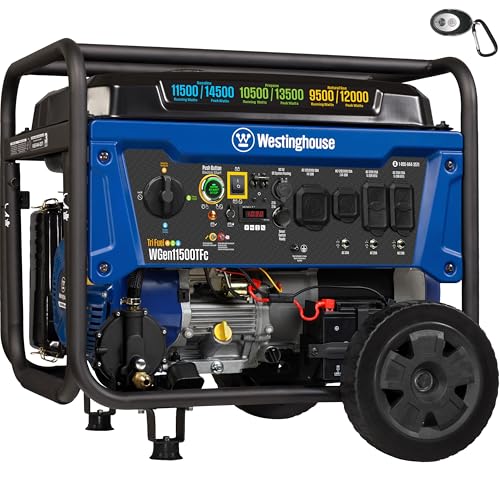
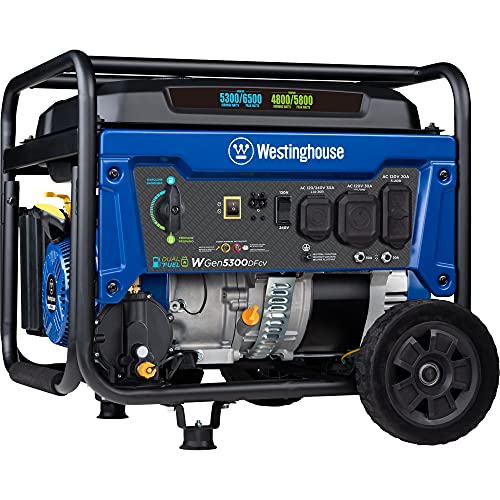
Quick Comparison Table of the Best Home Generators for Power Outages






Which Generator Type Is Better for Power Outages? (Portable or Standby Generators)
If you are preparing for a blackout, one of the biggest decisions is choosing between a portable generator and a standby generator.
Both provide backup power, but they work very differently and fit different budgets.
| Feature | Portable Generator | Standby Generator |
|---|---|---|
| Cost | Lower upfront cost | High upfront cost |
| Installation | No installation needed | Professional installation required |
| Automatic Start | Yes | Yes |
| Whole House Power | Limited | Yes |
So Which One Is Better?
It depends on your needs and budget.
- Choose a portable generator if you want affordable backup power for essential appliances and do not mind setting it up manually.
- Choose a standby generator if you want automatic, whole house protection and are willing to invest more for convenience and peace of mind.
For many homeowners, a properly sized portable generator is more than enough for typical power outages.
Best Fuel for Generator When Power Outage
The best fuel for a generator during a power outage depends on your setup: Natural Gas is best for permanent, long-term, low-maintenance standby power due to an unlimited supply.
- Natural Gas: Best for automatic home standby generators. It offers an unlimited, uninterrupted supply, produces fewer emissions, and requires no storage.
- Propane (LPG): Best for portability and long-term storage. It does not degrade, making it perfect for infrequent, long-duration outages. It is also cleaner burning.
- Gasoline: Most accessible for short-term,, portable use, but requires, frequent refueling, has a short shelf life, and poses higher, safety risks in storage.
- Diesel: Known for high efficiency and reliability, but generally more common for industrial or, very large home, setups.
For maximum versatility, dual-fuel generators that run on both gasoline and propane are highly recommended, allowing you to switch based on availability.
Safety Tips During a Power Outage
Using a generator during a blackout can keep your home comfortable and safe, but improper use can be dangerous. Follow these essential safety tips to protect your family and property.
1. Never Run a Generator Indoors
This is the most important rule.
Generators produce carbon monoxide, a colorless and odorless gas that can be deadly within minutes.
- Never run a generator inside your home
- Do not use it in a garage, even with the door open
- Do not use it in a basement or enclosed porch
Always operate generators outdoors in a well ventilated area.
2. Keep the Generator Away from Windows and Doors
Place the generator at least 20 feet away from:
- Windows
- Doors
- Vents
Position the exhaust so it points away from your home. This reduces the risk of carbon monoxide entering your living space.
Installing carbon monoxide detectors inside your home adds an extra layer of protection.
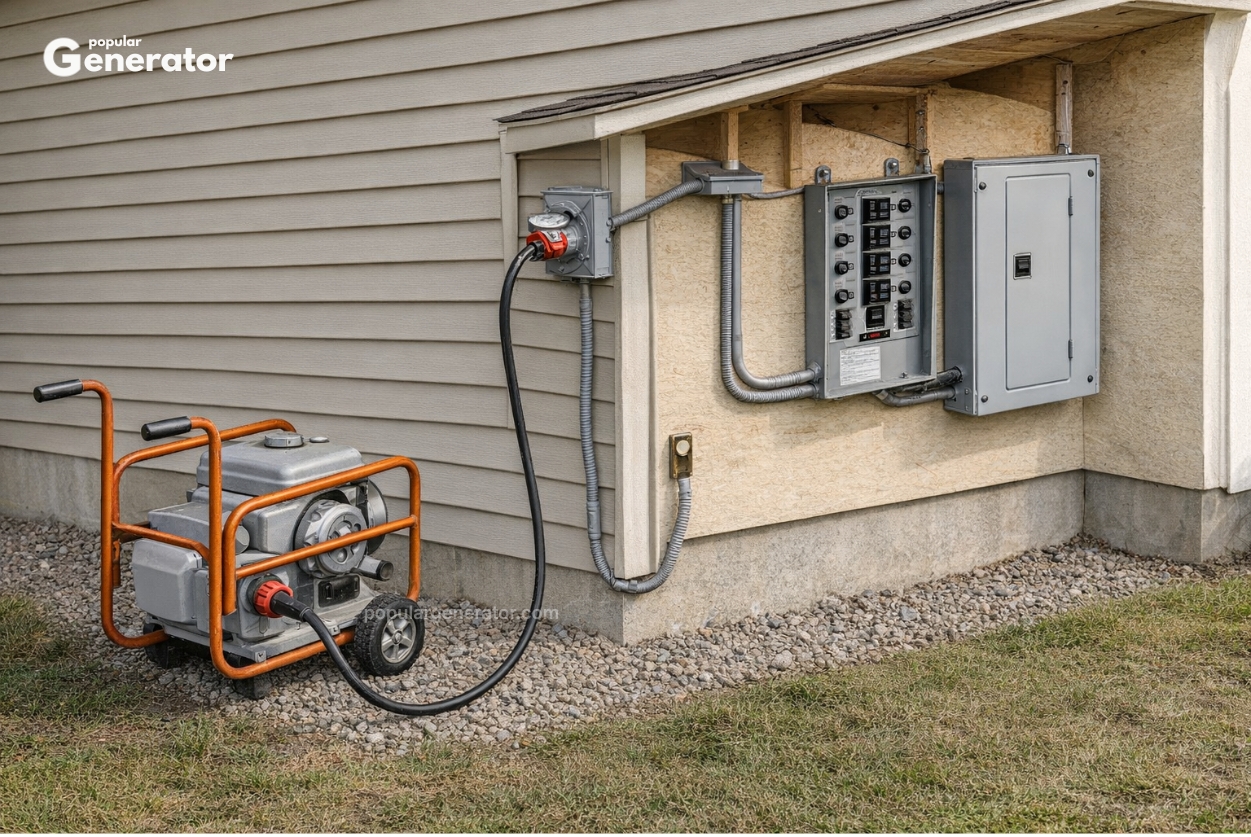
3. Use a Transfer Switch
Never plug a generator directly into a wall outlet. This is called backfeeding and it can:
- Damage your electrical system
- Cause fires
- Electrocute utility workers
Instead, use:
- A professionally installed transfer switch
- Or an interlock kit approved for your electrical panel
This safely connects your generator to your home circuits.
4. Store Fuel Properly
Store gasoline only in approved containers and keep it in a cool, well ventilated area away from heat or flames. Never refuel while the generator is running, and always let it cool down first. Fuel vapors are highly flammable, so proper storage and handling are essential for safety.
FAQs
1. What size generator runs a whole house?
To power an entire home, most households need a generator rated between 10,000 and 22,000 watts, depending on home size and appliance load.
Smaller homes without central AC may manage with around 10,000 to 12,000 watts. Larger homes with central air conditioning, electric water heaters, or multiple large appliances may require 20,000 watts or more.
For true whole house coverage, a standby generator is usually the best option.
2. Can I run my AC during a power outage?
Yes, but it depends on your generator size.
- A window AC unit typically needs 1,000 to 1,500 watts.
- A central air conditioner may require 3,000 to 5,000+ starting watts or more.
Many portable generators can handle a window AC, but running central AC usually requires a higher capacity portable unit or a standby generator.
3. How Much Does a Home Generator Cost?
Home generators range in cost from $500 for small portables to over $20,000 for large, permanently installed standby systems, with most homeowners spending between $7,000 and $15,000 for a fully installed whole-house unit.
Costs depend heavily on power capacity (kW), fuel type, and installation complexity, which usually adds $500–$3,000+ for professional setup.
4. Do I Need a Transfer Switch for Home Generator?
Yes, you absolutely need a transfer switch for a home generator to safely connect it to your electrical panel.
It prevents “backfeeding” electricity into utility lines, which is illegal, dangerous to utility workers, and damages equipment. A transfer switch also allows you to power hardwired appliances (HVAC, well pumps) safely.
- Essential for Safety: Without one, you risk electrocuting utility workers, causing electrical fires, or damaging your generator.
- Standby vs. Portable: Standby generators (permanently installed) generally require an Automatic Transfer Switch (ATS). Portable generators (5,000+ watts) can use a Manual Transfer Switch (MTS) to safely connect to your home’s breaker panel.
- Legal/Code Compliance: National Electrical Code (NEC) requires a transfer switch to prevent backfeeding.
- Convenience: An ATS provides seamless, automatic power transition during outages, while a manual switch requires manual intervention.
Using extension cords from a portable generator to appliances is safe, but directly connecting a generator to your home’s wiring without a transfer switch is dangerous and forbidden.


Write Your Review
No reviews yet. Be the first to share your experience!