

Running a food truck means your business lives and dies by reliable power. When the generator struggles, everything slows down. Equipment misbehaves, service backs up, and revenue takes a hit.
That’s why choosing the right generator for a food truck isn’t about chasing the biggest watt number. It’s about stable output, low noise, and the ability to handle long hours under real working conditions.
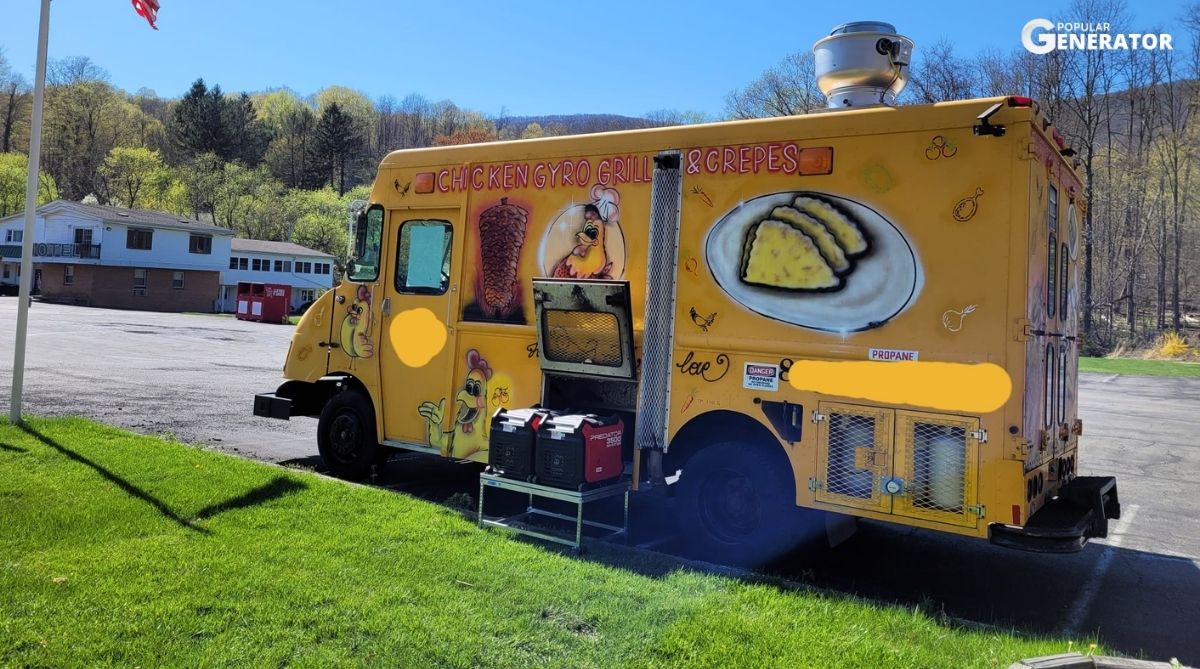
In this guide, we break down the best generators for food trucks based on real-world operation. We look at how they perform during full service, how loud they are in crowded areas, how long they run on a typical workday, and which setups actually make sense depending on your menu and truck size. If you want a generator that works as hard as you do, this is where to start.
Why Food Trucks Need a Specialized Generator
A food truck can’t treat a generator like a casual piece of gear. In this business, the generator is part of your production line.
Unlike home backup or camping use, a food truck generator is expected to run 6 to 10 hours straight every single day. It’s not just about peak wattage. The generator has to handle constant load, heat, vibration, and still deliver stable power hour after hour. A unit designed for occasional use will wear out fast under these conditions.
* Choose the wrong generator and you’ll deal with burned outlets, voltage drops, and equipment failure long before you see any return on your investment.
Food trucks also run multiple appliances with high startup surge.
- Fryers
- Refrigerators
- Freezers
- and espresso machines all demand extra power when they kick on.
If the generator can’t handle those surges, voltage drops happen. That’s when equipment starts acting up, breakers trip, or sensitive electronics like POS systems and coffee machines take a hit.
Noise regulations are another hard limit. Many downtown areas, street fairs, and public events enforce strict decibel caps. A loud open-frame generator can shut you down before you serve your first customer, no matter how powerful it is.
Space is tight on a food truck, and that creates safety challenges. Exhaust management, ventilation, and heat buildup all matter. A generator that isn’t designed for confined commercial setups increases the risk of overheating and unsafe exhaust exposure.
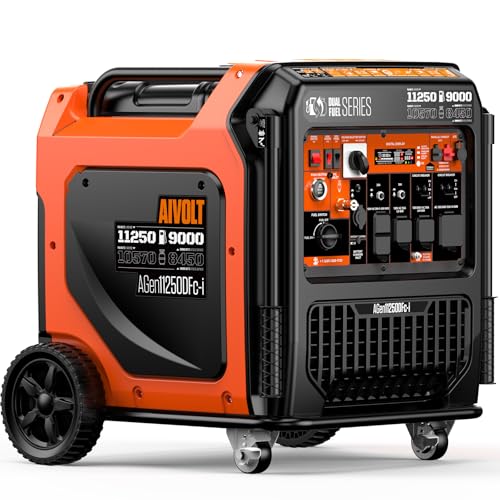
Compare the Best Generators for Food Trucks



How Much Power Does a Food Truck Really Need?
Before you look at generator specs, you need to look at what actually plugs into it. Food truck power planning fails when people guess instead of listing real equipment and how it behaves in the real world.
Most food truck loads fall into four groups.
- Refrigerators and freezers are always on. They don’t draw huge wattage while running, but every time the compressor starts, there’s a surge that can be two to three times higher than the running load. If your generator can’t handle that surge, you’ll see lights dim, voltage drop, or the compressor fail to start at all.
- Cooking equipment is where power demand spikes fast. Griddles, fryers, and induction cooktops draw heavy wattage and often cycle on and off. That cycling creates repeated surge events, not just a one-time startup hit. This is where undersized generators get exposed quickly.
- Beverage machines like espresso machines and blenders look harmless on paper, but espresso machines combine heating elements and pumps. When they heat and brew at the same time, they pull more power than many first-time owners expect.
- Support systems are easy to overlook but they matter. Lights, POS systems, exhaust fans, and small appliances all stack on top of your main load. Individually they’re minor. Together, they push a borderline generator into overload.
The key mistake beginners make is focusing only on running watts. What actually causes problems is surge watts. If your generator can’t absorb those short spikes cleanly, everything downstream suffers.
Recommended Generator Size by Food Truck Type
Choosing the right generator size for a food truck isn’t about chasing the biggest number on the box. It’s about matching real operating load, surge behavior, and how your kitchen actually runs during service.
1. Small Food Truck
These setups usually have lighter cooking loads and fewer simultaneous surges. Refrigeration, espresso machines, blenders, and lighting make up most of the draw.
For this type of truck, a 3,000 to 4,000W inverter generator is often enough.
Inverter units handle surge better, deliver cleaner power for electronics, and stay quiet enough for urban vending.
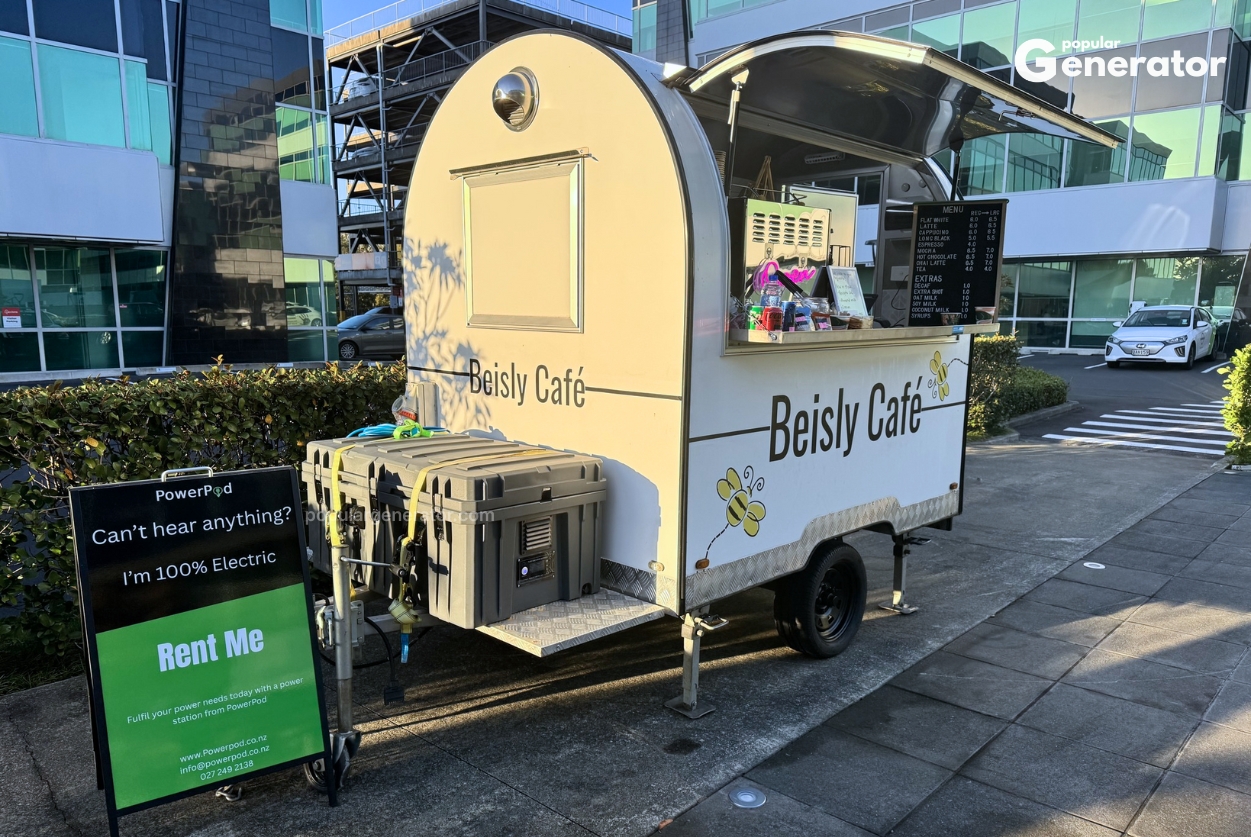
It’s not enough if you add a second refrigerator, run a high-powered espresso machine, or start stacking heat-based equipment. Once heating elements enter the picture, margins disappear fast.
2. Medium Food Truck
This is where power planning gets serious. You’re dealing with overlapping loads: refrigeration running nonstop, cooking equipment cycling, and prep equipment coming on throughout service.
In real-world use, these trucks typically need 5,000 to 7,000W to stay stable.
Anything less tends to struggle during peak service when multiple devices kick on at once.
An inverter generator still makes sense here. Even though it costs more upfront, the cleaner power, better surge handling, and quieter operation pay off quickly in fewer shutdowns and fewer equipment issues.
3. Large Food Truck or Full Kitchen Setup
Once you’re running a fryer, refrigerator, freezer, and multiple prep devices together, you’re firmly in commercial territory.
An 8,000 to 10,000W generator is the safe range for this kind of load.
That buffer matters. It keeps voltage stable, prevents nuisance shutdowns, and protects expensive kitchen equipment from long-term electrical stress.
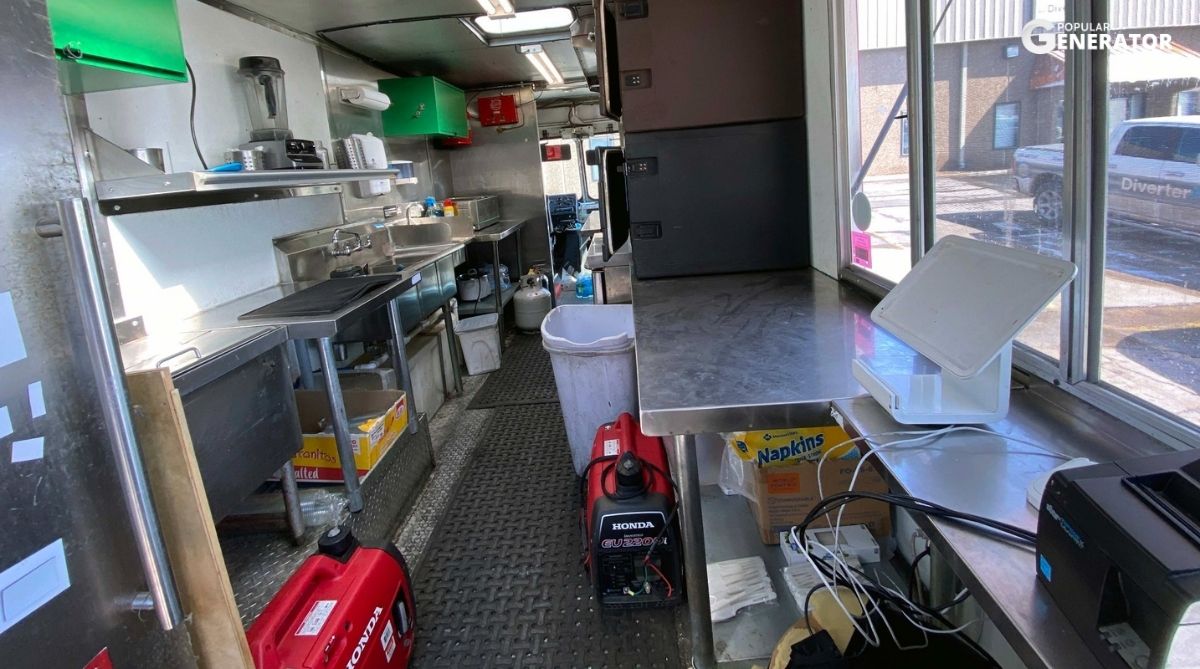
This is also where cheap generators become expensive mistakes. Low-quality units may claim high wattage, but under sustained load they overheat, sag voltage, and fail early. For a full kitchen food truck, cutting corners on the generator almost always costs more in the long run.
Generator Types That Actually Work for Food Trucks
The best generators for food trucks,providing reliable, quiet, and efficient power,are inverter generators (especially with parallel kits), quiet portable generators (often propane-powered), and built-in,, diesel-powered, or RV-style generators. Key considerations include noise levels (60 dBA or below), wattage capacity (7k–25k watts), and fuel efficiency.
- Inverter Generators: These are ideal for food trucks because they provide “clean” power that won’t harm sensitive, computer-controlled electronics. They are quiet, fuel-efficient, and can be connected in parallel (using two smaller generators to act as one large one) to increase power, making them highly portable.
- Quiet Portable Generators: These are a cost-effective,, traditional option for powering standard equipment. Many food trucks use portable generators that run on propane, as it allows for easy integration with existing cooking fuel systems and is generally cleaner.
- Built-in/Generator Compartment Generators: These are permanently installed in larger, purpose-built trucks. They offer high, consistent, power output and run on diesel or propane, providing the most reliable power for heavy, continuous loads.
Noise Levels, Runtime, and Daily Operating Cost for Food Trucks
For food truck operators, power isn’t just about wattage. Noise, fuel consumption, and how long a generator can realistically run in a workday directly affect whether you’re allowed to operate and whether the numbers still make sense at the end of the month.
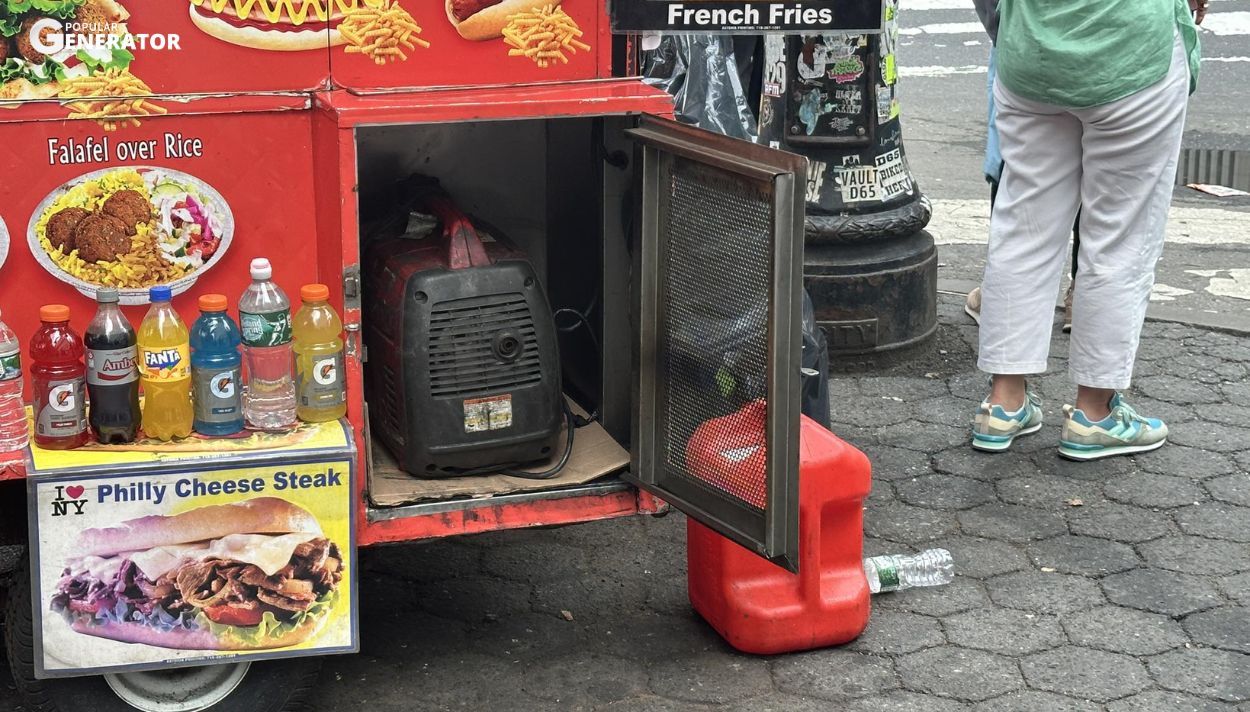
In many downtown areas, street fairs, and public events, generators are subject to noise limits, usually measured at a fixed distance from the unit. While the exact rules vary by city and event, anything approaching or exceeding 70 (dB) decibels is a clear warning sign. At that point, problems tend to escalate quickly:
- Around 60 – 65 dB: Generally acceptable in most urban and event settings. Comparable to normal conversation. This is where many inverter generators operate under moderate load.
- Around 66 – 70 dB: Borderline territory. You may be allowed to operate, but complaints become more likely, especially during long service hours or in tight spaces.
- Above 70 dB: High risk. Noise carries across the venue, draws attention from nearby vendors, and often triggers complaints from the public.
- Consistent noise over the limit: Even if technically allowed, sustained loud operation increases the chance that inspectors or event staff step in.
- Event-level enforcement: Many organizers enforce stricter limits than city codes. If you exceed their threshold, you can be shut down regardless of local regulations.
This is where the difference between generator types becomes obvious. Inverter generators are designed to run quieter and adjust engine speed based on load, which keeps noise levels more controlled in crowded environments. Open-frame generators, on the other hand, tend to stay loud and harsh, especially under continuous load. In a busy street setting or tight event layout, that noise travels fast and works against you.
Runtime and fuel use matter just as much.
A typical food truck service day runs around 8 hours, and your generator has to make it through that window without constant refueling or overheating. Smaller generators pushed near their limit burn fuel faster and often need refills during peak service, which is both inconvenient and risky.
Eco mode can help, but only in the right situations. When loads fluctuate, it lowers engine speed and saves fuel. When heavy cooking equipment stays on continuously, eco mode offers little benefit and may even cause sluggish response during surge events. That’s why fuel efficiency should always be evaluated based on how your truck actually operates during service, not brochure numbers.
Safety Rules When Running a Generator on a Food Truck
Running a generator on a food truck isn’t just about keeping the lights on. It’s about keeping people safe and staying compliant so you don’t get shut down mid-service.
- Placement and ventilation come first. A generator should always run outdoors in a well-ventilated area, ideally at least 20 feet away from the truck, tents, doors, and windows. Never operate a generator indoors or under the truck. Exhaust gases build up fast, and carbon monoxide doesn’t give warnings before it becomes dangerous.
- Carbon monoxide safety is non-negotiable. Install a working CO detector inside the food truck and treat it like a critical safety device, not an accessory. If it alarms, shut down immediately and address the source. Ignoring CO risks lives, not just inspections.
- Refueling must be done cold. Always turn the generator off and let it cool completely before adding fuel. Hot engines and gasoline vapors are a proven recipe for fires. Extra fuel should never be stored inside the food truck, even temporarily.
- Electrical safety protects both people and equipment. Use a properly grounded, three-prong system and GFCI protection where required. Inspect power cords regularly. If a cord is frayed, cracked, or pinched, replace it. Electrical shortcuts lead to shocks, voltage drop, and damaged appliances.
- Fire prevention should be planned, not assumed. Keep a fully charged Class K or ABC fire extinguisher within reach of the generator area. When something goes wrong, seconds matter.
Finally, don’t overload the generator. Running at or beyond capacity increases heat, fuel consumption, and failure risk. Check oil weekly and follow a basic maintenance schedule, including early oil and filter changes after the first 24 hours of operation. A generator that’s maintained properly is safer, quieter, and far more reliable during long service days.
FAQs About Food Truck Generators
1. What size generator do I need for a food truck?
Most food trucks require a generator between 5,000 and 10,000+ watts, with 7,000–8,000 watts being common for average, fully-equipped trucks. Small operations (coffee/carts) may only need 3,000–5,000 watts, while large trucks with heavy-duty electric appliances (AC, ovens, fryers) often need 10,000–15,000 watts or more.
- Small Operations (Coffee/Bev): 3,000 – 5,000 watts.
- Medium Operations (Standard Food): 5,000 – 7,500 watts.
- Large Operations (Full Cooking/AC): 8,000 – 12,000+ watts.
2. Are inverter generators worth it for food trucks?
Inverter generators are highly recommended for food trucks, offering superior fuel efficiency, significantly lower noise levels, and clean, stable power that protects sensitive electronics. While they have a higher upfront cost, they are often considered worth it for reducing operational costs, ensuring reliability, and avoiding noise complaints from customers.
3. How loud is too loud for a food truck generator?
A food truck generator is generally considered “too loud” if it exceeds 60-70 dBA, which can annoy customers and violate local noise ordinances.
While some, like inverters, operate quietly around 50-60 dB, standard generators often run at 70-80 dB, which is considered noisy and potentially harmful over long periods.
4. Can one generator run a fryer and refrigerator?
Yes, one generator can run a fryer and a refrigerator simultaneously, provided it has sufficient capacity to handle the high combined starting wattage. A generator with at least 3,000 to 4,000 running watts is generally required to manage the ~1,300–1,800+ watt load of a fryer plus the compressor surge of a refrigerator.
- Total Wattage: A standard electric fryer typically uses about 1,300–1,800 watts. A refrigerator runs on 100–800 watts but needs 1,200–2,400+ watts for startup surges.
- Startup Surge: The combined startup wattage (the moment both devices turn on) is the critical factor. A generator must handle the surge of the fridge compressor while the fryer is drawing high power.
- Recommended Size: A 3,500-watt to 4,500-watt generator is highly recommended to safely run both appliances without overloading.
- Running Together: If the generator is smaller (e.g., 2,000W), it may not handle both, especially if the fridge compressor kicks on while the fryer is heating.
It is advisable to check the specific wattage labels on both appliances to calculate the exact power requirement.
5. Is propane better than gas for food trucks?
Propane is generally considered better than, or superior to, natural gas for most food trucks because of its portability, higher heat output (2516BTUs per cubic foot vs. 1030 for natural gas), and independence from a fixed pipeline. It provides consistent, high-intensity heat for cooking, making it ideal for mobile, off-grid, or varied locations, whereas natural gas requires a stationary line.


Write Your Review
No reviews yet. Be the first to share your experience!