

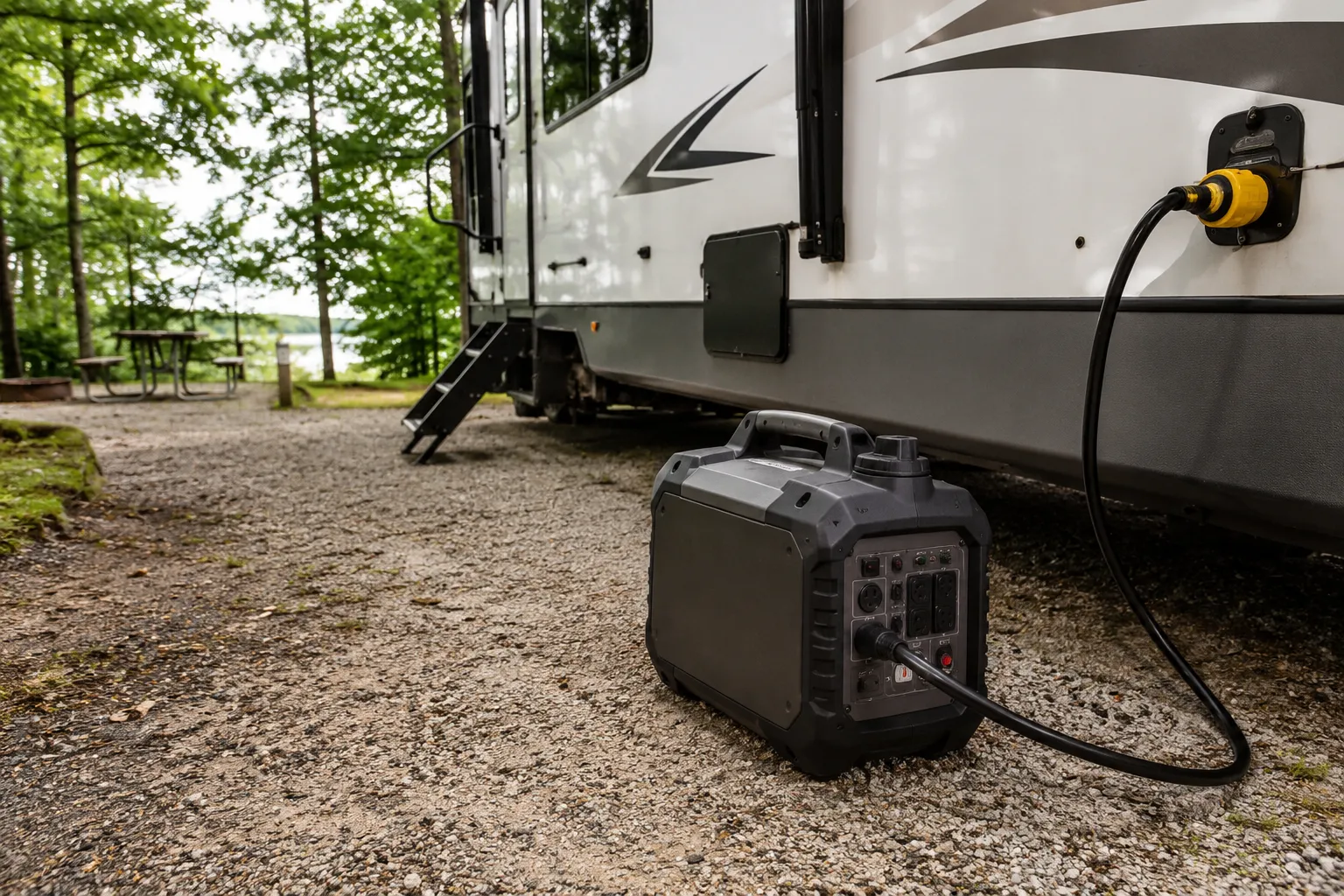
Whether you’re camping off-grid, traveling cross-country, or staying at an RV park, having the best generator for a 30 amp RV can make your trip much more comfortable.
A reliable RV generator gives you enough power to run essentials like your air conditioner, microwave, refrigerator, and electronics while still being quiet and portable enough for campground use.
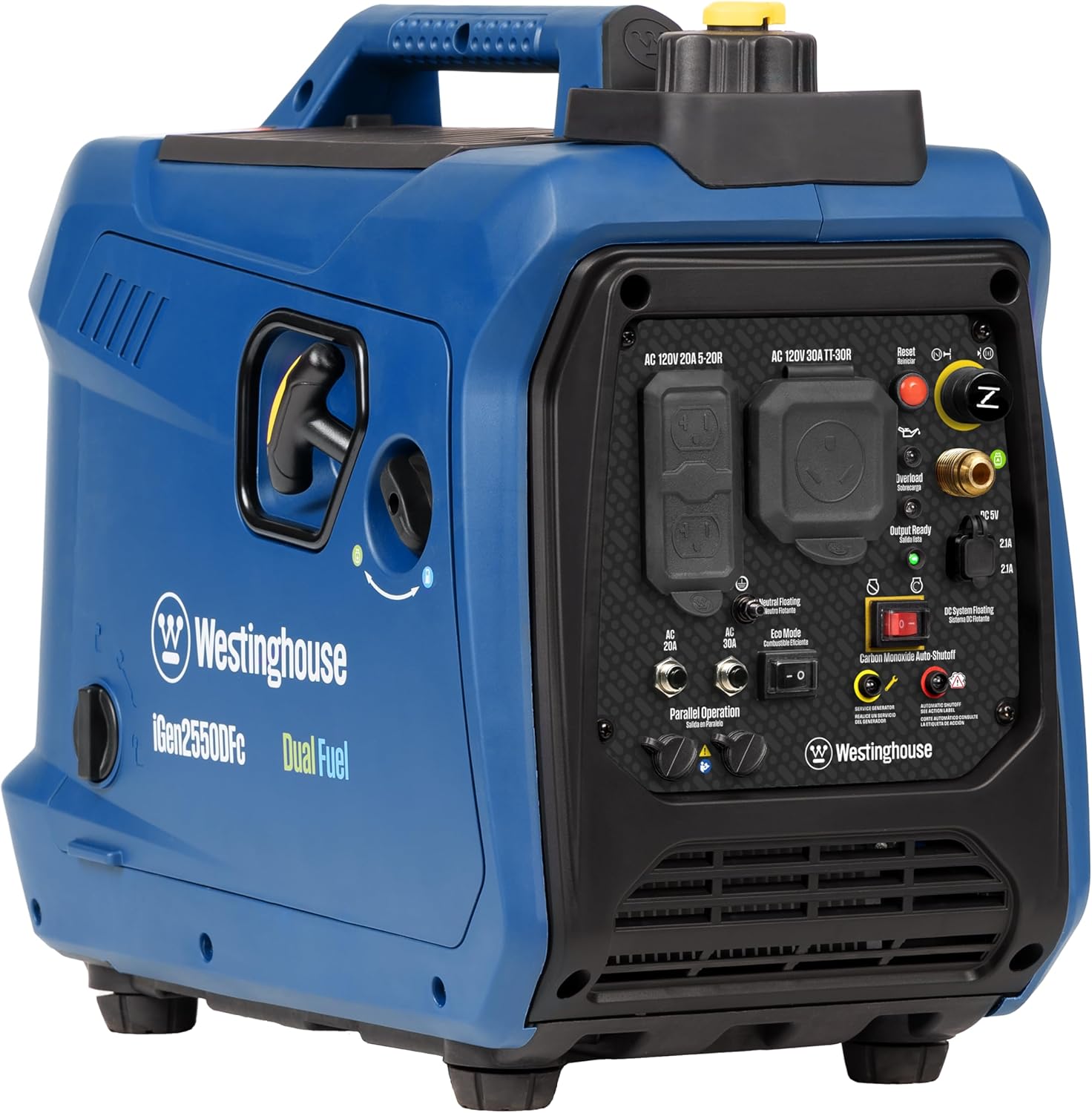


Some generators are better suited for RV use than others, especially when it comes to handling the power demands of a 30 amp setup. The ideal generator should provide enough wattage for everyday RV appliances while also offering features like quiet operation, fuel efficiency, RV-ready outlets, and stable inverter power for sensitive electronics.
Below are some of the best generators for 30 amp RVs, including quiet inverter models, dual-fuel options, and portable generators designed for reliable RV camping and travel.
Reviews: Best Generators for 30 Amp RV (Quick Picks)
If you want a quick way to compare your options, these three generators are strong choices for most 30 amp RV setups. Each one fits a different type of RV owner, whether you want the quietest premium option, the best value for the money, or the most convenient feature set.
| Generator | Best For | Starting / Running Watts | Key Highlight |
|---|---|---|---|
| Honda EU3200i | Best Overall | 3,200 / 2,600W | Quiet, smooth, and extremely reliable |
| Champion 4500-Watt Dual Fuel Inverter | Best Value | 4,500 / 3,500W gas; 4,250 / 3,150W propane | Dual-fuel power with RV-ready outlet |
| Westinghouse iGen4500 | Best Features | 4,500 / 3,700W | Remote start, LED display, and strong AC support |
Best Overall: Honda EU3200i
The Honda EU3200i is one of the best generators for 30 amp RV owners who care most about quiet operation, smooth performance, and long-term reliability. It produces 3,200 starting watts and 2,600 running watts, which is enough for many essential RV loads, especially if your RV has an AC soft-start installed.
This generator is a great fit if you want premium portable power without dealing with excessive noise or rough engine performance. It runs efficiently, sips fuel under lighter loads, and delivers clean inverter power for sensitive RV electronics.
Best Value: Champion 4500-Watt Dual Fuel Inverter
The Champion 4500-Watt Dual Fuel Inverter offers excellent value because it gives you strong power output, fuel flexibility, and RV-friendly features at a more approachable price. On gasoline, it delivers 4,500 starting watts and 3,500 running watts. On propane, it provides 4,250 starting watts and 3,150 running watts.
Its biggest advantage is convenience. You can run it on either gasoline or propane, and the built-in TT-30R RV-ready outlet makes it easy to connect directly to a 30 amp RV setup without needing a complicated adapter arrangement.
Best Features: Westinghouse iGen4500
The Westinghouse iGen4500 is a strong pick if you want more convenience and power for a 30 amp RV. It delivers 4,500 starting watts and 3,700 running watts, giving it enough output to handle heavier RV loads, including many 15,000 BTU air conditioners, without feeling underpowered.
What makes it stand out is the feature set. It includes remote start, a useful LED data center, and excellent fuel efficiency for longer camping trips. It is heavier than some smaller inverter generators, but the extra power and convenience make it a practical choice for RV owners who want a more capable setup.
What Size Generator Do You Need for a 30 Amp RV?
Choosing the right generator size for a 30 amp RV is important if you want enough power to run your essential appliances comfortably without overloading the generator.
A standard 30 amp RV operates on 120 volts, which gives it a maximum electrical capacity of:
30 amps × 120 volts = 3,600 watts
That means most RV owners should look for a generator rated somewhere between 3,000 and 4,000 watts, depending on the appliances they plan to run.
Why 3,500W to 4,500W Is the Sweet Spot
Even though a 30 amp RV technically maxes out at 3,600 watts, many experienced RV owners prefer generators with around 3,500 to 4,500 starting watts. This gives the generator extra headroom, especially when running high-demand appliances like an RV air conditioner.
Air conditioners are usually the biggest power challenge in a 30 amp RV because they require a large startup surge when the compressor first kicks on. A generator that’s too small may struggle to start the AC or constantly trip breakers under heavy loads.
Choosing a slightly larger generator also helps:
- Reduce strain on the engine
- Improve fuel efficiency under moderate loads
- Lower operating noise
- Prevent overload shutdowns
What Can a 30 Amp RV Generator Run?
A 30 amp RV generator can provide up to 3,600 watts of power, since a standard 30 amp RV operates on:
This is usually enough power to comfortably run one major appliance such as an RV air conditioner or microwave, along with several smaller devices at the same time. However, most 30 amp RV setups cannot run all high-power appliances simultaneously without overloading the generator.
High-Draw RV Appliances (1,000–1,800 Watts)
These appliances consume the most power in a 30 amp RV. In most cases, you should only run one major high-draw appliance at a time.
| Appliance | Typical Power Usage |
|---|---|
| 13,500 BTU RV Air Conditioner | 1,500–2,000W startup / 1,000–1,200W running |
| Microwave Oven | 1,000–1,500W |
| Space Heater | Around 1,500W |
| Hair Dryer | 1,200–1,800W |
The RV air conditioner is usually the biggest challenge because the compressor requires a large startup surge when turning on.
Moderate-Draw Appliances (400–1,000 Watts)
These appliances use a moderate amount of power and can usually run alongside smaller electronics if managed carefully.
| Appliance | Typical Power Usage |
|---|---|
| Coffee Maker | 600–1,200W |
| RV Refrigerator (AC Mode) | 400–600W startup / 150–400W running |
| Electric Water Heater | 1,000–1,400W |
Low-Draw RV Devices (50–300 Watts)
Low-power devices generally do not create major issues for a 30 amp RV generator and can often run together without problems.
| Device | Typical Power Usage |
|---|---|
| Converter / Battery Charger | 50–300W+ |
| LED TV & Laptop Chargers | 50–100W |
| Interior Lights & Water Pump | 50–100W |
Managing Power in a 30 Amp RV
Because your RV has a maximum limit of 3,600 watts, managing power usage becomes important, especially when using larger appliances.
For example, it’s common for a generator to overload if the air conditioner starts while the microwave or hair dryer is already running.
Here are a few ways RV owners reduce power strain:
Rotate High-Power Appliances
Try not to run multiple heavy-draw appliances at the same time. Many RV owners temporarily turn off the air conditioner or water heater when using appliances like:
- Microwave ovens
- Coffee makers
- Hair dryers
- Electric heaters
Use Propane Whenever Possible
Switching appliances like the RV refrigerator and water heater to propane mode can save a significant amount of electrical power and free up wattage for other devices.
Install an RV Soft Start
If your generator struggles to start the RV air conditioner, installing an AC soft start device can help. A soft start reduces the large startup surge from the air conditioner compressor, making it easier for smaller generators to handle the load while still powering other electronics at the same time.
Quiet Generator Considerations for RV Camping
Noise is an important factor when choosing a generator for RV camping, especially if you frequently stay at campgrounds, RV parks, or national parks with strict quiet-hour rules. A loud generator can easily disturb nearby campers and may even violate campground regulations.
For most RV camping situations, portable inverter generators are the best choice because they are significantly quieter than conventional generators. Inverter generators automatically adjust engine speed based on the amount of power being used, which helps reduce both noise and fuel consumption during lighter loads.
Recommended Noise Level for RV Camping
Most experienced RV campers recommend choosing a generator rated at:
- Under 60 decibels (dB) for campground-friendly operation
- Around 50–58 dB for the quietest RV experience
For comparison, this is roughly similar to the sound level of a normal conversation.
When comparing generators, always check the official dB rating measured at a quarter-load and from 23 feet (7 meters) away, since this is the standard measurement used by most manufacturers. Some generators may appear quiet on paper but become much louder under heavier loads.
FAQs About Generators for 30 Amp RVs
Do I need an RV-ready generator for a 30 amp RV?
Not necessarily, but an RV-ready generator makes setup much easier. These generators include a built-in TT-30R outlet, allowing you to plug your RV directly into the generator without needing additional adapters.
Can I use a dual-fuel generator for RV camping?
Yes, dual-fuel generators are very popular for RV camping because they can run on both gasoline and propane. Many RV owners prefer propane for camping since it burns cleaner and is easier to store for longer trips.
Why does my RV generator trip the breaker when the AC starts?
This usually happens because RV air conditioners require a large startup surge. If the generator cannot handle that sudden spike in power demand, the breaker may trip. Installing an RV soft start can significantly reduce the startup load.
Is remote start useful on an RV generator?
Remote start can be very convenient for RV camping, especially during hot or cold weather. It allows you to start the generator from inside the RV without going outside.
How long can a portable generator run during RV camping?
Runtime depends on the generator size, fuel tank capacity, and electrical load. Many inverter generators can run between 8 and 18 hours at lower loads using Eco Mode or similar fuel-saving features.


Write Your Review
No reviews yet. Be the first to share your experience!