

Choosing the best 30 amp RV generator is not just about chasing the biggest wattage number.
A 30 amp RV has very real electrical limits, and the wrong generator can lead to voltage drop, tripped breakers, or an air conditioner that refuses to start when you need it most.
In this guide, we break down what actually matters when powering a 30 amp RV, from real world power needs to noise limits at RV parks.
What “30 Amp RV” Actually Means in Real Life
A 30 Amp RV generator is a portable or built-in power source designed to supply 120 volts at up to 30 amps, which equals a theoretical maximum of about 3,600 watts.
This power is supplied through a standard TT-30 connection, the common three prong plug found on most travel trailers and smaller motorhomes. On paper, that number sounds straightforward. In real life, it often leads to confusion and costly buying mistakes.
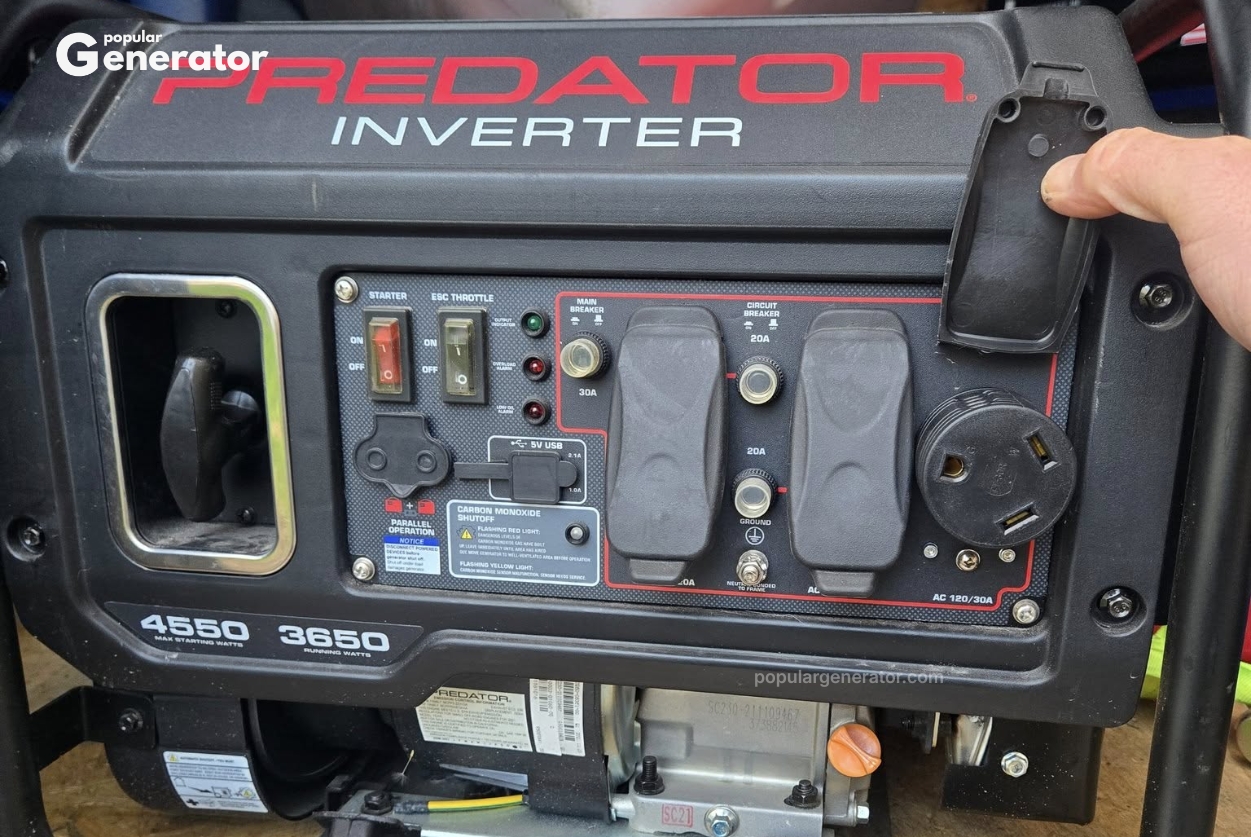
High draw appliances like air conditioners, microwaves, and refrigerators do not all run at full load at the same time. Some cycle on and off, others only run for short periods. Because of that, real world RV power demand is usually much lower than the maximum rating.
The 3,600-watt figure is the maximum available power, not what an RV draws all the time. In real use, RV appliances cycle on and off and rarely run at full load together.
Typical loads in a 30 amp RV include:
- 13,500 – 15,000 BTU air conditioner: ~1,400 – 1,600 watts running, higher at startup
- Microwave or coffee maker: ~900 – 1,000 watts (short-term use)
- Refrigerator: Low running draw, higher during compressor startup
- Battery charger, lights, fans, electronics: Relatively small loads
Because of this, most RVs operate well below the 3,600-watt ceiling during normal use.
This is why many RV owners successfully run their rigs on 3,000 to 3,500 watt generators, even though the system is technically rated for 3,600 watts. As long as loads are managed and high draw appliances are not stacked at the same time, that power range is usually enough for normal RV living.
It is also important not to confuse a 30 amp RV with a 50 amp RV system. A 30 amp RV uses a single 120 volt leg and tops out at around 3,600 watts. A 50 amp RV uses two 120 volt legs and can supply up to 12,000 watts. The difference in real world capability is massive, and generators that work well for 30 amp RVs are completely inadequate for most 50 amp setups.
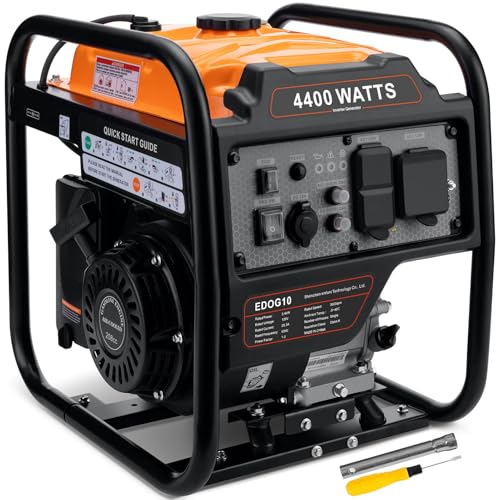
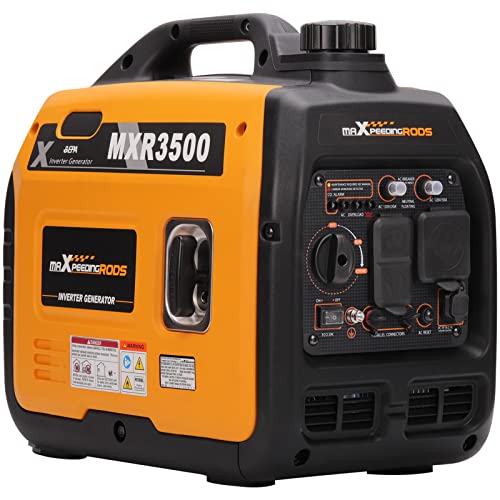
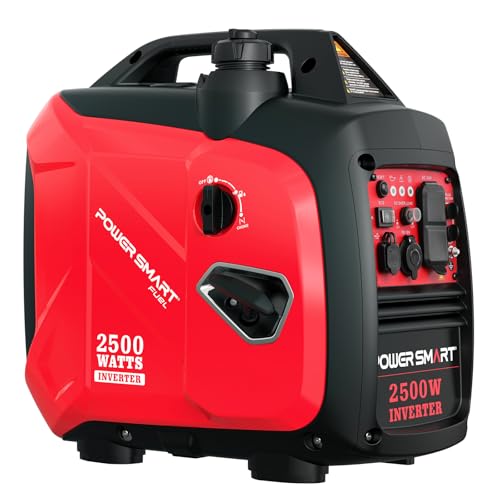
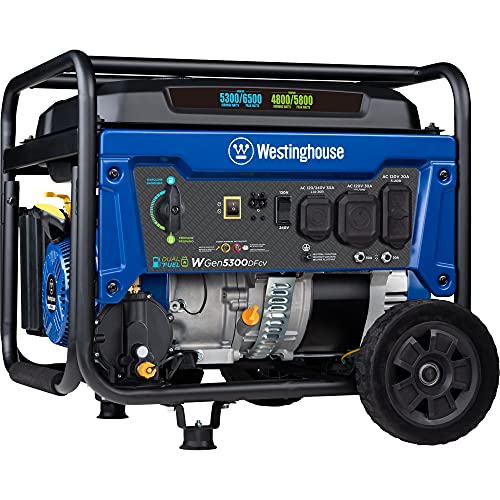
Best 30 Amp RV Generators (Real-World Reviews)





Difference Between a 30 Amp and a 50 Amp RV Generator?
The core difference between a 30-amp and 50-amp RV generator is total power capacity:
- 30-amp units provide 3,600 watts (single 120V leg) for smaller RVs,
- 50-amp units provide 12,000 watts (two 120V 50A legs) for larger rigs.
A 30-amp setup limits simultaneous appliance usage to avoid tripping breakers, whereas a 50-amp system allows running multiple air conditioners, microwaves, and, in some cases, residential appliances at once.
- 30 Amp Generator (e.g., ~3600W): Ideal for running one air conditioner, a refrigerator, and lights. Users must practice power management (e.g., turning off the AC to use a hair dryer).
- 50 Amp Generator (e.g., 5500W-12,000W): Suitable for running two 15,000 BTU air conditioners, a residential refrigerator, a microwave, and a television simultaneously.
Can a Generator Really Power a 30 Amp RV?
A generator can absolutely power a 30 amp RV when it is properly sized and designed for RV use.
In most real world setups, a generator with 3,000 to 3,600 watts of running power is what it takes to operate a 30 amp RV correctly. This range allows the RV to run essential systems like one air conditioner, a refrigerator, interior lights, and basic electronics at the same time.
A generator rated closer to 3,600 running watts delivers full 30 amp capability at 120 volts. This matches what you would get from a standard campground shore power connection, providing stable and uninterrupted power without constant load juggling.
Generators in the 3,000 to 3,200 watt range can still work well for many RVs, but they require more awareness. You may need to avoid overlapping high draw appliances, especially when the air conditioner is cycling on and off.
The key point is that running wattage matters more than peak wattage. A generator that can sustain its output over hours of use will perform far better than one that only hits high numbers for short bursts.
When sized correctly, a generator in this class can power a 30 amp RV safely and reliably, without stressing the generator or the RV’s electrical system.
Parallel Generators vs One Bigger Generator for a 30 Amp RV
Parallel generators are usually the better choice for most 30 amp RV owners, especially when portability, noise, and fuel efficiency matter.
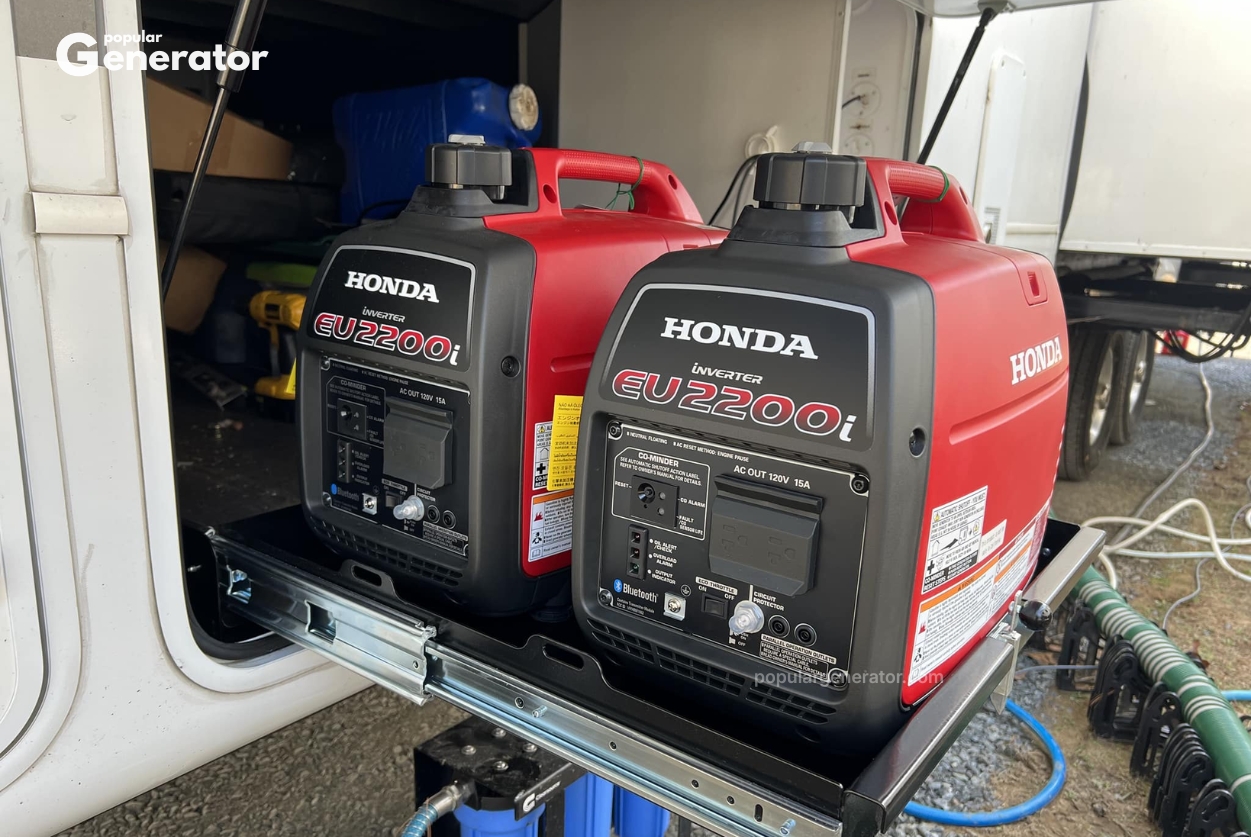
Why parallel generators often make more sense
A common parallel setup uses two inverter generators in the 2,000 to 2,500 watt range. Each unit typically weighs around 50 pounds, making them much easier to lift, store, and move compared to one large generator.
This setup gives you flexibility. You can run a single generator for light loads like battery charging, lights, and refrigeration. When the air conditioner is needed, you connect the second unit and get the extra power instantly.
Parallel inverter generators also tend to run quieter and more efficiently. At low to medium loads, one generator operates in a more efficient RPM range, using less fuel and producing less noise.
Where a single large generator falls short
A single generator rated around 4,000 watts or more can technically power a 30 amp RV, but it comes with trade offs.
These units are usually heavy, often weighing over 100 pounds. That makes transport and setup harder, especially for solo RV owners. They are also louder, which can be a problem in campgrounds with strict noise limits.
Fuel efficiency is another issue. Large generators running under light load still burn fuel at a higher rate, even when you do not need full power.
Which option is better for most RV owners
For most 30 amp RVs, parallel generators offer a better balance of power, portability, noise control, and fuel savings. A single large generator can work, but it is best suited for users who value simplicity over flexibility and do not mind the extra weight and noise.
If your goal is quiet operation, easier handling, and the ability to scale power based on demand, a parallel inverter setup is usually the smarter choice.
FAQs About 30 Amp RV Generators
Q: What size generator do I need for a 30 amp RV?
A 3,000 to 3,600-watt inverter generator is ideal for a 30-amp RV, allowing you to run the air conditioner, refrigerator, and lights simultaneously. While 30-amp systems max out at 3,600 watts (30A x 120V), a 3,000+ watt unit provides sufficient power for starting the AC. For maximum efficiency and noise control, a 3,000 – 3,500W inverter generator is recommended.
Q: Can I run my RV air conditioner on a generator?
Yes, you can run an RV air conditioner on a generator, typically requiring a unit with at least 3,000–4,000 watts for a single 13,500–15,000 BTU unit.
A soft starter device allows smaller (2,200W) generators to handle the high startup surge. Ensure other high-draw appliances are off, and avoid Eco mode.
Q: Do I need an inverter generator for my RV?
An inverter generator is not strictly required for an RV, but it is highly recommended if you boondock, camp off-grid, or need to run sensitive electronics (like laptops, TVs, and modern RV appliances) without damaging them. They are significantly quieter, more fuel-efficient, and produce “cleaner” power than traditional generators.
Q: How quiet does a generator need to be for RV parks?
Most RV parks expect generators to stay below 60 to 65 decibels at rated load. Generators louder than that are more likely to trigger complaints or violate campground quiet hour rules.


Write Your Review
No reviews yet. Be the first to share your experience!