



Best 2000 Watt Inverter Generators in 2026
- Honda EU2200i: 2200W peak / 1800W running, 48-57 dBA, CO-Minder sensor, 8.1-hour runtime, industry benchmark
- Yamaha EF2200iS: 2200W peak / 1800W running, 51.5 dBA, Smart Throttle, Yamaha’s most refined 2000W-class inverter
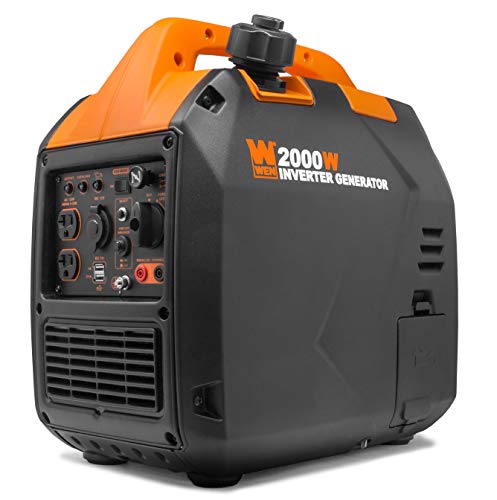
- WEN 56203i Super Quiet: 2000W peak / 1700W running, 51 dBA, under 0.3% THD, CARB compliant, 39 lbs
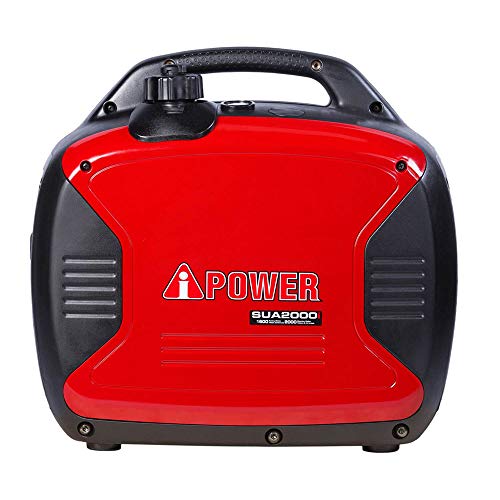
- A-iPower SUA2000i: 2000W peak / 1600W running, 58 dBA, CARB compliant, best value entry in the 2000W class
- Pulsar PG2200BiS Dual Fuel: 2200W peak / 1700W running on gas or propane, USB outlet, parallel capable, only dual fuel in this tier
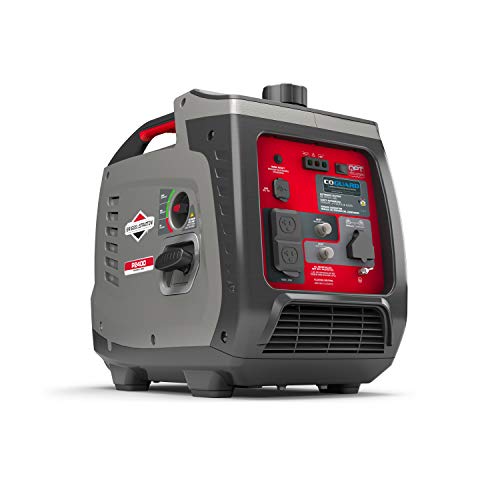
- Briggs & Stratton P2400: 2400W peak / 1800W running, CO Guard auto-shutoff, Quiet Power Technology, parallel capable
The 2000-watt inverter generator class is defined by a single practical requirement: you need quiet, clean power that is portable enough to carry by hand and capable enough to handle real appliance loads. At 2000W to 2200W peak output and 1600W to 1800W continuous, this class sits above power stations for actual appliance capability and below the 3000W to 5000W generators needed for RV air conditioning and heavy tools. The niche it fills covers camping, tailgating, outdoor events, sensitive electronics use, and home backup for a single critical circuit during an outage.
What separates inverter generators from conventional open-frame generators is the combination of noise and power quality. An open-frame 2000W generator runs at 65 to 75 decibels and produces power with high harmonic distortion that can damage laptop power supplies, DSLR battery chargers, and other sensitive electronics. The inverter generators in this roundup run at 48 to 58 decibels and produce pure sine wave output with less than 3 percent THD, the standard that electronics manufacturers use when certifying their equipment for generator use. The difference is not cosmetic. A CPAP machine used on a conventional generator may experience pressure inconsistencies. A camera battery charging on high-THD power may charge slowly or not at all. A laptop power supply may overheat. These issues are eliminated by the pure sine wave output that every unit in this roundup produces.
What to Look for in a 2000 Watt Inverter Generator
Continuous wattage versus peak wattage is the most important distinction to understand before buying. The “2000 watt” label typically refers to peak (starting surge) output. The continuous output, which is what the generator sustains under normal operation, is 1600W to 1800W depending on the unit. This matters because the loads you plan to run are rated at continuous wattage. A coffee maker rated at 1200W draws 1200W continuously. A refrigerator rated at 150W running and 700W starting surge will run on any unit in this class; the surge happens for less than a second. Check your planned loads against the continuous rating, not the peak wattage, and ensure the total falls below that number with some margin.
Noise level at operating distance varies significantly even within the 48 to 58 dBA range on this list. The Honda EU2200i at 48 dBA at quarter load is barely audible at conversational distance. The A-iPower SUA2000i at 58 dBA is noticeable but still quieter than most portable air conditioners. Campground courtesy rules typically cite a 60 dBA limit at the campsite boundary, which all six units meet. For RV parks with strict generator hours and close neighbor proximity, the difference between a 48 dBA and a 58 dBA unit matters. The Honda and Yamaha lead the field on noise, and the quieter operation becomes particularly relevant when the generator runs at light loads for extended periods.
Parallel capability allows two identical units to be connected to double the output to approximately 3600W to 4400W combined, sufficient to start a 13,500 BTU RV air conditioner. All six units in this roundup support parallel operation with a sold-separately parallel kit. The kits are brand-specific and not cross-compatible: a Honda parallel kit does not work with a Yamaha, and a Champion kit does not work with a WEN. If parallel RV AC capability is your long-term plan, factor in the cost of the parallel kit (typically $50 to $150) when comparing unit prices. For buyers whose primary use case requires parallel-capable RV power from the start, the 3500-watt inverter generators for RV guide covers single units that handle RV AC loads without a parallel setup.
CARB compliance is required for legal operation in California and several other states with strict emissions standards. CARB-compliant models are sold and shipped to all 50 states. Non-CARB-compliant models are restricted from sale in California and cannot be shipped there. Four of the six units in this roundup are CARB compliant. If you are in California or a CARB-standard state, verify compliance before purchasing. All CARB-compliant models also meet EPA standards. For a broader look at how 2000W generators compare to larger models across more use cases, the portable inverter generators guide covers the full range from 1000W to 7500W.
Reviews: Best 2000 Watt Inverter Generators
Honda EU2200i
The Honda EU2200i at 2200W peak and 1800W continuous is the most respected generator in the 2000W class by a wide margin, backed by Honda’s GX commercial engine lineage and a track record of reliable multi-thousand-hour operation. The 48 to 57 dBA noise range is the quietest in this roundup at equivalent loads, and the Eco-Throttle variable speed control reduces both fuel consumption and noise when the generator is lightly loaded. At quarter load (approximately 450W), the EU2200i produces approximately 48 dBA, which most people describe as noticeably quieter than a refrigerator hum at close range.
The CO-Minder carbon monoxide detection system monitors ambient CO levels and automatically shuts the engine down if concentration approaches the danger threshold. This is a meaningful safety feature for outdoor events and camping where generator placement relative to occupied areas is not always ideal. The EU2200i accepts up to 2200W of additional parallel-connected output through Honda’s parallel kit, and it is compatible with Honda’s EU2200i Companion unit for dedicated parallel configurations. The three-year residential warranty and Honda’s nationwide dealer network provide long-term ownership confidence that budget alternatives cannot match. Check on Amazon
Best for: Buyers who want the quietest operation, the most trusted engine reliability, and CO sensor protection with Honda’s nationwide service network backing their purchase.
Yamaha EF2200iS
The Yamaha EF2200iS is the closest direct competitor to the Honda EU2200i in the 2000W class, offering 2200W peak and 1800W continuous at 51.5 dBA with Yamaha’s Smart Throttle variable speed system. The Smart Throttle adjusts engine speed based on actual load demand, providing fuel efficiency and noise reduction comparable to Honda’s Eco-Throttle. Yamaha’s engineering attention to the EF2200iS is evident in its refinements over the EF2000iS line: improved sound insulation, a larger fuel tank for longer run time, and an updated control panel layout that places the most frequently accessed switches in more convenient positions.
The EF2200iS produces clean power with under 2.5% THD, sufficient for the most sensitive electronics in the 2000W class. Yamaha does not integrate a CO sensor in the standard EF2200iS, which is one differentiator from the Honda EU2200i and the Briggs & Stratton P2400. For buyers who prioritize Yamaha’s engine reputation and are not in a situation where CO sensor shutdown is critical, the EF2200iS delivers comparable output, noise level, and build quality to the Honda at a competitive price. The Yamaha parallel cable connects two EF2200iS units for up to 4400W combined output. Check on Amazon
“I tested the Yamaha side by side with the Honda at my campsite. Both ran at virtually the same volume. The Yamaha started on the first pull every time across a week of use and the fuel economy was identical. If Honda had not been the established standard, I think the Yamaha would get more attention than it does.”
Best for: Buyers who want Honda-class quietness and reliability from a Yamaha engine with competitive pricing and equivalent parallel capability.
WEN 56203i Super Quiet
The WEN 56203i produces 2000W peak and 1700W continuous at 51 dBA with a THD specification of under 0.3 percent at no load and under 1.2 percent at full load. The sub-1.2% full-load THD is the cleanest power output in this roundup and among the lowest available in any portable generator category. For applications where power quality is the primary specification, including professional audio production, video production with battery chargers, scientific instruments, and medical devices that specify low-THD power requirements, the WEN 56203i provides a meaningful technical advantage over units with higher THD ratings.
The fuel shutoff valve closes the fuel supply before the engine shuts down, allowing the carburetor to run dry on remaining fuel. This prevents the varnish and gum deposits that form in carburetors left with old fuel during seasonal storage, which is one of the most common causes of generator starting problems after a period of non-use. For seasonal users who store their generator for weeks or months between camping seasons, this feature pays for itself by avoiding carburetor cleaning service. CARB compliance makes the 56203i legal for operation in California. At 39 lbs, it ties for the lightest unit in this roundup. Check on Amazon
Best for: Electronics-sensitive applications requiring the lowest possible THD, seasonal users who want fuel shutoff protection against carburetor deposits during storage, and buyers prioritizing light carry weight.
A-iPower SUA2000i
The A-iPower SUA2000i produces 2000W peak and 1600W continuous at 58 dBA using a 79cc 4-cycle OHV engine. At 58 dBA it is the loudest unit in this roundup, though still significantly quieter than any conventional open-frame generator. The 1600W continuous output is slightly lower than the 1700W to 1800W of the premium units, which reduces maximum sustained appliance coverage but still handles the most common camping and outdoor use cases comfortably. A-iPower CARB certifies the SUA2000i for all 50 states including California.
The SUA2000i’s primary advantage is cost-to-output ratio. It delivers the core 2000W inverter capability at a price point well below the Honda and Yamaha options, with parallel capability included for buyers who want the option to scale to RV AC power later. For first-time inverter generator buyers who want to experience the quiet clean power of the category without the premium pricing, or for buyers who need a backup or secondary unit to pair with a primary Honda or Yamaha in parallel, the SUA2000i provides the essential 2000W inverter platform at the most accessible entry point in this roundup. Check on Amazon
Best for: Budget-conscious buyers who want the core 2000W inverter capability with CARB compliance and parallel option at the lowest entry point, or as a secondary parallel unit paired with a premium primary generator.
Pulsar PG2200BiS Dual Fuel
The Pulsar PG2200BiS runs on gasoline or propane, producing 2200W peak and 1700W continuous on gas and slightly less on propane. It is the only dual fuel unit in this roundup and one of the few dual fuel inverter generators available in the 2000W class from any manufacturer. A dedicated USB output charges phones and tablets directly without an AC adapter, which is a practical convenience for camping use where USB charging is more common than AC device use. Parallel capability with the sold-separately parallel kit allows two units to combine for up to 3400W output.
The practical case for the dual fuel capability is emergency preparedness. During regional power outages following hurricanes, ice storms, or other events, gasoline supplies deplete rapidly at remaining open gas stations. Propane, stored in 20-pound cylinders at hardware stores and home improvement retailers, is typically available longer than automotive-grade gasoline and does not degrade in storage the way gasoline does after 30 to 90 days. A dual fuel generator stored with a full propane cylinder is ready to operate even if the gasoline in its tank has gone stale. For buyers who also use propane for outdoor cooking and already maintain a propane supply, the PG2200BiS consolidates fuel management. Check on Amazon
“After a major storm, every gas station in a 20-mile radius was either closed or had lines around the block. I switched to propane on day two and ran the generator for four more days off my backup cylinders without leaving the house. Without that dual fuel option I would have been out of power on day one.”
Best for: Emergency preparedness buyers who want fuel flexibility during supply disruptions and RV or camping users who already maintain a propane supply for cooking and heating.
Briggs & Stratton P2400
The Briggs & Stratton P2400 produces 2400W peak and 1800W continuous with CO Guard carbon monoxide detection, Quiet Power Technology, and a parallel capability that allows two units to combine for up to 3600W. The CO Guard system automatically shuts down the engine when CO concentration in the surrounding air reaches an unsafe level, matching the Honda EU2200i’s CO-Minder functionality. The P2400 exceeds the 2000W class slightly at 2400W peak, which provides additional starting surge headroom for appliances with high startup requirements such as window AC units and refrigerator compressors.
Briggs & Stratton engines are built and serviced through one of the most extensive North American dealer networks in the outdoor power equipment industry, with thousands of authorized service locations. For buyers in rural areas or smaller markets where Honda and Yamaha dealer service is not readily accessible, the Briggs & Stratton service network often provides more local options. The P2400’s CO Guard feature and higher peak output make it the strongest choice in this roundup for home emergency backup use where both safety monitoring and maximum surge capacity matter. For whole-home emergency backup that exceeds the 2000W class, the small inverter generators guide covers parallel configurations and the quiet portable generators guide covers larger output options with similar noise focus. Check on Amazon
Best for: Home emergency backup buyers who want CO Guard safety monitoring with higher 2400W peak surge headroom and access to Briggs & Stratton’s extensive North American service network.
Frequently Asked Questions
Is a 2000 watt inverter generator enough for camping?
For most camping use cases, yes. A 2000W inverter generator comfortably powers the combination of loads typical at a campsite: a medium-size camping cooler or 12V refrigerator (40W to 80W), LED string lights (30W to 60W), phone and device charging (20W to 60W), a small box fan (25W to 50W), and a coffee maker in the morning (900W to 1200W briefly). The only common camping appliance that approaches the capacity limit of a 2000W unit is a small window AC unit (typically 900W to 1200W running), which a 2000W unit can run on its own but leaves minimal headroom for other loads. Campground rules vary on generator hours; most permit operation from 8 AM to 10 PM, and the quiet operation of these inverter generators keeps neighbor relations manageable within those hours.
How long does a 2000W inverter generator run on a tank of gas?
At 25 percent load (approximately 450W of actual draw, typical for device charging plus lighting), most 2000W inverter generators run 8 to 12 hours per tank. The Honda EU2200i is rated at 8.1 hours, the Westinghouse iGen2200 at 12 hours, and others fall between those figures. At 50 percent load (approximately 900W, more typical of mixed-use camping with a cooler and small appliance), runtime drops to approximately 4 to 6 hours per tank. The variable speed throttle in all inverter generators is the reason for this efficiency: the engine runs slower at lighter loads, consuming less fuel and producing less noise. A conventional open-frame 2000W generator running at fixed speed would consume significantly more fuel for the same load.
Final Verdict
The Honda EU2200i remains the top recommendation for buyers who prioritize quietness, CO sensor protection, and long-term engine reliability in the 2000W class. The Yamaha EF2200iS matches Honda on nearly every specification and is the right choice for buyers who want Honda-class performance at a potentially better price point. The WEN 56203i leads on power quality with its sub-1.2% THD and is the best choice for sensitive electronics applications. The Pulsar PG2200BiS stands alone as the dual fuel option for emergency preparedness and propane-equipped RV users.
Any unit in this roundup represents a significant upgrade over a conventional open-frame generator for use cases where noise, weight, and clean power matter. The 2000W class is the most competitive segment of the inverter generator market precisely because it hits the sweet spot between sufficient output for real appliance loads and portable weight that makes it genuinely usable rather than just technically portable.





Write Your Review
No reviews yet. Be the first to share your experience!