



Best Small Inverter Generators in 2026
- Honda EU2200i: 2200W peak / 1800W running, 48-57 dBA, 47.4 lbs, best-in-class runtime and reliability
- Westinghouse iGen2200c: 2200W peak / 1800W running, 52 dBA, CO sensor with auto-shutoff, 12-hour runtime at 25% load
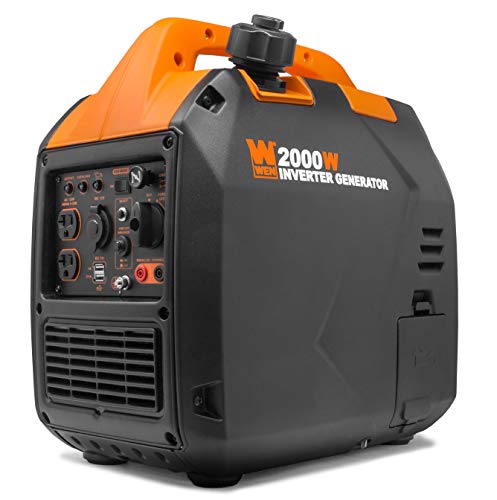
- WEN 56203i Super Quiet: 2000W peak / 1700W running, 51 dBA, CARB compliant, under 0.3% THD, ultralight at 39 lbs
- Champion 100692: 2000W peak / 1700W running, 53 dBA, 39 lbs, parallel ready, one of the lightest 2000W units available
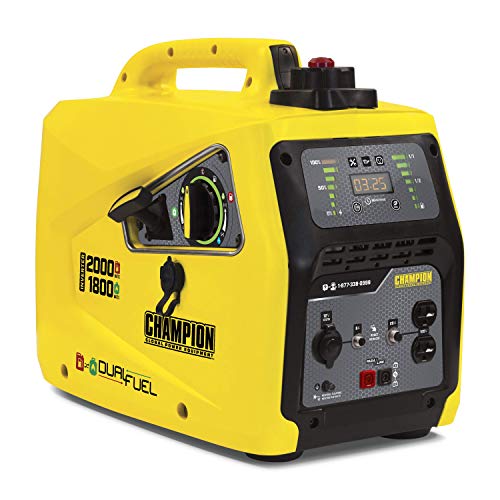
- Champion 100402 Dual Fuel: 2000W peak / 1700W running on gas or propane, parallel ready, only dual fuel option in the 2000W class
- Generac GP2200i: 2200W peak / 1700W running, 52 dBA, parallel capable, Generac’s compact entry into the small inverter class
A small inverter generator sits in one of the most useful power niches available: quiet enough for campground use, light enough to carry by hand, and clean enough to run laptops, camera battery chargers, CPAP machines, and other electronics that older conventional generators would damage. The typical small inverter generator weighs 35 to 50 lbs, produces 1700W to 2200W of continuous power, runs at 50 to 58 decibels at a quarter load (roughly the volume of a normal conversation), and delivers pure sine wave output with less than 3 percent total harmonic distortion.
The six generators in this roundup all fall in the 2000W to 2200W peak output class, which is the most competitive and most popular tier in the small inverter category. This output range covers the most common portable power needs: a 13,500 BTU RV air conditioner draws 1500W running and 3000W at startup, which typically requires two parallel-connected 2200W units. As a standalone unit, a single 2200W inverter handles a portable AC window unit, a full coffee maker, a refrigerator, or a combination of smaller electronics simultaneously. All six units here are parallel-capable, meaning two identical units can be connected together to double the available output when needed.
What to Look for in a Small Inverter Generator
Output at rated load versus peak output is the most important spec to read carefully. A generator marketed as “2000 watts” typically means 2000W peak (starting surge) and 1600W to 1700W continuous (running). The continuous wattage is what matters for sustained loads. A 1500W window air conditioner running at continuous draw requires a unit with at least 1700W of continuous output, not just 2000W peak. All six units in this roundup produce 1700W to 1800W continuous, which covers the full range of typical small inverter generator use cases.
Total harmonic distortion (THD) below 3 percent is the threshold for electronics safety. Standard open-frame generators produce dirty power with THD above 5 percent and often above 10 percent, which can cause data corruption, reduced battery life, and hardware damage in laptops, tablets, and medical devices. Every inverter generator produces cleaner power than any conventional generator, but the specific THD rating matters for the most sensitive equipment. The WEN 56203i at under 0.3 percent THD and the Honda EU2200i at under 2.5 percent represent the cleanest output on this list. For CPAP machines, camera chargers, and high-end audio equipment, these low THD ratings provide a meaningful safety margin.
Noise level in practice depends on load. Manufacturers measure dBA at 23 feet at quarter load, which produces the lowest numbers. At full load, the same unit may run 5 to 8 decibels louder. For campground use where common courtesy limits generator noise, the quarter-load rating at 48 to 52 dBA is relevant because most campground generator use involves light loads for device charging and lighting. At full load powering a large appliance, the practical noise level increases to 55 to 60 dBA. All six units on this list operate significantly below the 65 dBA threshold that distinguishes inverter generators from open-frame conventional generators. For a comparison of how small inverter generators compare to larger models, the portable inverter generators guide covers the full output spectrum from 1000W to 7500W.
Parallel capability allows two identical units to be connected through a parallel kit, combining their output to power loads neither could handle alone. Most campground RVs with a 13,500 BTU air conditioner need approximately 3000W to start the compressor. A single 2200W inverter cannot handle that surge. Two parallel 2200W units provide 4400W combined, which starts and runs the RV AC without issue. Parallel kits are sold separately for most units and are brand-specific. The Honda parallel kit, Champion parallel cable, and Generac parallel kit are not cross-compatible. If parallel operation for RV AC is a priority, confirm that the parallel kit is available and affordable before purchasing. The inverter generators for RV guide covers parallel setup and RV-specific output requirements in detail.
Reviews: Best Small Inverter Generators
Honda EU2200i
The Honda EU2200i is the benchmark small inverter generator that all others are measured against. At 2200W peak and 1800W continuous, it runs at 48 to 57 dBA depending on load, making it the quietest unit on this list at light loads. The Eco-Throttle system automatically adjusts engine speed to match the load, extending run time to 8.1 hours at quarter load and reducing fuel consumption when the generator is lightly loaded. Honda’s reputation for engine longevity is well-established in the generator market, and the EU2200i’s GX series engine has a track record of reliable operation over thousands of hours.
The EU2200i carries Honda’s CO-Minder carbon monoxide detection system, which shuts the engine down if CO concentration in the surrounding air reaches unsafe levels. This is a meaningful safety feature for camping and outdoor event use where the generator may be positioned closer to occupied spaces than ideal. The CARB-compliant engine also makes the EU2200i legal to sell and operate in California, which not all competing units are. For users who plan to run sensitive electronics including laptops, audio equipment, or medical devices, the EU2200i’s sub-2.5% THD rating provides a reliable safety margin. Check on Amazon
Best for: Buyers who prioritize engine longevity, quietest operation at light loads, and are willing to pay the Honda premium for the most trusted name in small inverter generators.
Westinghouse iGen2200c
The Westinghouse iGen2200c offers 2200W peak and 1800W continuous output with a CO sensor and automatic shutdown, matching the Honda EU2200i on the carbon monoxide safety feature at a significantly lower cost. The 52 dBA noise level at quarter load is 4 dB higher than the Honda, a difference that is barely perceptible in normal use. The standout spec for the iGen2200c is runtime: up to 12 hours at 25% load on a single tank of gas, which is the longest runtime in the 2200W class and reduces the number of refueling stops on camping trips or extended outdoor events.
The iGen2200c is parallel-capable with a sold-separately Westinghouse parallel kit that connects two units to produce up to 3600W combined, sufficient to start and run most 13,500 BTU RV air conditioners. The three-year warranty is one of the longer coverage periods in this class, and Westinghouse maintains a network of service centers in most major markets. For buyers who want a CO sensor and auto-shutdown alongside the longest runtime in the class without the Honda price premium, the iGen2200c represents the strongest value argument in the 2200W tier. Check on Amazon
“I camped for a week at a remote site and only refueled three times total. The eco-mode runs incredibly efficiently and the CO sensor gave me peace of mind with kids in the tent nearby. The Honda was twice the cost and I honestly couldn’t justify the difference for casual camping use.”
Best for: Campers and RV owners who want CO sensor protection, 12-hour runtime, and solid parallel capability at a price that undercuts Honda by a meaningful margin.
WEN 56203i Super Quiet
The WEN 56203i Super Quiet produces 2000W peak and 1700W continuous at 51 dBA with a THD rating below 0.3 percent at no load and below 1.2 percent at full load. The sub-1.2% full-load THD is the cleanest output in this roundup and among the lowest available in any portable generator class, making the 56203i the best choice for sensitive professional audio equipment, high-end camera battery chargers, and lab or medical instruments where power quality cannot be compromised. The ultralight 39-lb weight makes it the most portable unit on the list for users who regularly carry the generator from storage to deployment by hand.
The fuel shutoff feature closes the fuel valve before the engine runs out of fuel, allowing the carburetor to run dry on the remaining fuel in the float bowl. This prevents the varnish deposits that form when old fuel sits in a carburetor, which is a common cause of hard starting in generators that are stored between seasonal uses. For RV owners and campers who store their generator for weeks or months between trips, the fuel shutoff is a practical maintenance advantage that reduces service needs. CARB compliance makes the 56203i legal for use in California. Check on Amazon
Best for: Users with sensitive electronics requiring the lowest possible THD, buyers who prioritize light carry weight, and anyone storing the generator seasonally who wants the fuel shutoff maintenance advantage.
Champion 100692 Ultralight
The Champion 100692 is one of the lightest 2000W inverter generators available at 39 lbs, matching the WEN 56203i at the low end of the weight range for this output class. The 53 dBA noise level at quarter load is comparable to the rest of the field, and the 79cc engine produces 2000W peak and 1700W continuous. Champion’s parallel capability uses a sold-separately parallel kit that can connect two 100692 units for up to 3400W combined output. The economy mode extends run time at light loads, and Champion rates the unit at approximately 11.5 hours of run time at 25% load on a full tank.
Champion backs the 100692 with a 3-year limited warranty and provides free access to their technical service team by phone, which is a practical advantage for buyers who may need troubleshooting support. The Champion brand is widely available through major retailers, and parts and service are accessible in most markets. For buyers who want a lightweight, parallel-ready 2000W inverter from a brand with broad retail availability and accessible warranty service, the 100692 is the straightforward choice at the mid-tier price point between the Honda premium and the WEN value tier. Check on Amazon
Best for: Buyers who want lightweight parallel-ready performance with accessible brand warranty support and broad retail availability at a mid-tier price.
Champion 100402 Dual Fuel
The Champion 100402 is the only dual fuel unit in this roundup, capable of running on either gasoline or propane. On gasoline it produces 2000W peak and 1700W continuous; on propane output drops slightly to 1875W peak and 1550W continuous due to propane’s lower energy density per volume. The dual fuel capability matters in emergency use scenarios where gasoline supplies may be depleted during a regional power outage while 20-pound propane cylinders remain available at hardware stores, and in long-term storage situations where propane does not degrade like old gasoline that sits in a tank for months.
For RV users who already carry a propane system for cooking and heating, the ability to run the generator from the same propane supply eliminates a separate fuel type to manage. A 20-pound propane cylinder holds approximately 4.7 gallons of propane equivalent and runs the 100402 for approximately 5 to 6 hours at half load, comparable to a gasoline run. The propane startup is cleaner and requires no choke management in cold weather, which is a practical advantage for campsite use in shoulder-season temperatures. For RV-specific generator considerations including dual fuel options at higher output levels, the 3500-watt inverter generators for RV guide covers the next output tier. Check on Amazon
“I used this during a hurricane when gas stations were all out of fuel for three days. The propane from my BBQ grill kept it running the whole time. That flexibility is worth everything when everyone else’s gas generators are sitting dead.”
Best for: Emergency preparedness buyers and RV owners with existing propane systems who want the fuel flexibility to run on either gasoline or propane depending on what is available.
Generac GP2200i
The Generac GP2200i produces 2200W peak and 1700W continuous at 52 dBA, fitting squarely in the performance range of the class. Generac positions the GP2200i as their compact consumer inverter entry, backed by Generac’s extensive authorized service center network, which is one of the largest in North America. For buyers who want the option to have their generator serviced by a local authorized dealer rather than shipping it to a manufacturer service center, Generac’s dealer network is a practical advantage over brands with limited retail service presence.
The GP2200i’s parallel capability pairs with Generac’s 7118 parallel kit to connect two units for up to 4400W combined output. The combination of two parallel GP2200i units is a cost-effective path to RV air conditioner power for buyers who prefer to start with one unit and add a second later. The economy mode adjusts engine speed to match the load, and Generac rates run time at approximately 10.75 hours at 25% load. For whole-home emergency backup needs that exceed the small inverter class, the 5000-watt inverter generators guide covers the higher-output options including larger Generac models. Check on Amazon
Best for: Buyers who prioritize access to local authorized service and the option to scale to parallel operation later through Generac’s established dealer network.
Frequently Asked Questions
What can a 2000W inverter generator run?
A 2000W inverter generator running at 1700W continuous can power most portable electronics and moderate appliances simultaneously. Typical loads: a laptop (65W), LED TV (80W), CPAP machine (40W), LED lighting (60W), phone chargers (30W combined), and a small fan (50W) total approximately 325W, leaving substantial headroom. A single 1200W coffee maker draws close to the continuous rating on its own. A window AC unit (typically 500W to 1200W running) is feasible for most small units. A central air conditioning system (1500W to 2500W running) is not feasible from a single 2000W unit. For exact compatibility, check the rated running wattage on the appliance nameplate and ensure it falls within the generator’s continuous output, then add 20 percent margin for startup surges.
Can a small inverter generator run a refrigerator?
Yes. A standard household refrigerator draws 100W to 200W running and 600W to 800W at startup surge when the compressor kicks on. A 2000W inverter generator handles this comfortably with headroom remaining for other loads. A large side-by-side refrigerator may draw up to 200W running and 1200W at startup, which is still within the capacity of a 2000W unit. The clean pure sine wave output of an inverter generator is also ideal for refrigerator compressors, which can be sensitive to power quality. For emergency home backup scenarios where a refrigerator is the critical load, a 2000W inverter generator is a practical and quiet solution that can run indoors in a garage with adequate ventilation better than a loud conventional generator.
Final Verdict
The Honda EU2200i is the benchmark recommendation for buyers who want the quietest operation at light loads, the most proven engine longevity, and CO sensor protection. For buyers who prioritize value and runtime over the Honda premium, the Westinghouse iGen2200c delivers identical output and CO sensor protection with 12 hours of runtime at a lower cost. The WEN 56203i is the top pick for electronics-sensitive applications where THD below 1.2 percent at full load is the deciding factor. The Champion 100402 Dual Fuel stands alone in its class as the only dual fuel small inverter generator and is the right choice for emergency preparedness buyers and RV owners with existing propane systems.
Any of the six units here will run quieter, cleaner, and more fuel-efficiently than a conventional open-frame generator of equivalent or higher wattage. The pure sine wave output is the characteristic that makes this class appropriate for modern electronics, and all six units deliver it. The differences between them come down to brand preference, noise priority, fuel flexibility, and budget, not fundamental output capability.





Write Your Review
No reviews yet. Be the first to share your experience!