




Best Dual Fuel Electric Start Generators in 2026
- Westinghouse WGen3600DF: 4650W peak / 3600W running, remote electric start with auto choke, RV Ready 30A outlet, compact entry-level dual fuel
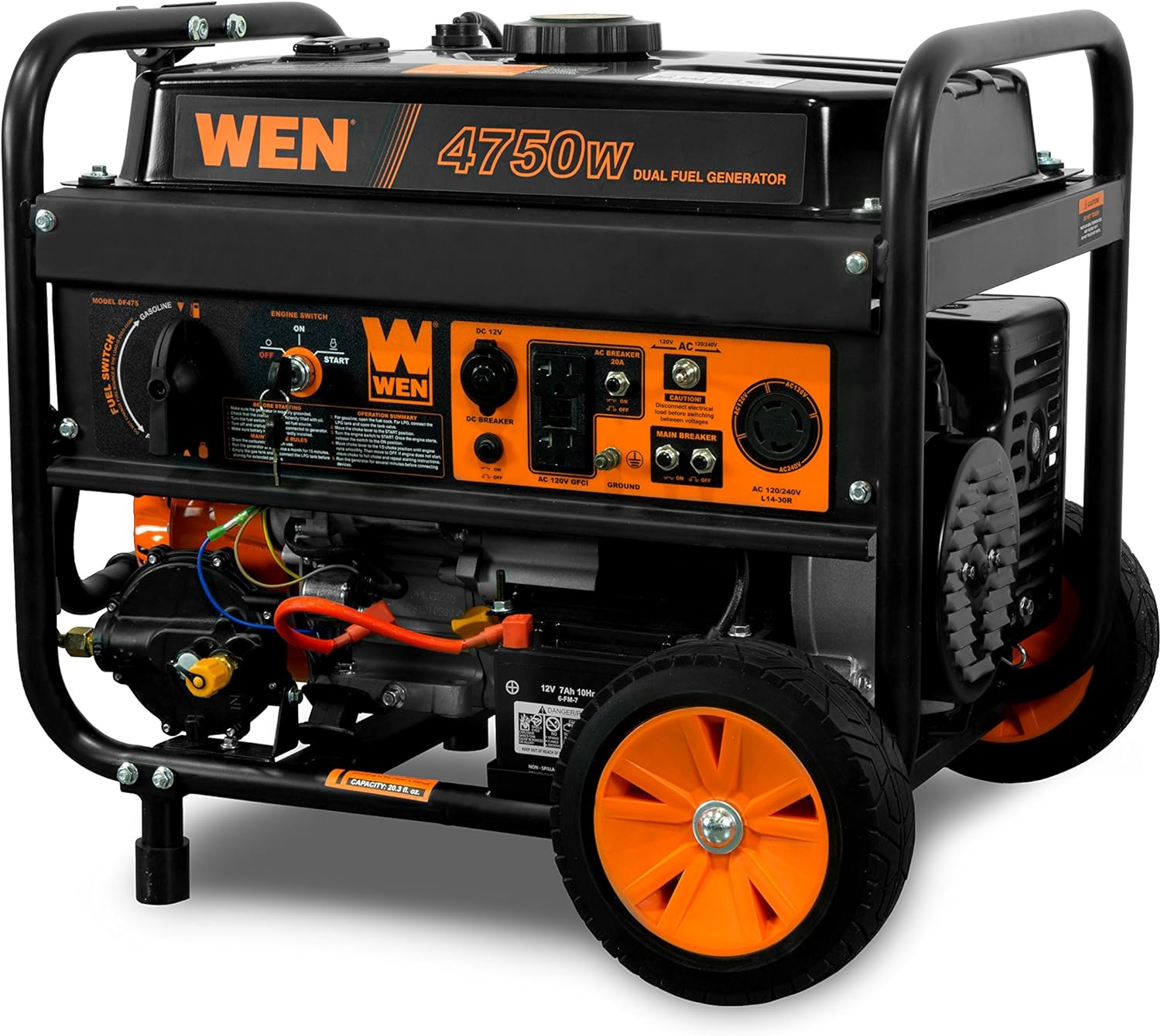
- WEN DF475T: 4750W peak / 3800W running, 120V/240V output, electric start, CARB compliant, transfer-switch-ready dual fuel
- Champion 9375W/7500W Dual Fuel CO Shield: 9375W peak / 7500W running, electric start, CO Shield auto-shutoff, 10-hour runtime at 50% load
- Westinghouse WGen7500DF: 9500W peak / 7500W running, remote key fob electric start, transfer switch outlet, 11-hour runtime on gas
- DuroMax XP12000EH: 12000W peak / 9500W running, electric start, whole-home capable, transfer switch ready, MX2 technology for full power on both 120V and 240V
- DuroMax XP13000EH: 13000W peak / 10500W running, electric start, maximum capacity dual fuel for large homes and commercial applications
A dual fuel generator with electric start combines two practical advantages that make it the most convenient generator for emergency home backup: the ability to run on either gasoline or propane depending on what is available, and the ability to start the engine at the press of a button rather than pulling a recoil cord. These two features address the two most common complaints about conventional generators during real emergencies. Fuel supply runs out or degrades, and pulling a recoil start on a cold engine in January when the power is already out is physically demanding. Dual fuel eliminates the first problem; electric start eliminates the second.
The six generators in this roundup cover a wattage range from 3600W running to 10500W running, addressing the full spectrum of home backup needs from partial critical circuit coverage to large whole-home operation. All six are conventional open-frame portable generators rather than inverter generators, which means they run at higher noise levels but also provide the high wattage output and sustained runtime that open-frame engines deliver at lower per-watt cost than inverter designs. All include both electric start and recoil pull-start backup, ensuring the generator can be started even if the battery is depleted.
What to Look for in a Dual Fuel Electric Start Generator
Running wattage versus peak wattage determines what loads you can sustain. Peak wattage is the maximum output for approximately 30 seconds to handle startup surges from motors and compressors. Running wattage is the sustained continuous output. A central air conditioner with a 3500W running draw requires a generator with at least 3500W running output, plus headroom for the startup surge (typically 2 to 3 times the running wattage for the compressor’s first second of operation). Plan your load around running wattage with peak wattage providing the startup margin. To calculate your required generator size, add all running wattages of loads you want to run simultaneously, then ensure the peak wattage covers the highest single startup surge in that list.
Propane run time per pound of fuel is shorter than gasoline per gallon, but propane does not degrade in storage. Gasoline stored in a generator’s tank or a fuel can begins to oxidize and degrade in 30 to 90 days without a fuel stabilizer, eventually causing starting problems and carburetor damage. Propane in a sealed cylinder stores indefinitely without chemical degradation. For emergency backup generators that may sit unused for months between events, this storage advantage is significant: the generator is ready to start on propane regardless of when the emergency occurs, without the need to rotate fresh gasoline through the tank. For regions where propane infrastructure is established (rural areas with existing propane heating and cooking systems), dual fuel also simplifies long-term fuel supply planning for extended multi-day outages.
Transfer switch compatibility is the feature that determines how easily a generator connects to your home’s electrical system. A generator with a 30A L14-30R outlet connects to a manual transfer switch, allowing specific circuits in the home to be powered without running extension cords to individual appliances. A generator with a remote electric start additionally allows the engine to be started from inside the house before venturing outside in bad weather. For whole-home backup with a permanently installed generator inlet, the transfer switch outlet on several units in this roundup is the connection point that makes that installation possible. The whole house generators guide covers permanently installed standby options that include automatic transfer switches.
Electric start battery maintenance is a practical consideration for a generator used infrequently. The 12V lead-acid battery that powers the electric starter self-discharges over several weeks of storage. A generator stored for three to six months without being started may have a depleted battery when you need it most. Most dual fuel electric start generators include both electric and recoil start as backup. To keep the electric start ready, either connect a battery tender to the generator’s charging circuit during storage, or run the generator for 30 minutes every two to three months to keep the battery charged. For comparison with generators that run on a single fuel type, the dual fuel generators guide covers models across fuel and wattage categories.
Reviews: Best Dual Fuel Electric Start Generators
Westinghouse WGen3600DF
The Westinghouse WGen3600DF produces 4650W peak and 3600W running on gasoline, with approximately 3150W running on propane. It includes both push-button electric start and remote electric start through a key fob, allowing you to start the generator from a distance before connecting loads or walking outside in adverse weather. The auto choke feature eliminates manual choke adjustment during cold starts, a practical convenience that makes the first start of the season as straightforward as the most recent. The 30A RV-Ready outlet connects to RV shore power inlets directly, and the 3600W running output handles the essentials for a small to medium home: refrigerator, sump pump, selected lighting circuits, and device charging.
At the 3600W running tier, the WGen3600DF is appropriate for households whose primary backup need is a single critical circuit, a weekend cabin with modest loads, or an RV with smaller AC requirements. It does not have sufficient running wattage to start a 13,500 BTU RV air conditioner (which draws approximately 1500W running but surges to 3500W at startup) reliably as a standalone unit. For full critical circuit home backup including central AC, the 7500W tier is the practical minimum. The WGen3600DF carries a 3-year limited warranty with Westinghouse’s lifetime technical support. Check on Amazon
Best for: Compact dual fuel electric start coverage for small homes, RV essential loads, and buyers who want the convenience of remote key fob start at an accessible entry-level wattage.
WEN DF475T
The WEN DF475T produces 4750W peak and 3800W running with a native 120V/240V output configuration that delivers split-phase 240V power through its L14-30R outlet. The 240V capability is the distinguishing feature: most generators at this wattage tier produce only 120V output, which limits them to standard household circuits. The DF475T’s 240V output connects to a transfer switch and powers 240V loads including well pumps, electric ranges, water heaters, and clothes dryers that require 240V service. For properties with a well pump (typically 240V, 750W to 1500W running) or other 240V critical loads, the DF475T covers that requirement at the 3800W tier where most competitors cannot.
The CARB-compliant engine is legal for operation in California and all 50 states. The electric start pairs with a recoil backup, and WEN includes a battery and charging cable with the unit. On propane, the DF475T produces slightly less output due to propane’s lower energy density. The wheel kit and fold-down handle make repositioning the generator practical without assistance. For buyers who need 240V dual fuel output at the 3800W running tier, the DF475T has no close comparable in its class from other manufacturers. Check on Amazon
“I have a well pump that needed 240V and I couldn’t find a dual fuel generator at this wattage that provided it until I found the DF475T. It starts the well pump without hesitation, runs the refrigerator simultaneously, and switching to propane when my gas runs low is straightforward. The 240V capability was the entire reason for the purchase.”
Best for: Properties with 240V critical loads including well pumps, water heaters, or electric ranges who need dual fuel flexibility with native 240V output at the 3800W tier.
Champion 9375W/7500W Dual Fuel with CO Shield
The Champion 9375W/7500W Dual Fuel generator with CO Shield produces 9375W peak and 7500W running on gasoline with the CO Shield carbon monoxide detection system that automatically shuts the engine down if CO levels in the surrounding air become dangerous. At 7500W running, this unit crosses the practical threshold for whole-home critical circuit coverage: it can simultaneously run a central air conditioner (approximately 1500W to 2500W running), a refrigerator (150W), a sump pump (750W running), and all lighting circuits (200W to 400W) with capacity remaining. The 439cc Champion engine includes Cold Start Technology for reliable starting in low temperatures without extended warm-up.
The 10-hour runtime at 50% load on the 7.7-gallon gasoline tank reduces refueling frequency during extended outages. On propane, the unit connects to a standard 20-pound cylinder or a larger external tank for extended run time. Champion backs the unit with a 3-year limited warranty and their free lifetime technical support line. The Intelligauge monitoring panel displays voltage, hertz, and runtime hours, providing real-time feedback on generator performance during operation. For emergency backup use where CO sensor protection is a priority, the CO Shield is a meaningful safety advantage over comparable units that lack this feature. Check on Amazon
Best for: Whole-home critical circuit backup buyers who want CO Shield safety monitoring with reliable cold-start performance and Champion’s 3-year warranty and lifetime support.
Westinghouse WGen7500DF
The Westinghouse WGen7500DF produces 9500W peak and 7500W running on gasoline, matching Champion’s 7500W tier with the addition of a wireless remote key fob electric start that operates from up to 260 feet away. The remote start allows the generator to be started from inside the house before the power outage is noticed, or before walking outside in a storm. The L14-30R transfer switch outlet connects directly to a home generator inlet for whole-circuit coverage without extension cords. At 11 hours runtime on the 6.6-gallon gas tank at 25% load, the WGen7500DF provides one of the longest runtimes in the 7500W class before needing refueling.
The WGen7500DF also includes a VFT (Voltage, Frequency, Total Hours) data center that monitors generator performance from the control panel. The unit produces less output on propane (6300W peak / 4500W running) due to propane’s energy density difference, which reduces propane suitability for full-load operation but makes it a valid emergency fuel for reduced-load use. Westinghouse provides a 3-year warranty with lifetime technical support. For buyers who prioritize the convenience of remote electric start as the primary differentiator within the 7500W dual fuel class, the WGen7500DF’s key fob system is the most practical implementation available at this output tier. Check on Amazon
Best for: Home backup buyers who want the convenience of 260-foot wireless remote start for 7500W whole-home coverage with a transfer switch outlet and long 11-hour runtime.
DuroMax XP12000EH
The DuroMax XP12000EH produces 12000W peak and 9500W running on gasoline with DuroMax’s MX2 technology, which allows the generator to deliver full 12000W across both 120V legs simultaneously rather than splitting power between them. On most generators, the total output is shared between the two 120V legs; under MX2 mode, both legs receive the full rated output simultaneously, which matters when running 240V loads at high wattage. The electric start is backed by a recoil pull-start. At 9500W running, the XP12000EH covers every standard residential critical circuit including central AC, well pump, electric range, water heater, and sump pump simultaneously.
The transfer switch ready L14-30R outlet connects to a home’s generator inlet for circuit-level distribution. DuroMax builds the XP12000EH with an all-metal frame construction and a heavy-duty air-cooled OHV engine rated for extended hours of operation. On propane, the unit connects to a standard 20-pound cylinder or a larger bulk propane tank for multi-day operation. For homeowners who have experienced extended multi-day outages and want a generator capable of running the full home load without any load shedding, the 9500W running tier is the practical whole-home capability threshold that covers all common residential loads simultaneously. The generators for emergency use guide covers backup power planning including load calculation methods for sizing a generator to your home’s specific requirements. Check on Amazon
“After a 9-day outage following a hurricane, I sized up to the XP12000EH for the next storm season. During the next event we ran the central AC, the well pump, the refrigerator and freezer, and the hot water heater without tripping anything. On propane during the last two days when gas was unavailable, it ran at reduced load but still kept the essentials going. It changed how my family experiences outages.”
Best for: Large home backup buyers who need full simultaneous whole-home coverage including 240V loads with MX2 dual-power-leg technology and dual fuel flexibility for extended outages.
DuroMax XP13000EH
The DuroMax XP13000EH delivers 13000W peak and 10500W running on gasoline, the highest output in this roundup and among the highest available in a portable dual fuel generator. At 10500W running, the XP13000EH covers large homes with multiple AC units, workshops with high-draw power tools, small commercial operations, and rural properties with simultaneous high-draw 240V loads including irrigation pumps, grain dryers, or livestock heating equipment. The electric start handles the large 500cc engine reliably, and the recoil backup provides an independent starting method if the battery is depleted.
DuroMax includes a wheel kit and folding handle on the XP13000EH for repositioning, though the unit’s significant weight makes it a semi-permanent installation at most residential sites rather than a frequently moved portable. The all-metal frame is designed for outdoor deployment in adverse conditions. On propane, the unit connects to high-flow 100-pound or larger cylinder setups for extended multi-day operation at commercial sites where tank size is not constrained. For agricultural operations, rural commercial properties, and large residential estates where extended outages require maintaining full electrical capacity, the XP13000EH is the maximum-capacity dual fuel electric start option available in the portable generator class. For permanently installed high-capacity solutions, the home backup generators guide covers the full spectrum from portable to standby. Check on Amazon
Best for: Large homes, workshops, agricultural operations, and commercial applications requiring maximum portable dual fuel output with electric start and extended runtime capability.
Frequently Asked Questions
Does a dual fuel generator lose power on propane?
Yes, by approximately 10 to 15 percent compared to gasoline operation. Propane has a lower energy density per unit volume than gasoline, which means the engine produces slightly less power per combustion cycle when running on propane. A generator rated at 7500W running on gas typically produces 6000W to 6500W running on propane. This difference is relevant for full-load applications like central air conditioning, which may not start reliably on propane from a generator that is barely capable of handling it on gas. For light to moderate loads such as refrigeration, lighting, sump pumps, and device charging, the propane output difference is not practically significant. The advantage propane provides in storage stability and fuel availability during emergencies outweighs the output reduction for most home backup scenarios.
How often should I start a dual fuel electric start generator to maintain the battery?
Running the generator for 30 minutes under load every two to three months keeps the electric start battery charged and exercises the engine to prevent carburetor deposits and fuel degradation. If the generator uses gasoline in the tank during storage periods, adding a fuel stabilizer at each fill and running the stabilized fuel through the carburetor extends fuel life to 12 to 24 months. Alternatively, run the generator dry using the fuel shutoff (if equipped) at the end of each season to prevent stale fuel from sitting in the carburetor bowl. On propane, the generator can be started and run from the propane supply without any fuel degradation concerns, making propane operation ideal for the regular maintenance runs that keep the electric start battery and engine ready for the next emergency.
Final Verdict
For compact dual fuel electric start coverage at an accessible price, the Westinghouse WGen3600DF provides remote key fob start and RV-ready output in the most portable package on this list. For households with 240V critical loads like well pumps who need dual fuel flexibility below the 7500W tier, the WEN DF475T is the only option with native 240V output at 3800W running. At the 7500W whole-home tier, the Westinghouse WGen7500DF leads on convenience with its 260-foot wireless remote start, while the Champion with CO Shield leads on safety monitoring. For maximum capacity coverage of large homes and commercial applications, the DuroMax XP12000EH and XP13000EH are the highest-output portable dual fuel electric start options available.
Any dual fuel generator provides a meaningful resilience advantage over a single-fuel gas generator for emergency preparedness. The ability to switch to propane when gasoline is unavailable has proven its practical value in virtually every major natural disaster event of the past decade, making dual fuel the recommended choice for homeowners in hurricane zones, tornado alley, ice storm corridors, and any region with a history of extended outages.


Write Your Review
No reviews yet. Be the first to share your experience!