

For many homeowners, a 7500 watt generator offers the ideal balance of power and practicality. It is strong enough to run essential appliances without the cost and size of a whole house system.
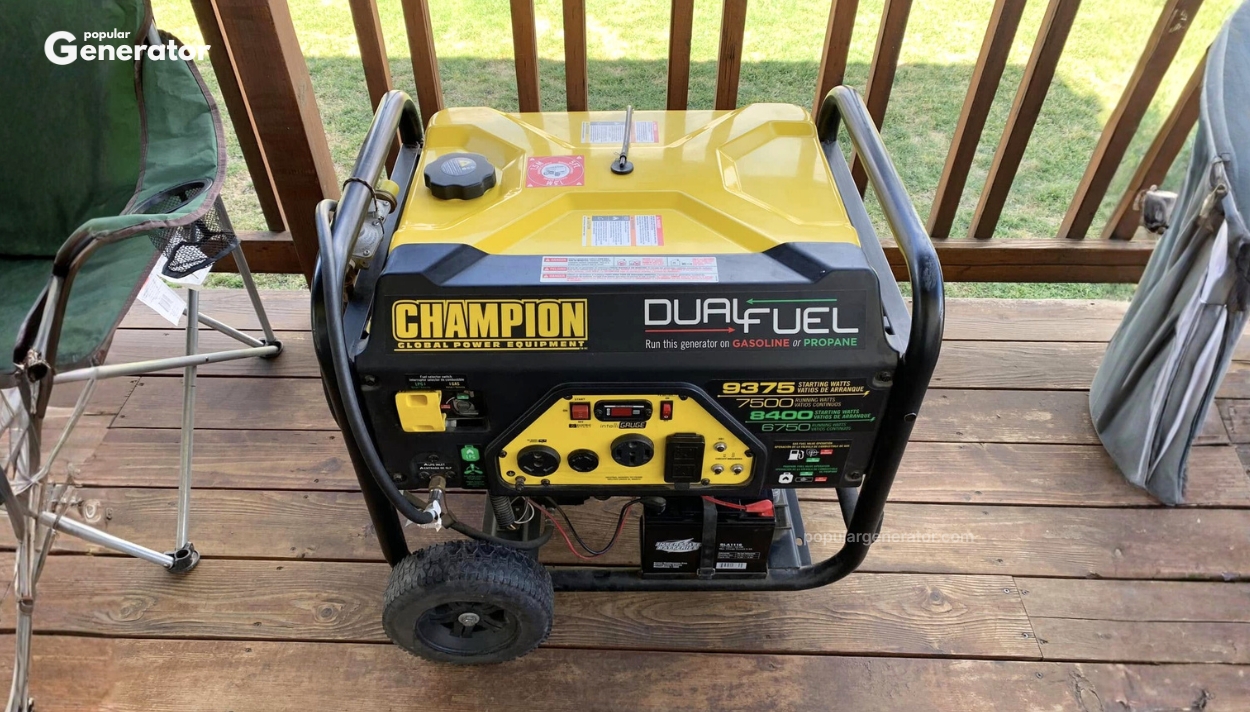
In this guide, we break down what 7500 watts can actually handle and whether it is the right choice for your home or RV.
When Is a 7500-Watt Generator the Right Choice?
A 7500-watt generator is the ideal choice for homeowners needing reliable backup power for essential appliances (refrigerator, sump pump, lights, furnace) and small AC units during outages, or for powering high-drain tools on job sites.
It offers a versatile balance of portability and power, typically handling around 7500 running watts and 9000-9500 surge watts, enough to run a medium-sized home’s critical systems.
1. Home Backup During Power Outages
If your goal is to keep the essentials running during an outage, 7500 watts is a strong fit.
It can typically power:
- Refrigerator and freezer
- Sump pump or well pump
- Microwave
- Lights and outlets
- TV and Wi-Fi
- A window air conditioner
This setup works well for partial home backup. You won’t run your entire house at full capacity, but you’ll stay comfortable and functional.
2. Homes with a Well Pump
Well pumps draw a high surge of power when they start. A 7500-watt generator usually provides enough starting watts to handle that surge while still running a few other essential appliances.
For rural homes, this wattage is often the practical minimum for reliable water access during an outage.
3. Running a Window AC or Small Cooling System
A 7500-watt unit can comfortably run:
- One window AC unit
- A small portable air conditioner
- An RV air conditioner (in many cases)
It may struggle with large central air systems (especially 3–5 ton units), but for targeted cooling, it’s usually more than enough.
4. Larger RVs or Travel Trailers
If you own a mid-size or large RV, a 7500-watt generator gives you the power margin you actually need, not just the bare minimum.
With 7,500 watts, you can typically run:
- RV air conditioner
- Microwave
- Battery charger / converter
- Coffee maker
- TV, lights, and outlets
That extra wattage matters because RV air conditioners require high starting (surge) power. A smaller generator may struggle or trip breakers when the AC kicks on. A 7500W unit gives you smoother startups and more stable power.
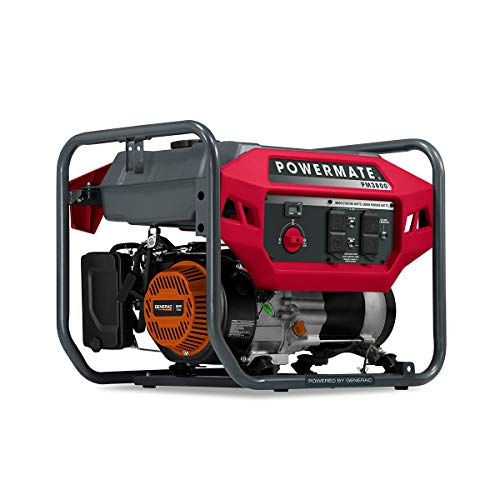
Quick Comparison Table of best 7500 Watt Generators



Who Should Consider 7500 Watts generator?
A 7500-watt generator is ideal for homeowners, RV owners, and contractors needing reliable, high-capacity portable power to run essential appliances (refrigerator, well pump, sump pump), lights, computers, and AC during outages or on job sites. It supports roughly 1,500 sq ft homes with critical, non-electric heating loads.
- Best For: Homeowners with 1,200 – 1,500 sq ft homes needing to run essential appliances (refrigerator, AC, sump pump, lights).
- Capacity: Provides enough power to run multiple major appliances simultaneously, with roughly 9000 – 9500 surge watts for startup.
- Application: Suitable for extended power outages, job sites, and large RVs.
- Management: Requires careful management of high-draw appliances (e.g., avoiding running the AC, electric dryer, and microwave at the same time).
- Considerations: These units are often loud and fuel-intensive, so inverter models are recommended for noise reduction and efficiency.
Those with larger homes (2,000+ sq ft) or extensive electric heating/AC systems may require a higher capacity unit.
7500-Watt vs 6500-Watt vs 9000-Watt Generators
Generator choice depends on your specific, total wattage needs: 6500W runs essential home appliances, 7500W handles more appliances simultaneously (like a small AC), and 9000W powers large homes/heavy loads (HVAC). 6500W is better for fuel efficiency, 7500W is a popular middle-ground for outages, and 9000W offers maximum, often louder, performance.
| Feature / Use | 6500-Watt | 7500-Watt | 9000-Watt |
|---|---|---|---|
| Running Watts | ~6,000 | ~7,000 | ~8,500+ |
| Starting (Surge) Watts | ~8,000 | ~9,000 | ~11,000+ |
| Best For | Small home backup / tools | Most home backups + AC | Large homes / central AC |
| Window AC | ✓ (1 unit) | ✓ (1–2 units) | ✓ (2+ units) |
| Central AC | ⚠ Maybe | ⚠ Maybe | ✓ Likely |
| Job Site Power Tools | Good | Better | Best |
| Approx. Price | Lower | Mid | Higher |
| Fuel Consumption | Lower | Medium | Higher |
| Weight / Size | Smaller | Medium | Bigger |
| Portability | Easier | Moderate | Harder |
- 6500 – Watt Generator: Suitable for powering essential home appliances like a refrigerator, lights, microwave, and dishwasher. It is generally sufficient for small to medium-sized homes but might struggle with heavy loads.
- 7500 – Watt Generator: A versatile option that can power more, including some 240V, in a 2000 square-foot home. Suitable for a range of household needs, including well pumps and small central AC systems.
- 9000 – Watt Generator: Provides enough power for larger homes, including essential and some luxury appliances. Often used for high-demand needs, but can be noisier and less fuel-efficient.
Is 7,500 Watts Enough for a House?
A 7,500 – watt generator is generally sufficient to power most essential appliances in an average 2,000 sq ft home during an outage, including lights, refrigerator, well pump, and some HVAC systems. It can handle 7,500 running watts and around 9,000 – 9,500 surge watts, but you may need to balance loads and cannot run all heavy-duty appliances (e.g., HVAC, electric dryer, oven) simultaneously.
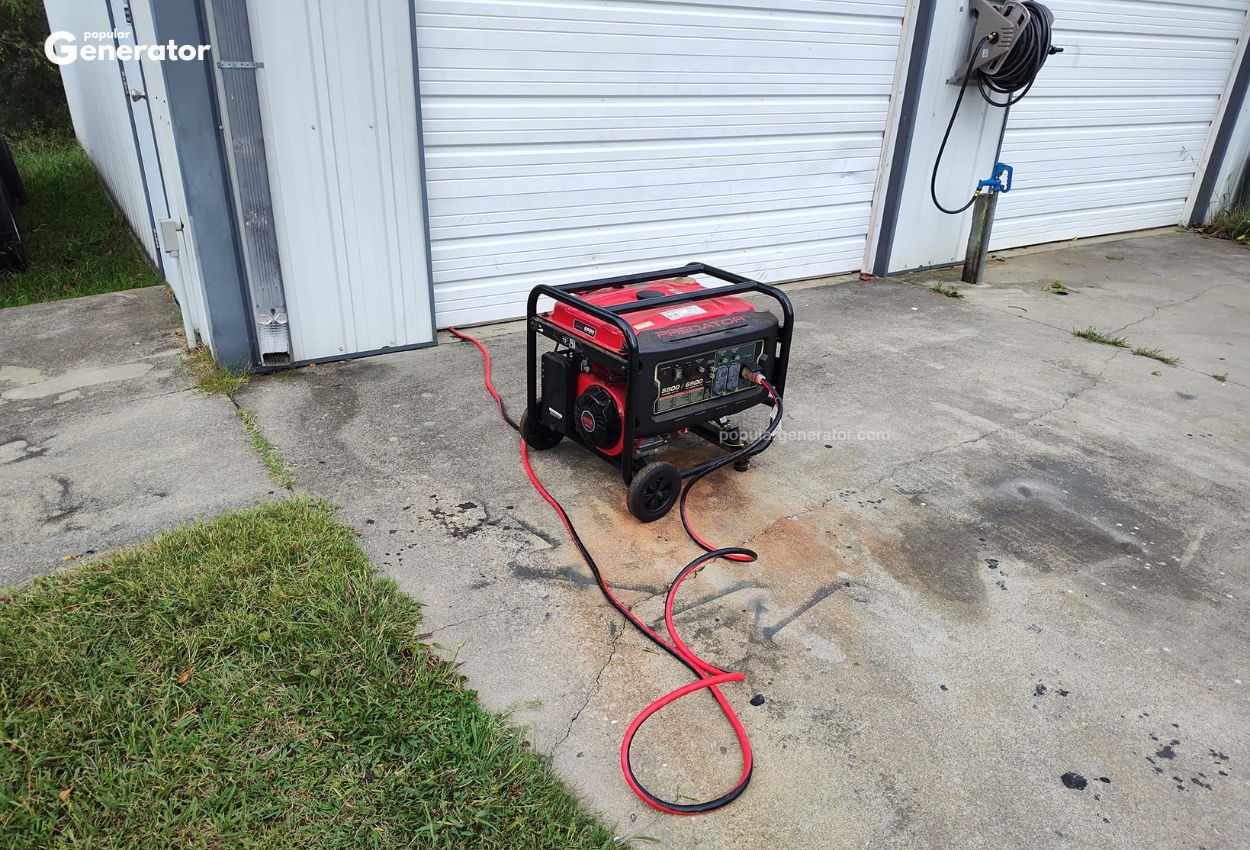
Partial Home Backup
A 7,500 – watt generator is well-suited for running essential circuits during an outage. That typically includes:
- Refrigerator and freezer
- Sump pump or well pump
- Microwave
- Lights and outlets
- TV and internet
- One window air conditioner
This setup allows your home to remain functional and comfortable without overloading the generator. If connected through a transfer switch and managed properly, 7,500 watts provides reliable short-term emergency power for most average-sized homes.
Central Air Conditioning (3–4 Ton)
Central AC systems require high startup (surge) power. A 3 -4 ton unit can demand most or all of a 7,500-watt generator’s available capacity when it kicks on.
Even if the generator manages to start the AC, you may have very little power left for other appliances. That means careful load management and limited flexibility.
If running central air is a priority during outages, stepping up to 9,000 – 10,000+ watts is typically a safer choice.
Full Whole-House Power
A 7,500 – watt generator is not designed to power everything at once, especially high-draw appliances such as:
- Electric water heater
- Electric stove or oven
- Clothes dryer
- Large central HVAC systems
Trying to operate your entire home as usual will likely overload the system.
FAQs About 7,500 – Watt Generators
1. Can a 7,500 – watt generator run central air?
Yes, a 7,500-watt generator can run a central air conditioner, but typically only for smaller units (roughly 2.5 to 3 tons or 30,000–36,000 BTUs). It may struggle with the high startup surge (starting wattage) of larger 4-5 ton units. A soft start kit is highly recommended to reduce startup load.
2. How long will a 7,500 – watt generator run on a full tank?
A 7,500-watt generator typically runs for 8 to 12 hours on a full tank (roughly 6–8 gallons) at 50% load. At full capacity (100% load), runtime decreases to about 4–6 hours. Diesel models generally offer longer runtimes of 12–15 hours at half load due to higher efficiency.
3. Is 7,500 watts enough for a well pump?
Yes, 7,500 watts is generally more than enough to power a standard household well pump, along with other essential appliances. A 7,500-watt generator can typically handle the high starting surge (up to 7,500W for a 1.5 HP pump) and running wattage (1,500-2,500W) of most residential pumps while powering other items like refrigerators and lights.
4. Do I need a transfer switch for a 7,500 – watt generator?
You need a transfer switch or an interlock device to safely connect a 7,500-watt generator to your home’s electrical panel. While not mandatory for running individual appliances via extension cords, it is required by the National Electrical Code (NEC) to prevent dangerous “backfeeding” into utility lines, which can kill utility workers and damage your home.
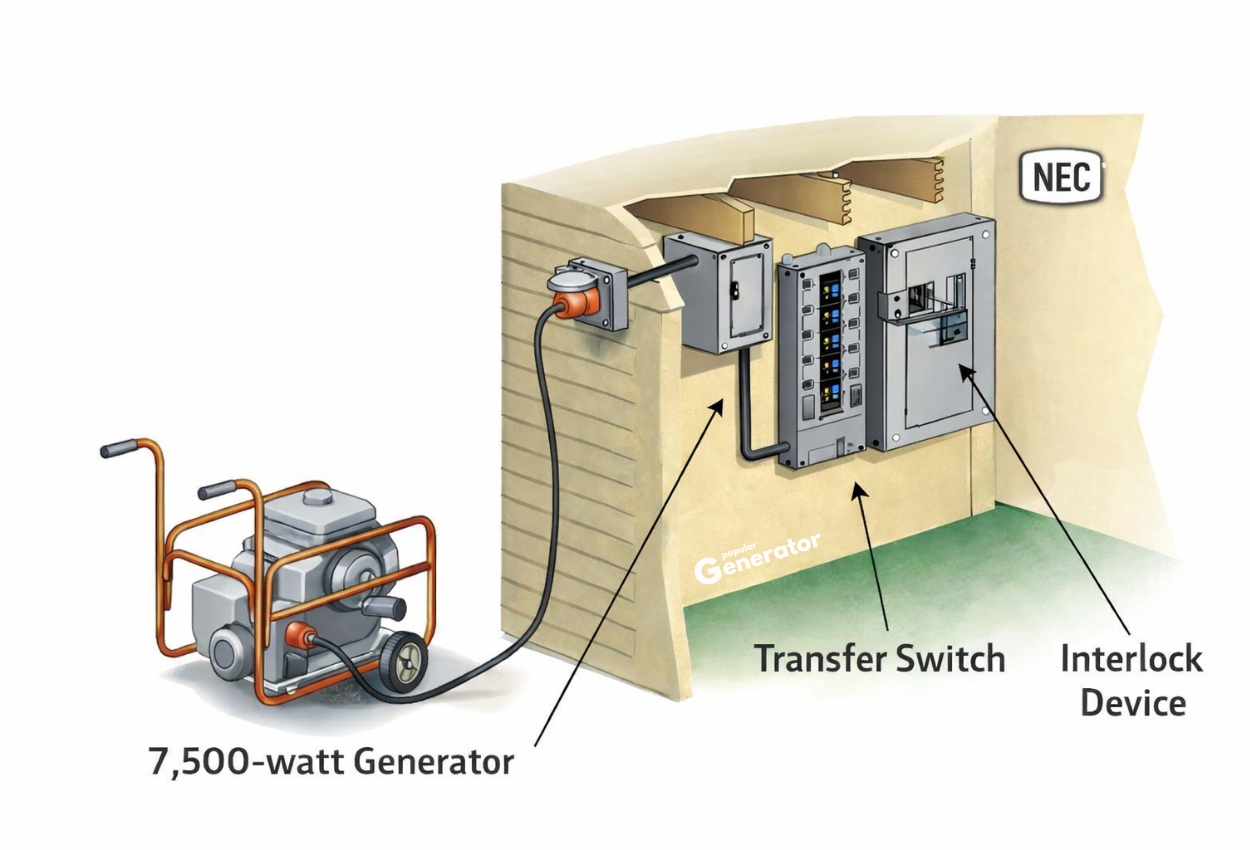
Without a transfer switch, you risk fire, electrical damage, and serious safety hazards.
5. What size extension cord should I use?
For high-wattage loads, use heavy-duty 10-gauge or 12-gauge outdoor-rated extension cords, depending on distance and amperage. Undersized cords can overheat and reduce performance.
6. Is 7,500 watts enough for an RV?
7,500 watts is more than enough for most RVs, comfortably powering a 50-amp system, including multiple air conditioners, microwaves, and residential appliances simultaneously. It offers ample capacity for 30-amp or 50-amp rigs, providing roughly 62.5 amps at 120 volts.
- Capacity: It can easily handle high-demand items like dual AC units, refrigerators, washers/dryers, and heaters.
- Suitability: Ideal for large travel trailers (30-40 ft) and Class A motorhomes, often exceeding the 5,500W standard found in many motorhomes.
- Power Output: It typically provides 7,500 running watts and about 9,000–9,500+ surge watts, which is crucial for starting AC compressors.
- Pros/Cons: While it offers full power, it may be heavier, louder, and less fuel-efficient than a 3,000–4,000W generator.
For most users, 7,500 watts eliminates the need to manage power loads or switch off appliances, ensuring a “plug-and-play” experience similar to being at a full-hookup campsite.


Write Your Review
No reviews yet. Be the first to share your experience!