



Quick Picks: Best Portable Generators for Small Home
- Best Compact Quiet Generator: Honda EU2200i – 2200W pure sine wave, 48dB at quarter load, handles all small home essentials without the noise of larger units
- Best Full-Home Coverage: Westinghouse iGen4500 – 4500W inverter covers small home AC plus all appliances simultaneously, quiet enclosed design for residential use
- Best Value Inverter for Small Home: Champion 3500W Inverter – quiet mode, CO Shield, 3500W handles refrigerator, fans, lighting, and electronics simultaneously
- Best Dual Fuel Small Home Generator: Champion 4000W Dual Fuel – gasoline or propane flexibility, 4000W, practical for extended outages where fuel sourcing varies
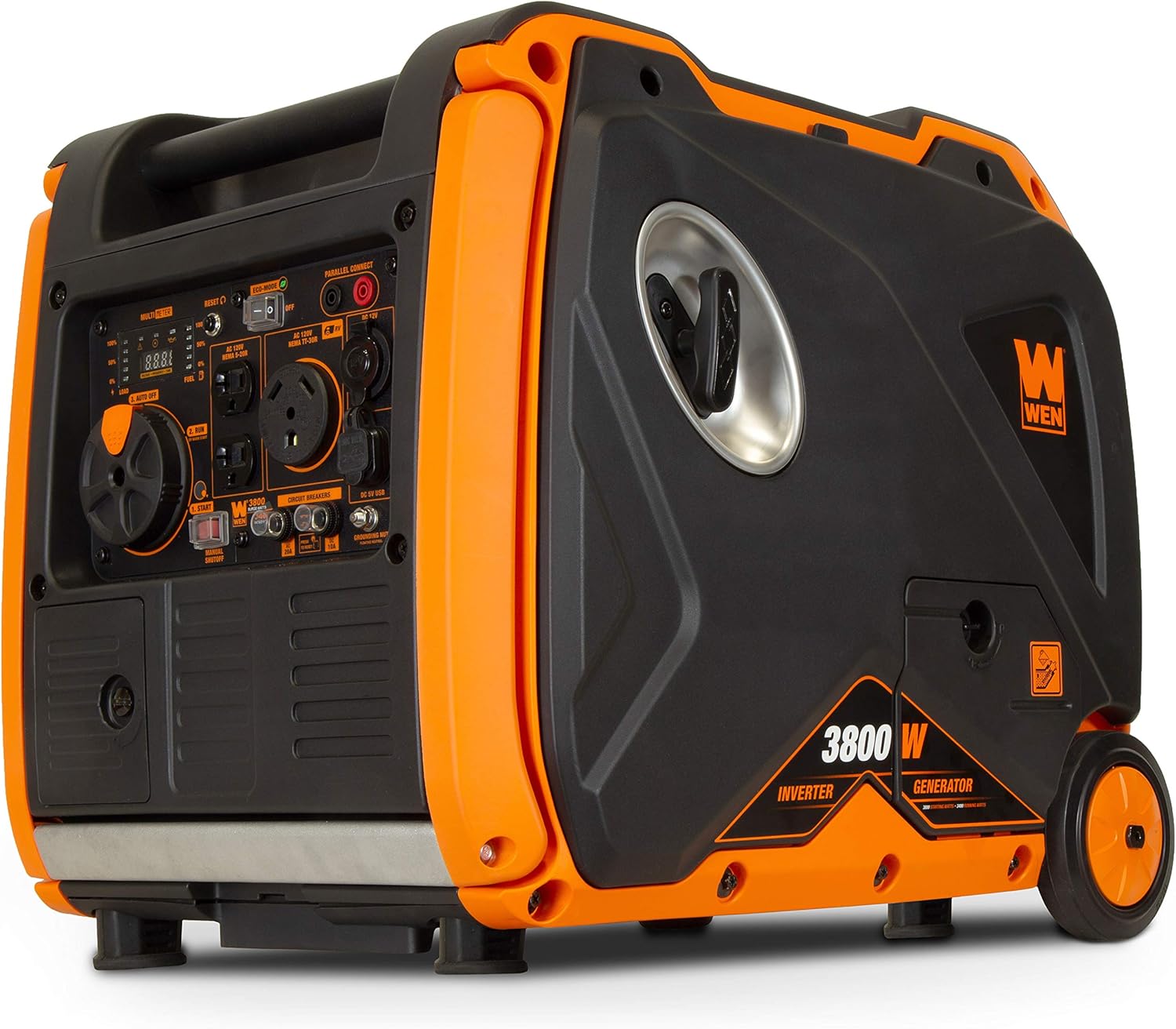
- Best High-Capacity Value: WEN 56380i 3800W – pure sine wave at 3800W, RV-ready outlet, covers small home needs with capacity for a window AC unit
- Best Battery Station for Small Homes: EcoFlow DELTA Pro 3600Wh – 3600Wh LiFePO4, 3600W output, solar expandable, ideal for apartments where gas generators are prohibited
A small home – an apartment, a studio, a 500-900 square foot house, or a tiny home – has fundamentally different power needs during an outage than a large house. The critical loads are smaller: one refrigerator rather than two, a single air conditioner unit rather than a central system, one floor or two of lighting rather than a full 2000-square-foot house. The appliance inventory is more limited. The generator that correctly serves a small home is smaller, quieter, and more efficient than the units sized for large residential backup.
Small home residents also face a constraint that large homeowners often do not: proximity to neighbors. An apartment building resident, a townhouse owner, or a homeowner with a narrow lot has neighbors within 20-30 feet rather than 100. Generator noise that is acceptable at the far end of a large backyard becomes a neighbor complaint at 30 feet. This guide emphasizes quiet inverter generators that operate within noise levels appropriate for dense residential environments, alongside battery power station options for apartment residents who cannot safely operate any gas generator near their living space.
A 2000-watt inverter generator running a small home’s essential loads – refrigerator, fans, lighting, and device charging – operates at 30-40% of rated capacity. At that load, the ECO mode throttle runs the engine near idle speed, which is both the quietest and most fuel-efficient operating point. A quiet generator at the right size for actual small home loads is quieter than a “quiet generator” running a larger home load at 80% capacity.
Small Home Power Load Profile
Essential loads for a small home during an outage: refrigerator (150-200W running, 800W startup), window AC (450-1200W running depending on BTU), fans (50-100W each), LED lighting (20-50W), phone and tablet charging (40-80W), laptop or TV (50-150W). Total essential running load without AC: approximately 500-700W. With a small 5000-8000 BTU window AC: 1000-1900W total. With a 10,000 BTU window AC: 1600-2500W total. These load profiles are well within a 2200-3500W inverter generator’s capability, running the generator at 30-70% of capacity in ECO mode throughout the outage. For further guidance on matching generator capacity to home size, the home size generator guide covers sizing across different floor plan configurations.
Best Portable Generators for Small Home – Reviewed
Honda EU2200i – The Small Home Essential Load Generator
For a small home’s essential non-AC loads – refrigerator, lighting, fans, and all device charging – the Honda EU2200i at 2200 peak watts and 1800 running watts covers everything with capacity remaining. At the typical essential load of 500-700W, the Honda runs in ECO mode at near idle – 48dB, consuming approximately 0.1 gallons per hour, virtually inaudible at residential neighbor distances. For small homes with a single small window AC (5000-8000 BTU), the Honda also handles that load, adding approximately 500-900W to the running total and still operating within comfortable capacity margins.
The CO-Minder automatic CO shutoff is specifically relevant for small homes where the generator may be placed close to the structure due to limited outdoor space. In a small backyard or narrow side yard, the CO-Minder adds an automatic safety layer that monitors CO continuously. The 0.95-gallon tank runs 8-9 hours in ECO mode at small home loads – sufficient for an overnight outage without any attention or refueling. For apartments and small units with a courtyard or accessible outdoor space but limited range for generator placement, the EU2200i is the minimum footprint gas generator that covers essential small home loads reliably.
Best for: Small apartments and studios with outdoor access, tiny homes and small houses where essential non-AC backup is the primary need, anyone who wants the minimum size and weight gas generator that covers essential small home loads reliably.
Westinghouse iGen4500 – The Complete Small Home Backup Solution
When “small home” includes central or window air conditioning as a comfort or health necessity during summer outages, the load calculation changes: a 10,000 BTU window AC plus essential household loads totals 2000-2500W running with 4000-4500W startup surge. The Westinghouse iGen4500 at 4500 peak watts and 3700 running watts covers this complete small home AC-plus-essentials load at approximately 60-70% of rated capacity – efficient, sustainable continuous operation for multi-day summer outages. The enclosed inverter housing keeps noise at 52dB at 25% load, appropriate for the close residential proximity of a small home neighborhood.
At 3700 running watts, the iGen4500 also handles a small window AC plus a microwave simultaneously – the combination that stresses 2200W generators when residents try to heat food while keeping the bedroom cool. The parallel capability allows two units to combine for 7400 watts if a future higher-demand scenario requires it. For small homeowners who want one generator that covers all scenarios – from the most minimal essential load through a full summer cooling outage – the iGen4500 is the single-unit solution.
Best for: Small homes with window air conditioning, homeowners who want complete small home backup capability including AC in one quiet generator, apartments with outdoor space where the generator needs to run through the night near neighbors.
Champion 3500W Inverter – Quiet Mid-Range for Most Small Homes
The Champion 3500W Inverter Generator fills the practical sweet spot for most small homes: enough wattage for essential loads plus a modest window AC, quiet mode at 53dB for residential operation, and CO Shield for safety. At 3500 peak watts, it starts a 10,000 BTU window AC and runs it alongside all essential small home loads at approximately 70% of running watt capacity – the same efficient ECO mode range as smaller generators at light loads. The wireless remote key fob start is a practical small home feature: start the generator from inside when the power drops rather than going outside in the dark or during a storm.
For small homeowners who want more wattage margin than the Honda EU2200i provides for AC operation, but who do not need the full 4500W of the Westinghouse for their actual load profile, the Champion 3500W hits the mid-range correctly. The parallel capability provides a path to expand if needs grow. The CO Shield shutoff addresses the safety concern for small lot sizes where the generator must be placed closer to the structure than ideal. For the broader range of budget-friendly generator options, see the generators under $1000 comparison.
Best for: Small homes with a single 10,000 BTU window AC plus essential loads, homeowners who want the middle ground between compact EU2200i-class and full-capacity 4500W generators, anyone who values wireless remote start for convenience and CO Shield for safety.
Champion 4000W Dual Fuel – Extended Outage Flexibility
Extended winter or storm outages lasting 48-72 hours create fuel logistics challenges for small homeowners without large fuel storage capacity. The Champion 4000W Dual Fuel generator addresses this by accepting both gasoline and propane – allowing the homeowner to use whatever fuel is available and accessible at the time. A 20-pound propane cylinder (standard grill tank size) stored in the garage provides a ready backup fuel source that stores indefinitely without degradation, available even if nearby gas stations are closed or have long lines during a regional outage event.
At 4000 peak watts and 3500 running watts on gasoline (slightly less on propane), the Champion Dual Fuel covers the complete small home load including a window AC unit. Electric start with battery makes starting accessible without pull-start effort. The dual fuel capability is particularly valuable for small homeowners who also use propane for grilling or outdoor cooking, since the same cylinder supply serves multiple uses. For a deeper look at propane generator options and fuel planning for extended outages, see the dual fuel generator guide.
Best for: Small homeowners in regions prone to extended outages who want fuel sourcing flexibility, anyone with existing propane storage who wants to use that supply for generator backup, households that may not have access to gasoline during regional outage events.
WEN 56380i 3800W – High Capacity Inverter at Value Pricing
The WEN 56380i at 3800 peak watts and 3400 running watts provides the highest wattage in the inverter generator category at WEN’s characteristically accessible price point. For small homeowners who want AC backup capability without the premium pricing of Honda or Westinghouse, the WEN 56380i delivers inverter quality pure sine wave output at under 1.2% THD with enough wattage for a window AC plus essentials. The RV-ready 30A outlet provides flexibility for connection to a transfer switch or a 30A power distribution setup, uncommon at this price tier.
The fuel shutoff protects the carburetor during storage between outages – an important feature for a generator that may sit unused for 6-12 months between use cycles in regions with mild weather and infrequent outages. CARB compliance means the WEN 56380i is available and legal in California and other strict-emissions states where some competitors are not sold. For small homeowners in California or other regulated states who want 3800W inverter capacity at lower cost than premium brands, the WEN 56380i is the appropriate choice.
Best for: CARB-state small homeowners who want 3800W inverter capacity at WEN pricing, small homes with a single window AC where value-to-wattage ratio is the priority, anyone who uses the generator seasonally and benefits from fuel shutoff storage protection.
EcoFlow DELTA Pro – For Apartments and Indoor-Only Use
For apartment residents in mid-rise or high-rise buildings, the generator question has a definitive answer: gas generators are not an option. Building rules, CO risk from ground-level exhaust reaching upper floors, lack of outdoor placement space within safe range, and the physical reality of carrying fuel to an apartment all make gas generators impractical for apartment dwellers. The EcoFlow DELTA Pro is the answer for this scenario: 3600Wh of LiFePO4 battery capacity, 3600 watts of pure sine wave output, completely silent, zero emissions, and safe for indoor use in any living space.
At 3600Wh, the DELTA Pro runs a small home’s essential non-AC loads (refrigerator, lighting, fans, phone charging: roughly 500-700W total) for approximately 5-7 hours on a full charge. It can also connect to EcoFlow solar panels via the Smart Generator integration for extended solar recharging during multi-day outages. Two DELTA Pro units can be paired for 7200Wh total capacity and 7200W combined output. For apartments and small homes where outdoor generator access is not available, the DELTA Pro provides backup power capability that no gas generator can match in a residential indoor context. For the full range of solar power station options, see the portable solar generator guide.
Best for: Apartment residents and small home dwellers without safe outdoor generator access, urban homeowners in buildings with gas generator restrictions, anyone who wants silent zero-emissions backup power with solar expansion capability.
Choosing a Generator for Your Small Home
Calculate Your Essential Load First
List every appliance you would run during a summer or winter power outage, find the wattage on the label or in the manual, and total the running watts. Add the startup surge of the largest single appliance (usually the refrigerator or window AC) to confirm the generator’s peak wattage clears that surge. For most small homes without air conditioning, total essential running wattage falls below 800W – a scenario where a 2200W inverter generator is not just adequate but genuinely oversized, running quietly at 30-40% of rated capacity through the outage.
Noise Matters More in Small Home Neighborhoods
Townhouses, attached homes, and apartment buildings with outdoor generator access have neighbors within 15-30 feet. At those distances, a 70dB conventional generator is audible and disruptive at any hour. A 52dB enclosed inverter generator at the same distance blends into residential ambient noise. For small home use, inverter generators in enclosed housings are not just a preference – they are the respectful choice in dense residential settings. All five gas generators on this list are enclosed inverter designs rated at 52-57dB at 25% load.
FAQs
What size generator does a small home need for basic backup?
A 2000-2200W inverter generator covers the essential loads of a small home without air conditioning: refrigerator, fans, lighting, and charging for all devices simultaneously. With a small 5000-8000 BTU window AC, a 2200W generator still handles the total load comfortably. For a larger 10,000 BTU AC plus essentials, a 3000-3500W generator provides the surge capacity needed for reliable AC starting. Match the generator to the AC’s startup surge specification, not just the running wattage total.
Can I run a portable generator inside my apartment?
Gas generators of any kind must never be operated indoors. Carbon monoxide poisoning from indoor generator use is a leading cause of consumer product-related deaths each year. The only safe indoor power options during an outage are battery power stations (like the EcoFlow DELTA Pro) or UPS units. If you live in an apartment without outdoor generator access, a battery power station is the correct emergency power solution for your situation.
How long will a small home run on a 2200W generator?
A 2200W inverter generator at a small home essential load of 500-700W in ECO mode runs approximately 8-9 hours per tank fill. With a spare gallon of fuel on hand, a single tank plus reserve covers a full overnight outage. For multi-day outages, plan for one tank fill per day at essential loads, or two fills per day if a window AC is running continuously. A 2000W generator is one of the most fuel-efficient options because its small tank is matched to the low fuel consumption rate of light ECO mode operation.
Final Verdict
For a small home without air conditioning where essential load backup is the goal, the Honda EU2200i is the most fuel-efficient, quietest, and most reliable option available. For a small home with window air conditioning, the Westinghouse iGen4500 covers the complete load in a single quiet generator at an appropriate size for a small home’s actual needs without the excess capacity and weight of a large backup generator.
For apartments and small homes without safe outdoor generator access, the EcoFlow DELTA Pro is not a compromise – it is the only option that is actually safe, quiet, and practical for indoor residential emergency power.


Write Your Review
No reviews yet. Be the first to share your experience!