




Quick Picks: Best Portable Generators for Electronics
- Best Premium Low-THD Generator: Honda EU2200i – under 0.3% THD, the cleanest power output in the portable generator category, protects all sensitive electronics without exception
- Best Ultralight for Sensitive Electronics: WEN 56235i 2350W – pure sine wave output, ultra-lightweight design for easy transport, handles electronics-heavy camping and outdoor setups
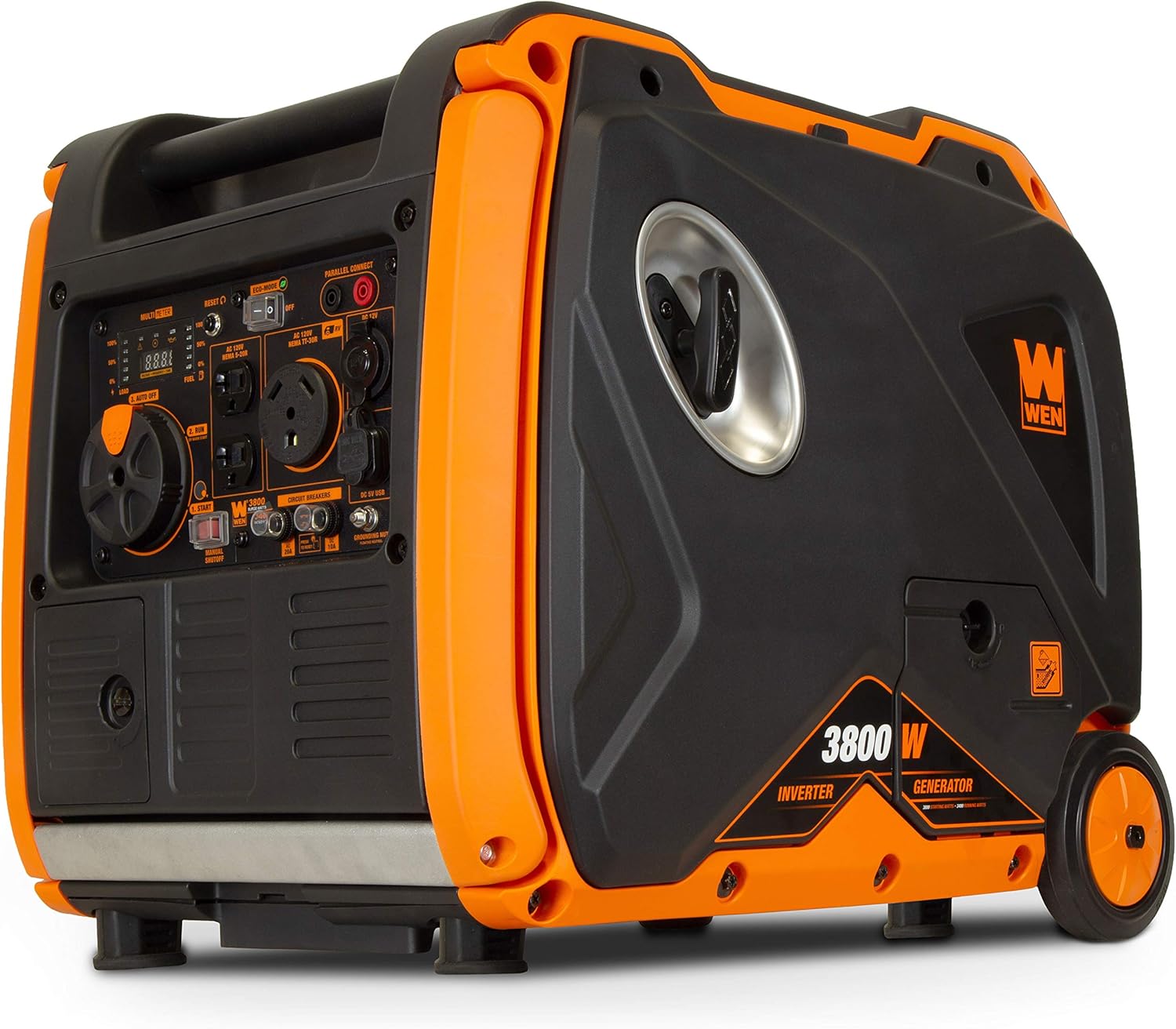
- Best High-Capacity Electronics Generator: WEN 56380i 3800W – 3800W with pure sine wave, RV-ready outlet, handles large AV setups, professional audio, and multi-device loads
- Best High-Output Inverter: ERAYAK 4500W – 4500W pure sine wave inverter, exceptionally low 0.1% THD specification, large capacity for demanding multi-device electronics setups
- Best for Whole-Home Electronics Backup: Westinghouse 12000W Dual Fuel – high-capacity dual fuel option for whole-home electronics protection during extended outages
- Best Budget Compact Option: GENKINS 2300W – under 2% THD inverter at a compact size and weight, handles standard electronics loads at an accessible price point
The electronics that fill modern homes – smart TVs, home theater receivers, gaming consoles, streaming devices, Wi-Fi routers, smart home hubs, NAS storage systems – all share one vulnerability: sensitivity to power quality. These devices contain microprocessors, switching power supplies, and precision digital circuits that were designed to receive stable, clean 60Hz sine wave power from the utility grid. When a power outage forces those devices to run from a generator, the quality of that generator’s output determines whether the electronics function normally, develop intermittent faults, or suffer premature component degradation.
The measurement that separates safe generators for electronics from unsafe ones is total harmonic distortion (THD). Utility grid power runs at approximately 2-3% THD. Quality inverter generators produce 0.3% to 1.2% THD. Standard conventional portable generators produce 5% to 10% THD or higher. Electronics rated for “clean power” input – which includes virtually all consumer electronics manufactured in the last decade – tolerate grid-level THD without issue. They do not necessarily tolerate the 5-10% THD of conventional generators, and running sensitive electronics on dirty power creates heat and stress in the power supply components that is invisible in the short term but cumulative over time. This list covers only generators and power sources that produce electronics-safe pure sine wave output.
Best Portable Generators for Electronics – Reviewed
Honda EU2200i – The Benchmark for Electronics-Safe Generator Power
At under 0.3% THD, the Honda EU2200i produces power that is cleaner than the utility grid in most residential areas. This specification matters for electronics use because it is not the average THD that damages sensitive components – it is the peak harmonic spikes that exceed the tolerance of power supply capacitors. At 0.3% THD, those spikes essentially do not exist. The result is generator power that a home theater receiver, a gaming console, or a smart home hub cannot distinguish from grid power. Audio equipment, which is particularly sensitive to power quality and produces audible artifacts from dirty power sources, performs identically on the Honda as on utility power.
The CO-Minder automatic shutoff adds safety relevant to any extended electronics use scenario – a generator running overnight while charging banks of devices, or running an event setup in a partially enclosed outdoor space. At 48dB at quarter load with a 500W electronics load, the EU2200i runs at a noise level that barely registers above ambient outdoor noise at a residential distance. For anyone protecting an investment in high-end electronics, the Honda represents the smallest gap between generator power and grid power available in the portable category.
Best for: High-end audio and home theater equipment, smart home systems and hubs, professional AV and streaming setups where power quality directly affects performance, anyone whose electronics investment justifies the premium power quality.
WEN 56235i 2350W – Ultra-Lightweight Pure Sine Wave
The WEN 56235i combines pure sine wave inverter output at under 1.2% THD with the lightest weight in the 2000-2500W class, making it the most portable option for electronics-heavy outdoor events, tailgating setups, outdoor cinema, or camping with a full electronics kit. At 46 pounds, it is lighter than most comparable inverter generators and handles the electronics loads common in those scenarios: a projector, portable speakers, gaming consoles, streaming devices, and charging banks simultaneously within its 2350W capacity.
The fuel shutoff protects the carburetor during storage and transport, which matters for a generator that travels to events and sits between uses. At 51dB at 25% load, the WEN 56235i operates quietly enough for an outdoor event environment where the generator noise should not compete with the entertainment it is powering. CARB compliance makes it usable in California and other regulated states. For users who move their generator between events or locations and need the lightest possible pure sine wave unit in the 2000W class, the WEN 56235i fills that role precisely.
Best for: Outdoor events, tailgating, camping with projectors and sound systems, anyone who carries the generator regularly and needs the lightest electronics-safe option.
WEN 56380i 3800W – High Capacity for Multi-Device Electronics Setups
A professional outdoor event with a DJ setup, powered speakers, lighting controllers, and multiple charging stations can easily exceed 2000 watts of electronics load. The WEN 56380i at 3800 peak watts and 3400 running watts handles this higher-demand electronics use case while maintaining the pure sine wave output at under 1.2% THD that sensitive electronics require. The RV-ready 30A outlet provides a single high-amperage connection point for setups that use a 30A power distribution panel. The electric start eliminates pull-starting a 3800W generator that requires slightly more force than smaller units.
For indoor use during extended outages – powering a home theater, gaming room, home office, and household appliances simultaneously – the WEN 56380i provides the capacity to run a realistic whole-electronics-room load without operating near its limit. The fuel shutoff feature retains its carb-protection value for a generator of this size, which is typically stored between infrequent outage uses. CARB compliance extends availability to California and other states.
Best for: Multi-device outdoor event setups, DJs and event producers who need 3000W+ of clean power for professional audio and lighting, home theater and gaming room backup with capacity for simultaneous household loads.
ERAYAK 4500W – Exceptionally Low THD at High Wattage
The distinguishing specification of the ERAYAK 4500W is its 0.1% THD claim – lower even than Honda’s 0.3% specification – at a 4500W capacity that covers the most demanding multi-device electronics setups. Whether this specification is independently verified at the same rigor as Honda’s is a legitimate question for any high-stakes electronics use. For general consumer electronics, NAS drives, and home entertainment systems, 0.1% versus 0.3% THD is an academic difference with no practical impact on device performance or longevity. The practical advantage of the ERAYAK is the 4500W capacity at inverter quality output – a combination that allows running a full home AV setup plus a refrigerator, air conditioner, and other household loads simultaneously during an outage.
The ECO mode throttles the engine to match actual load, which at typical electronics loads of 500-1500W means the 4500W generator runs quietly and efficiently well below its rated capacity. For users who want inverter output quality at the 4000-5000W class without the Honda EU3000iS premium pricing, the ERAYAK 4500W offers a competitive specification. For a broader comparison of inverter generator options at this wattage class, see the 5000-watt inverter generator comparison.
Best for: Large multi-device electronics setups requiring 3000-4500W of clean power, anyone who needs inverter output quality at the 4000W+ class for demanding setups.
Westinghouse 12000W Dual Fuel – Whole-Home Electronics Protection at Scale
A large home with a dedicated media room, smart home infrastructure, multiple gaming setups, a home office, and a full-house entertainment system represents an electronics load that no 2000W generator can cover simultaneously. The Westinghouse 12000W Dual Fuel generator addresses the whole-home electronics scenario with high-output inverter quality power on gasoline or propane. At 12,000 peak watts, it covers the entire home electronics load plus air conditioning, heating, refrigeration, and all other household loads – providing a complete household power solution with the clean sine wave output that sensitive electronics require.
The dual fuel capability addresses extended outage fuel logistics at this output level: a 12,000W generator running a full household load consumes fuel at a significant rate, and propane’s storage advantages (indefinite shelf life, bulk tank availability) make it the practical primary fuel for extended winter or hurricane-season outages. The Westinghouse dealer network provides service accessibility comparable to Generac, important for a generator this size that represents a meaningful maintenance investment.
At 12,000 watts of capacity, this generator crosses the line from “portable backup” to “whole-home standby equivalent.” The decision to purchase at this scale should be made based on whole-home load calculations, not just electronics protection needs. For electronics protection alone, any of the 2000-4500W inverter generators on this list is the more appropriate and economical solution.
Best for: Large homes where whole-house electronics protection and household backup are both required, properties where a single generator must cover all outage scenarios from electronics to HVAC.
GENKINS 2300W – Compact and Accessible Electronics Protection
The GENKINS 2300W inverter generator produces clean power at under 2% THD – above the 1.2% standard of premium inverter generators but well within safe limits for all consumer electronics. For homeowners who want clean generator power for electronics protection at an accessible entry price point, the GENKINS provides the essential inverter output quality at 2300W capacity. The compact size and lower weight make it practical for storage in smaller spaces and transport in mid-size vehicles.
At 2300W, the GENKINS handles a standard home electronics load comfortably: smart TV, streaming devices, gaming console, Wi-Fi router, and device chargers running simultaneously within well under half of rated capacity. The pure sine wave output, while at a slightly higher THD specification than premium brands, is functionally indistinguishable to all standard consumer electronics and will not cause the power quality issues associated with conventional modified-wave generators. For users who want an electronics-safe generator at minimum cost, the GENKINS 2300W delivers the fundamental pure sine wave requirement.
Best for: Budget-conscious homeowners who want inverter quality for electronics protection without the premium brand cost, standard consumer electronics setups where under-2% THD is sufficient, light-use seasonal backup applications.
Electronics Protection: What THD Actually Means
The THD Specification Explained
Total harmonic distortion measures the distortion of the pure 60Hz sine wave by additional harmonic frequencies (120Hz, 180Hz, 240Hz, etc.). Utility grid power has approximately 2-3% THD. Premium inverter generators produce 0.3-1.2% THD. Standard open-frame generators produce 5-10% THD. Consumer electronics are designed for grid-level input (2-3% THD); they function normally on inverter generators (0.3-1.2% THD); they may tolerate open-frame generators in the short term but experience accelerated component wear from the 5-10% THD over time. The practical message: for any electronics, only use inverter generators. The difference between 0.3% and 1.2% THD is irrelevant for all consumer electronics – both specifications are well within the safe operating range.
Does Generator Brand Matter for Electronics Safety?
Brand matters primarily for reliability and consistency rather than for peak THD specification. A Honda EU2200i that consistently produces 0.3% THD across years of service is more protective than a cheaper generator that claims 1.0% THD but produces 3-4% under real-world load variations. For high-value electronics – professional audio gear, broadcasting equipment, high-end home theater – the consistency of Honda and Westinghouse inverter output is worth the premium. For standard consumer electronics, any inverter generator from a reputable brand at under 1.2% THD provides adequate protection. For the full range of low-THD generator options, see the comprehensive low-THD generator guide.
FAQs
Can a generator damage my television or home theater equipment?
A pure sine wave inverter generator will not damage consumer electronics – the power quality matches or exceeds utility grid power. A conventional open-frame generator running at 5-10% THD can cause electronics to function abnormally (buzzing audio, screen artifacts), generate excess heat in power supply components, and cause premature failure of sensitive capacitors over repeated use. For a single brief connection, the risk from a conventional generator is low. For repeated or extended use, only pure sine wave inverter output is appropriate for sensitive electronics.
Does a gaming console need a special generator?
Any inverter generator on this list is safe for gaming consoles. Gaming consoles contain internal switching power supplies that handle the standard 120V 60Hz input from an inverter generator identically to utility power. The power draw of gaming consoles is modest – a PlayStation 5 draws approximately 100-200W during gameplay – which means virtually any 2000W inverter generator runs it at a small fraction of rated capacity. The clean power requirement is met by any inverter generator; no special specification beyond pure sine wave output is needed for gaming equipment.
How do I protect my electronics during the switch from utility to generator power?
The transition between utility power and generator power – typically 3-10 seconds – is a brief total power interruption. Any device that does not tolerate brief power interruptions needs a UPS (uninterruptible power supply) between the generator and the equipment. A UPS battery bridges the gap during generator startup and shutdown, providing seamless power continuity to connected devices. For home routers, NAS drives, gaming consoles, and workstations where abrupt power loss could cause data loss or require rebooting, a UPS is the correct companion to any generator, regardless of generator power quality.
Final Verdict
For electronics protection, the specification that matters is pure sine wave output at under 1.2% THD. Every generator on this list meets that standard. The Honda EU2200i is the choice when electronics protection at the highest available standard is the priority. The WEN 56235i and WEN 56380i are the practical value choices at different wattage points for outdoor events, camping setups, and residential backup.
For large multi-device setups requiring 3000W or more of clean power, the ERAYAK 4500W provides the capacity and inverter quality for demanding electronics configurations. And the GENKINS 2300W is the entry-point option for anyone who wants pure sine wave electronics protection at the minimum budget.


Write Your Review
No reviews yet. Be the first to share your experience!