




Quick Picks: Best Portable Generators for High Altitude
- Best Overall at High Altitude: Honda EU2200i – ECO throttle mode adapts automatically to reduced air density, minimal altitude derating versus carbureted competitors, proven at mountain campsites
- Best with CO Safety for High Altitude: Honda EU2200i with CO-Minder – same altitude performance plus automatic CO shutoff critical at enclosed high-altitude shelters and tent camping
- Best for Parallel Operation at Altitude: Honda EU2200i Companion – parallel-ready for doubled output, important when altitude derating reduces effective wattage of a single unit
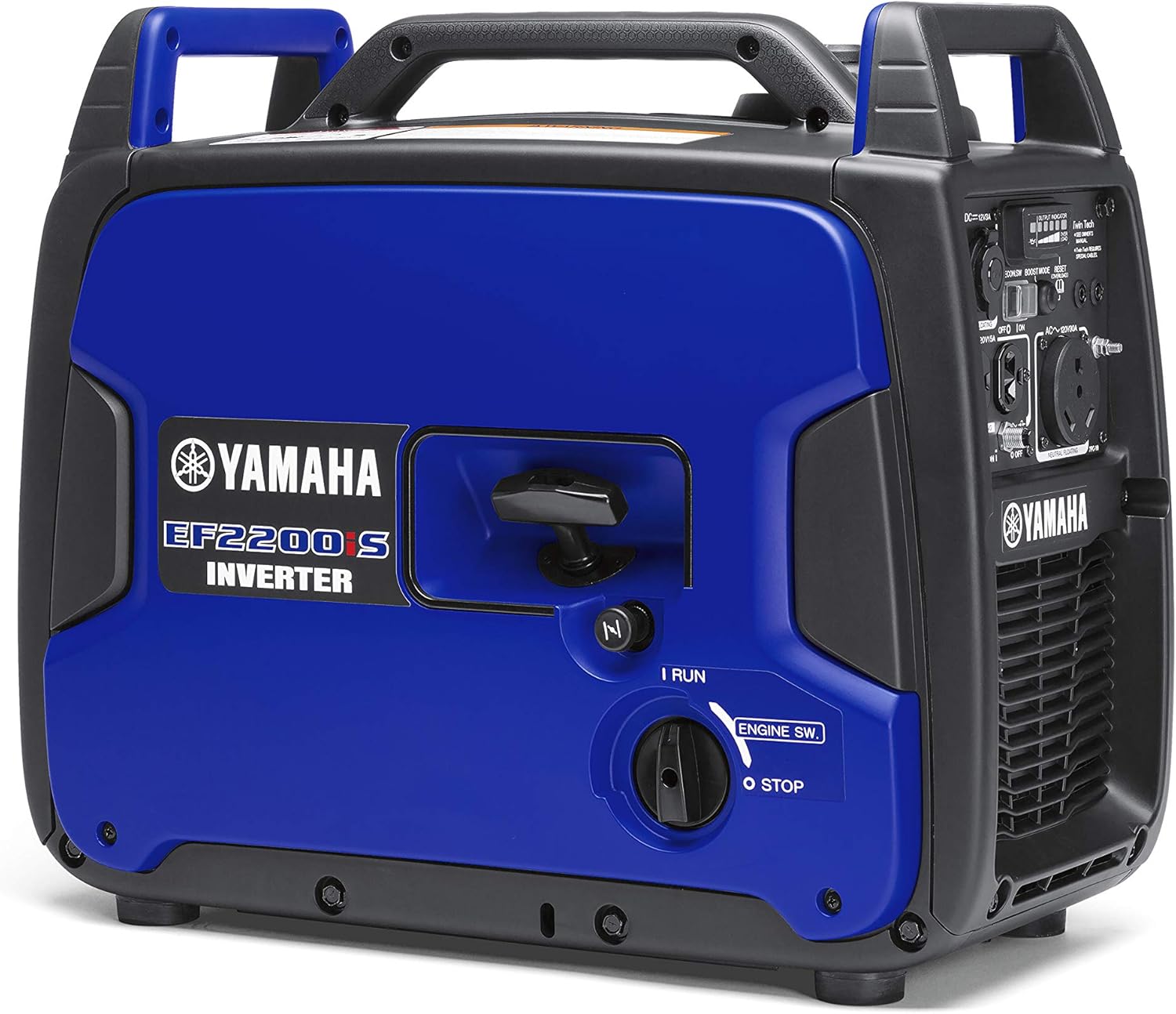
- Best Competitor to Honda at Altitude: Yamaha EF2200iS – Yamaha’s Smart Throttle performs comparably to Honda’s ECO mode at altitude, dual outlet design, quieter than most competitors
- Best Value for Mountain Camping: Westinghouse iGen2200 – solid altitude performance at a more accessible price point, 12-hour runtime at 25% load, parallel capable
- Best for Higher-Load Altitude Use: Westinghouse iGen4500DF – dual fuel helps compensate for altitude fuel delivery challenges, 4500W ensures sufficient effective output at elevation
Portable generators lose measurable output at altitude. The fundamental reason is air density: at 5,000 feet above sea level, the air contains approximately 17% less oxygen per cubic foot than at sea level. Less oxygen means less combustion per piston stroke, which means less power output from the same engine displacement. The standard rule of thumb for carbureted generators is a 3.5% output reduction per 1,000 feet of elevation gain above sea level. At 5,000 feet, a generator rated at 2000 watts at sea level effectively delivers approximately 1650 watts. At 10,000 feet, that same generator produces roughly 1300 effective watts – a 35% reduction in usable output.
Not all generators derate equally at altitude. Inverter generators with electronic throttle control – Honda’s ECO mode, Yamaha’s Smart Throttle, Westinghouse’s ECO mode – automatically adjust fuel delivery to match available oxygen at elevation, which partially compensates for the reduced air density. Carbureted conventional generators with fixed jets produce a progressively rich fuel mixture at altitude as oxygen decreases but fuel delivery remains constant, reducing combustion efficiency further than the air density reduction alone would cause. For high-altitude use, inverter generators with electronic throttle control are the correct category, and Honda’s fuel-injection-adjacent electronic controls represent the best available altitude performance in the portable inverter class.
The practical test for altitude performance is not a specification sheet – it is running the generator at the actual elevation with the actual load. Before relying on a generator at altitude for critical power needs, test it at the target elevation or as close to it as practical. Note the actual output voltage and frequency under load, check for surging or hunting behavior that indicates fuel delivery struggle, and verify that the generator starts and runs stably at the target altitude before depending on it.
How Altitude Affects Different Generator Types
Carbureted generators with fixed main jets are the most affected by altitude. As altitude increases, the same jet that delivers the correct fuel mixture at sea level delivers too much fuel per unit of available oxygen, richening the mixture progressively. Rich running causes incomplete combustion, increased fuel consumption, reduced power output, and carbon fouling. Most manufacturers offer altitude jet kits for their carbureted models – replacing the main jet with a smaller orifice size that leans the mixture at altitude. This requires disassembly and is typically only done for permanent high-altitude installations. For occasional high-altitude camping, the derating loss is usually accepted.
Electronic fuel injection (EFI) eliminates the altitude jet problem entirely: the oxygen sensor and fuel injection controller automatically reduce fuel delivery to match available oxygen at any altitude. Honda’s EU3000iS is the portable inverter generator with true EFI in the standard lineup. The EU2200i series uses a more standard carburetor but with Honda’s ECO mode electronic throttle that partially compensates by running at reduced throttle, which partially leans the mixture versus a full-throttle carbureted baseline.
For fuel considerations at altitude camping, propane has a slight advantage in that its energy content per pound is consistent regardless of altitude – the generator gets less power from the same propane volume at altitude, but the fuel delivery system handles altitude changes more consistently than a carbureted gasoline system. For extended high-altitude camping where fuel efficiency is a concern, see the dual fuel generator comparison for propane runtime calculations.
Best Portable Generators for High Altitude – Reviewed
Honda EU2200i – The Altitude Performer
The consistent recommendation for high-altitude camping comes back to the Honda EU2200i. Honda’s inverter generator line has been tested and used at altitude by outdoor enthusiasts, mountain rescuers, and high-altitude research stations for decades. The ECO mode throttle control, while not true fuel injection, produces a fuel delivery behavior that performs meaningfully better at altitude than fixed-jet carbureted generators. At 5,000 feet, a properly run EU2200i delivers approximately 1800-1900 effective watts – better retention than the theoretical 3.5% per 1000 feet rule suggests for carbureted competitors, because the ECO throttle’s load-following behavior naturally leans the mixture as the engine works less to meet reduced load at altitude.
At 47 pounds, the EU2200i is portable enough for mountain camping scenarios where the generator is carried from a vehicle to a campsite. The 0.95-gallon tank is lighter than larger generators, which matters on mountain trails where every pound is felt. The sound profile at altitude conditions – where ambient noise from wind and water is higher than at sea level campgrounds – blends into the environment. For mountain camping in designated generator areas, the Honda sets the standard that other generators are measured against.
Best for: High-altitude camping from 4,000 to 10,000 feet, mountain campsite use where reliable starting and output stability at elevation are required, anyone who needs the best available altitude performance in a portable inverter package.
Honda EU2200i with CO-Minder – Altitude Performance with Critical Safety
The Honda EU2200i with CO-Minder is the current production version of the EU2200i – same altitude-optimized ECO throttle performance, with the addition of Honda’s automatic CO detection and shutoff system. At altitude, where camping in mountain huts, large tents, or partially enclosed shelters is common, carbon monoxide risk is elevated compared to open campsite use. CO concentrations accumulate faster in enclosed high-altitude shelters due to the smaller air volumes typical of lightweight mountain structures. The CO-Minder shutoff provides an automatic safety layer that operates independently of the user’s attention level – important at altitude where physical performance and alertness can be reduced by elevation effects.
The altitude performance specifications are identical to the standard EU2200i – the CO-Minder adds safety without any trade-off in output or fuel efficiency. For high-altitude camping in any enclosed or semi-enclosed shelter environment, the CO detection feature is not optional – it is the appropriate safety standard. This is the version of the EU2200i that should be purchased for any new acquisition intended for mountain use.
Best for: Camping at altitude in tents, huts, or any partially enclosed shelter, anyone buying a new EU2200i-class generator for mountain use, situations where the generator will run while users sleep at altitude.
Honda EU2200i Companion – Parallel Ready for Altitude Derating Compensation
The effective wattage reduction at altitude creates a practical problem: a generator sized for sea-level loads may not have enough effective output at 8,000 feet. One solution is to buy a larger generator. Another is the Honda EU2200i Companion approach: a pair of EU2200i-class generators in parallel that combines to deliver 4400 watts at sea level and approximately 3500-3800 effective watts at 8,000 feet – still exceeding the load of most high-altitude camping electrical needs. The Companion’s parallel outlet is the unique feature: it connects to any standard EU2200i via Honda’s parallel cable, combining two generators without any additional hardware.
For mountaineers or expedition teams who need reliable power at altitude for base camp operations – satellite communication equipment, scientific instruments, medical equipment, heating devices – the Companion paired with a standard EU2200i provides the capacity cushion that altitude derating removes from a single generator. Two lightweight units at 47 pounds each are also more practical for mountain transport than a single 100+ pound generator of equivalent combined output.
Best for: High-altitude base camps with substantial power requirements, teams that split the generator load between two pack carriers, anyone who wants altitude derating compensation through parallel operation rather than generator oversizing.
Yamaha EF2200iS – The Honda Competitor Worth Considering at Altitude
The Yamaha EF2200iS is the only generator on this list that gives the Honda EU2200i genuine altitude performance competition. Yamaha’s Smart Throttle system performs comparably to Honda’s ECO mode at elevation, with the same load-following behavior that partially compensates for altitude derating by running the engine at the minimum throttle required for the actual load. At standard camping altitudes of 5,000-8,000 feet, the EF2200iS and EU2200i deliver similar effective output and similar fuel efficiency.
The EF2200iS has two 120V 20A outlets compared to the EU2200i’s two outlets, and the dual-outlet design on the Yamaha’s panel provides more flexibility for high-altitude base camp setups with multiple devices. Noise output at 51.5dB at 25% load is slightly higher than Honda’s 48dB benchmark but still within campsite-friendly range. For buyers who have compared the EU2200i and EF2200iS head-to-head and prefer the Yamaha’s price point or outlet configuration, the altitude performance difference is minimal enough that both generators are appropriate choices for mountain use. For the complete comparison of inverter generator options, see the inverter generator selection guide.
Best for: High-altitude campers who have compared Honda and Yamaha and prefer Yamaha’s features or availability, anyone in areas where Yamaha’s dealer network or parts availability is stronger than Honda’s.
Westinghouse iGen2200 – Value Option for Mountain Camping
The Westinghouse iGen2200 provides altitude-capable inverter generator performance at a more accessible price point than Honda or Yamaha. The ECO mode throttle behaves similarly to the Honda and Yamaha at altitude – reducing engine speed to match the actual load, which partially compensates for altitude derating. At 5,000 feet, the iGen2200 delivers approximately 1800-1900 effective watts, sufficient for most mountain camping electronic needs including CPAP machines, LED lighting, battery charging, and communication equipment.
The 12-hour runtime at 25% load on a single tank provides excellent coverage for an overnight high-altitude camping session without refueling. The parallel capability allows two iGen2200 units to combine for 4400 watts if altitude-compensated higher capacity is needed. At 52dB at quarter load, it is slightly louder than Honda at the same load but still within the range that registers as background noise rather than intrusion at a dispersed mountain campsite.
Best for: Budget-conscious mountain campers who need inverter quality without the Honda premium, high-altitude camping where 1800-2000 effective watts is sufficient for the load, anyone who wants parallel expansion capability at the Westinghouse price point.
Westinghouse iGen4500DF – Dual Fuel Headroom for High-Altitude Loads
At 8,000 feet, a generator rated at 4500 watts sea-level effectively delivers approximately 3200-3500 watts. For high-altitude applications that require substantial output – a mountain hut with electric heating supplements, a research station, a remote construction site at elevation – the Westinghouse iGen4500DF starts with enough headroom that altitude derating still leaves useful capacity. The dual fuel capability is relevant at altitude specifically for propane’s consistent fuel delivery behavior versus gasoline’s altitude carburetion challenges.
Running the iGen4500DF on propane at high altitude reduces the carburetor richening effect that gasoline experiences at elevation, potentially delivering slightly more consistent output than the gasoline mode at the same altitude. The built-in 30A TT-30R outlet supports connection to an RV or powered camp structure directly, and the 5000W peak wattage on gasoline provides substantial output even after altitude derating. For high-altitude RV use, ski resort worksite operations, or extended mountain expeditions with higher power demands, the iGen4500DF is the appropriate step up from the 2200W class options on this list.
Best for: High-altitude RV camping, remote worksites or construction at elevation, mountain expeditions or base camps with substantial power requirements that 2000W class generators cannot satisfy after altitude derating.
Altitude Performance Planning Guide
Calculate Effective Wattage at Your Altitude
Apply the 3.5% derating rule per 1000 feet of elevation above sea level. At 5,000 feet, multiply rated output by 0.825. At 8,000 feet, multiply by 0.72. At 10,000 feet, multiply by 0.65. These are worst-case figures for carbureted generators; inverter generators with electronic throttle control may perform 5-10% better than the formula suggests. Size your generator to deliver the required effective output at your target altitude rather than at sea level.
Consider the Altitude Jet Kit Option
For permanent high-altitude installations or regular camping at the same high-altitude site, installing an altitude jet kit in a carbureted generator is the mechanically correct solution. Honda, Champion, and other manufacturers offer altitude-specific carburetor jets for their generator models, typically calibrated for elevations above 5,000 feet. At the corrected jetting, the generator runs closer to rated output at altitude with better fuel efficiency than the stock jet. This modification is appropriate only for generators that stay at altitude – returning to sea level with an altitude-lean jet will cause the generator to run hot and produce reduced output.
FAQs
At what altitude does a generator start losing significant power?
Noticeable output reduction begins at approximately 2,000 feet but is small enough to be inconsequential for most loads. At 5,000 feet, the 17% output reduction becomes practically significant for loads that are close to the generator’s rated capacity. For generators running at 50% or less of rated capacity, the derating at 5,000 feet may never cause a functional issue. It is only when the generator is asked to deliver near its rated output at altitude – starting an air conditioner, running a large power tool, or supplying simultaneous high-draw loads – that altitude derating creates real constraints.
Do fuel injection generators perform better at altitude?
Yes, fuel-injected engines with oxygen feedback control (closed-loop injection systems) adjust fuel delivery automatically to match available oxygen at any altitude, almost entirely eliminating altitude derating from the fuel delivery side. The remaining output reduction comes from reduced air mass flow through the engine, which no fuel system adjustment can compensate for. In the portable inverter generator market, only a few models offer true closed-loop EFI. Honda’s EU3000iS is the notable example. For most consumers, the ECO throttle behavior of standard inverter generators provides adequate partial altitude compensation without requiring true fuel injection.
Is it safe to run a generator at very high altitude?
Yes, with standard precautions. At very high altitudes (above 10,000 feet), generators may run roughly and produce surging output due to extreme fuel mixture richness in gasoline-carbureted models. Ensure adequate ventilation regardless of altitude. Carbon monoxide production is similar at altitude to sea level operation – CO risk is not reduced at altitude, and the same 20-foot placement rules away from windows and doors apply. At extreme altitude above 12,000 feet, consult the generator manufacturer for specific altitude operational guidance.
Final Verdict
For high-altitude camping and mountaineering use, the Honda EU2200i in any of its variants (standard, CO-Minder, or Companion) remains the consistent choice for reliable altitude performance, quiet operation, and proven track record. The altitude derating on the Honda EU2200i is the smallest available in the 2000W class for a carbureted inverter generator, and the 20+ year track record at mountain campsites worldwide provides a confidence level that newer brands cannot match.
The Yamaha EF2200iS is the legitimate alternative with comparable altitude performance for buyers who have access to Yamaha’s service network or who prefer Yamaha’s dual-outlet panel design. For loads requiring more than 2200 effective watts at altitude, the Honda EU2200i Companion parallel setup provides the right scaling approach, and the Westinghouse iGen4500DF provides the high-capacity single-unit option for the most demanding high-altitude power applications.


Write Your Review
No reviews yet. Be the first to share your experience!