



Quick Picks: Best Portable Generator for Job Site
- Best Overall Job Site Generator: Westinghouse 7500W EFI Dual Fuel, fuel injection for reliable starts, most widely owned in this class
- Best Inverter for Job Site: AIVOLT 8000W Dual Fuel Super Quiet Inverter, clean power for laser levels and electronics alongside heavy tools
- Best High-Output Job Site: Westinghouse 13500W Tri-Fuel, runs on gas, propane, or natural gas, highest satisfaction rating on this list
- Best Budget 10,000W: A-iPower 10000W Gas Generator, 420cc OHV engine, electric start, lowest price at the 10,000W output tier
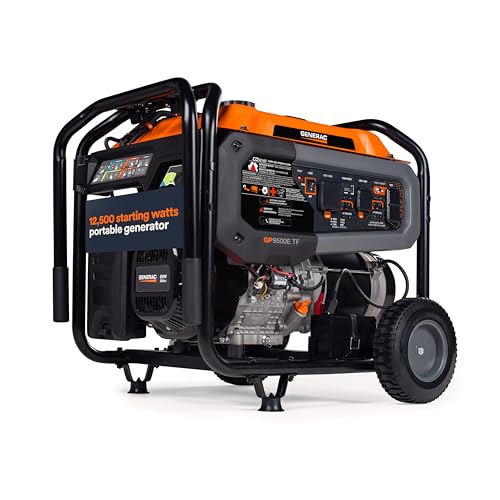
- Best Generac for Job Sites: Generac 12500W Tri-Fuel Portable Generator, tri-fuel flexibility at the top of the portable output range
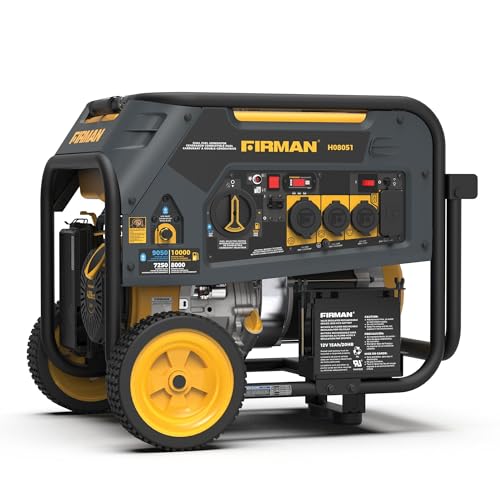
- Best Dual Fuel Workhorse: FIRMAN H08051 8000W/10000W Dual Fuel Generator, gas or propane, 10,000W surge capacity
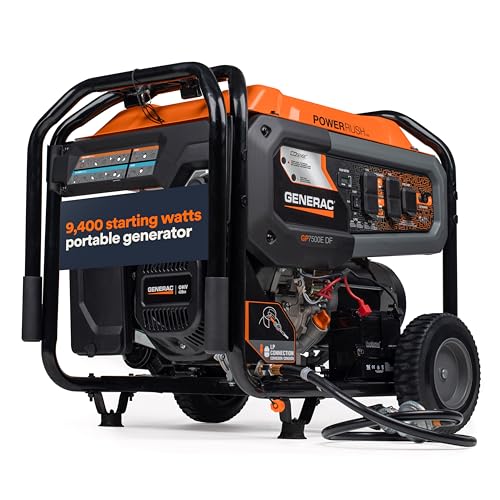
- Best Mid-Range Generac: Generac 9400W Dual Fuel Portable Generator, electric start, gas or propane for extended site runs
- Best Brand Recognition: DeWalt 8750W Gas Portable Generator, contractor-trusted brand, idle control technology for fuel efficiency
What Job Site Generators Actually Need to Handle
A job site generator earns its keep differently than a home backup unit. It starts in cold weather without hesitation, runs all day under sustained load, powers multiple tools simultaneously, and does not complain when it gets dusty, rained on slightly, or vibrated on the back of a truck. The wattage requirements are also higher than most homeowners expect: a circular saw (1,400 to 2,400W), an air compressor (1,500 to 3,000W running), work lighting (500 to 1,000W), and a few cordless tool chargers (100 to 300W each) add up quickly. Most job sites need at least 7,500W of running capacity to avoid tripping the generator mid-cut.
Fuel logistics matter more on a job site than in a backyard. A generator that runs 8 to 10 hours per day will go through 6 to 10 gallons of gasoline daily. Dual fuel and tri-fuel models reduce that pressure by allowing propane operation when a tank is more convenient than gasoline deliveries, and natural gas connection on a permanent job site eliminates fuel handling entirely.
The most overlooked job site generator spec is the GFCI outlet. OSHA requires GFCI protection for construction site power under 1000V, which means generators without GFCI outlets technically require an external GFCI adapter on every outlet used for tools. Most modern job site generators have at least some GFCI-protected outlets built in. Check the outlet panel before purchasing for any site where safety compliance matters.
For buyers who need maximum durability and heavy-duty ratings, our best heavy duty portable generators guide covers rugged-build alternatives across wattage tiers. For buyers focused on output above 10,000W for large commercial sites, the best large portable generators article covers that range in depth.
In-Depth Reviews: Best Portable Generator for Job Site
Westinghouse 7500W EFI Dual Fuel Portable Generator
Electronic fuel injection on a job site generator addresses a problem that any contractor who has tried to start a carbureted machine on a cold January morning understands viscerally. The Westinghouse 7500W EFI reads its own operating conditions and adjusts the fuel mixture automatically, which translates to consistent cold-weather starts, stable performance at altitude, and no carburetor service calls after a season of storage. On a job site where downtime costs money, that reliability is not a luxury.
7,500 running watts handles the full typical job site load: circular saw, air compressor, work lighting, and multiple tool chargers running simultaneously. Dual fuel means propane is an option when gasoline logistics become inconvenient on a larger site. The most thoroughly validated generator on this list by owner volume, which means the real-world performance in demanding conditions is well-documented.
Best for: contractors and site supervisors who want a proven, fuel-injected job site generator at the 7,500W tier with dual fuel backup capability.
AIVOLT 8000W Dual Fuel Super Quiet Inverter Generator
The question contractors often ask about inverter generators is whether the clean power actually matters on a job site. The answer is yes, and more so than it used to be. Modern job sites run laser levels, digital measuring tools, laptop-based project management software, and jobsite radios with USB charging, all of which benefit from the stable sine wave output that the AIVOLT 8000W Dual Fuel Inverter provides alongside the power for heavy tools.
8,000W of inverter output at this price point is genuinely unusual. The throttle-down at partial load also means quieter operation when fewer tools are running, which matters in residential construction zones with noise restrictions or early morning start windows. Dual fuel adds propane flexibility. It is the heaviest hitter in the inverter category on this list and one of the most reviewed 8,000W inverters available.
Westinghouse 13500W Tri-Fuel Home Backup Portable Generator
When a job site is large enough that multiple crews are working at once, 7,500 to 8,000W starts to feel like a single-circuit breaker. The Westinghouse 13500W Tri-Fuel changes that calculus entirely. 12,500 running watts supports two full tool circuits simultaneously, heavy compressors, temporary lighting for an entire structure, and site office equipment all from one machine. The 50-amp outlet allows direct connection to a temporary power distribution panel, which is standard practice on larger commercial sites.
Tri-fuel is the right call at this output level. The daily fuel consumption at near-full load makes gasoline logistics challenging for a week-long site. Propane from a large tank or natural gas from a site utility connection keeps the generator running without the interruptions of twice-daily refueling.
The highest satisfaction rating on this list at this review volume is not a coincidence. At 13,500W, there is not much room for a generator to underdeliver without buyers noticing immediately. The load is too demanding for marginal hardware to survive, and the fact that this Westinghouse holds that rating after thousands of uses in demanding conditions tells you something about the engineering margin they built into it.
A-iPower 10000W Electric Start Portable Generator
Sometimes the job site budget is fixed and the output requirement is not. The A-iPower 10000W delivers the highest wattage available at the lowest price on this list: conventional gas operation, 420cc OHV engine, electric start, and both 30-amp and 50-amp outlets for flexible site connection. No dual fuel, no inverter circuit, no remote start. Just 10,000 watts at a price that makes the output tier accessible without the premium of a Generac or Westinghouse.
For site managers whose primary concern is maximum simultaneous tool capacity at minimum capital cost, and who have gasoline logistics sorted, the A-iPower is the direct answer. The owner base has put it through sustained construction use and the results are documented.
Generac 12500W Tri-Fuel Portable Generator
Generac built its brand on the premise that power should be available when you need it without requiring the operator to think too hard about it. The Generac 12500W Tri-Fuel reflects that: electric start, tri-fuel flexibility across gas, propane, and natural gas, and 12,500 starting watts with strong running capacity for a full site load. For contractors who have worked with Generac home standby systems and trust the brand’s service network, this is the portable job site version of that commitment.
Best for: contractors who want Generac’s brand reliability and tri-fuel capability at the 12,000W+ tier for demanding multi-crew job sites.
FIRMAN H08051 Dual Fuel Portable Generator
FIRMAN positions itself as the working contractor’s alternative to premium brands: built for sustained operation at full load, dual fuel without the price premium of the major names, and 10,000W surge capacity from an 8,000W running platform. The FIRMAN H08051 is a generator that does not apologize for being conventional. Recoil start as backup to the electric start, a large fuel tank for extended run time, and dual fuel operation that switches cleanly between gas and propane mid-run. For buyers who do not need inverter output and want maximum dual-fuel running hours at this wattage, FIRMAN delivers.
Generac 9400W Dual Fuel Portable Generator
The Generac 9400W Dual Fuel sits between the 7,500W entry tier and the 12,500W heavy hitters, which makes it the right size for mid-scale job sites where a 7,500W unit runs a little too close to capacity but a 12,500W machine is more than the site actually needs. Electric start, dual fuel for propane flexibility, and Generac’s construction-grade reliability in a package that is slightly easier to move and store than the 12,500W variant. If you have run Generac before on a site and know what to expect, this delivers that at the output level that matches the work.
DeWalt 8750W Gas Portable Generator
Walk onto any major commercial construction site in the United States and count the number of yellow and black tools. DeWalt’s presence in professional contracting is not accidental, and when they released the DeWalt 8750W Generator, contractors already trusted the brand before reading a single spec. 8,750 starting watts, idle control technology that cuts fuel consumption when the load drops, a 389cc engine built for sustained site use, and the DeWalt reliability warranty that contractors have staked their tool budgets on for decades. It is newer to the generator market than some alternatives here, but the brand equity behind it is not.
Job Site Generator Buying Guide
Sizing for a construction site
Add up the running watts of every tool that might operate simultaneously, not just the peak load. A circular saw (1,800W) plus an air compressor (2,000W running) plus a chop saw (1,500W) plus site lighting (600W) plus three cordless chargers (300W total) equals roughly 6,200W running with surge spikes above that when compressors kick on. A 7,500W generator provides reasonable headroom for this load. Add a second compressor or a table saw and you need 10,000W or more.
Conventional vs. inverter on a job site
For sites where the primary load is motors, compressors, and power tools, conventional generators are appropriate and cost-effective. For sites that also run sensitive electronics (laser levels, measurement equipment, laptop-based site management, or audio/video production), inverter output is worth the premium. The AIVOLT 8000W inverter on this list handles both without compromise.
Fuel planning for extended site operation
A 10,000W generator at 70% load burns roughly 0.8 to 1.0 gallon of gasoline per hour. An 8-hour work day requires 6 to 8 gallons. For a week-long site, that is 30 to 40 gallons, which requires either planned daily fuel delivery or an on-site storage solution within fire code limits. Dual fuel and tri-fuel models that connect to a propane tank or natural gas supply remove this logistical challenge for sites where those options are available.
FAQs: Portable Generators for Job Sites
Q: Do job site generators need GFCI outlets?
OSHA requires ground fault circuit interrupter (GFCI) protection for all 120V, single-phase, 15 and 20-amp receptacles used at construction sites. Most modern portable generators include at least two GFCI-protected outlets on the panel. For generators without built-in GFCI outlets, portable GFCI adapters provide compliant protection on any outlet. Verify outlet configuration before purchasing for any site with OSHA compliance requirements.
Q: Can a portable generator run a construction site air compressor?
Most portable air compressors (2 to 5 gallon) draw 1,500 to 2,500W running with starting surges of 3,000 to 5,000W. A 7,500W generator handles a standard single-stage compressor with room for additional tools. Large two-stage compressors (240V, 5 horsepower and above) draw 3,500 to 5,000W running and may require a dedicated 10,000W generator if other tools are running simultaneously. Check the compressor’s nameplate amperage and calculate accordingly.
Final Verdict
For most job sites up to mid-scale construction, the Westinghouse 7500W EFI Dual Fuel is the starting recommendation: EFI reliability, dual fuel flexibility, and the most thoroughly validated job site performance on this list.
For larger multi-crew sites that need 12,000W or above with tri-fuel capability, the Westinghouse 13500W Tri-Fuel holds the highest satisfaction rating on this list and handles full-site loads without rationing power between crews.
And for contractors who want to run inverter-grade clean power alongside heavy tools at the 8,000W tier, the AIVOLT 8000W Dual Fuel Inverter is the job site inverter choice on this list.





Write Your Review
No reviews yet. Be the first to share your experience!