



Quick Picks: Best 10,000-Watt Generators
- Best 10,000W Inverter Generator: Westinghouse iGen10500DF 10,000W Dual Fuel Inverter, clean power for sensitive electronics with 10,000W output
- Best 10,000W Conventional Generator: Generac 10,000W Portable Generator, trusted brand with robust output for whole-home backup and construction
- Best 12,500W Step-Up Option: Westinghouse WPro12500 Dual Fuel Generator, 12,500W for larger homes and heavier commercial equipment
- Best Tri-Fuel 14,500W Option: Westinghouse WPro14500TFc 14,500W Tri-Fuel Generator, gasoline, propane, and natural gas at maximum portable output
- Best Value 10,000W Generator: A-iPower 10,000W Portable Generator, reliable 10,000W output at a competitive price point
When You Need a 10,000-Watt Generator
A 10,000-watt generator is the appropriate choice when a standard 5,000 to 7,500W generator is not sufficient for the load you need to run. The two most common scenarios where 10,000W becomes necessary are: whole-home backup for larger homes (2,500 square feet or more) where central air conditioning, a well pump, refrigerators, and lights must run simultaneously, and commercial or construction use where multiple high-draw tools (table saw, compressor, concrete mixer, site lighting) operate concurrently. At 10,000W, a generator can sustain a 240V central AC system (6,000 to 8,000W running) alongside refrigeration and lighting without running the generator above 80 percent of its rated capacity, which is the recommended maximum for sustained operation.
The generators in this guide span from 10,000W to 14,500W, which reflects that buyers shopping in the 10,000W category often need to decide between a true 10,000W unit and a step-up to 12,500 to 14,500W for additional headroom. The incremental cost from 10,000W to 12,500W is typically modest relative to the additional covered load, and the extra capacity provides meaningful benefit for homes with larger central AC systems, electric water heaters, or heavy power tools. The Westinghouse 12,500W and 14,500W models are included in this guide as the natural step-up options for buyers who discover during load analysis that 10,000W sits close to their requirement.
Generator output ratings reflect peak or starting watts, not continuous running watts. A 10,000W generator typically provides 8,000 to 9,000W of continuous rated output; the peak 10,000W is available for two to three seconds during appliance motor startups. When calculating your total load, use the running watts of your appliances (not the surge figures) and ensure the total stays within the continuous rating. The startup surge of the largest single appliance (typically the central AC compressor) should not exceed the generator’s surge capacity. Most 10,000W generators have surge capacities of 10,000 to 12,500W, which comfortably handles central AC startup when the other loads are already running at steady state.
For buyers who need the next tier down at 7,500W for most home backup scenarios, the best generators for home use covers the full range from 5,000W to 10,000W+. For buyers specifically comparing the largest portable generator models, the best 15,000-watt generators covers maximum-output portable generators above the 12,000W threshold.
In-Depth Reviews: Best 10,000-Watt Generators
Westinghouse iGen10500DF 10,000W Dual Fuel Inverter Generator
The Westinghouse iGen10500DF is the only true inverter generator in this guide, combining 10,000W output with clean sine wave power quality from both gasoline and propane fuel sources. Inverter technology at 10,000W is uncommon because the engineering cost is higher than conventional generators at this output level, which reflects in the price premium. The iGen10500DF produces THD below 3 percent, making it the appropriate choice when 10,000W is needed for data centers, medical equipment, sensitive commercial electronics, or full-home backup that includes modern variable-speed HVAC systems. Westinghouse’s brand reputation, Co-Pilot monitoring display, and Westinghouse Lifetime Technical Support add confidence to the purchase. For buyers who specifically need inverter-quality clean power at the 10,000W class, the Westinghouse iGen10500DF is the reference recommendation.
Generac 10,000W GP10000 Portable Generator
The Generac GP10000 is a high-output conventional generator from one of the most recognized brands in the US market. Generac’s OHVI engine design and established US dealer service network make the GP10000 a defensible choice for buyers who value brand familiarity and service accessibility alongside performance. At 10,000W, it handles the full residential whole-home backup load for most households, including central AC, well pump, and standard appliances simultaneously. Generac’s wide distribution also means parts and service are accessible without special ordering. For buyers who prefer Generac’s brand reputation for their 10,000W home backup generator, the GP10000 provides established brand reliability at the 10,000W output class.
Westinghouse WPro12500 Dual Fuel Generator
The Westinghouse WPro12500 Dual Fuel provides 12,500W of output on both gasoline and propane, offering 25 percent more capacity than a 10,000W generator for loads that push a 10,000W unit close to its continuous rating. This extra headroom is valuable for homes with larger 4-ton central AC systems (requiring 8,000W or more running) where a 10,000W generator would operate continuously near its maximum, reducing longevity and increasing maintenance requirements. Propane operation allows fuel storage without stabilizer concerns for long-term emergency preparedness. For buyers who identify during load analysis that a 10,000W generator would operate at 85 to 90 percent of continuous capacity during AC use, the WPro12500 provides the appropriate additional margin.
Westinghouse WPro14500TFc 14,500W Tri-Fuel Generator
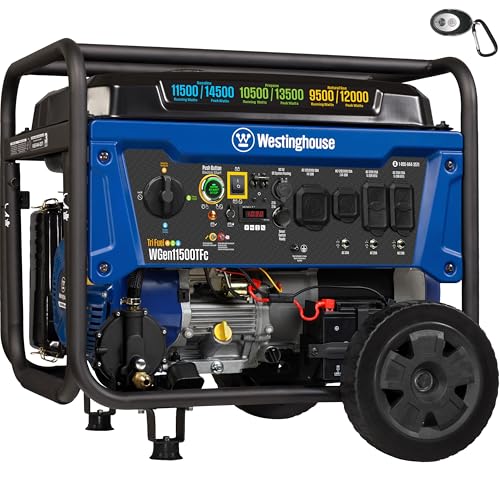
The Westinghouse WPro14500TFc is the highest-output portable generator in this guide at 14,500W with tri-fuel capability: gasoline, propane, and natural gas. Natural gas capability is the key differentiator, allowing direct connection to the home’s natural gas line for unlimited runtime during extended outages without fuel resupply logistics. For homeowners in hurricane or storm corridors where outages lasting a week or more are realistic, natural gas capability combined with 14,500W output provides a near-standby equivalent backup from a portable generator. At 14,500W, it covers virtually every load combination in a large home without load management. For buyers who want the maximum portable generator capability with fuel versatility, the WPro14500TFc is the premium recommendation.
A-iPower 10,000W Portable Generator
The A-iPower 10,000W Generator offers reliable 10,000W output at a competitive price point, making it the value recommendation in this guide for buyers who need 10,000W capacity and want to minimize upfront cost. A-iPower has established a solid reputation in the high-output generator category with a focus on robust construction and practical features for demanding use. At 10,000W, it covers the full whole-home backup and construction site use cases effectively. For buyers who want straightforward 10,000W conventional generator performance at the lowest available price from a recognized brand with functional customer support, the A-iPower 10,000W is the budget-conscious choice in this guide.
10,000-Watt Generator Buying Guide
How to calculate if 10,000W is the right size for your home
List your critical loads with their running watts: central AC (a 3-ton unit draws approximately 3,500W running, a 5-ton unit approximately 6,000W), well pump (750 to 1,500W), refrigerator (150 to 400W), freezer (100 to 400W), lighting (200 to 500W total), device charging (150 to 300W). Total these running watts and add 20 percent for surge margin. If the total exceeds 8,000W (the typical continuous output of a 10,000W generator), you need either a 12,500W or larger unit or load management to stagger AC and pump operation. Most homes with a 3-ton central AC system and standard appliances total 5,000 to 6,500W running, which a 7,500 to 10,000W generator handles comfortably. Only homes with 4-ton or larger central AC or multiple concurrent high-draw loads consistently require 10,000W or more.
Conventional vs inverter for 10,000W: when does inverter matter?
For most whole-home backup scenarios that power motors, compressors, heating elements, and standard electronics, a conventional generator is functional and appropriate. For sensitive loads such as medical equipment requiring pure sine wave input, variable-frequency drives on newer HVAC systems, high-end audio or video systems, and network server equipment, inverter technology is the safer choice. If your critical load list includes these sensitive items and you need 10,000W total, the Westinghouse iGen10500DF inverter model is the correct choice despite its higher cost. If your critical loads are predominantly motors, lights, refrigeration, and standard AC devices that tolerate modified sine wave or conventional generator output, a conventional 10,000W generator is appropriate.
FAQs: 10,000-Watt Generators
Q: How long can a 10,000-watt generator run on one tank of gas?
Runtime varies with load and fuel tank size. Most 10,000W generators have 5 to 7.5-gallon tanks and consume 0.8 to 1.2 gallons per hour at 50 percent load (5,000W). At 50 percent load, a 5-gallon tank provides 4 to 6 hours of runtime; a 7.5-gallon tank extends that to 6 to 9 hours. At 75 to 100 percent load with central AC running, fuel consumption increases to 1.2 to 1.8 gallons per hour, reducing runtime accordingly. For extended outages, plan on approximately 5 gallons per 6 to 8 hours at typical whole-home backup load, and stockpile fuel accordingly. Propane runtime on dual-fuel models with a 20-pound propane cylinder (approximately 4.7 gallons equivalent) is approximately 4 to 6 hours at moderate load.
Q: Do I need a transfer switch for a 10,000-watt generator?
Yes. A transfer switch is strongly recommended for any generator intended for home backup use, and is legally required in most jurisdictions for any permanent or semi-permanent generator connection to home wiring. A manual transfer switch (interlock kit) prevents backfeed to the utility grid (which can electrocute line workers) and allows the generator to power your home’s circuits cleanly without running extension cords. Professional installation by a licensed electrician is required for transfer switch wiring. The cost of a manual interlock kit plus installation is typically a one-time expense that significantly improves safety and convenience during outages. Automatic transfer switches cost more but eliminate the need to manually connect the generator each time the power fails.
Final Verdict
For buyers who need 10,000W with clean inverter power quality for sensitive electronics and HVAC systems, the Westinghouse iGen10500DF Dual Fuel Inverter is the only true 10,000W inverter generator in this guide and the premium recommendation for electronics-sensitive whole-home backup.
For buyers who want maximum output flexibility with tri-fuel operation for unlimited natural gas runtime during extended outages, the Westinghouse WPro14500TFc is the largest-capacity and most fuel-flexible option available in the portable generator category.
And for buyers who need proven 10,000W conventional generator performance from an established brand at a competitive price, the Generac GP10000 delivers Generac brand reliability and US service network support at the 10,000W output tier.





Write Your Review
No reviews yet. Be the first to share your experience!