




Quick Picks: Best 1000 Watt Solar Generators
- Best LiFePO4 at 1000Wh: Jackery Explorer 1000 v2 – 1070Wh LiFePO4, 1500W output, 4000-cycle battery life, compact for camping and van use
- Best Fast-Charging Option: EcoFlow DELTA 2 – 1024Wh, 1800W output, X-Stream charging to 80% in under 50 minutes from wall, top solar input in class
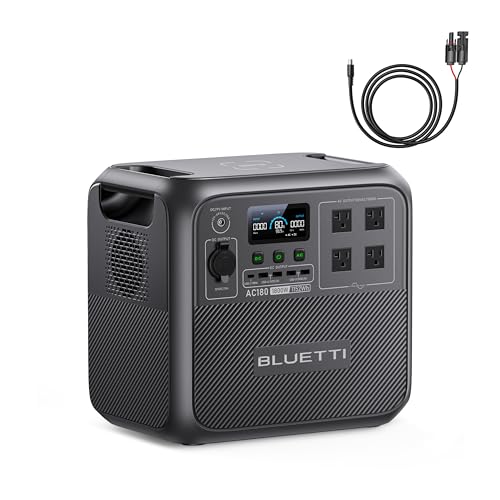
- Best Output Wattage: Bluetti AC180 – 1152Wh, 1800W continuous, 2700W peak, handles high-draw appliances beyond what most 1000Wh stations support
- Best Compact Design: Anker SOLIX C1000 – 1056Wh, 1800W, industry-leading fast charge, compact form factor for portability
- Best Ecosystem Integration: Goal Zero Yeti 1000X – 1000Wh, 1500W, compatible with the full Goal Zero panel and accessory ecosystem
- Best Value at 1000Wh: EcoFlow DELTA 1000 – 1008Wh, 1600W, proven reliability in the established DELTA platform at accessible pricing
The 1000Wh solar generator class is the most popular tier in the portable power station market. Stations in this range offer the best balance of portability and practical capacity, large enough to run a refrigerator for several hours, charge all devices, power a CPAP through the night, and run lighting and a small TV, while remaining light enough to carry without assistance and compact enough to fit in a car trunk or van cargo area. The 1000Wh class represents the crossover point where a solar generator becomes genuinely useful for extended camping, van life, and emergency home backup rather than just phone and laptop charging.
The key distinction within the 1000Wh class is output wattage. Not all 1000Wh stations deliver the same output: older or budget models may offer 1000W or less, limiting which appliances can run. The best current 1000Wh stations deliver 1500-1800W of output, enough to run a microwave (1000W), a small window AC (800-1200W startup), or an induction cooktop at medium setting. This output tier expands what a 1000Wh station can actually do in real use beyond the basic charging and lighting scenarios that 500W-output stations handle.
The practical limit of a 1000Wh solar generator is one night of essential backup: a refrigerator cycling at 150W average draw consumes approximately 750-900Wh in an 8-hour overnight period. A 1000Wh station handles this single load with minimal capacity for anything else. For multi-appliance coverage, size up to the 2000Wh class. For single-device overnight coverage including CPAP, refrigerator, or lighting plus charging, 1000Wh hits the right balance of capability and portability.
What 1000Wh Can and Cannot Power
Can power continuously: CPAP without humidifier (30-60W, 8-16 hours), refrigerator cycling (150W average, 5-7 hours), LED lighting (50W, 20 hours), laptop (50-80W, 12-20 hours), phone charging (multiple cycles). Can power intermittently: microwave at 1000W for 45-60 minutes total runtime, electric blanket at 200W for 5 hours, small window fan continuously. Cannot power continuously: central AC, electric water heater, well pump for extended periods, or multiple high-draw appliances simultaneously. For applications requiring overnight coverage of multiple loads, the home backup solar generator guide covers the 2000Wh+ tier.
Best 1000 Watt Solar Generators – Reviewed
Jackery Explorer 1000 v2 – LiFePO4 Longevity at 1000Wh
The Jackery Explorer 1000 v2 brings LiFePO4 battery chemistry to the 1000Wh class with a 4000-cycle rated service life, significantly longer than the 500-800 cycle life of older NMC chemistry stations at this capacity tier. At 1070Wh and 1500W output (3000W surge), it handles all standard camping and emergency backup loads: refrigerator startup and continuous running, CPAP overnight, lighting and device charging, and periodic microwave use. The LiFePO4 chemistry also provides improved thermal stability, making the Explorer 1000 v2 safer in high-temperature environments like a vehicle interior or sun-exposed campsite.
Jackery’s SolarSaga panel compatibility covers the Explorer 1000 v2 with clear documentation for panel selection and expected recharge times. A 200W panel array recharges the station from near-empty in approximately 5-6 hours of direct sunlight, a practical daily camping recharge schedule. For buyers who want a 1000Wh station that will serve them for 5-10 years of regular use rather than degrading significantly after 2-3 years, the LiFePO4 chemistry of the Explorer 1000 v2 is the correct long-term investment at this capacity tier.
Best for: Campers and van lifers who want LiFePO4 longevity in a 1000Wh station, CPAP users who need reliable overnight power on camping trips, anyone investing in a solar generator they plan to use for many years without capacity degradation.
EcoFlow DELTA 2 – Fastest Charging 1000Wh Solar Generator
The defining advantage of the EcoFlow DELTA 2 in the 1000Wh class is charging speed. X-Stream technology charges the 1024Wh station from 0 to 80% in under 50 minutes from a standard wall outlet, the fastest AC wall recharge of any station at this capacity. In pre-storm emergency preparation scenarios, this means arriving home with a drained station and having it adequately charged before the outage arrives. The 1800W output handles all 1000Wh-class applications plus the high-draw appliances that lower-output stations cannot start.
Solar input supports rapid recharge from EcoFlow’s compatible panel ecosystem. The DELTA 2 is also expandable with the EcoFlow DELTA 2 Extra Battery, doubling capacity to 2048Wh on the same base unit, a useful upgrade path for buyers who start with the 1000Wh tier and find they need more capacity over time. The LiFePO4 chemistry provides the same 3000+ cycle durability as competitors in this class. For buyers who prioritize wall charging speed for emergency preparedness use alongside solar capability, the DELTA 2 is the fastest-recharging 1000Wh station available.
Best for: Emergency preparedness users who need fast pre-storm wall charging, anyone who wants the option to expand to 2000Wh by adding a battery module later, EcoFlow ecosystem users who want a 1000Wh station compatible with existing panels and accessories.
Bluetti AC180 – Highest Output at 1000Wh Capacity
The Bluetti AC180 stands apart in the 1000Wh class for its 1800W continuous and 2700W peak output, the highest output wattage in the 1000-1200Wh capacity tier. This output level handles a small window AC unit startup (800-1200W surge, 600-800W running) alongside other loads, which most 1000Wh stations at lower output wattages cannot manage. At 1152Wh of capacity, the AC180 also sits at the higher end of the 1000Wh class in storage. The combination of maximum output wattage and above-average capacity makes it the most capable 1000Wh station for users with higher-demand loads.
The 1800W output and 2700W peak mean the AC180 can start a small portable AC unit for brief cooling sessions during camping, run a microwave at full power, and handle all charging and lighting loads simultaneously without approaching the output limit. BLUETTI’s LiFePO4 chemistry provides 3500+ cycles at 80% capacity retention. Solar input of up to 500W recharges the AC180 in approximately 2.5 hours with a matched panel array, among the fastest solar recharge times in the 1000Wh class. For buyers who need the most powerful 1000Wh station available, the AC180 is the correct choice.
Best for: Users who need 1800W+ output in a 1000Wh station to run a small window AC or high-draw appliances, campers who want the highest output available at this capacity for maximum appliance compatibility, anyone for whom output wattage is the primary constraint at the 1000Wh tier.
Anker SOLIX C1000 – Best Compact 1000Wh Form Factor
The Anker SOLIX C1000 delivers 1056Wh and 1800W output in a compact form factor that Anker has optimized for portability and clean aesthetics alongside capable specifications. The 1800W output matches the class leaders, and the fast wall charging speed, among the fastest in the category, makes it practical for users who frequently recharge from the grid between outdoor uses. Anker’s GaN-based power conversion technology contributes to the compact size by using more efficient components than conventional power station designs.
For buyers who carry the solar generator frequently, into camping sites, between locations in a van or car, or up stairs in an apartment, the SOLIX C1000’s compact dimensions and well-considered carry handle make it the most portable option in the 1000Wh class without sacrificing output capability. Anker’s customer support reputation and warranty coverage are among the strongest in the category. The station accepts compatible Anker solar panels for outdoor recharging. For buyers who prioritize physical portability alongside 1800W output, the SOLIX C1000 is the compact class leader.
Best for: Users who carry the station frequently and want the most compact 1000Wh form factor, apartment dwellers who move the station between balcony solar charging and indoor use, anyone who values Anker’s customer support and warranty for a significant electronics purchase.
Goal Zero Yeti 1000X – Ecosystem Depth at 1000Wh
The Goal Zero Yeti 1000X brings the depth of Goal Zero’s accessory ecosystem to the 1000Wh class. Compatible with the full range of Goal Zero’s Boulder and Nomad solar panels, power links for connecting multiple Yeti stations, and vehicle charging adapters, the Yeti 1000X is the 1000Wh option for buyers who are already in the Goal Zero ecosystem or who plan to expand into a multi-station setup. At 1000Wh and 1500W output, it covers all standard 1000Wh applications comfortably.
Goal Zero’s ecosystem advantage is particularly relevant for buyers planning to connect multiple Yeti stations for combined capacity in a van or cabin setup. Power links between Yeti units allow simultaneous use and combined charging, making the ecosystem scalable in ways that competing single-station platforms cannot match. For buyers who want a 1000Wh station as part of a larger planned Goal Zero power infrastructure rather than a standalone unit, the Yeti 1000X is the ecosystem entry point at this capacity tier. For a broader comparison of how 1000Wh stations compare to off-grid living requirements, see the off-grid solar generator guide.
Best for: Existing Goal Zero users adding a 1000Wh station to their setup, buyers planning a multi-station Goal Zero ecosystem with Power Links for combined capacity, anyone who values tested ecosystem compatibility documentation over lowest-cost alternatives.
EcoFlow DELTA 1000 – Proven Reliability at 1000Wh
The EcoFlow DELTA 1000 is the established platform in EcoFlow’s lineup that has accumulated extensive real-world reliability data across years of consumer use. At 1008Wh and 1600W output (3100W surge), it covers all standard 1000Wh applications with a surge capacity that handles refrigerator startup reliably. For buyers who want a proven, extensively reviewed 1000Wh platform rather than the newest model, the DELTA 1000’s track record provides confidence that the newer iterations do not yet match simply due to time in market.
The DELTA 1000 is compatible with EcoFlow’s panel lineup and supports standard solar charging from third-party panels with MC4 connectors. X-Stream charging brings it to 80% in under 80 minutes from the wall. The station’s reliability reputation and EcoFlow’s customer support infrastructure make it a low-risk purchase for first-time solar generator buyers who want a 1000Wh station from a proven ecosystem. For buyers who want EcoFlow reliability at the 1000Wh class and do not need the very latest model specifications, the DELTA 1000 is the straightforward choice at often more accessible pricing than the DELTA 2.
Best for: First-time solar generator buyers who want a proven, well-reviewed 1000Wh platform, EcoFlow ecosystem users who want a 1000Wh station compatible with existing accessories, budget-conscious buyers who want EcoFlow reliability at the most accessible pricing in the lineup.
Choosing the Right 1000Wh Solar Generator
Match Output Wattage to Your Highest-Draw Appliance
The 1000Wh stations on this list range from 1500W to 1800W output. For most camping and emergency use cases, 1500W is sufficient, it handles refrigerators, CPAPs, laptops, and small appliances. For users who want to run a microwave at full power (1000W) alongside other loads, or attempt a small window AC (800-1200W startup), 1800W output provides the necessary headroom. Identify the highest-wattage appliance in the intended use case and select a station whose output comfortably exceeds it.
Solar Input Rating for Daily Recharge Planning
For camping use where solar is the primary recharge source, match the station’s maximum solar input to the panel array planned. A station accepting up to 400W of solar with a 200W panel array recharges in approximately 3-4 hours of direct sun, adequate for daily camping use. A station with only 200W solar input limits recharge speed regardless of panel array size. Higher solar input ratings reduce the recharge time per day, which matters most in locations with limited daily sun hours or during shoulder seasons.
FAQs
How long does a 1000Wh solar generator last on a full charge?
Runtime depends entirely on the load: a 60W laptop runs approximately 14-16 hours, a CPAP without humidifier at 40W runs 18-22 hours, a refrigerator cycling at 150W average runs 5-7 hours, a microwave at 1000W runs approximately 50-55 minutes total, LED lighting at 50W runs 15-20 hours. Combining loads reduces runtime proportionally. A realistic camping load of refrigerator plus lighting plus phone charging at approximately 250-300W total runs 3-4 hours per 1000Wh of capacity.
Can a 1000Wh solar generator run a refrigerator overnight?
Yes, but at the limit of capacity. A full-size refrigerator averages 150W draw cycling on at roughly 40% duty cycle, consuming approximately 720-900Wh over a 10-hour overnight period. A 1000Wh station covers this on a full charge with minimal capacity remaining. For peace of mind, either start with the station fully charged, limit other loads during overnight refrigerator operation, or use a 2000Wh station if the refrigerator plus other loads need to run simultaneously overnight.
What solar panel pairs best with a 1000Wh station?
A 200W panel is the practical sweet spot for 1000Wh stations. At 200W of panel output (approximately 140-160W real-world in direct sun), the station recharges from near-empty in 6-8 hours, workable for daily camping use with early morning setup. A 400W panel or two 200W panels in parallel recharges in 3-4 hours, providing more flexibility for days with limited sun or late setup. Check the specific station’s maximum solar input rating before selecting panels, a station with a 200W input limit cannot benefit from a 400W panel array.
Final Verdict
For buyers who prioritize long battery life and plan to use the station regularly for years, the Jackery Explorer 1000 v2 with its 4000-cycle LiFePO4 chemistry is the most durable 1000Wh investment. For users who need the fastest wall charging speed for emergency preparedness use, the EcoFlow DELTA 2 charges to 80% in under 50 minutes, unmatched in the class.
For the highest output wattage in the 1000Wh tier, the Bluetti AC180 at 1800W continuous and 2700W surge handles appliance loads that other 1000Wh stations cannot start. All six stations on this list outperform older-generation 1000Wh options and represent the current best available in the class.





Write Your Review
No reviews yet. Be the first to share your experience!