



Quick Picks: Best Solar Generators Under $1,000
- Best Under $1,000 EcoFlow: EcoFlow DELTA 3 Plus – 1,024Wh LiFePO4, 1,500W output, X-Stream fast charge to 80% in 50 minutes, the current-generation EcoFlow 1000Wh platform
- Best Under $1,000 Jackery: Jackery Explorer 1000 Plus – 1,264Wh expandable to 5kWh, 2,000W output, LiFePO4 with the clearest expansion path in the 1000Wh class
- Best Under $1,000 Bluetti: Bluetti Elite 100 V2 – 1,024Wh LiFePO4, 1,000W output, compact design with fast solar input and competitive mid-tier pricing
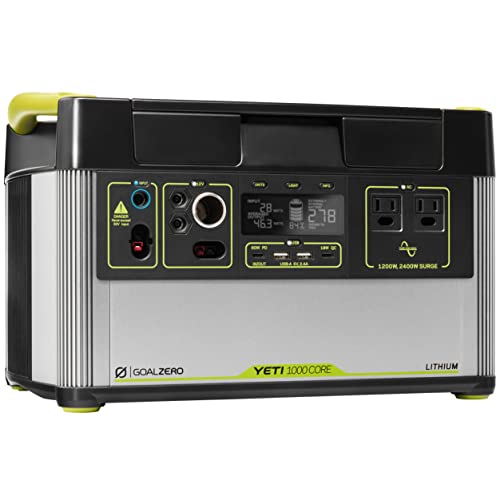
- Best Under $1,000 Goal Zero: Goal Zero Yeti 1000 Core – 983Wh, 1,500W output, full Goal Zero ecosystem compatibility at the 1000Wh class entry point
- Best Under $1,000 High Capacity: VTOMAN FlashSpeed 1500 – 1,548Wh LiFePO4, 1,500W output, the highest capacity option under $1,000 from a value-focused brand
- Best Under $1,000 Entry EcoFlow: EcoFlow Delta 3 – 1,024Wh, standard EcoFlow platform at the most accessible under-$1,000 EcoFlow price point
The under-$1,000 solar generator category is the most competitive capacity tier in the market. At this budget ceiling, buyers can access 1,000-1,548Wh LiFePO4 stations from every major brand — EcoFlow, Jackery, Bluetti, Goal Zero — alongside value brands delivering higher capacity at lower price points. The $1,000 ceiling is significant because it is just below the threshold where stations begin to include 30A RV outlets and split-phase 240V output, keeping this tier focused on camping, CPAP backup, home essential load coverage for shorter durations, and van life applications.
Within the under-$1,000 class, the differentiating specifications are output wattage, expansion capability, and recharge speed. All stations in this tier offer 1000Wh class capacity and LiFePO4 chemistry at their respective price points. The Jackery Explorer 1000 Plus stands out with 5kWh expandability from a sub-$1,000 starting point — a rare platform choice at this price ceiling. The EcoFlow DELTA 3 Plus offers the fastest wall recharge in the class. The VTOMAN FlashSpeed 1500 offers the highest capacity at 1,548Wh from under-$1,000 pricing.
The $1,000 budget threshold for a solar generator corresponds to approximately 1,000-1,500Wh of LiFePO4 capacity — exactly the right tier for covering a home refrigerator overnight (6-8 hours at 150W average = 900-1,200Wh consumed). At 1,024-1,264Wh, every station in this class covers a refrigerator for one overnight cycle, one to two nights of CPAP without humidifier, and a full weekend of device charging without wall access. This is the tier where solar generators cross from supplemental camping devices to practical emergency home backup tools.
What Under-$1,000 Solar Generators Cover
At 1,000-1,548Wh with 1,000-2,000W output, these stations cover: overnight refrigerator backup (1 cycle), two to three nights of CPAP without humidifier, full weekend camping device charging, 12V cooler for 12-18 hours, LED lighting several nights, small portable induction cooktop for 30-60 minutes, laptop full charge 10-15 times. What they do not cover: multi-day home backup without solar recharge, simultaneous AC and microwave for extended periods, whole-home overnight backup at full load. For the step up to genuine multi-night home backup capacity, the 1,500-watt solar generator guide and home backup solar generator guide cover the next tiers.
Best Solar Generators Under $1,000 – Reviewed
EcoFlow DELTA 3 Plus – Fastest Charging 1000Wh Under $1,000
The EcoFlow DELTA 3 Plus at 1,024Wh LiFePO4 and 1,500W output is EcoFlow’s current-generation 1000Wh class platform — bringing X-Stream charging (0 to 80% in 50 minutes) alongside LFP chemistry to the under-$1,000 tier. The 50-minute wall recharge is the fastest in the 1000Wh class among under-$1,000 options, enabling pre-storm emergency charging from nearly flat in under an hour and allowing travelers with 45-minute access to a wall outlet to leave with a nearly full station. The 1,500W output covers refrigerator startup, microwave at moderate power, CPAP, and all standard 1000Wh applications.
EcoFlow’s ecosystem compatibility extends the DELTA 3 Plus with EcoFlow-branded solar panels, the Smart Generator pairing for expanded capability, and app monitoring. Battery expansion adds capacity beyond the 1,024Wh base for buyers whose needs grow over time. LiFePO4 chemistry at 3,000+ cycles covers daily use without significant capacity degradation over years of service. For buyers who want EcoFlow’s fastest-charging current-generation 1000Wh platform with full ecosystem compatibility at under-$1,000 pricing, the DELTA 3 Plus is the correct EcoFlow choice at this budget tier.
Best for: EcoFlow ecosystem users who want the current-generation 1000Wh platform with the fastest wall charging in the class, emergency preparedness buyers who need fast recharge capability from low battery, anyone who wants EcoFlow app monitoring and ecosystem compatibility at under-$1,000 pricing.
Jackery Explorer 1000 Plus – Most Expandable Under $1,000
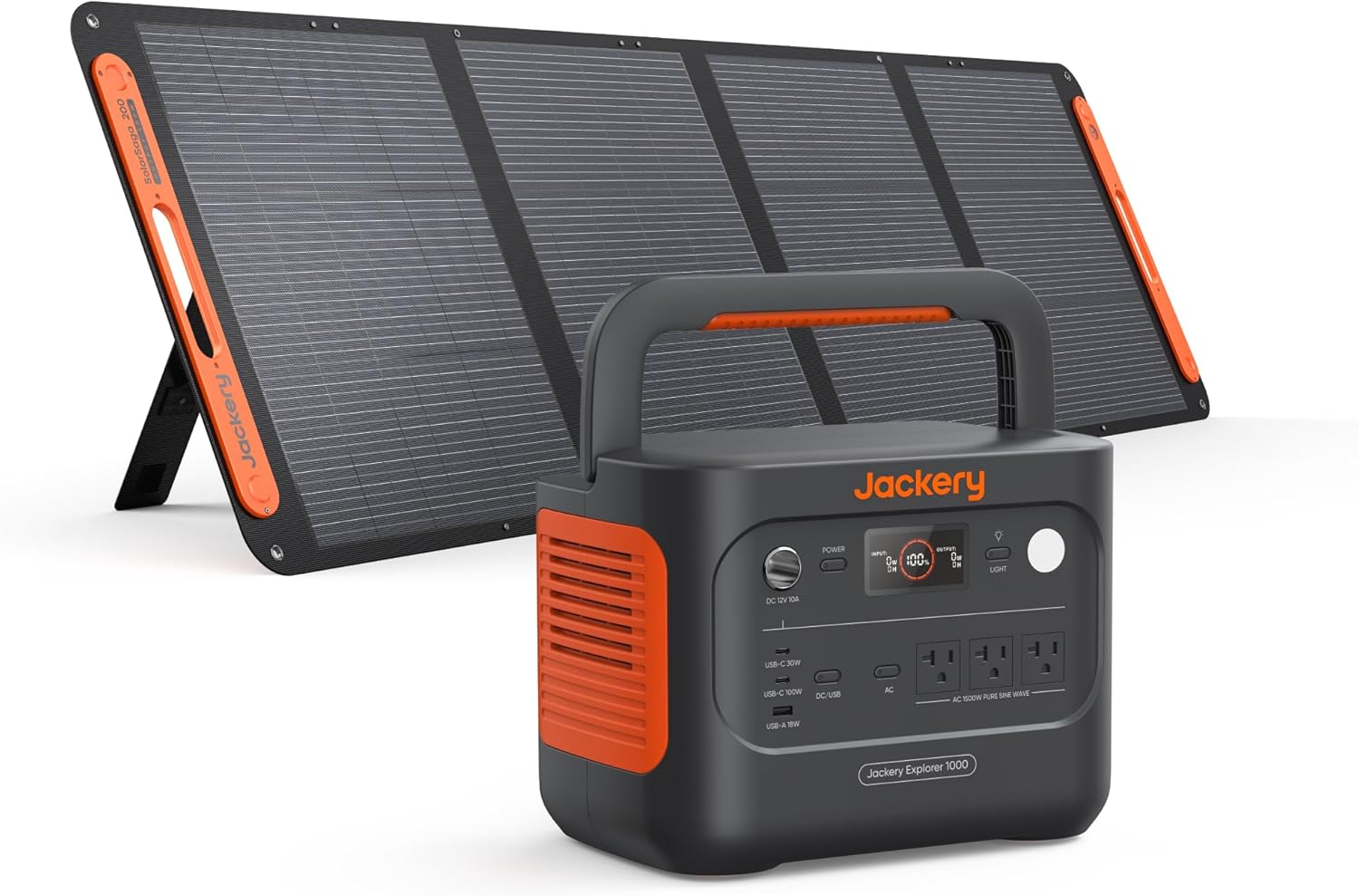
The Jackery Explorer 1000 Plus at 1,264Wh expandable to 5,000Wh is the only station in the under-$1,000 class with a credible path to 5kWh total capacity from the same base unit. At 2,000W output and 1,264Wh base capacity, it exceeds the standard 1000Wh class specifications in both dimensions — providing 26% more capacity than 1024Wh alternatives and 33% more output than 1,500W output competitors. The expansion architecture adds Jackery-compatible battery modules to reach 5kWh total for buyers whose camping or backup needs grow beyond the 1,264Wh starting point.
LiFePO4 chemistry provides 4,000-cycle rated life at the Explorer 1000 Plus — the highest cycle life on this list. Jackery’s SolarSaga panel documentation extends to the 1000 Plus with specific recharge time estimates for each panel configuration. For Jackery ecosystem users or buyers who want the highest expandable 1000Wh class station, or who plan to grow into a 5kWh system without replacing the base station, the Explorer 1000 Plus is the most strategically sound purchase at under-$1,000. For the Jackery full range, the Jackery solar generator guide covers all current models.
Best for: Buyers who plan to expand from 1,264Wh to 5,000Wh over time without replacing the base station, Jackery ecosystem users who want the current-generation 1000Wh class flagship, anyone who wants the highest cycle life (4,000 LiFePO4 cycles) and output (2,000W) in the under-$1,000 tier.
Bluetti Elite 100 V2 – Compact 1000Wh from Bluetti Under $1,000
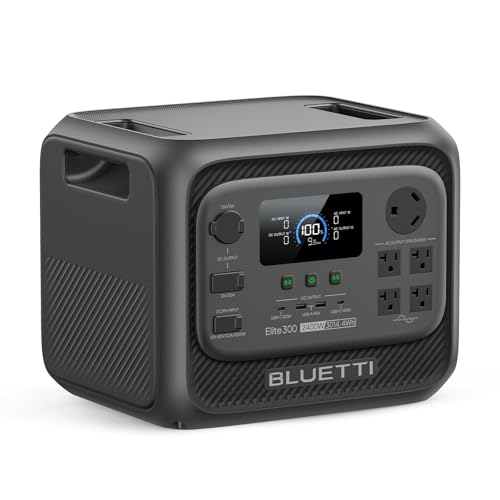
The Bluetti Elite 100 V2 at 1,024Wh LiFePO4 is Bluetti’s compact 1000Wh class station — a smaller form factor than the AC180 above but sharing Bluetti’s LiFePO4 chemistry and brand support infrastructure at the lowest Bluetti entry price in the 1000Wh class. At 1,000W output, the Elite 100 V2 covers all standard 1000Wh use cases: CPAP, device charging, refrigerator startup, and lighting. Fast solar input enables efficient outdoor recharging for camping use.
Bluetti’s approach with the Elite 100 V2 prioritizes compact portability and accessible pricing over the high-output specifications of the AC180. For buyers who want Bluetti’s LiFePO4 quality and customer support at the lowest entry point in Bluetti’s 1000Wh lineup, or who want a compact station that packs smaller than the AC180 while sharing the same brand backing, the Elite 100 V2 is the correct budget-conscious Bluetti choice. For a comparison across Bluetti’s full line, the Bluetti solar generator guide covers all models.
Best for: Bluetti ecosystem users who want the most compact and accessible 1000Wh entry point in Bluetti’s lineup, buyers who prioritize compact form factor over maximum output at the 1000Wh tier, anyone who wants Bluetti LiFePO4 quality and support at the lowest Bluetti price in this class.
Goal Zero Yeti 1000 Core – Ecosystem Depth at 1000Wh
The Goal Zero Yeti 1000 Core at 983Wh and 1,500W output is the 1000Wh tier entry point for Goal Zero ecosystem users — fully compatible with Goal Zero’s complete Boulder and Nomad panel lineup, Power Link multi-station connection capability, and the full Goal Zero accessory ecosystem. At 1,500W output, it handles all standard 1000Wh use cases reliably. The Core designation indicates this is Goal Zero’s entry-level 1000Wh platform, providing the ecosystem compatibility without the premium features of the higher-tier Yeti models.
For buyers who are already using Goal Zero’s solar panels and want to add the 1000Wh station that integrates with those panels, the Yeti 1000 Core is the correct ecosystem choice — it avoids the compatibility research and cable adapter sourcing that cross-brand panel combinations require. Power Link connections allow multiple Yeti stations to work as a combined system for buyers who want to grow their total capacity over time. For buyers starting fresh with no ecosystem preference, the other stations on this list often provide more output or capacity per dollar. For Goal Zero ecosystem users, the Yeti 1000 Core is the right fit.
Best for: Goal Zero ecosystem users who want the 1000Wh tier with full panel and accessory compatibility, buyers who want Power Link multi-station expansion capability from the 1000Wh base, anyone who has Goal Zero panels already and wants a compatible station without adapter sourcing.
VTOMAN FlashSpeed 1500 – Highest Capacity Under $1,000
The VTOMAN FlashSpeed 1500 at 1,548Wh LiFePO4 and 1,500W output delivers the highest energy storage of any station on this list at under-$1,000 pricing — providing 50% more capacity than 1024Wh alternatives without breaking the budget ceiling. At 1,548Wh, the FlashSpeed 1500 covers overnight refrigerator backup with significant margin, multi-night CPAP operation, and extended camping loads that 1000Wh stations cannot sustain without solar recharge. The 1,500W output covers all standard camping and home backup appliance loads.
VTOMAN has established a track record in the mid-capacity value segment with real-world reviews that confirm their specification claims perform as advertised. LiFePO4 chemistry provides the 3,000+ cycle durability expected for this use. For buyers whose primary under-$1,000 criterion is maximum stored energy rather than brand ecosystem or premium features, the FlashSpeed 1500 delivers substantially more capacity than any comparable-priced established brand alternative. For buyers who want even more capacity at budget pricing, the budget solar generator guide covers additional high-value options across different capacity tiers.
Best for: Under-$1,000 buyers who prioritize maximum LiFePO4 capacity over brand ecosystem, campers who need more than 1000Wh for multi-night trips but want to stay under a $1,000 budget, value-focused buyers who want 1500Wh class coverage at sub-$1,000 pricing.
EcoFlow Delta 3 – Most Accessible EcoFlow Under $1,000
The EcoFlow Delta 3 at 1,024Wh is EcoFlow’s most accessible 1000Wh class station — the entry point into the EcoFlow ecosystem at the lowest price available for an EcoFlow station in this capacity range. While the DELTA 3 Plus above offers faster charging (50 minutes) and higher output (1,500W), the Delta 3 base model provides EcoFlow’s LiFePO4 chemistry, ecosystem compatibility, and app integration at a lower starting price. For buyers who want EcoFlow’s brand backing and ecosystem at the lowest EcoFlow entry point in the 1000Wh class, the Delta 3 covers the standard use cases reliably.
EcoFlow’s ecosystem compatibility — panels, Smart Generator pairing, app monitoring — extends to the Delta 3 base model. Wall charging refills the 1,024Wh capacity in approximately 56-70 minutes depending on outlet conditions. LiFePO4 chemistry provides 3,000+ cycle rated life. For buyers who want EcoFlow but have a tighter budget within the under-$1,000 ceiling, the Delta 3 base model is the correct EcoFlow choice when the DELTA 3 Plus premium is not justified by the use case. For a direct comparison of EcoFlow’s 1000Wh lineup, the 1,000-watt solar generator guide covers the full class.
Best for: EcoFlow ecosystem users who want the lowest EcoFlow entry price in the 1000Wh class, buyers who want EcoFlow LFP quality and app integration at the most accessible pricing, anyone who does not need the DELTA 3 Plus’s faster charging and higher output but wants EcoFlow’s ecosystem compatibility.
The most strategically sound under-$1,000 purchase is the one that avoids future regret from under-buying. If there is any realistic possibility of needing a 30A RV outlet, 240V output, or more than 1500Wh capacity within the next 2-3 years, spending the extra $300-500 to reach the next tier now prevents replacing the station entirely — a total cost that far exceeds the upgrade premium paid upfront. The under-$1,000 tier is correct for buyers who have genuinely defined their use case as 1000Wh class and are not planning to expand beyond it.
FAQs
Is 1000Wh enough for home backup?
For short outages of 4-6 hours covering only a refrigerator (150-200W average), lighting (50W), and device charging (100W) at approximately 300-350W total running load, a 1000Wh station provides approximately 3-4 hours of coverage. Overnight backup of 8-10 hours at that load requires 2400-3500Wh — beyond the under-$1,000 class. 1000Wh is a practical home backup for short day-time outages or for managing specifically the refrigerator overnight with careful load scheduling. For full overnight coverage without load management, the 1500Wh and 2000Wh tiers are more appropriate.
What is the best solar generator for under $1000 for camping?
For camping without a 12V compressor cooler — device charging, CPAP, lighting — any 1024Wh station on this list covers a full weekend comfortably. With a 12V cooler, the VTOMAN FlashSpeed 1500 at 1,548Wh provides approximately 18-20 hours of cooler runtime versus 12-14 hours from a 1024Wh station — a meaningful difference for a 3-day camping trip without shore power. For camping users who want the most under-$1,000 capacity for extended cooler operation, the FlashSpeed 1500 is the correct choice.
Final Verdict
For the fastest wall charging in the under-$1,000 class, the EcoFlow DELTA 3 Plus at 50-minute recharge is the speed benchmark. For buyers who plan to expand their system, the Jackery Explorer 1000 Plus at 5kWh expandable capacity is the most future-proof platform at this budget ceiling.
For the highest raw capacity under $1,000, the VTOMAN FlashSpeed 1500 at 1,548Wh provides more energy storage than any other station at this price point. And for Goal Zero ecosystem users, the Yeti 1000 Core is the correct 1000Wh entry point with full panel and accessory compatibility.




Write Your Review
No reviews yet. Be the first to share your experience!