




Best Solar Generators for 30-Amp RV in 2026
Quick Picks
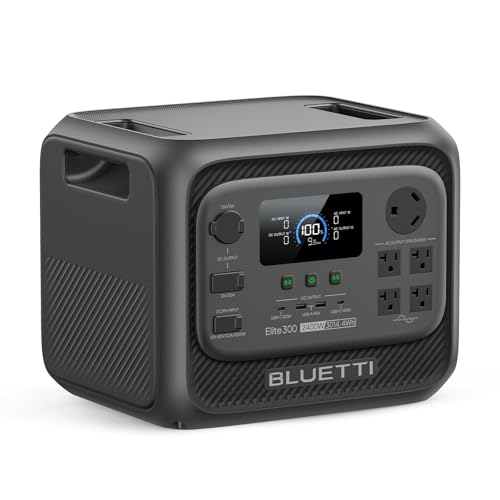
- Best Native TT-30R: Bluetti Elite 300 – 3,014Wh, 2,400W, built-in TT-30R outlet
- Best Budget Entry: Anker SOLIX C1000 Gen 2 – 1,024Wh, 2,000W, with TT-30R adapter
- Best Solar Bundle: Jackery Solar Generator 2000 PRO + 2x200W panels, 2,200W
- Best Surge Headroom: Jackery Explorer 3000 Pro – 3,072Wh, 3,600W, 7,200W surge
- Best Mid-Range: Jackery Solar Generator 3000 PRO + 100W panel, 3,000W
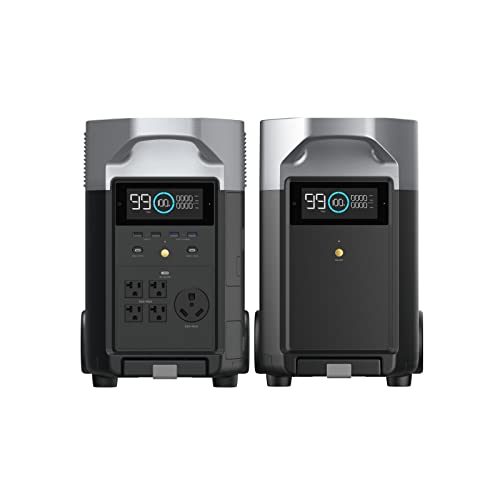
- Best for Long Trips: EcoFlow DELTA Pro + Extra Battery – 7,200Wh, 3,600W
Powering a 30-amp RV from a solar generator is a different challenge than simply owning a generator with a TT-30R outlet. A 30-amp shore power connection (30A x 120V) supports up to 3,600W of total load. That means your rooftop AC, refrigerator, microwave, and interior outlets can all draw simultaneously up to that 3,600W ceiling. A solar generator sized for 30-amp RV use must not only have the right outlet – it must have enough output wattage and battery capacity to sustain real combined RV loads for useful periods.
This article focuses specifically on running a whole 30-amp RV through the shore power inlet – the TT-30R plug on the side of your rig. This is distinct from our dedicated 30-amp solar generator guide, which covers generators defined by having the TT-30R outlet. Here, we go deeper on actual RV use: what happens when you plug the generator into your RV’s shore power inlet and ask it to run everything. The rooftop AC is the dominant load in that scenario, so any solar generator on this list must handle the full RV electrical load, not just light-duty camping accessories.
All six generators here can connect to a TT-30R shore power inlet – some via a built-in outlet, others via an adapter. The meaningful differences are in output wattage, surge capacity, battery size, and solar recharge capability. Understanding those differences will tell you which unit actually works for your specific RV and camping style.
The TT-30R outlet is the standard 30-amp RV shore power connection. When you plug a solar generator into your RV’s shore power inlet, the entire RV electrical system – AC unit, refrigerator, outlets, microwave, and all 120V loads – draws from the generator’s battery and inverter. The generator must sustain the sum of all those loads, not just the AC alone. Always tally your actual simultaneous load before sizing a generator for this use case.
Top Solar Generators for 30-Amp RV Use
Bluetti Elite 300 – Best with Native TT-30R Outlet
The Bluetti Elite 300 earns the top spot in this roundup for one specific reason: it has a dedicated TT-30R outlet built in – no adapter required. Plug it directly into your RV’s shore power cord and the entire 30-amp system recognizes a clean, properly configured power source. The Elite 300’s 2,400W continuous output and 4,800W surge provide solid headroom for running an RV with a 13,500 BTU rooftop AC alongside a compressor fridge, lighting, and phone charging.
Real-world 30-amp RV loads with the AC running typically land between 1,500-2,200W depending on which other appliances are active. The Elite 300’s 2,400W continuous rating keeps those loads comfortably within spec, and the 4,800W surge handles the AC compressor startup without tripping the inverter. The 3,014Wh battery sustains a 1,800W combined load for about 1.6 hours – enough for a substantial rest period or an afternoon cooling session. Solar recharge via up to 1,200W of panel input makes the Elite 300 viable for multi-day stays when paired with a roof or ground array.
The native TT-30R outlet also means the RV’s internal 30-amp breakers and GFI protection remain in the circuit, providing the same protection as shore power – an important safety consideration that some adapter-based setups can complicate. For RVers who want clean, plug-in simplicity, the Bluetti Elite 300 is the right starting point. See our RV AC solar generator guide for a deeper focus on air conditioner-specific performance.
Best for: RVers who want native TT-30R connectivity, light-to-moderate 30-amp loads, weekend trips
Anker SOLIX C1000 Gen 2 – Best Minimal 30-Amp Entry Point
The Anker SOLIX C1000 Gen 2 is the most compact generator on this list and the one with the most honest limitations for full 30-amp RV use. At 1,024Wh and 2,000W output, it can power a 30-amp RV if you manage loads carefully – but it cannot run the rooftop AC and microwave simultaneously, and runtime under real RV loads is measured in under two hours. Its place on this list is as a budget entry point and as a generator for smaller trailers or teardrop campers with modest 30-amp load profiles.
Via a TT-30R adapter (widely available and inexpensive), the SOLIX C1000 Gen 2 plugs into any RV shore power inlet. At 2,000W output, it handles the 30-amp connection up to its rated capacity. For a small trailer used primarily for sleeping and minimal cooking – where the heaviest load might be a portable AC unit at 700W and a few appliances at 300W – the C1000 Gen 2 is adequate and genuinely portable. The 800W solar input allows meaningful daytime recharge, and the 1,024Wh battery is fast to refill from a campground hookup if available.
Where the SOLIX C1000 Gen 2 falls short is any RV scenario involving a rooftop AC. The 2,000W output is below the starting surge of a 13,500 BTU rooftop unit, and even if the AC started, the running load plus fridge would push against the generator’s limits continuously. Be honest about your load profile before choosing this option. For small campers with modest needs, it is a solid choice. For anything with a rooftop AC, step up to at least the 2,200W options.
Best for: Small trailers, teardrop campers, load-managed 30-amp use without rooftop AC
Jackery Solar Generator 2000 PRO + 2x200W Panels – Best Solar Bundle for 30-Amp RVs
The Jackery Solar Generator 2000 PRO with 2x200W panels bundles 2,160Wh of battery and 400W of solar panels in one complete system. At 2,200W continuous and an included solar array, it is the most turnkey option for buyers who want to drive to a campsite, set up panels in 15 minutes, and have a functioning solar power system for their 30-amp RV. The 2,200W output handles most small-to-mid RV loads, including a portable or window-type RV AC unit at 5,000-8,000 BTU alongside the fridge and outlets.
The 2,200W limit means the Jackery 2000 PRO will not run a standard 13,500 BTU rooftop AC – the startup surge alone exceeds the generator’s output. For RVers whose rooftop AC is a hard requirement, the 3,000W+ options below are the correct choice. For RVers with a portable or window-style AC, or those willing to run the rooftop AC on a reduced schedule, the 2000 PRO’s output is workable. The included 400W of solar panels significantly offsets daytime load and can sustain operation of a 5,000 BTU portable AC for much of a sunny afternoon with minimal net battery drain.
Runtime math: a combined 30-amp RV load of 1,200W (fridge, lights, portable AC) from the 2,160Wh battery lasts about 1.7 hours. With 400W of solar offsetting some of that draw, the effective daytime runtime extends meaningfully. For the off-grid living use case where the RV is stationary for days at a time, 400W of solar plus a larger battery bank would be the next upgrade step.
Best for: Travel trailers without rooftop AC, portable AC setups, buyers who want bundled solar panels
When powering a 30-amp RV from a solar generator, the TT-30R connection method matters. A generator with a native TT-30R outlet (like the Bluetti Elite 300) is the cleanest solution. Generators without the native outlet can use a 30-amp female to standard 5-20P male adapter, which is widely available. Both approaches deliver the same 120V power to the RV – the native outlet is simply more convenient and eliminates one adapter connection point.
Jackery Explorer 3000 Pro – Best Surge Headroom for 30-Amp RVs
The Jackery Explorer 3000 Pro delivers 3,072Wh and 3,600W continuous output with a 7,200W surge rating – the highest surge capacity on this list. In 30-amp RV terms, 3,600W of continuous output means the generator can sustain full 30-amp load utilization without throttling: rooftop AC at 1,300W, compressor fridge at 150W, microwave at 700W, and lighting plus miscellaneous at 200W totals about 2,350W, well within the 3,600W continuous rating. The 7,200W surge handles the AC startup comfortably even with other loads already running.
The 3,072Wh battery at a combined 2,350W load lasts about 1.25 hours of maximum-utilization use. In real camping conditions where you cycle appliances – run the microwave briefly, cycle the AC on and off – the effective duration stretches considerably. Paired with 600-800W of solar panels, the Explorer 3000 Pro can sustain moderate 30-amp RV loads through a full day of camping with careful management. The solar input limit of 1,000W means there is headroom to add a large panel array if you mount panels on the RV roof.
Jackery’s build quality on the 3000 Pro class is proven. The unit has been widely used in the RV community for two camping seasons and has a strong track record for reliability under sustained high-load use. For buyers who have been burned by underpowered generators before and want genuine 30-amp capability, the Explorer 3000 Pro is the straightforward answer.
Best for: Full-featured 30-amp RVs with rooftop AC, buyers who want maximum surge headroom, Class C motorhomes
Jackery Solar Generator 3000 PRO + 100W Panel – Best Mid-Range Complete System
The Jackery Solar Generator 3000 PRO with 100W Panel sits at the same performance level as the Explorer 3000 Pro but adds an included 100W panel and comes packaged as an integrated system. At 3,024Wh and 3,000W continuous output, it is rated just at the minimum threshold for reliable 13,500 BTU rooftop AC operation – which means it works, but with less margin than the 3,600W competitors. The 100W panel is a starter piece; most buyers running a 30-amp RV will want to add 300-500W more to build a functional daily solar strategy.
The advantage of the 3000 PRO bundle over buying a bare generator is that the panel is already connector-matched and the system is validated as a unit by Jackery. For new solar RVers who want to start somewhere reasonable and add panels incrementally, this is a logical choice. The 3,024Wh battery running a combined 30-amp load of 2,000W lasts about 1.5 hours, comparable to the Explorer 3000 Pro at similar load levels. The 3,000W continuous rating is the main limitation – with the rooftop AC running plus other loads, you can approach the ceiling and trigger protection if you run the microwave simultaneously.
Sequencing loads carefully – run the microwave before turning the AC on, for example – is a practical workaround at the 3,000W continuous threshold. For most everyday camping scenarios, the load management required is minimal and the system performs reliably within its ratings.
Best for: New solar RVers, mid-size travel trailers, buyers who want an integrated panel bundle
EcoFlow DELTA Pro + Extra Battery – Best for Extended Off-Grid Stays
The EcoFlow DELTA Pro + Extra Battery is the capacity champion of this roundup at 7,200Wh combined with 3,600W continuous output. For 30-amp RVers who boondock for multiple days without shore power access, this configuration provides a fundamentally different experience: enough battery to run a full RV load through the afternoon, into the evening, and overnight, with solar recharging during daylight hours to repeat the cycle the next day. No other system here offers that combination at the same capacity level.
At a combined 30-amp RV load of 2,000W, the 7,200Wh battery sustains 3.5 hours of full utilization – roughly double the 3,000Wh competitors. In real camping conditions with AC cycling and appliance variation, a realistic daily use pattern of 10-12 hours of moderate load (averaging 1,000W) draws about 10,000-12,000Wh. The DELTA Pro system’s 7,200Wh plus 1,200W of rooftop solar (EcoFlow supports up to 1,600W solar input on the DELTA Pro) can realistically sustain that daily load in good sun conditions. This is the system for serious off-grid RVers who want large-scale solar generator capability without a fixed installation.
The DELTA Pro + Extra Battery combination is heavy and expensive. It is not a casual purchase. But for full-time RVers, snowbirds, or those doing extended wilderness stays where shore power is unavailable for days at a time, it represents the practical ceiling of portable solar generator capability for 30-amp RV use. EcoFlow’s smart home panel integration also allows permanent installation in an RV electrical bay with proper circuit integration.
Best for: Extended boondocking, full-time RVers, multi-day trips without shore power access
Frequently Asked Questions
Do I need a special adapter to plug a solar generator into a 30-amp RV?
Yes, unless your generator has a native TT-30R outlet (like the Bluetti Elite 300). Most solar generators output through standard NEMA 5-20R or L14-30 outlets. To connect to your RV’s TT-30R shore power inlet, you need a 30-amp female (TT-30R) to 5-20P male adapter if your generator has standard 20-amp outlets. These adapters are widely available online and at RV supply stores. One important note: when using an adapter, the connection limits current to whatever the lower-rated connector supports. A 5-20P adapter limits you to 20 amps (2,400W at 120V) regardless of the generator’s stated output – meaning high-draw appliances like a rooftop AC may not perform correctly. Generators with native TT-30R outlets avoid this limitation entirely.
Can I run everything in my 30-amp RV from a solar generator simultaneously?
Possibly, but probably not all at once. The typical 30-amp RV has a 3,600W load ceiling (30A x 120V). Running a rooftop AC at 1,300W, compressor fridge at 150W, and microwave at 700W simultaneously totals 2,150W – achievable with a 3,000W+ generator. But add an electric water heater at 1,200W and you exceed the 3,600W maximum, which would trip the generator’s protection just as it would trip the shore power pedestal’s breaker. The practical approach is to identify your simultaneous loads, tally the wattage, and ensure your generator’s continuous rating exceeds that total. Most campers find that with a 3,000-3,600W generator, they can run everything except heating elements (water heater, space heater) simultaneously, which covers the vast majority of camping comfort loads.
Final Verdict
For most 30-amp RV owners, the Jackery Explorer 3000 Pro represents the best balance of output, capacity, and surge headroom. Its 3,600W continuous and 7,200W surge rating provide genuine 30-amp capability with a safety margin that makes daily use stress-free. The 3,072Wh battery gives adequate runtime for a camping day, and the 1,000W solar input supports a meaningful rooftop panel installation.
Buyers who specifically want a native TT-30R outlet should prioritize the Bluetti Elite 300 – the clean plug-in experience and 4,800W surge rating make it the most convenient option for standard 30-amp travel trailer use. For those who camp for weeks at a time without hookups, the EcoFlow DELTA Pro + Extra Battery is the only system here with enough capacity to sustain full 30-amp RV loads across multiple days of variable solar conditions. Whatever you choose, size up rather than down: a generator running at 60% of its rated output runs cooler, lasts longer, and handles unexpected load spikes better than one that is constantly near its limit.





Write Your Review
No reviews yet. Be the first to share your experience!