




Best Solar Generators for EV Charging in 2026
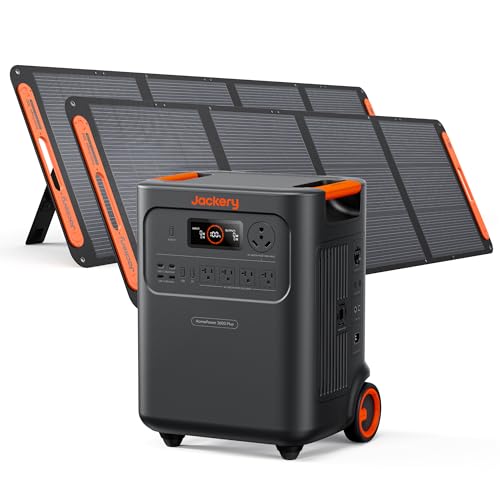
- Best Overall: Jackery HomePower 3600 Plus + 2x200W Solar Panels – 3,584Wh, solar recharge during day offsets EV draw
- Best Expandable Capacity: Anker SOLIX C2000 Gen 2 + Expansion Battery – 4,096Wh total, 4,000W peak output
- Best for Road Trips: DABBSSON 3000L – 3,072Wh, built-in TT-30, 0 to 80% in 1.5 hours
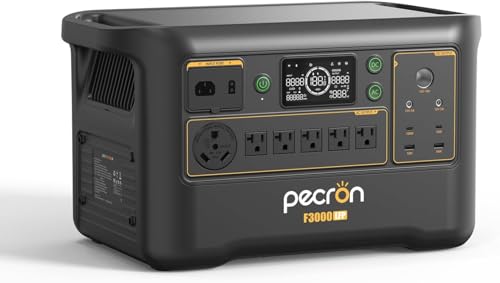
- Best Expandable for Long Trips: PECRON F3000LFP – 3,072Wh, expandable to 10,752Wh
- Best Standalone Value: Jackery HomePower 3000 – 3,072Wh, 7,200W surge, no add-ons needed
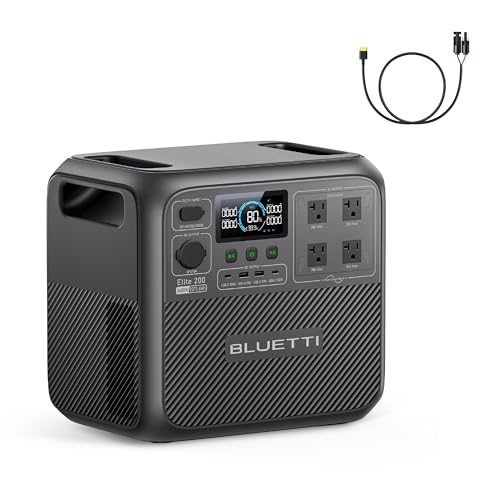
- Best Budget Pick: BLUETTI Elite 200 V2 + Solar Charging Cable – 2,073Wh, 3,900W Power Lifting mode
Charging an electric vehicle from a solar generator is one of the most capacity-intensive things you can ask a portable power station to do. Unlike running a refrigerator or a few lights, Level 1 EV charging draws 1,100W to 1,400W continuously – and keeps drawing it for hours. Adding 50 miles of range at a 1,200W charging rate takes roughly 6 hours and consumes around 7,200Wh. For emergency range – say 20 miles to reach a real charger – you need about 3,000Wh. This means the minimum viable solar generator for meaningful EV charging is a 3,000Wh+ unit, and even then you are working with a limited range top-up rather than a full charge.
This guide is aimed at EV owners who want a solar generator for emergency range extension, campground and off-grid charging, or as a supplemental power source when grid access is limited. For broader context on large-capacity stations, see our best large solar generators guide. We focus on 120V Level 1 charging here, which any standard EV can accept through its included charging cable. Level 2 (240V) charging from a solar generator is possible with 240V-capable stations but delivers a much lower current than a dedicated EVSE, so the practical difference is limited for most portable setups.
Understanding EV Charging from a Solar Generator
Level 1 EV charging uses a standard 120V outlet and draws roughly 12 amps, which at 120V equals about 1,440W. Most EVs include a Level 1 charging adapter in the box. At this rate, you add approximately 3 to 5 miles of range per hour of charging, depending on the vehicle. The math is straightforward but sobering: to add 50 miles of range, you need 10 to 16 hours of continuous charging, consuming 7,200Wh to 10,800Wh of battery capacity. No single portable solar generator currently holds that much energy in one unit.
The practical use case for solar generator EV charging is therefore not a full charge – it is emergency range extension. If you are stranded with 10 miles of range and need 25 more miles to reach a fast charger, a 3,000Wh station can deliver that in roughly 2.5 hours. Solar recharge during the day can meaningfully offset the draw: 400W of solar input running for 5 hours adds 2,000Wh back to the battery, partially replacing what the EV charging session consumed. For the highest-capacity solutions in this space, our best 5,000-watt solar generators guide covers units that push toward the upper boundary of what is currently portable.
Think of a solar generator as an EV range extender for emergencies or off-grid charging, not as a replacement for a home Level 2 charger. A 3,500Wh station adds roughly 12 to 20 miles of EV range – enough to reach a charging station, not enough to top off a depleted battery.
Capacity matters far more than output wattage for this application. A 3,600W output station with 2,000Wh of storage can technically charge an EV quickly – but only for about 80 minutes before it is depleted. A 2,400W output station with 4,000Wh of storage runs nearly 3 hours at full EV charging draw. For EV charging, always maximize capacity first, then check that the output is at least 1,500W to support the Level 1 charge rate. For more on pairing solar generators with home energy management, see our best solar generators for home backup article.
The 6 Best Solar Generators for EV Charging
Jackery HomePower 3600 Plus + 2x200W Solar Panels – Best Overall Solar EV Charging Bundle
The Jackery HomePower 3600 Plus bundled with two 200W solar panels addresses both sides of the EV charging equation: enough storage capacity to deliver meaningful range, and enough solar input to partially replenish the battery during daylight hours. The 3,584Wh LFP battery can add approximately 12 to 18 miles of EV range depending on vehicle efficiency before the battery is depleted, and the included 400W of solar panels add back roughly 1,600Wh to 2,000Wh on a good solar day.
The 3,600W continuous output with 7,200W surge handles Level 1 EV charging at full draw without throttling. The HomePower 3600 Plus is also expandable up to 21kWh, which means a user who starts with this bundle can add battery modules over time to increase total EV range capability substantially. For regular campground or off-grid use where the station is charging from solar during the day and delivering EV power in the evening, the solar bundle configuration makes the most sense.
Best for: EV owners who want a complete solar charging bundle that can partially offset EV draw through solar recharge, with room to expand capacity over time.
Anker SOLIX C2000 Gen 2 + Expansion Battery – Best for Maximum Capacity in a Two-Unit Setup
The Anker SOLIX C2000 Gen 2 paired with its expansion battery reaches 4,096Wh of total LFP capacity – the highest of any two-unit configuration on this list. At a 1,200W Level 1 charging draw, that is approximately 3.4 hours of continuous EV charging and roughly 17 to 20 miles of added range for a typical EV. The 4,000W peak output provides adequate headroom for the Level 1 charge rate.
The C2000 Gen 2’s 58-minute full-charge time means the base unit can be topped off quickly before a trip or during a brief grid access window, and the expansion battery adds a substantial reserve for extended off-grid sessions. Anker’s build quality on the Gen 2 series is well regarded, and the combined unit handles the sustained 1,200W+ draw of EV charging without the thermal issues that can affect lesser stations under prolonged high load.
Best for: Users who want the largest capacity in a compact two-unit setup and prefer the reliability of a well-established brand with fast recharge capability.
DABBSSON 3000L – Best for EV Owners Who Also Camp in an RV
The DABBSSON 3000L offers a unique combination of features for EV-owning RVers: 3,072Wh of semi-solid LFP capacity, a built-in TT-30 (30-amp RV) outlet, and a P-Boost mode that pushes output to 3,600W for high-draw appliances. The 0 to 80% charge time of 1.5 hours is among the fastest in this capacity class, which matters when campground power is available for limited windows.
For EV charging specifically, the 3,000W continuous output handles Level 1 charging cleanly, and the 3,072Wh capacity translates to roughly 12 to 15 miles of added range before the battery needs replenishment. The TT-30 outlet is a practical bonus for RV users who already own a 30-amp EV charging adapter, allowing the station to serve double duty as both EV charger and RV power source. The semi-solid LFP chemistry offers excellent cycle life and safety characteristics comparable to standard LFP.
Best for: RV travelers with an EV who want one station that powers both the coach and adds emergency EV range, with the fastest recharge time in this capacity range.
PECRON F3000LFP – Best for Expanding Toward Road Trip Capacity
The PECRON F3000LFP starts at 3,072Wh and is expandable up to 10,752Wh – a capacity level that begins to make multi-day EV charging genuinely practical rather than just emergency use. At full expansion, 10,752Wh at a 1,200W Level 1 draw gives nearly 9 hours of continuous charging and approximately 35 to 45 miles of added range, which covers a meaningful portion of a daily driving range for many EV owners.
The 3,600W continuous output handles EV Level 1 charging without restriction. For users who are building toward a more complete off-grid or travel solar system incrementally, starting with the F3000LFP base unit and adding expansion batteries as budget allows is a reasonable path. The expandability to 10,752Wh also means this unit can serve as a general home backup and EV charging solution simultaneously during grid outages.
Best for: EV owners who plan to expand their solar system over time and want a base unit that can scale toward genuine multi-day EV charging capability.
Jackery HomePower 3000 – Best No-Accessory Standalone EV Charger
The Jackery HomePower 3000 is a standalone 3,072Wh LFP station with 3,600W continuous output and a 7,200W surge rating – ready to use out of the box without purchasing expansion batteries or solar panels. For an EV owner who wants a clean, ready-to-go solution primarily for emergency use, the HomePower 3000 provides roughly 12 to 15 miles of added range per charge cycle and handles the sustained Level 1 draw without issue.
The 7,200W surge rating, while less relevant for EV charging specifically (which is a steady draw rather than a surge load), is useful if the same station is also used for other home backup applications. Jackery’s interface and app integration are straightforward, and the HomePower 3000’s build quality reflects its premium home-backup positioning. It is the simplest, most self-contained option on this list for a user who does not want to manage expansion batteries or solar panel pairings.
Best for: EV owners who want a ready-to-use, no-configuration standalone solution for emergency range extension and prefer simplicity over modularity.
BLUETTI Elite 200 V2 + Solar Charging Cable – Best Budget Entry for Solar EV Charging
The BLUETTI Elite 200 V2 bundled with a solar charging cable brings 2,073Wh of LFP capacity and 2,600W continuous output to the EV charging conversation at a more accessible price point. The 3,900W Power Lifting mode extends the effective output for brief high-draw moments, and the included solar charging cable enables direct panel connection for daytime solar recharge without additional adapters.
At 2,073Wh, the Elite 200 V2 adds roughly 8 to 12 miles of EV range per full discharge – enough for a genuine emergency range extension but less than the 3,000Wh+ units above. The 2,600W continuous output supports Level 1 EV charging at full draw. For users whose primary use case is home backup with EV charging as a secondary capability, the Elite 200 V2 offers good value. The Power Lifting mode also helps if the same station is used to start surge-heavy appliances alongside EV charging duties. For more budget-conscious options across the solar generator space, see our best 240V solar generators guide for premium alternatives at higher price tiers.
Best for: Budget-conscious EV owners who want solar EV charging capability as one of several use cases, and who primarily need emergency range extension rather than a dedicated EV charging solution.
Frequently Asked Questions
How many miles of EV range can a solar generator realistically add?
At Level 1 charging (1,200W draw), a 3,000Wh solar generator delivers about 2.5 hours of charging time, which adds approximately 10 to 15 miles of range depending on your vehicle’s efficiency. A 4,000Wh unit extends that to roughly 15 to 22 miles. These numbers assume the station starts fully charged and is depleted entirely by EV charging – in practice, you would likely reserve some capacity for other uses. Solar recharge during the day can add 1,500Wh to 2,500Wh back to the battery over 5 to 6 hours of good sun with a 400W to 500W panel array, partially extending the available EV range per day.
Can a solar generator charge an EV faster using 240V?
Some solar generators – particularly whole-home backup systems – do output 240V, which could theoretically support Level 2 EV charging. However, portable solar generators that output 240V typically do so at lower amperage than a dedicated Level 2 EVSE (which runs at 24 to 48 amps at 240V). A solar generator outputting 240V at 10 amps delivers 2,400W, which is only marginally faster than Level 1 and still much slower than a proper Level 2 station. For meaningful Level 2 charging speed improvements, you need a dedicated 240V charging setup with a proper EVSE. The 240V output on solar generators is more useful for running 240V appliances like well pumps than for significantly accelerating EV charging speed.
Final Verdict
Solar generators are best understood as EV range insurance, not a charging replacement. Keep a 3,000Wh+ station in your garage or vehicle for emergencies, pair it with solar panels for off-grid campground charging, and rely on your home Level 2 charger and public fast chargers for day-to-day needs. The two systems complement each other rather than compete.
For most EV owners, the Jackery HomePower 3600 Plus bundled with solar panels provides the best combination of capacity, solar recharge capability, and expandability for solar EV charging. The 3,584Wh base capacity handles emergency range needs, and the solar panels mean you can partially replenish the battery on sunny days for ongoing off-grid use. If maximum capacity in a two-unit setup is the priority, the Anker SOLIX C2000 Gen 2 with its expansion battery reaches 4,096Wh and recharges faster than any competitor.
The most important takeaway for EV-solar generator pairing is to size for capacity first. A station with 3,000Wh or more gives you practical, meaningful range extension. Below that threshold, you are dealing with a true emergency-only scenario with limited miles to show for a full discharge. Plan your solar input accordingly – a 400W panel array running 5 hours per day can replace the energy equivalent of 6 to 8 miles of EV range, which meaningfully offsets the math over a week of off-grid camping.





Write Your Review
No reviews yet. Be the first to share your experience!