





Quick Picks: Best Portable Generators for Construction
- Best Entry Construction Generator: Westinghouse 7500W EFI Dual Fuel, fuel injection for consistent cold starts, most widely owned in the 7,500W class
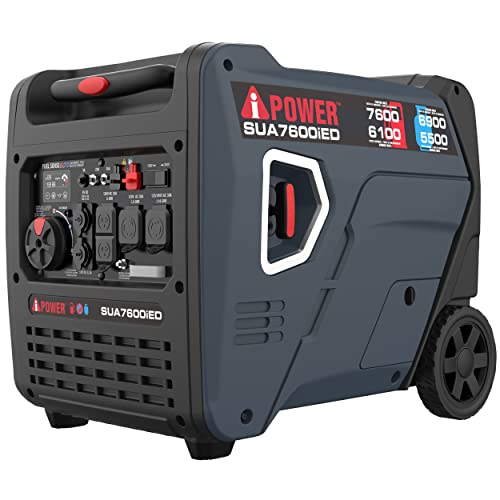
- Best Construction Inverter: A-iPower 7600W Dual Fuel Quiet Inverter Generator, pure sine wave output for tools and electronics, dual fuel flexibility
- Best Large Inverter for Construction: Westinghouse 11000W Tri-Fuel Portable Inverter Generator, 9,500 running watts of clean power, tri-fuel, remote start
- Best High-Output Tri-Fuel: Westinghouse 13500W Tri-Fuel Home Backup Generator, highest satisfaction rating on this list, runs full-site loads all day
- Most Powerful on This List: DuroMax XP15000HXT 15,000-Watt Tri Fuel Generator, 15,000 peak watts for large commercial sites, dual 50-amp outlets
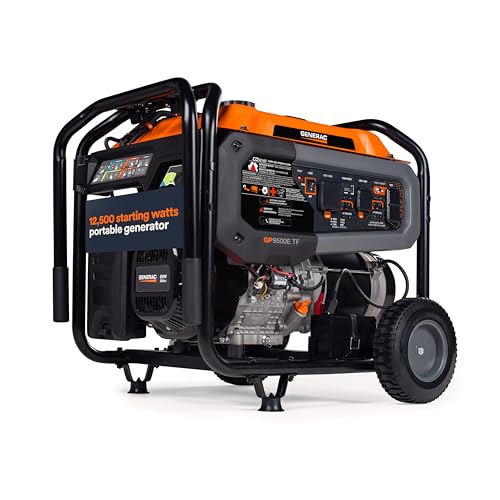
- Best Generac for Construction: Generac 12,500W Tri-Fuel Portable Generator, tri-fuel flexibility, trusted brand, strong surge capacity
- Best Budget Dual Fuel Inverter: AIVOLT 8000W Dual Fuel Inverter Generator, clean power at 8,000W for sites that also run sensitive equipment
What Construction Sites Actually Demand from a Generator
Framing a house, installing HVAC, or running a concrete crew all place different electrical demands on a generator, but they share three non-negotiable requirements: enough running watts to power multiple tools simultaneously without tripping, reliable starts in cold weather, and enough fuel capacity to run through a full working day without a mid-morning shutdown. A generator that cannot meet all three is not a construction generator, regardless of what the spec sheet says.
Wattage requirements scale quickly once multiple trades are on site. A framing crew running a circular saw (1,800W), a compressor (2,500W running), and a miter saw (1,800W) simultaneously draws 6,100 watts before site lighting or chargers are factored in. Add HVAC rough-in equipment or concrete vibrators and the baseline surpasses 9,000 watts. Most of the generators on this list land at 7,500W or above for exactly this reason.
GFCI protection is not optional on construction sites in most US jurisdictions. OSHA 29 CFR 1926.404 requires GFCI protection on all temporary power used for construction. Before purchasing any generator for commercial construction use, verify the outlet panel includes at least two GFCI-protected 20-amp outlets. Machines that lack them require individual GFCI adapters on every outlet used for tool power.
For sites focused specifically on tool power and worksite durability, the best heavy duty portable generators guide covers the rugged-build alternatives. Contractors focused on the 7,500 to 15,000W output range for larger projects can also compare these picks against the best large portable generators roundup for additional options.
In-Depth Reviews: Best Portable Generators for Construction
Westinghouse 7500W EFI Dual Fuel Portable Generator
Try to cold-start a carbureted generator at 7 a.m. in February on a job site in the mountains. The choke adjustment, the primer pulls, the flood risk if you do it wrong. It is a predictable source of lost morning time. The Westinghouse 7500W EFI removes that ritual entirely. Electronic fuel injection reads ambient conditions and adjusts the air-fuel ratio automatically, which means it starts the same way at altitude and in freezing temperatures as it does on a warm day at sea level. For crews who move between job sites in different climates or elevations, that consistency is not a minor feature.
7,500 running watts (9,500 peak) is the practical floor for a multi-trade construction site. It handles the typical framing crew load with room for tool surge spikes. Dual fuel lets the site supervisor decide whether to run on gasoline or propane depending on delivery logistics at a given site. Among construction generators with owner validation at this output level, it is the most widely reviewed option in this class.
A-iPower 7600W Dual Fuel Quiet Inverter Generator
The inverter question on construction sites used to be simple: too expensive, not worth it for tools. That calculus has shifted. Today’s construction sites run laser levels, building information modeling (BIM) laptops, digital surveying equipment, and phone banks that are constantly charging, all of which perform better on the stable sine wave output that a conventional generator cannot provide. The A-iPower 7600W Dual Fuel Inverter delivers clean power across a 7,600W operating range, which covers both the sensitive electronics and the power tools on the same circuit without the need for a separate power conditioning device.
Dual fuel adds propane flexibility for sites where gasoline logistics are challenging. The inverter load-following circuitry also means fuel consumption drops when fewer tools are running, which matters on a site where the generator may run 10-hour days. At this output tier with this feature set, the A-iPower is consistently among the most reviewed options.
Westinghouse 11000W Tri-Fuel Portable Inverter Generator
Do you actually need 11,000 watts of clean inverter power on a construction site? On a residential build with one trade at a time, probably not. On a commercial framing project where a concrete crew, a mechanical subcontractor, and a site office are running simultaneously, absolutely. The Westinghouse 11000W Tri-Fuel Inverter is built for that second scenario: 9,500 running watts of pure sine wave output, tri-fuel capability for extended site operation, and remote start for a generator that may be positioned away from the primary work area.
The tri-fuel advantage at this output level is worth spelling out: a generator running 10,000 watts for 8 hours on gasoline burns roughly 10 to 12 gallons per day. Propane from a 100-pound tank, or natural gas from a temporary utility hookup, eliminates that daily resupply pressure on a week-long pour. The strong satisfaction rating at this review volume, for a machine this demanding to operate correctly, reflects an engineering package that works as specified.
Westinghouse 13500W Tri-Fuel Home Backup Portable Generator
The arithmetic of extended site fuel consumption becomes a logistics problem faster than most buyers anticipate when they buy a large conventional generator. A 13,500W machine at 70% load burns roughly 1.5 gallons per hour. Over a 10-hour construction day, that is 15 gallons, and 75 gallons for a five-day project, which exceeds what most vehicles can transport in a single trip and approaches fire code storage limits for a permanent site. The Westinghouse 13500W Tri-Fuel addresses that directly with propane and natural gas compatibility, turning what would be a twice-daily gasoline problem into a single propane tank delivery or a utility connection.
12,500 running watts is enough to power two independent tool circuits at full construction load simultaneously, which eliminates the power rationing that forces crews to wait for one trade to clear before another starts up. The highest satisfaction rating on this list reflects a machine that has been validated across exactly these demanding conditions.
DuroMax XP15000HXT 15,000-Watt Tri Fuel Generator
There is only one generator on this list that arrives on a pallet. The DuroMax XP15000HXT weighs over 300 pounds and needs to be staged with a hand truck or fork before you consider start-up. That weight is the honest acknowledgment of what 15,000 peak watts and 12,000 running watts requires mechanically. DuroMax built its reputation on machines that prioritize raw output and durability over refinement, and the XP15000HXT is the direct expression of that priority: dual 50-amp outlets for split whole-site distribution, tri-fuel for extended large-site operation, and a transfer switch-ready panel for permanent temporary power installations.
For commercial construction projects, agricultural operations, or industrial job sites where 13,500W would run close to capacity, this machine provides the headroom that matters when multiple large loads surge simultaneously. Among 15,000W class generators, the DuroMax has accumulated the deepest owner validation of any option at this extreme output tier.
Generac 12,500W Tri-Fuel Portable Generator
Contractors choose Generac not always because it is the cheapest option or the highest-rated in every category, but because the brand has spent decades proving its products on the same job sites its customers work on. The Generac 12,500W Tri-Fuel carries that brand weight into the portable large generator segment: tri-fuel flexibility, electric start with recoil backup, and the Generac service network for maintenance support on extended projects. At 12,500 starting watts, it sits just below the DuroMax in raw output but covers every realistic multi-crew construction scenario within the portable generator weight and size class.
AIVOLT 8000W Dual Fuel Inverter Generator
Eight thousand watts of inverter power. Those five words represent a product category that barely existed five years ago at a price that construction buyers can justify. The AIVOLT 8000W Dual Fuel Inverter delivers pure sine wave output at 8,000W, enough for a full single-trade construction load plus sensitive electronics, at a price point that positions it as an accessible alternative to the Westinghouse and A-iPower inverter options on this list. Dual fuel adds propane capability. For buyers whose construction work is a single-trade residential build rather than a multi-crew commercial project, this covers the requirement without paying for the premium of a higher-output machine.
Construction Generator Buying Guide
Wattage tiers by project size
Single-trade residential construction (framing, plumbing, electrical rough-in alone): 7,500 to 8,000W covers typical single-trade loads with room for surges. Multi-trade residential where two trades may run simultaneously: 10,000 to 11,000W avoids the rationing problem. Commercial or multi-crew construction where three or more trades overlap: 13,500W and above is the appropriate range. Undersizing and running close to capacity shortens engine life and creates nuisance trips during tool surge events.
Inverter vs. conventional for construction
Conventional generators are appropriate for sites where the load is entirely motors, compressors, and power tools with no sensitive electronic equipment. Any site that runs computers, laser levels, modern digital controls, or medical equipment (for any worker on-site) benefits from the stable output of an inverter generator. The A-iPower 7600W and Westinghouse 11000W Inverter on this list cover this use case at different output tiers.
Tri-fuel advantages for week-long projects
Any construction project lasting more than two days where the generator runs 8 or more hours per day should consider a tri-fuel model. A 10,000W generator running 8 hours daily at 60% load consumes roughly 7 gallons of gasoline per day, or 35 gallons per week. Coordinating two fuel deliveries per week to a job site is a logistics overhead that propane or natural gas connection eliminates entirely.
FAQs: Construction Site Generators
Q: What wattage do I need for a construction site generator?
Add the running watts of every tool that could operate simultaneously, then add 20% headroom for surge events. A single-trade site typically needs 7,500 to 9,000W. A multi-trade site where two or three crews overlap needs 10,000 to 13,500W. Commercial projects with multiple large loads running at once may need 15,000W or above. The generators on this list cover 7,500 to 15,000W to match these ranges.
Q: Can I use a construction generator for whole-home backup after the project?
Yes, and this dual-use case makes the investment more defensible for contractors. Most construction generators above 7,500W include 30-amp and 50-amp outlets suitable for home transfer switch connection. The tri-fuel models (Westinghouse 13500W, Generac 12,500W, DuroMax 15,000W) are particularly well-suited to this dual use because natural gas connection turns them into a semi-permanent home backup option when not needed on a site. For buyers who want to compare home backup-optimized picks, the best portable generator for job site article covers the 7,500 to 13,500W range from a job site perspective with some additional options.
Final Verdict
For single-trade residential construction, the Westinghouse 7500W EFI Dual Fuel is the most validated entry-level construction generator with the fuel injection advantage that matters in variable weather conditions.
For commercial or multi-crew builds needing maximum output and tri-fuel flexibility, the Westinghouse 13500W Tri-Fuel has the highest satisfaction rating on this list and covers the full-site load without output rationing between trades.
And for construction sites that also run sensitive electronics alongside heavy tools, the Westinghouse 11000W Tri-Fuel Inverter delivers 9,500 running watts of clean power with the tri-fuel flexibility needed for extended project timelines.





Write Your Review
No reviews yet. Be the first to share your experience!