

Solar generators are a great source of renewable energy that can be used for various purposes, from camping trips to emergency power backups at home. There are different types of solar generators available in the market, and each one has its own advantages and disadvantages.
- Portable Solar Generator: This type of solar generator is lightweight and easy to carry, making it ideal for camping, hiking, or other outdoor activities. It usually has a smaller battery capacity and is designed to charge small electronic devices like smartphones and tablets.
- Standby Solar Generator: This type of solar generator is designed for home or office use as a backup power source during power outages. It has a larger battery capacity and can power larger appliances like refrigerators, TVs, and computers.
- RV Solar Generator: This type of solar generator is designed for RVs and other mobile homes. It has a high battery capacity and can power all the appliances in an RV, including air conditioners and refrigerators.
Each type of solar generator has its own features, and it is important to choose the one that best fits your needs. Factors to consider include battery capacity, charging time, portability, and price.
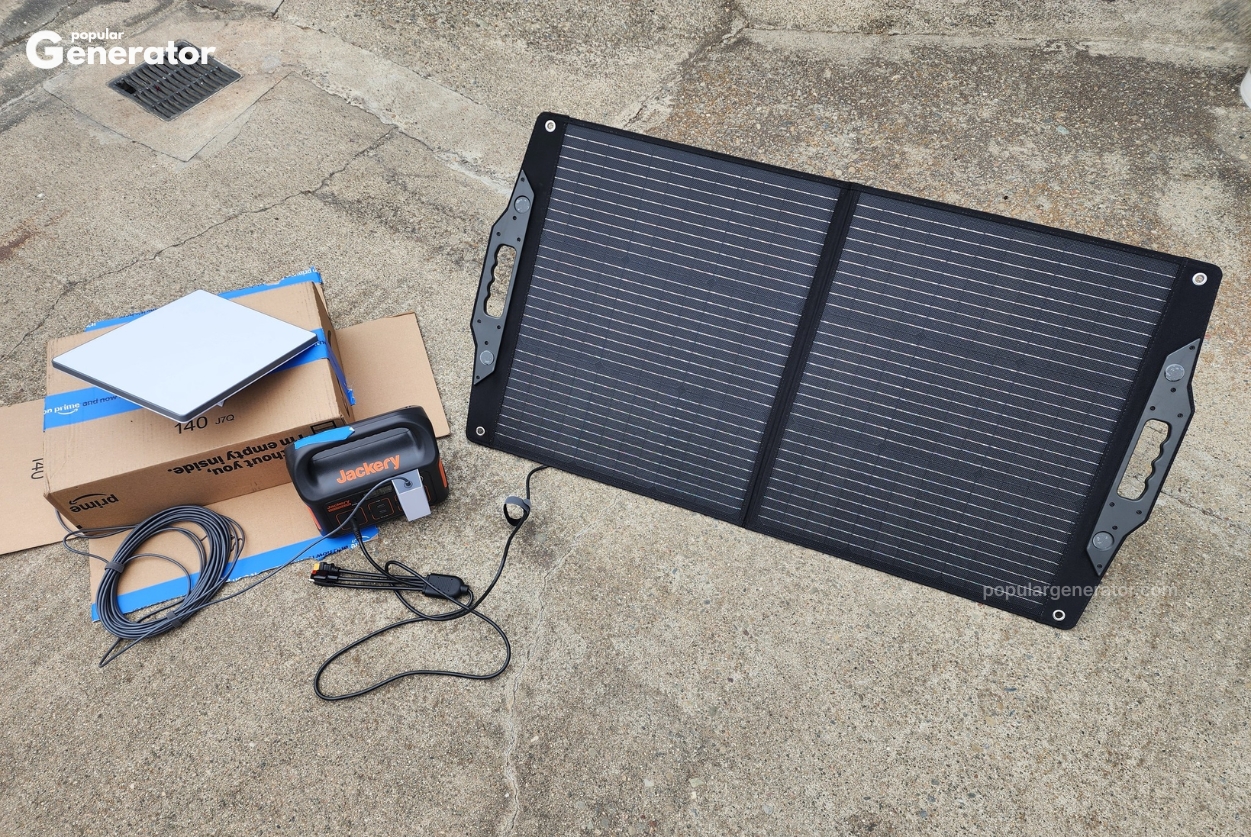
We’re here to help you find the right one for you.
- Best overall: Jackery Portable Power
- Best for frequent use: Goal Zero Yeti 1400
- Best for camping: Aimtom portable
- Best budget: PRYMAX
- Best for off-grid living: SUAOKI Portable
- Best for homes: Flashfish Solar
- Best portable: Rockpals
What is Solar Generators?
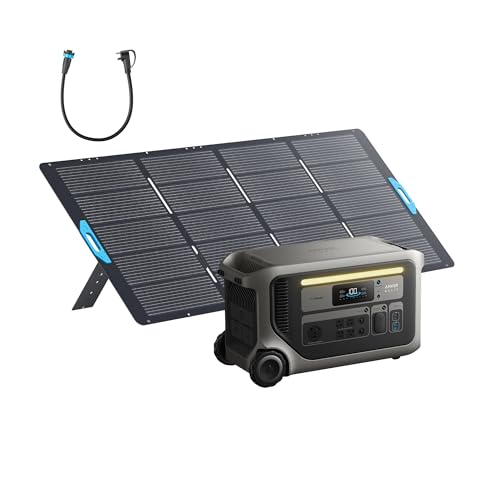
The Solar generator is a device which binding power from the sunlight by (PV) photovoltaic adjusted panel. The created energy is transformed into electricity in the form of DC. After then it’s inverted to AC before stored into the battery.
A solar powered generator is able to power almost anything like laptops, appliances, and the full house. Which depends on the solar panel and batteries.
Even, a small model is able to produce power for charging the device like televisions, tablets, laptops and smartphones. You will have enough knowledge and expertise to pick the best solar generators after introducing some system by yourself.
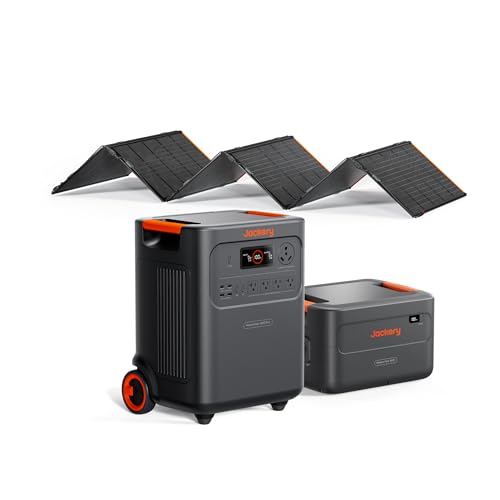
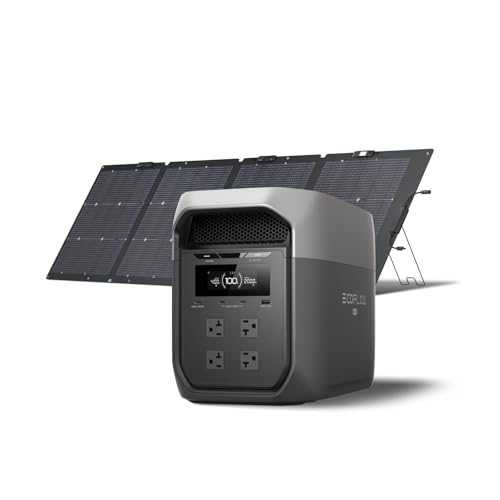
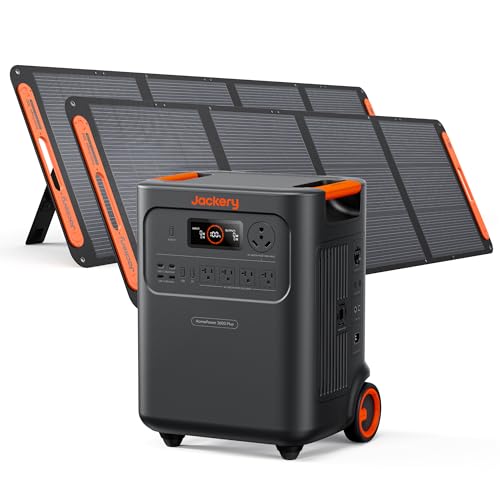
Quick Comparison Table of the Best Solar Generators



Why Should You buy a Solar Generator?
The solar generator is considered as “Green” eco-friendly choice because of its distinct advantage. Because solar powered generator doesn’t need fuel for gaining power, it totally runs over solar power. The efficiency of creating power without fuel is not only good for the sphere but also equalize regular cost related to buying fuel, gas or any other such elements.
This is not only going save your money for the electricity bill for very long term. The solar powered generator also provides a durable and self-reliant way for power creation, which simply depends on sunlight and the exact working of its parts.
Moreover, it’s better for durability, less costly, credibility and eco-friendly. We represent a far more extensive list of “Ten” arguments, why people find it best to have a solar powered generator.
- Produce cheaper energy – When you are going to count the electricity cost for a year including its (solar generator) servicing cost or maintenance cost, you will find that it’s cheaper than the fuel-powered generators.
- Reducing grid reliance and utility bill – Even when your panel produces sufficient to cover up to 25% of your home’s electricity, still that could be large-scale of the bills every month.
- Small solar generators are best for Pavilion – There have a large number of solar powered portable generators, which is particularly perfect for pavilions or camping.
- Positive carbon footprint – Solar generator isn’t harmful to our ecosystem because it does not create any greenhouse gas or any other byproducts.
- Perfect for summer use – It’s gain better power in the summer sun, and it does not create any heat. So it’s possible to use in a hot climate without any discomfort.
- More portable and compact – Solar power generator is more portable and compact than any smallest solar powered generators. It’s easy to setup accurately.
- No potentially deadly smoke – Fuel generators need an open space like high-quality ventilation. Because they have dangerous monoxide fumes. But solar generators doesn’t have such kind of risk.
- More reliable than fuel – It’s more reliable than fuel generators. Because it will still work if you are in shortage of fuel.
Possible to store power for later – Solar generator has system battery storage. Where you can store power for later use, on the other hand with fuel power, it’s not possible. - Electricity companies will pay you – If you enlarge the setup by some extra panels, you can course them to power company when you have more power than your needs. And you will receive checks from them every month instead of pay them.
What Can a Solar Generator Run?
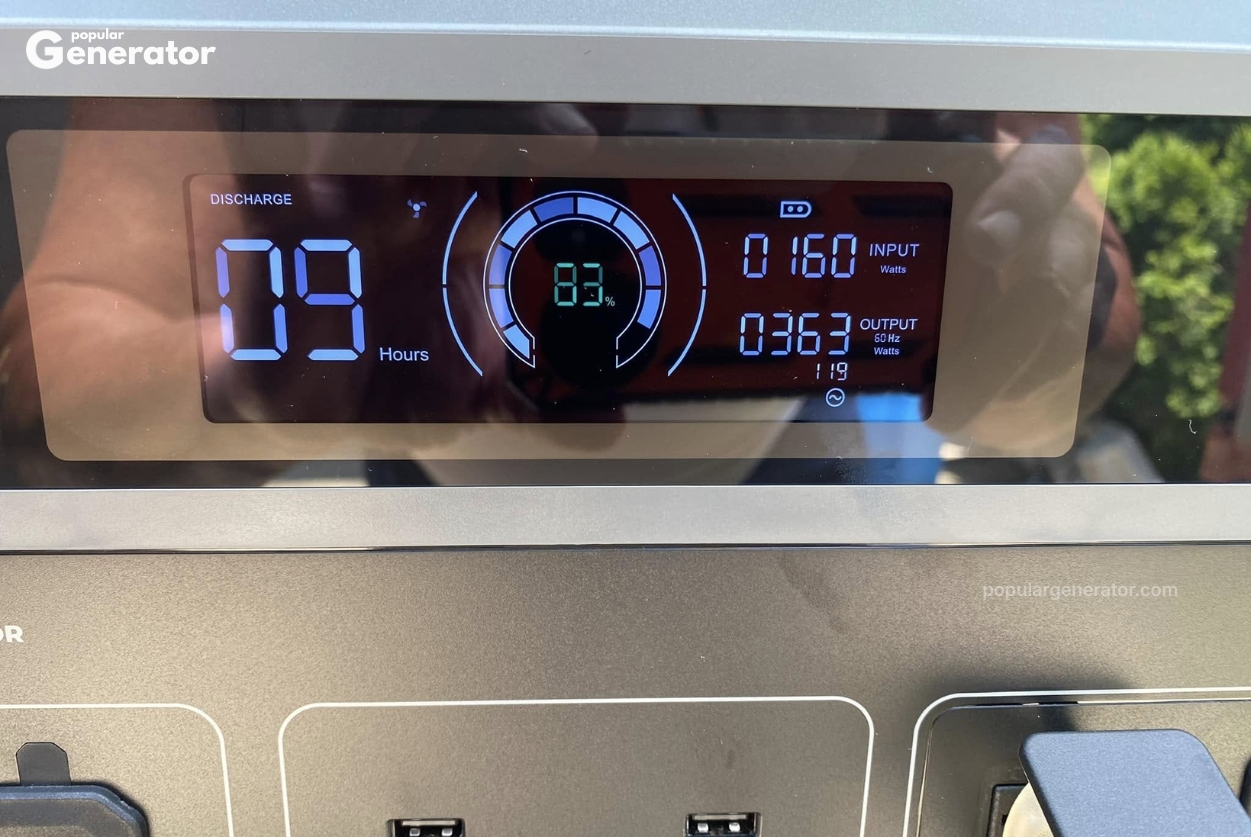
Solar generators can power a wide range of devices, from small electronics to full household appliances, depending on their capacity. They are ideal for charging phones, running LED lights, laptops, Wi-Fi routers, and refrigerators, with larger 3000W+ models capable of running power tools, microwaves, and air conditioners during emergencies.
The answer depends on two key factors:
- Battery capacity (Wh – watt-hours) → How long it can run devices
- Output rating (W – watts) → What it can run at the same time
Below are real-world examples of common appliances and what size solar generator you’ll need.
- Small (300W–500W): Phone, laptop, Wi-Fi, small TV, CPAP (short use)
- Medium (1000W–2000W): Refrigerator (short-term), TV, lights, CPAP overnight
- Large (3000W+): Fridge overnight, multiple devices, power tools, microwave
Common Appliances and Power Requirements
| Device / Appliance | Average Power (W) | Surge Power (W) | Recommended Generator Size | Estimated Runtime |
|---|---|---|---|---|
| Refrigerator | 100 – 250W | 800 – 1,200W | 1,000 – 2,000Wh | 6 – 10 hours |
| LED TV (40–55”) | 60 – 120W | – | 300 – 500Wh | 4 – 8 hours |
| Large TV (65–75”) | 120 – 200W | – | 500 – 1,000Wh | 3 – 6 hours |
| Laptop | 30 – 60W | – | 300Wh | 4 – 6 recharges |
| Gaming Laptop | 100 – 200W | – | 500 – 1,000Wh | 2 – 4 hours |
| CPAP (No Humidifier) | 30 – 60W | – | 500Wh | 8 – 12 hours |
| CPAP (With Humidifier) | 60 – 100W | – | 1,000Wh | 4 – 6 hours |
| Power Drill | 300 – 600W | 800 – 1,000W | 500 – 1,000Wh | Short use |
| Circular Saw | 1,200 – 1,800W | 2,000W+ | 2,000Wh+ | Intermittent |
| Microwave | 800 – 1,200W | 1,500W+ | 1,500 – 2,000Wh | Short bursts |
ⓘ Runtime is estimated and varies based on efficiency, battery age, and inverter losses.
What you need to know before buying a solar generator?
Nearly all solar power generator creates sufficient electricity to power the house appliance for few hour at a single time. However, there have some more powerful generators that possible to use and they are perfect for expanding. You will be able to add more panels to those solar powered generators for more energy production.
A solar panel creates radiation from the sun’s rays, which pass through the power inverter to generate an AC output. After then stock the power in the deep-cycle battery setup.
Main elements of solar generators
To simplify this procedure, solar generator setup especially consists of the following elements:
- Solar panels
- One or more batteries, normally deep cycle
- Power inverters
- Solar controller
- Smart battery charger
- Pre-wired transfer switch
- Inverter remote
- Output cables
- Mounting hardware’s
- DC inverter fuse & cable install kit
Although every model comes with all the elements above. That list shows that what type of parts should have well-equipped solar power generators. There have more extra features which are very great and comes with a different model.
Whichever comes with features from the least below can be a sound generator, if that can fulfill your power supply requirements. This feature makes a difference with one to another solar system.
Additional Feature
Here have some additional feature you would search in a solar power generator:
- USB charging outlets
- Carrying case
- Power to charge from a wall outlet or car charger
- Solar panel stands
- Continuous duty rating
- Silent activities
- Easy setup of panels
- Remote control power inverter
- Expand-ability.
By taking above functions into consideration before deciding your disparity, You will have the knowledge exactly what solar powered generator is the best pick for you. Make sure before buying a generator they are full of quality materials in every element and make sure to check if there have any objection about their durability and their functionality. For make sure this you can read our solar generator reviews.
Inquiring all the elements one by one to find out which type you want and which can help you prepare for the shopping process. After having correct information about all of them, you will be able to make an accurate decision.
How to Find the Best Solar Generator for You?
Make one solar generator choice over another:
- Inverter power rating
- Wattage of panels and number
- Battery bank conception
- Solar photovoltaic output level
- Included component
- Inclusiveness of the set – Some generators comes with all the pieces you need to get started when other comes with the lowest number of components to run the generator.
How much electricity can be produced at a single time? It depends on the output of the wattage. So make sure to check the power rating of the inverter. High power rating inverter indicates that how much power the inverter can supply or create at a single time.
Mostly, people used the solar power generator for their households power supply, when they needed. But an extendable solar system is able to power the whole house if there have enough solar panel.
Find out the watts you need
To find out the watts output you actually need top power all of your devices continuously, check out the labels to find out how many watts they are able to process per hour. What is the volume of electricity is use when all the features are on. Make sure to use peak usage to find out how much power you need when using multiple appliances.
Pursue this three steps to ensure how many watts is your solar panels output.
- Determine average monthly or daily usage: There has two option for this. Firstly, use your utility bill and divide them by 30 to find out daily usage in kilowatt-hour (kWh). Or you can use an electric monitor to find out the usage limit.
- Add a cushion on your daily average: Next step is to add 25% cushion on your average electricity usage to account. Because the solar panel is not permanently efficient in all climate.
- Pick a system with sufficient solar output: After find out exactly how many watts you needs to pick a system that fulfills your needs. Maybe you need to take an expandable system and add to it for gaining your desired output level.
Type of solar power generators
However, you have an accurate calculation on watts, and you know how many watts you need to gain your target. The general comparison can be a help to you for deciding and picking the right type of solar power generator.
- Compact & portable solar generators (perfect for camping, travel, pavilion, boats, RVs, etc.)
- All-extensive solar power generators set for emergency power backup (Which is fastest and easiest way to complete home setup)
- Expandable solar power generator systems (start & small and expand as you want)
- Car-compatible solar power generator system ( Possible to charge via sun or car)
- Miniature device charging set (Smartphone’s and tablets)
By all the data from above, anyone can decide what to buy, why buy and where to buy. It’s proven to all people, in anyone follow these steps they can find their best solar power generator according to their needs
Top 5 Solar Generators Reviews 2017
Goal Zero 31901 Yeti 1250 Silver/Black XX-Large Solar Generator review
The Goalzero 31901 Yeti solar power generator is the most popular generator on the market now. It has enough power to run refrigerators, Power lights, freezers, health care equipment and others device. It’s a silent generator so you can use it indoor.
You can charge this generator by using solar panel, also can charge with car charger so when you are out of sun, you just can plugin with car charger for charge the generator. The goal zero Yeti solar power generator have 3 USB port, Font display to see the current status, also it’s only 103 pounds weight so you can carry this generator anywhere for your needs. I really like this generator and also many American people also like this generator.
Goal Zero Yeti 400 Solar Generator Kit w/Nomad 20 Solar Panel Review
Goal zero Yeti is on of the best generator on the market now. This Yeti four hundred(400) kit with Nomad 20Goalzero Yeti sun Powered Generator solar panel is a step above the alternative picks in Goal 0’s Yeti line because it ‘s Provide Extra Element that makes the unit well worth thinking about. We Included it to be a super preference for camping journeys, exterior utilization, and for backup emergency situations.One purpose of choosing this device over the similar choices from goalzero is that it comes with the Nomad recharging panel, which is Very well matched with all others solar systems.
The greater 20 watts of non-stop power from the Nomad are first-class for charging gadgets like Tablet, Powerbank, smartphones, you could plug into the Yeti four hundred (400) Primary unit through the USB ports with 1.5 amp and AC outlet, also you can directly through the 12V connections anytime. you can easily recharge your phone, tablets with this generator any time without spent more time. If you wanna charge your computer with this generator, you can charge it with more than 5 times . so you can choose this generator for your campaign trips anytime.
Goal Zero 23000 Yeti 400 Solar Generator Review
The Yeti 2300 generator is the solar power generator, it has compact unit that is very strong Enough to run the laptop, Television, Cap matching, Light, smartphone, It has USB port with 1.5 Amp and also have 12V outlet connections ability.This generator can build 300-watt power with AC inverter that’s why you can get Energy to AC. you can run it long-term for your needs anywhere.
The Goalzero 2300 solar powered generator can charge from the sun with the solar panel, also you can charge it from car Charger .this generator can carry Easily because it’s only 29 pounds. you can move it Easily by the pop-up handle and stackable shape for campaign trips anytime anywhere . also we really Like the fantastic design of the Goalzero yeti solar power generator.
It also has a good opportunity that you can be used it in your home indoors because it doesn’t make any bad smells or fumes. most of the people like this generator for their own needs.
Goal Zero Yeti 1250 Solar Generator Kit Review
The Goal Zero Yeti 1250 solar power generator is on of the strong generator in Yeti Line. This generator unit larger than others Yeti generator. you can get much more wattage for your needs. you can run CPAP machine, Freezers, refrigerators, home and health care equipment.
This generator includes 1 Solar Tripod, 2 Solar Panel Carrying Cases, 10 Boulder Clips, 4 Solar Panels, and 1 Solar Generator. you can charge this generator by include 4 solar panel during the period of 24 hours. If you want to charge it very faster then you have to just include more panel . also you can charge it with the car charger or plug the unit into a wall outlet.
on the other think that you can’t carry this generator yourself but as far as it’s fantastic on for comfortable on Kitchen countertop. This generator has 3 DC connections, 3 USB ports with 1.5 amp and 3 AC connections with 1250 wattage ability. so this is the best choose for your needs.
Solar Generator vs Gas Generator
Solar generators are generally better for camping, light home backup, and eco-friendly, quiet, low-maintenance operation, whereas gas generators are superior for high-demand, continuous, or heavy-duty power needs. Solar offers free energy and indoor safety but higher upfront costs; gas is cheaper initially but noisy and requires fuel.
Solar Generators
- Pros: Silent operation, zero emissions, safe for indoor use, no fuel costs, minimal maintenance, long lifespan (up to 25 years).
- Cons: Higher initial cost, limited by sunlight/capacity, slower to recharge.
- Ideal For: Camping, RVing, backup for small appliances/electronics,, and eco-conscious users.
Gas Generators
- Pros: Lower upfront cost, high power output (wattage), reliable in any weather, easy to refuel.
- Cons: Noisy, produces toxic fumes (cannot use indoors), high maintenance, ongoing fuel costs.
- Ideal For: Powering heavy-duty tools, whole-home backup during long outages, and construction sites.
Frequently Asked Questions (FAQs)
1. What Size Solar Generator Do I Need?
The right solar generator size depends on your energy needs: small (100–500Wh) for camping/phones, medium (1000–2000Wh) for RVs/fridges, and large (3000Wh+) for home backups. Calculate your needs by multiplying device wattage by daily hours of use, ensuring the generator’s inverter handles the peak startup watts.
- Small (Under 1,000W / 100-500Wh): Best for charging phones, laptops, and powering small lights or fans during short outages or camping trips.
- Medium (1,000W – 2,000W / 1,000-2,000Wh): Suitable for running a refrigerator, Wi-Fi, television, and multiple lights for extended periods.
- Large (2,000W – 5,000W+ / 3,000Wh+): Necessary for heavy-duty, whole-house light loads, such as power tools, well pumps, and window AC units.
- Whole-House Backup (5,000W+): Large,often modular, systems capable of running essential home circuits (e.g., fridge, lights, microwave) for days.
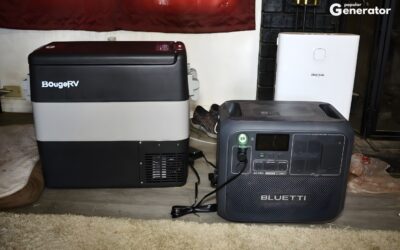
2. Can a Solar Generator Run a Refrigerator?
Yes, a solar generator can definitely run a refrigerator.
But it requires a unit with sufficient capacity, typically at least 1,000–2,000 Wh for daily use, to handle both the consistent draw (300-800 watts) and the higher surge power needed to start the compressor. A 2kWh (2,000 Wh) generator with 400W-600W solar panels is ideal for 24-hour, off-grid operation.
3. How Long Does It Take to Charge a Solar Generator?
Solar generators typically take between 1.5 and 48 hours to fully charge, with times heavily dependent on battery capacity, solar panel wattage, and sunlight conditions.
A 1,000Wh unit usually charges in 3–4 hours via wall outlet, 8–10 hours with 200W solar panels in full sun, or over 10 hours using a car charger.
- AC Wall Outlet: 1.5–6 hours (fastest).
- Solar Panels: 4–12+ hours (depends on panels and sunlight).
- Car Outlet (12V): 8–20+ hours (slowest).
- Hybrid (Solar + AC): 1–2 hours (ideal for fast, high-capacity charging).
4. Can I Use a Solar Generator Indoors?
Yes, solar generators are safe for indoor use.
They produce no toxic fumes, noise, or emissions, unlike gas-powered generators. The main unit (battery/inverter) can safely sit inside to power household appliances, while the solar panels are placed outdoors to charge it. They are ideal for emergency backup and running electronics quietly.
5. Do Solar Generators Work in Cloudy Weather?
Yes, solar generators still work on cloudy days, but they produce less power.
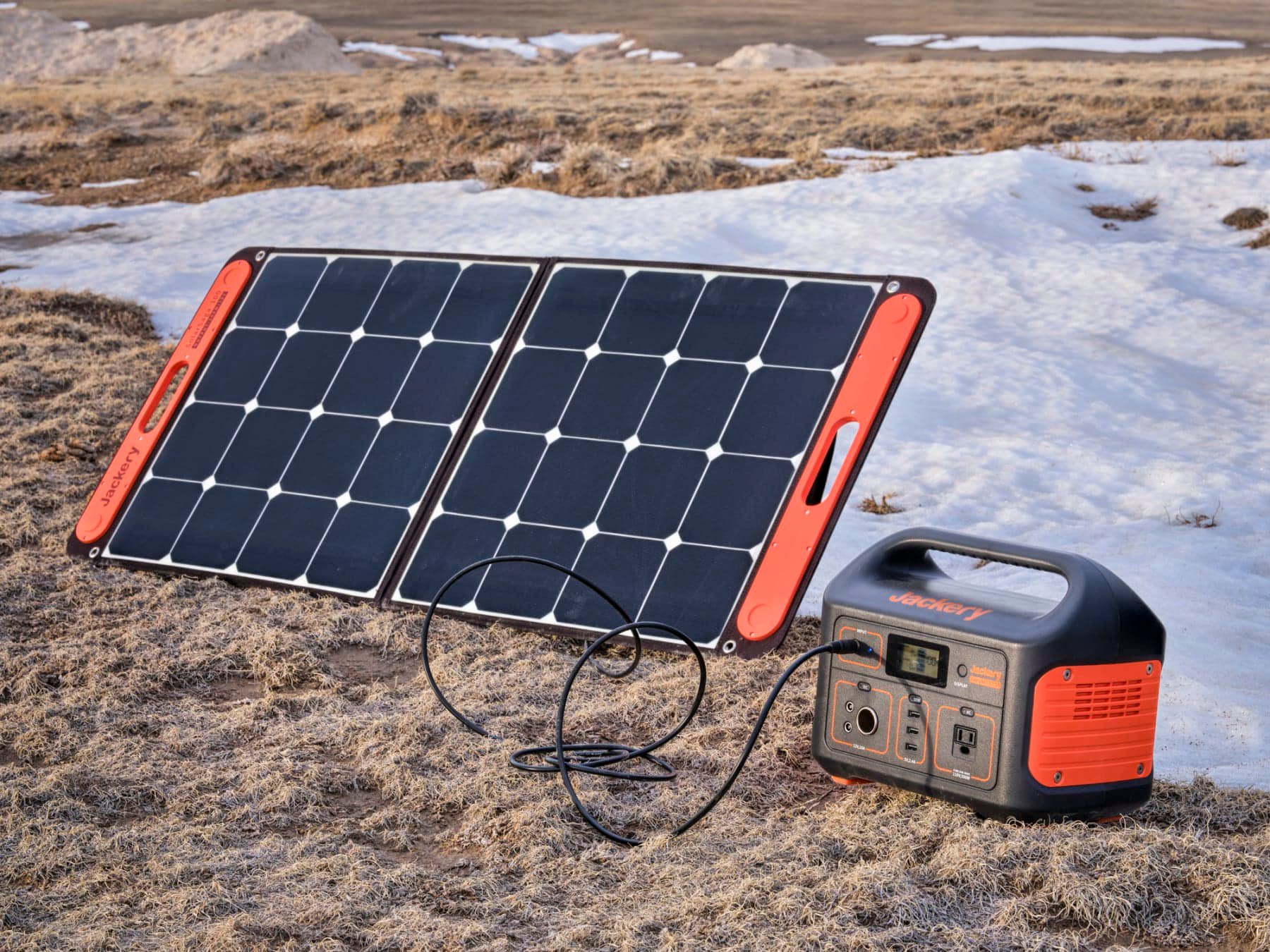
Solar panels don’t need direct sunlight to generate electricity. However, in overcast conditions, output typically drops to about 10%–50% of their rated capacity, depending on cloud thickness and panel quality.
As a result, charging times will be longer compared to clear, sunny days.
To ensure reliable backup power in cloudy weather:
- Choose a solar generator with larger battery capacity
- Consider models with expandable battery options
- Keep an AC wall charging method available as a backup
For areas with frequent cloudy weather, combining solar charging with wall charging provides the most dependable setup.
6. How Long Do Solar Generators Last?
Solar generators typically last between 10 and 15 years, with high-quality models (especially those using LiFePO4 batteries) lasting even longer. Their lifespan is primarily determined by the battery’s charge cycles, with many modern units retaining 80% capacity after 3,000–5,000+ cycles. Proper maintenance and storage can significantly extend this duration.


Write Your Review
No reviews yet. Be the first to share your experience!