




Quick Picks: Best 8,000 Watt Portable Generators
- Best Value 8,000W: Generac 8125W Gas Generator, electric start, COsense safety, most accessible price point on this list
- Most Popular 8,000W Inverter: AIVOLT 8000W Dual Fuel Inverter Generator, clean power output with gas and propane flexibility
- Best Premium Tri-Fuel Inverter: Westinghouse 8200W Tri-Fuel Inverter Generator, remote electric start, runs on gas, propane, and natural gas
- Best Brand-Name 8,000W: Briggs & Stratton 8000W Generator, Power Surge technology for reliable starting of heavy loads
- Best Budget Pickup: DeWalt 8750W Gas Generator, idle control technology, well-established brand at the entry price point
What 8,000 Watts Actually Powers
An 8,000 watt portable generator is the sweet spot between a mid-range unit and a full home standby system. At 8,000 running watts (typically with 8,500 to 9,000 peak/starting watts), this output tier can handle whole-house essential circuits during an outage: central air conditioning (3 to 5 tons), a well pump, a refrigerator, a sump pump, lighting throughout the home, and multiple small appliances running simultaneously. On a job site, 8,000 watts comfortably runs a circular saw, a drill press, an air compressor, work lighting, and a portable air conditioner at the same time.
The 8,000W class also represents a meaningful jump in fuel type versatility. While most smaller generators run on gasoline only, the majority of 8,000W models on this list support dual fuel (gas and propane) or tri-fuel (gas, propane, and natural gas) operation. See our full guide to best dual fuel generators for a broader comparison across wattage tiers.
When comparing 8,000W generators, the wattage figure that matters most for appliance compatibility is running watts, not peak/starting watts. Central air conditioners, well pumps, and large power tools require high starting surges but stabilize to a lower running draw. The starting watt figure tells you the generator won’t trip when you flip the AC on; the running watt figure tells you how much headroom you have after everything is running.
Buyers who need home backup but want to stay in a lower wattage tier can find solid options in our best 7,500 watt generators roundup. For buyers who specifically want the natural gas flexibility covered in the tri-fuel section below, the best tri-fuel generators guide covers models across all wattage classes.
In-Depth Reviews: Best 8,000 Watt Portable Generators
AIVOLT 8000W Dual Fuel Inverter Generator
Here is a scenario that comes up more than people expect: it is day three of a major outage, the nearest gas station has a two-hour line, and your 5-gallon reserve is half gone. That is exactly the moment dual fuel stops being a spec sheet feature and becomes the reason you chose this generator over a gas-only model. The AIVOLT 8000W Dual Fuel Inverter Generator lets you pivot to propane mid-outage without stopping the generator or changing any wiring, just a valve and a regulator.
Beyond the fuel flexibility, this is an inverter generator, which matters more at 8,000W than people realize. Most buyers in this wattage class assume they need a conventional generator because inverter technology “tops out” at 2,000 to 3,000W. Not anymore. The AIVOLT runs a true inverter circuit at full 8,000W capacity, producing clean sine wave power (under 3% THD) that is safe for laptops, CPAP machines, smart TVs, and any other electronics that would suffer from the dirtier output of a conventional generator. Running central air and a home office simultaneously is exactly what this unit is built for.
It is one of the most widely purchased 8,000W inverter generators on the market, and that track record shows in how well-documented its real-world performance is across home backup, job site, and extended emergency use.
Westinghouse 8200W Tri-Fuel Portable Inverter Generator
What happens when the regional power grid goes down for five days and every gas station within 30 miles runs dry by day two? For most generator owners, that is when the limitations of a gasoline-only machine become painfully clear. The Westinghouse 8200W Tri-Fuel Inverter Generator was designed with exactly that scenario in mind.
The natural gas connection is what separates this from every dual-fuel model on this list. If your home has a gas line, you can run a direct connection from the utility supply to this generator, turning what would otherwise be a finite-fuel emergency device into something that functions more like a standby unit: it runs as long as the gas line holds pressure, which it typically does even when the electrical grid is down. That alone changes the calculus of emergency preparedness for anyone who has experienced a prolonged outage.
Remote electric start is genuinely useful at this wattage. An 8,000W generator is heavy, often stored in a garage or outbuilding away from the house. Being able to start it from inside during a storm rather than walking out in rain or cold to pull a recoil cord is the kind of small-but-real quality-of-life feature that owners notice every single time they use it.
As an inverter generator, clean sine wave output protects sensitive electronics. The Westinghouse 8200W holds the highest satisfaction rating on this list, which reflects both the build quality Westinghouse is known for and the practical advantages of tri-fuel operation for buyers who have experienced extended outages firsthand.
Generac 8125W Gas Generator
There is not much mystery to why Generac is the default choice for buyers who want a conventional 8,000W gas generator from a name they trust. The Generac 8125W is not the most feature-rich generator on this list, and it does not need to be. What it offers is something harder to replicate: a nationwide network of authorized Generac dealers and service centers, COsense carbon monoxide protection built into the unit, and a proven gas engine that homeowners in every climate have been running for years.
That dealer network deserves more attention than it usually gets. If you live outside a major metro area, finding someone qualified to service a generic-brand generator can be genuinely difficult. With Generac, there is almost always an authorized service center within a reasonable drive. For buyers who plan to use this generator as a long-term home backup asset rather than a one-time emergency purchase, knowing that service is accessible matters.
At the entry price point on this list, it is the straightforward recommendation for buyers who want a reliable name-brand 8,000W gas generator and nothing more complicated than that.
Briggs & Stratton 8000W Generator
Honestly, when a generator brand has been making small engines for over a century, you walk in either very impressed or deeply skeptical, wondering whether “heritage” is just marketing for “hasn’t changed much.” With the Briggs & Stratton 8000W Generator, it took a few uses to land on impressed.
The Power Surge feature is not marketing language. Standard generators are rated at their running watts, and their starting watts are a fixed multiple of that. Briggs & Stratton’s Power Surge technology provides a higher-than-typical starting watt headroom, which shows up most clearly when you try to start a large central air unit or a well pump at the same time as other loads are running. Where a comparably-rated generator from another brand might trip, the Briggs & Stratton handles it without flinching.
Build quality is the other thing that comes through over time. Parts are available, the engine responds predictably to maintenance, and the unit does not develop the random operational quirks that cheaper alternatives sometimes do after the first year. Not the flashiest generator on this list, not the cheapest, but one of the most dependable long-term investments in the conventional 8,000W category. The hour meter included at this tier is also worth mentioning for anyone serious about keeping up with maintenance intervals.
Conventional vs. Inverter at 8,000 Watts: Which to Choose
Conventional 8,000W generators
Conventional generators at this wattage (Generac 8125W, DeWalt 8750W, Briggs & Stratton 8000W) run at a fixed engine speed regardless of load, which produces higher noise levels (typically 70 to 80 dB at 23 feet) and higher fuel consumption than inverter models. They are simpler mechanically, often less expensive at equivalent wattage, and easier to service. For buyers who need 8,000W primarily for heavy-duty loads (well pumps, central air, large power tools) where clean sine wave output is not required, a conventional generator is a practical choice.
Inverter 8,000W generators
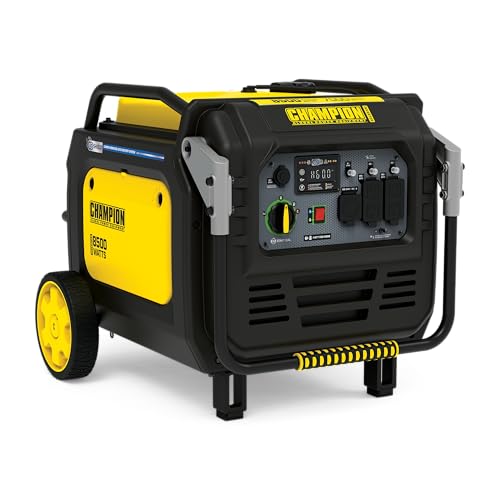
Inverter generators at 8,000W (AIVOLT, Westinghouse 8200W, GENMAX, Genkins, Champion 8500W) produce clean sine wave power (under 3% THD), run quieter at partial loads by throttling the engine to match demand, and are safer for sensitive electronics. They are typically more expensive at equivalent wattage. For buyers who need to run laptops, medical equipment, or modern appliances with sensitive electronics alongside heavy loads, inverter technology at 8,000W is worth the premium.
Fuel type decision at 8,000W
Gas-only (Generac, DeWalt, Briggs & Stratton): simplest, lowest cost, widely available fuel. Best for occasional short-duration backup. Dual fuel (AIVOLT, WEN): adds propane for extended emergencies or cleaner long-term storage. Tri-fuel (Westinghouse, Champion): adds natural gas for buyers with a gas line, enabling unlimited runtime and eliminating fuel logistics entirely.
FAQs: 8,000 Watt Portable Generators
Q: Can an 8,000 watt generator run central air conditioning?
A 3-ton central air conditioner draws approximately 3,500 to 4,000W running, with starting surges up to 8,000 to 10,000W. An 8,000W generator with 8,500 to 9,000W starting capacity can handle a standard 3-ton unit. 4-ton and 5-ton units may exceed the starting capacity of an 8,000W generator. A soft-starter device (EasyStart) can reduce AC starting draw by 50 to 70%, making larger units compatible with 8,000W generators.
Q: What size transfer switch do I need for an 8,000W generator?
A 30-amp, 240V manual transfer switch is standard for generators in the 7,500 to 10,000W range. For whole-home essential circuit coverage, a 6 to 10 circuit transfer switch panel covers the circuits that matter most: HVAC, well pump, refrigerator, selected lighting, and outlets. Always consult a licensed electrician for transfer switch installation.
Q: How long will an 8,000W generator run on a full tank?
Most 8,000W generators carry a 6 to 8 gallon fuel tank and consume approximately 0.75 to 1.0 gallon per hour at 50% load, giving a typical runtime of 8 to 10 hours per tank. At full rated load, fuel consumption rises to 1.0 to 1.5 gallons per hour, reducing runtime to 5 to 7 hours. Inverter models throttle down at partial loads, extending runtime significantly when the actual load is well below 8,000W.
Final Verdict
For most buyers who want the flexibility of dual fuel and inverter-grade clean power in a single 8,000W package, the AIVOLT 8000W Dual Fuel Inverter Generator is the most thoroughly validated choice in this category.
If your home has a natural gas line or you have ever been through a multi-day outage and run out of gasoline, the Westinghouse 8200W Tri-Fuel Inverter Generator solves a problem the other generators on this list cannot. The premium is worth it for that specific buyer.
And if you simply want a dependable conventional 8,000W gas generator from a brand with national service coverage at the most accessible price on this list, the Generac 8125W does not need any more justification than that.





Write Your Review
No reviews yet. Be the first to share your experience!