




Quick Picks: Best Quiet Dual Fuel Generators
- Quietest Dual Fuel Generator: Westinghouse iGen2550DFc 2550W, 52 dBA, the quietest dual fuel generator available
- Best Quiet Compact Dual Fuel: Champion 2500W CO Shield, 53 dBA, 43 lbs lightest, CO Shield, 25 hrs propane runtime
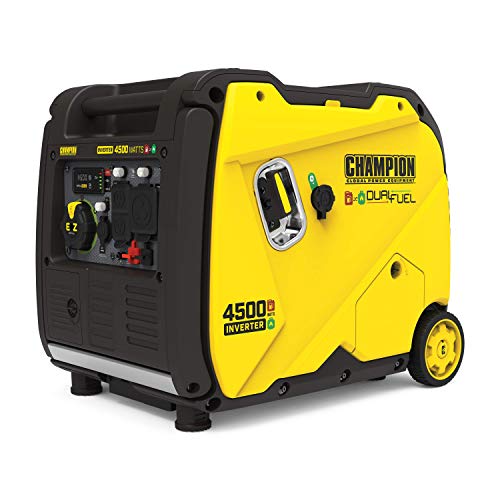
- Best Quiet Mid-Size Dual Fuel: Champion 4500W Wireless Inverter, 61 dBA, wireless remote, 30A RV outlet
- Best Quiet High-Output Dual Fuel: GENMAX GM6000iED 6000W, 62 dBA, 6000W inverter for whole-home quiet backup
- Best Budget Quiet Dual Fuel: Pulsar PG2200BiS 2200W, 59 dBA, lowest price in quiet dual fuel class
Conventional dual fuel generators are loud. That is the tradeoff you accept in exchange for their high output and low price per watt. If noise is a primary concern, the inverter-based dual fuel generator solves the problem at the cost of output ceiling, weight per watt, and price per watt. For campgrounds, neighborhoods with HOA rules, and anyone whose neighbors are within complaint range, the tradeoff is worth making.
Quiet dual fuel generators are exclusively inverter designs. Inverter technology allows the engine to throttle down under light loads – the primary mechanism that makes them 20-30 dB quieter than conventional generators at normal operating loads. Dual fuel capability adds propane to the standard gasoline option, which is useful for camping and extended outages where gasoline supply becomes unreliable.
This guide covers the quietest dual fuel inverter generators on the market, from 2,200-watt models suited for camping and tailgating to 6,800-watt units that power RV air conditioners and small home circuits. For generators prioritizing output over noise, our dual fuel generator guide covers the conventional high-output models in the same fuel flexibility category.
8 Best Quiet Dual Fuel Generators: Reviews
1. Champion Power Equipment 2500-Watt Inverter Dual Fuel Generator
At 53 dBA, the Champion 2500W inverter is among the quietest dual fuel generators available at any price. That 53 dBA figure is measured at 23 feet at rated load – quieter than normal conversation at the same distance. For campground use, this falls within or below the typical 60 dBA limit that most national forest and state park campgrounds enforce. CO Shield automatic CO shutdown addresses the safety concern that comes with any fuel-burning generator near enclosed spaces.
The 2,500-watt peak covers a 15,000 BTU RV air conditioner (typically 1,500W running), a refrigerator, and device charging simultaneously. Propane operation extends the dual fuel advantage: a 20-pound tank provides roughly 14.5 hours of runtime at 25% load, suitable for a full weekend of camping without resupply. The unit’s light weight relative to higher-output inverters makes it practical for camping situations where the generator must be carried.
Best for: Campers and tailgaters who need 53 dBA noise levels and dual fuel flexibility in a compact package with CO safety.
2. Westinghouse iGen2550DFc 2,550-Watt Dual Fuel Inverter
The Westinghouse iGen2550DFc hits 52 dBA – one decibel quieter than Champion’s 2500W inverter, which is at the edge of measurable difference. That distinction matters for buyers who have compared the two and want the absolute quietest specification in the 2,500W class. The DFc suffix indicates CO sensor integration, providing the same automatic shutdown that CO Shield offers on the Champion model.
Westinghouse includes a parallel kit connector, which allows two iGen2550DFc units to combine for 5,100 watts – a useful feature for situations where you need quiet operation but occasionally require more power than a single 2,550W unit provides. The brand’s build quality at this tier is consistent with Westinghouse’s broader generator lineup, and the three-year warranty matches industry standard for this product class.
Best for: Buyers who want the quietest specification in the 2,500W inverter class and value Westinghouse’s parallel capability and brand reputation.
3. Pulsar PG2200BiS 2,200-Watt Dual Fuel Inverter
The Pulsar PG2200BiS at 59 dBA operates in the moderate-quiet range – not as silent as the Champion or Westinghouse 2,500W models, but substantially quieter than any conventional generator. At 2,200 watts peak, the output covers most camping and tailgating loads with margin. The inverter design provides clean sine wave power suitable for sensitive electronics including laptops, cameras, and CPAP machines.
The PG2200BiS serves buyers who prioritize the dual fuel convenience and inverter clean power, and can accept slightly higher noise levels than the premium-quiet models in exchange for a lower purchase price. Parallel kit ready for doubling output when paired with a second unit.
Best for: Budget-conscious campers who want dual fuel inverter convenience at 59 dBA and can accept modest noise levels compared to premium-tier models.
4. WEN DF280iX 2,800-Watt Dual Fuel Inverter
WEN’s DF280iX at 60 dBA and 2,800 watts occupies the position of highest output in the sub-3,000W quiet inverter class. That extra 300 watts over the 2,500W tier is meaningful for loads that push the Champion or Westinghouse units to their limits – an older, less efficient RV air conditioner, or running an air conditioner alongside other heavy loads. CO Watchdog safety and a fuel selector knob for gasoline or propane operation match the safety standard of premium competitors.
The 60 dBA rating sits at the upper boundary of most campground limits, making placement and orientation worth considering. WEN’s fuel efficiency figures are competitive with comparable inverter models, and the brand’s value positioning relative to premium competitors makes the DF280iX a strong option for buyers who want maximum output in the quiet inverter category at WEN’s price tier. Our quiet generator guide includes additional inverter options for noise-sensitive applications.
Best for: Campers and RV users who want the highest output in the sub-3,000W quiet inverter category and value WEN’s competitive pricing.
5. Champion Power Equipment 2500-Watt Ultralight Dual Fuel Generator
The Ultralight variant of Champion’s 2,500W inverter weighs 39 pounds – approximately 4-6 pounds lighter than standard inverter generators in this output class. That weight reduction is the primary differentiator from Champion’s standard 2500W inverter. For camping situations where the generator must be carried significant distances from a parking area to a campsite, or loaded into the back of an SUV without assistance, the weight saving has practical value.
The noise specification and output numbers are comparable to Champion’s standard 2500W model. Buyers choosing between the two are effectively paying a premium for reduced weight. For users who load the generator into a truck bed and leave it there, the standard model’s better price-to-feature ratio makes more sense. For anyone who carries their generator regularly, the Ultralight’s reduced weight justifies the cost premium.
Best for: Frequent campers who carry their generator on trails or load/unload it regularly, and for whom every pound matters.
6. Champion Power Equipment 4500-Watt Dual Fuel Inverter
Champion’s 4,500W inverter at 61 dBA bridges the gap between compact camping generators and high-output conventional units. At 61 dBA it remains in the quiet category while delivering output sufficient to run a large RV air conditioner (up to 15,000 BTU) alongside a refrigerator, microwave, and device charging simultaneously. Electric start removes the pull-cord requirement at this weight class – a meaningful ergonomic improvement for a unit this size.
The dual fuel operation on a 4,500W platform is particularly useful for extended RV trips where gasoline availability is unpredictable. For RV users who need quiet operation but have loads exceeding what 2,500W units can cover, the 4,500W inverter is typically the correct choice over doubling up on smaller units. See our camping generator guide for a broader comparison including single-fuel models at this output tier.
Best for: RV owners with air conditioning loads who need quiet inverter output above 3,000 watts and value electric start at this size class.
7. GENMAX GM6000iED 6,000-Watt Dual Fuel Inverter
The GENMAX GM6000iED at 62 dBA and 6,000 watts represents the top of the quiet inverter class for dual fuel generators. Six thousand watts covers two RV air conditioners, or one AC plus full kitchen appliances, or a small home’s essential load during an outage – loads that exceed what any sub-5,000W inverter can handle. The 62 dBA noise level remains below the campground limit at most locations while delivering conventional-generator-level output.
GENMAX has built a reputation in the 6,000W inverter category through consistent performance and competitive pricing against Honda’s EU7000iS. The dual fuel capability adds utility for extended outages and remote camping where propane supply may be more reliable than gasoline. At this output level and weight class, the generator is typically transported by truck bed rather than carried – making weight less of a factor than at smaller sizes.
Best for: RV users with dual AC systems, homeowners who need quiet backup power above 5,000W, and buyers who want GENMAX’s pricing at the 6,000W inverter tier.
8. WEN DF680iX 6,800-Watt Dual Fuel Inverter
The WEN DF680iX at 6,800 watts is the highest-output quiet dual fuel generator in this guide. The extra 800 watts over the GENMAX GM6000iED provides meaningful margin for homes with electric water heaters or multiple AC compressors that create unpredictable peak load spikes. RV-ready 30-amp outlet covers travel trailer and motorhome connections directly. WEN’s pricing at this output tier is typically more aggressive than GENMAX, making the DF680iX an attractive option for buyers prioritizing value at maximum quiet-inverter output.
Best for: RV users and homeowners who need the highest-output quiet inverter tier and value WEN’s competitive pricing at 6,800W.
What Makes a Generator Quiet?
Inverter Technology Is the Core
Conventional generators run the engine at a fixed 3,600 RPM to maintain 60 Hz AC output regardless of load. Inverter generators produce variable-frequency AC, convert it to DC, then invert it back to clean 60 Hz AC. This allows the engine to throttle to match actual load – at 25% load, the engine runs at roughly 2,000 RPM instead of 3,600. Noise scales with RPM, so a lightly-loaded inverter generator runs 15-20 dB quieter than a conventional generator running the same load.
At full load, an inverter generator’s noise advantage narrows because the engine must run faster to produce maximum output. Quiet ratings like 53 dBA are typically measured at 25% load. At 100% load, the same generator may measure 65-70 dBA. Size your inverter generator generously relative to your actual load to keep the engine in its quiet operating range.
Understanding dBA Ratings
The dBA scale is logarithmic. Every 10 dB increase represents a doubling of perceived loudness. The difference between 53 dBA (Champion 2500W) and 63 dBA (a typical conventional 2500W generator) is not “10 units quieter” – it sounds approximately twice as loud. In practical terms: 50-55 dBA is comparable to a quiet conversation or office environment. 60 dBA is comparable to normal conversation. 70 dBA is comparable to a vacuum cleaner.
Campground Noise Limits
Most National Forest campgrounds enforce a 60 dBA limit. State parks vary by state, typically 60-65 dBA. Private RV parks often have stricter limits (55-60 dBA). Generators rated above 60 dBA may require positioning farther from neighboring campsites or operation only during permitted hours. When in doubt, a unit rated at or below 58 dBA provides compliance margin across nearly all campground regulations.
Frequently Asked Questions
Can a quiet dual fuel generator run an RV air conditioner?
Yes, but the generator must be sized correctly. A 15,000 BTU RV air conditioner requires approximately 1,500W running and up to 2,800W at startup. A 2,500W inverter generator will power a 15,000 BTU AC but will be operating near capacity. A 3,500W or larger inverter provides comfortable margin. For two AC units, a 6,000W+ inverter is required. Soft start capacitors (like Micro-Air EasyStart) can reduce the startup surge requirement, allowing a smaller generator to run an AC it otherwise could not start.
How long does a quiet dual fuel generator run on propane?
A 2,500W inverter at 25% load (625W) consumes roughly 0.4 lb of propane per hour. A 20-lb tank (4.6 gallons) provides approximately 14-15 hours at 25% load, or 7-8 hours at 50% load. Larger units consume proportionally more fuel. Propane runtime is typically 10-15% less than equivalent gasoline runtime due to energy density differences.
Final Verdict
For camping and RV use where noise is the primary concern, the Champion 2500W inverter at 53 dBA and the Westinghouse iGen2550DFc at 52 dBA are the quietest options in the dual fuel category. Both include CO safety shutoff and dual fuel operation. The Westinghouse’s parallel capability gives it an edge for users who might need expandable output.
For higher output with quiet operation, the Champion 4500W inverter is the clean choice for RV AC coverage at 61 dBA. The GENMAX GM6000iED and WEN DF680iX compete at the top of the class for buyers who need 6,000W+ of quiet inverter output.





Write Your Review
No reviews yet. Be the first to share your experience!