


Quick Picks: Best 7500 Watt Dual Fuel Generators
- Best Overall 7500W Dual Fuel: Westinghouse WGen7500DF, remote start, 9500W peak, transfer switch ready, 3-year warranty
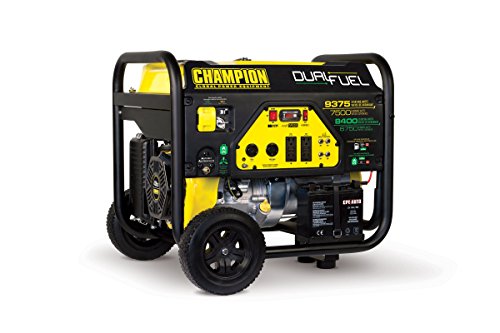
- Best with CO Protection: Champion 9375W CO Shield, CO Shield auto-shutoff, 3-year warranty, 30A outlet
- Best Heavy-Duty 7500W: DuroMax XP9000EH 9000W, 12000W peak, dual voltage 120/240V, electric start
- Best Budget 7500W: FIRMAN H08051 8000W, 8000W running, twist-lock 30A outlet, dual fuel
- Best for Large RV: Westinghouse WGen9500DF, 9500W continuous, remote start from 230 ft, LED data display
Seven thousand five hundred watts is the wattage where a portable generator stops being a convenience appliance and starts being genuine emergency infrastructure. At this output level, you can power a central air conditioner, a full refrigerator, a water pump, lighting throughout the house, and still have capacity remaining for a microwave or device charging.
The 7500-watt class is consistently the most searched generator wattage tier for home backup power, and the reason is straightforward: it matches the load profile of a typical American home during an outage without the cost and complexity of a whole-house standby system. Add dual fuel capability and you also solve the fuel supply problem that affects gasoline-only generators during extended regional emergencies.
This guide covers the best 7500-watt dual fuel generators currently available, from Westinghouse and Champion’s established home backup models to newer alternatives with CO sensors and RV-ready outlets. For a broader look at the category including gas-only options at this wattage, our 7500-watt generator comparison covers the full landscape.
8 Best 7500 Watt Dual Fuel Generators: Reviews
1. Westinghouse WGen7500DF Dual Fuel Home Backup Generator
Westinghouse designed the WGen7500DF specifically for the home backup scenario. The transfer switch ready panel connection – a dedicated L14-30R outlet on the control panel – lets you wire the generator directly into your home’s electrical system through a manual transfer switch, which is the correct way to power your home’s circuits safely during an outage. That outlet, combined with the 7,500 watts running output on gasoline and 6,750 watts on propane, covers the essential circuits in most homes without load shedding.
Remote electric start from up to 230 feet handles the practical reality of home backup: your generator is stored in a garage or on the side of the house, not next to your kitchen. The LED data display shows load, run time, and fuel status. Westinghouse backs this with a three-year warranty and has a service network that actually functions when you need it after a regional storm.
Best for: Homeowners who want a transfer-switch-ready 7500W dual fuel generator with proven reliability and remote start.
2. Westinghouse WGen7500DFc Dual Fuel Generator with CO Sensor
The WGen7500DFc updates the WGen7500DF with one critical addition: a built-in CO sensor that automatically shuts the generator down if carbon monoxide levels climb to dangerous concentrations. For a generator that might run in a garage with a partially open door, or near a home’s air intake, that automatic protection removes the dependence on the operator noticing symptoms before reaching a dangerous exposure level.
Spec-for-spec, both Westinghouse models at this wattage are nearly identical in output, outlets, and features. The DFc version is the better buy for most homeowners at comparable pricing – the CO sensor addition is a safety standard that is becoming expected in this class.
Best for: Homeowners who want the WGen7500DF feature set plus CO sensor automatic shutdown protection.
3. Champion Power Equipment 9375/7500-Watt Dual Fuel Generator with CO Shield
Champion’s latest-generation 7500W dual fuel model brings CO Shield automatic shutdown and a free three-year warranty to the class. The 9,375-watt peak output – significantly above the 7,500W running rating – provides the startup surge headroom needed when a central AC compressor kicks on at the same moment as other loads already running.
Champion’s CO Shield works differently from a simple detector: it monitors ambient CO levels and initiates a controlled shutdown when levels approach a threshold, rather than cutting power abruptly when levels are already elevated. The generator also features Champion’s dual fuel selector that allows switching while running, convenient when transitioning from a travel supply of gasoline to a large installed propane tank once you arrive home.
Best for: Homeowners who want Champion’s CO Shield safety and the latest-generation 7500W platform with a strong warranty.
4. Champion Power Equipment 100891 9375/7500-Watt Dual Fuel Generator
The Champion 100891 is the established midline model in Champion’s 7500W dual fuel lineup – not the latest version (that is the 201281 above) but a generator with a long enough track record that its reliability characteristics are well-documented by the homeowner community. For buyers who see a meaningful price difference between this model and the newer 201281 version, the 100891 delivers the same fundamental performance without the CO Shield addition.
Electric start, 9,375-watt peak output, and Champion’s standard control panel with 30A and 120V outlets are all present. The lack of CO sensor compared to the DFc or newer Champion models is the trade-off, which matters more or less depending on your generator placement and operating practices.
Best for: Buyers who find the 100891 at a lower price than newer Champion models and do not require CO sensor features.
5. DuroMax XP9500iH 9500-Watt Dual Fuel Digital Inverter Generator
Inverter-quality output at 9,500 watts peak and 7,600 watts running positions the DuroMax XP9500iH differently from every other generator in this comparison. All other models here are conventional open-frame designs; the XP9500iH delivers the same 7500W-class output with total harmonic distortion levels safe for sensitive electronics – medical equipment, home office setups, smart home devices – that the open-frame alternatives cannot guarantee.
Remote electric start and RV-ready outlets expand the use cases beyond home backup into premium RV and job site applications. The digital inverter design runs quieter than conventional 7500W generators, though it is still a large unit. For buyers who need both high output and inverter-quality power, this is the only option in this wattage class that delivers both.
Best for: Home offices, medical equipment users, and large RV owners who need 7500W output with inverter-quality clean power.
6. AIVOLT 7500-Watt Dual Fuel Generator with 50A RV Ready
AIVOLT occupies an interesting position: a newer brand offering a 50-amp RV-ready outlet alongside the standard home backup features at the 7500W level. The 50A outlet is genuinely useful for large fifth wheel or class A motorhome owners who want a generator capable of running their coach’s full 50-amp service, not just the 30-amp subset that most portable generators support.
CO sensor automatic shutdown is built in, addressing the safety standard that buyers increasingly expect at this price tier. EPA and PGMA300 compliance covers most U.S. states for legal generator operation. For buyers comparing this against established brands like Westinghouse and Champion, AIVOLT carries less service network history – a consideration for a generator intended for regular emergency use.
Best for: Large RV owners who need 50-amp capability at the 7500W level with CO protection.
7. Powermate PM7500 Dual Fuel Generator with COsense Technology
Powermate is one of the older generator brands in the U.S. market, with roots going back decades before the current portable generator category took its current shape. The PM7500 brings the COsense automatic CO detection system – Powermate’s version of the same category of protection found in Westinghouse and Champion’s latest models – to a 7,500-watt dual fuel platform with 49-state and CSA certification.
The Powermate name carries brand recognition in regions where it has been sold through hardware retail for years. Parts availability and service familiarity in those markets are advantages over newer brands. For buyers who recognize the Powermate name from prior generator purchases, the PM7500 fits naturally into the 7500W dual fuel comparison.
Best for: Buyers in markets where Powermate has established service presence who want COsense protection at 7500W.
8. Champion Power Equipment 100165 9375/7500-Watt Dual Fuel Generator
The Champion 100165 is the entry-level variant in Champion’s 7500W dual fuel lineup – same 9,375/7,500-watt output spec, same dual fuel operation, without the CO Shield or three-year warranty of the newer 201281. For buyers who find this model at a significant price discount compared to current Champion versions, it performs the core function reliably. Champion’s service network and parts supply mean the older model remains well-supported.
The practical trade-off is the absence of CO sensor protection compared to the newer Champion models and Westinghouse DFc. For operators who are disciplined about generator placement – always outdoors, well away from any structure openings – and who prioritize initial cost, this trade-off is manageable.
Best for: Budget-focused buyers who find this model at a discount and are comfortable with manual CO safety practices.
How to Choose the Best 7500-Watt Dual Fuel Generator
CO Sensor: Now a Standard Feature Worth Requiring
Carbon monoxide poisoning from generator use causes dozens of deaths annually in the U.S., almost entirely from generators operated too close to living spaces during power outages. Automatic CO sensor shutdown has become standard enough in the 7500W class that there is little reason to choose a model without it. Westinghouse, Champion, and Powermate all offer CO-sensor versions at competitive pricing.
Transfer Switch Compatibility for Home Backup
Using a generator for whole-home backup correctly requires a transfer switch that disconnects your home from utility power before connecting the generator. The L14-30R outlet found on most 7500W generators is the standard connection point for a manual transfer switch. Automatic transfer switches require a generator with compatible controls – check the generator specifications before purchasing if you plan an automatic transfer switch installation. For a more complete look at home backup generator options, including standby systems, we cover the full spectrum separately.
Propane Supply Sizing for Extended Outages
At 7500 watts and 50% load (3,750 watts), most generators in this class consume roughly 0.8-1.0 gallons of propane per hour. A standard 20-pound tank lasts approximately 5-6 hours at that load – barely enough for overnight coverage. For a three-day outage, a 100-pound tank (roughly 23 gallons) provides about 23-28 hours of runtime at 50% load. Serious home backup use typically requires a 250-500 gallon installed propane tank or a staged plan for tank refills.
Noise in Residential Settings
A conventional 7500W open-frame generator running at full load produces 70-75 decibels – roughly equivalent to a vacuum cleaner. At 25 feet from a neighbor’s property line, that level is noticeable and potentially a local ordinance issue during extended overnight use. For neighborhood-friendly operation, consider runtime management (running the generator in cycles to charge batteries or cool the refrigerator rather than continuously), or step up to the DuroMax inverter model’s lower noise floor. See also our guide to whole house generator options for quieter permanent standby alternatives.
Frequently Asked Questions
Will a 7500-watt generator run a central air conditioner?
Yes, for most residential central AC systems up to 3 tons (36,000 BTU). A 3-ton central AC draws roughly 3,500 watts running and may spike to 5,000-6,000 watts at startup. A 7,500-watt generator handles that startup surge with capacity remaining for a refrigerator and lights. Systems larger than 3 tons or with particularly high startup draws may push against the generator’s limits – check your AC’s nameplate amperage rating before assuming compatibility.
How long does a 7500W generator run on a full tank of gas?
Most generators in this class carry a 6-8 gallon fuel tank. At 50% load (roughly 3,750 watts), fuel consumption is approximately 0.5-0.7 gallons per hour, giving a runtime of 9-14 hours on a full tank. At full 7,500-watt load, expect 5-7 hours per tank. Plan refueling intervals accordingly and never refuel a hot generator – let it cool for 5-10 minutes before adding fuel.
What is the difference between running watts and peak watts?
Running watts (also called rated watts) is the continuous output a generator sustains indefinitely. Peak watts (surge watts) is the brief burst capacity available for motor startups – typically lasting 2-3 seconds. A generator rated 9,375/7,500 watts delivers 7,500 watts continuously and can briefly handle 9,375-watt startup surges. Always size your load against the running wattage, using peak wattage only as a startup surge buffer.
Final Verdict
For home backup, the Westinghouse WGen7500DFc is the standout recommendation: transfer-switch ready, CO sensor included, remote start, and backed by Westinghouse’s service network. The Champion 201281 is the direct alternative with CO Shield and a free three-year warranty for buyers who prefer Champion’s ecosystem.
For inverter-quality power at this wattage, the DuroMax XP9500iH is the only portable option delivering clean output at 7,600 watts running – the right choice for sensitive electronics or large RV use where power quality matters as much as raw capacity. Buyers comparing dual fuel options across wattage classes will find additional context for where 7500W fits relative to smaller and larger models.





Write Your Review
No reviews yet. Be the first to share your experience!