

A coffee trailer is one of the more electrically demanding mobile businesses you can run. The espresso machine alone can pull 1,200 to 3,500 watts on its heating element, and when you add a commercial grinder, blender, refrigerator, and steamer running simultaneously during a morning rush, you’re looking at a combined load that would trip a household circuit.
Getting the generator wrong doesn’t just slow you down – it can damage expensive equipment and kill revenue at your busiest hour.



Quick Picks
- Best Overall: Westinghouse 5000W Dual Fuel Portable Inverter Generator
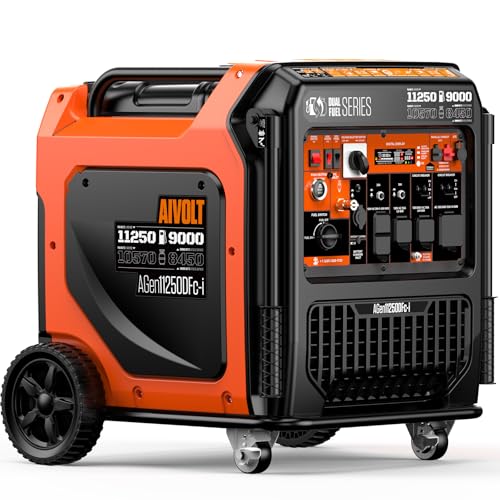
- Best for High Volume: AIVOLT 11250W Dual Fuel Inverter Generator
- Best for Single-Machine Setup: Westinghouse 4000W Dual Fuel Inverter Generator
- Best Mid-Range: WEN 8000W Dual Fuel Portable Generator
- Best Maximum Power: Westinghouse 12000W Dual Fuel Inverter Generator
- Highest Raw Wattage: DuroMax XP13000EH 13000W Dual Fuel Generator
The six generators on this list were selected specifically for coffee trailer and mobile food service use. All run on dual fuel, which means propane is available as a primary option – critical for food businesses where gasoline smell near customers is a real problem. Five of the six use inverter technology to protect sensitive espresso machine control boards from power fluctuations.
Coffee trailers need clean power – low THD inverter generators – to protect sensitive espresso machine electronics and avoid voltage damage. Conventional generators with high harmonic distortion can degrade control boards and heating element regulators over time, even when the machine appears to run normally.
Power Requirements for a Coffee Trailer
Power needs for a coffee trailer vary significantly based on your equipment. Use this reference before sizing your generator:
| Equipment | Typical Watts |
|---|---|
| Espresso machine (commercial) | 1,200–3,500W |
| Coffee grinder | 150–300W |
| Blender | 300–1,500W |
| Refrigerator | 150–400W |
| Milk frother/steamer | 500–1,500W |
| Display lighting + POS system | 100–300W |
| Total (typical full setup) | 3,000–7,000W |
The table shows running watts. Starting surges on compressors and heating elements can be 2-3x the running draw for 1-2 seconds. That startup spike is what trips undersized generators during the first morning rush. Always add 20-30% headroom to your total wattage estimate when choosing a generator – if your equipment adds up to 5,000W running, you want at least 6,000-6,500W of sustained output available.
Pro tips for coffee trailers: Propane is preferred for food service – no fuel smell near customers, longer runtime, and easier refueling from standard tanks. Inverter generators are essential to protect espresso machine control boards from power fluctuations. Always add 20-30% headroom to your wattage estimate for startup surges from compressors and heating elements.
Our Top Picks
1. Westinghouse 5000W Dual Fuel Portable Inverter Generator
For most single-machine coffee trailer setups – one commercial espresso machine, a grinder, a refrigerator, and lighting – the Westinghouse 5000W hits the wattage sweet spot. At 5,000 peak watts and approximately 4,300 running watts on gas (slightly lower on propane), it covers a typical full setup with the 20-30% headroom you need for startup surges. It’s not oversized to the point of burning unnecessary fuel during slow periods, and it’s not undersized in a way that creates anxiety during back-to-back espresso pulls.
The dual fuel system runs cleanly on propane – the preferred fuel for food service where gasoline smell near an order window is a customer experience problem. Inverter output keeps THD well below 3%, which matters for the PID controllers and electronic boards in commercial espresso machines. Remote electric start is included, which is practical when the generator is positioned away from the trailer and you need to fire it up before the first customer arrives.
The Westinghouse 5000W Dual Fuel Inverter is the model we’d recommend to most coffee trailer owners starting out or running a single-station setup. It’s sized for the real load, not the theoretical maximum, which translates to better fuel efficiency and quieter operation during the hours you’re actually serving customers.
Best for: Single-machine coffee trailers, food truck setups with one espresso station, and operators who prioritize propane runtime and quiet inverter output.
2. AIVOLT 11250W Dual Fuel Inverter Generator
When the morning rush means two espresso machines pulling simultaneously, a commercial blender running between shots, and a refrigeration compressor cycling in the background, you need a generator that doesn’t flinch at the combined load. The AIVOLT 11250W is built for that scenario. At roughly 9,000 running watts on propane, it covers a full dual-station setup – two commercial espresso machines (up to 3,500W each), a blender, refrigerator, and complete lighting and POS load – without pushing the generator above 70-75% capacity.
Running a generator at 70-75% of rated capacity rather than 90-95% makes a real operational difference: quieter output, lower heat, longer service intervals, and more headroom for the occasional equipment startup surge that would trip a tighter setup. For high-volume events, farmers markets with long hours, or trailers that operate in peak season with maximum equipment running, that headroom is the difference between smooth service and a mid-rush shutdown.
AIVOLT is a newer brand with less service infrastructure than Westinghouse, which is the honest trade-off. For operators who are comfortable with direct manufacturer support and want maximum inverter wattage at this tier, the AIVOLT 11250W is CARB compliant and dual-fuel ready with a dedicated 50A outlet alongside standard receptacles.
Best for: High-volume coffee trailers, dual-station setups, busy event catering, and operators who want maximum wattage headroom with inverter-quality output.
3. Westinghouse 4000W Dual Fuel Inverter Generator
Not every coffee trailer runs a full commercial setup from day one. A small specialty coffee cart, a weekend farmers market setup with a prosumer espresso machine, or a startup operation building toward a larger rig often runs on a more modest equipment list – one machine, a small grinder, minimal refrigeration, and basic lighting. For that load profile, paying for and hauling a 9,000-11,000W generator is unnecessary overhead.
The Westinghouse 4000W Dual Fuel Inverter covers a prosumer or entry-level commercial espresso machine (1,200-2,000W), a grinder, a small refrigerator, and POS lighting without strain. The inverter output is clean enough for sensitive electronics, propane operation is available, and the compact size means it fits in tighter trailer storage configurations without dominating the setup. At this wattage, it’s also significantly quieter than mid-to-high power options, which matters if the generator is positioned close to a customer-facing window.
As the business scales – adding a second machine or heavier blending equipment – the Westinghouse 4000W Dual Fuel Inverter can be paired in parallel with a second unit for doubled output. For a look at how dual-fuel inverters compare across wattage tiers, our best dual fuel generators guide covers the full range.
Best for: Startup coffee operations, small-format carts, prosumer machine setups, and operators who want to start compact and scale later.
Also Worth Considering
- WEN 8000W Dual Fuel Generator – A mid-range dual-fuel option at 8,000 watts. Covers most full coffee trailer setups with solid headroom. Note that the WEN 8000W is a conventional generator rather than an inverter model – adequate for most equipment but consider a power conditioner between the generator and the espresso machine if voltage stability is a concern for your specific machine model.
- Westinghouse 12000W Dual Fuel Inverter – For operators running a large trailer with three or more stations, a full cold brew setup, and event-scale loads, the 12000W Westinghouse provides maximum inverter wattage with propane capability and Westinghouse’s service network behind it. More generator than most coffee trailers need, but the right choice when the setup justifies it.
- DuroMax XP13000EH 13000W Dual Fuel – The highest raw wattage on this list at 13,000 peak watts. Conventional (non-inverter) output, so best suited for powering non-electronic loads or used with a line conditioner for sensitive equipment. Strong choice for large food courts or festival setups where raw capacity matters more than inverter quality.
For mobile business setups beyond coffee – detailing vans, food trucks, and service trailers – our guide to best portable generators for job sites covers commercial-grade options across different use cases.
Choosing the Right Generator for Your Coffee Trailer
Match Wattage to Your Actual Equipment List
The most common sizing mistake is using the total theoretical maximum of all equipment – but commercial espresso machines don’t run their heating element continuously. After initial heat-up, a well-insulated machine draws significantly less power in standby. A realistic operating load calculation for a single-machine setup is typically 3,000-4,500W sustained, with occasional 5,000-6,000W peaks during heat recovery after multiple shots. The 5,000W tier handles this range comfortably. A two-machine setup pushes toward 6,000-8,500W sustained and should be sized for the 9,000-11,000W tier.
Propane vs. Gasoline for Food Service
Propane is the operational choice for most coffee trailer operators for three reasons. First, there’s no gasoline smell near customers and food preparation areas. Second, propane tanks are available in standard exchange sizes at most grocery stores and hardware retailers, making mid-event refueling straightforward. Third, propane burns cleaner in the engine, which means less carbon buildup and lower maintenance frequency over a full season of daily use. All six generators on this list support propane operation. Our best propane generators guide covers propane-specific performance differences if fuel type is your primary filter.
Inverter Output Is Not Optional for Espresso Equipment
Commercial espresso machine control boards are sensitive to voltage irregularities. Machines with electronic temperature control (PID), pressure profiling, or digital displays are particularly vulnerable to the harmonic distortion that conventional generators produce. Running these machines on a conventional generator for months can degrade control board components gradually – often showing up as calibration drift or intermittent errors before a more serious failure. Five of the six generators on this list are true inverter models. The one conventional option (DuroMax XP13000EH) is noted as such.
Frequently Asked Questions
What size generator do I need for a coffee trailer?
For a single commercial espresso machine setup with a grinder, refrigerator, and basic lighting, a 4,500-6,000 running watt inverter generator covers typical loads with appropriate headroom. For dual-station setups or trailers with heavy blending equipment, size up to the 8,000-11,000W range. Always calculate your actual running watt total, then add 25-30% for startup surge headroom.
Can I use a regular portable generator for a coffee trailer?
You can, but it’s not recommended for machines with electronic controls. Conventional generators produce power with higher harmonic distortion than inverter models, which can affect electronic espresso machine components over time. If a conventional generator is the only option, use a high-quality power conditioner between the generator output and the espresso machine to smooth voltage irregularities.
Is propane or gasoline better for a coffee trailer generator?
Propane is generally preferred for food service use. It produces no smell near customers or food prep areas, is available in standard exchange tanks at most retailers, and burns cleaner than gasoline in the generator engine. All six generators on this list support propane operation. The trade-off is slightly reduced wattage output on propane compared to gasoline – typically 5-10% lower running watts.
How loud is a generator at a coffee trailer?
Inverter generators at 50-70% load typically operate at 55-65 dB – comparable to a normal conversation. Conventional generators at similar loads run 70-80 dB, which is noticeably louder. Generator placement matters significantly: positioning the generator 15-20 feet from the customer-facing side of the trailer and orienting the exhaust away from the service window reduces perceived noise substantially. A generator enclosure or sound-dampening box is an additional option for permanent trailer installations.
Final Verdict
For most coffee trailer operators, the Westinghouse 5000W Dual Fuel Inverter is the practical starting point – enough wattage for a full single-machine setup with headroom, propane capable, inverter output, and a brand with accessible service support.
Operators running high-volume setups with multiple machines should look directly at the AIVOLT 11250W or Westinghouse 12000W for the wattage headroom that high-demand operation requires. The difference between running a generator at 65% capacity versus 90% capacity shows up in noise level, fuel efficiency, and long-term reliability across a full operating season.
The Westinghouse 4000W is the right entry point for smaller operations that don’t yet need the full commercial setup wattage – and it parallels with a second unit when the business grows into it.





Write Your Review
No reviews yet. Be the first to share your experience!