


Quick Picks
- Best Overall: Honda EU7000iS 7000W Inverter Generator
- Best Mid-Range Electric Start: Champion 8125W Tri-Fuel Portable Generator
- Best High-Power: DuroMax XP13000HX 13000W Dual Fuel Generator
- Best Value Inverter: WEN 4800W Portable Inverter Generator
- Best Compact Dual Fuel: Generac 3800W Dual-Fuel Inverter Generator
- Best Mid-High Conventional: Generac 8250W Dual Fuel Generator
- Best Quiet Inverter: Westinghouse iGen4500 4500W
- Best Dual Fuel Compact Inverter: Westinghouse 4000W Dual Fuel Inverter
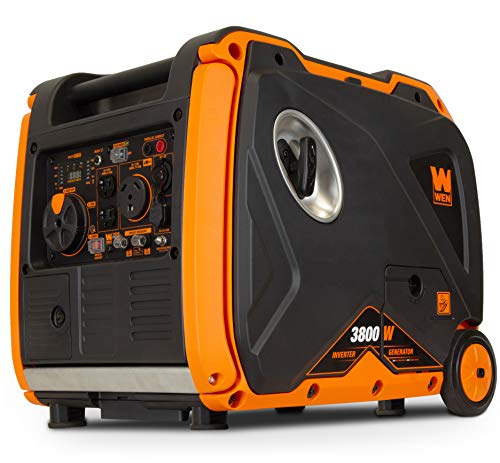
- Most Portable: WEN 3800W RV-Ready Inverter Generator
An electric start changes how you use a portable generator. Instead of yanking a pull cord in the dark during a blackout or fumbling with a cold-start choke in freezing weather, you turn a key or press a button. That convenience gap is real – and it’s the reason the market for electric start portables has expanded well beyond the traditional large-frame workhorse into compact inverters, tri-fuel models, and everything in between.
The nine generators on this list span a wide range of use cases: weekend camping, whole-home backup, job site power, and RV use. All include electric start as a standard feature. Five receive full detailed reviews below; the remaining four are covered in a quick-comparison section for readers who already know what wattage tier they’re shopping in.
Electric start on a portable generator doesn’t replace pull-cord backup – it adds to it. Every generator on this list also includes recoil start as a fallback, which matters when a battery dies mid-trip or after months of storage.
What to Look for in an Electric Start Portable Generator
The electric start mechanism itself is rarely the differentiator once you’ve narrowed to this category. What separates a good generator from a great one comes down to a few practical factors.
Running watts vs. peak watts: Peak (starting) watts handle the surge when motors start. Running watts sustain everything after. Size to your running load, not the peak number on the label.
Fuel flexibility: Dual-fuel and tri-fuel generators let you run on propane when gasoline isn’t available – a meaningful advantage during extended outages or remote trips. Six of the nine models on this list offer at least dual-fuel capability.
Inverter vs. conventional output: Inverter generators produce cleaner power (low THD) that’s safe for laptops, TVs, and medical devices. Conventional generators cost less per watt but output noisier power. Four generators on this list are inverter-based; the rest are conventional with electric start added. Our guide to portable inverter generators covers the technical trade-offs in full.
Runtime and tank size: Check the runtime at 50% load, not maximum load. Most generators list a best-case figure; real-world usage at 60-70% load is typically 20-30% shorter.
Detailed Reviews: Our Top 5 Picks
1. Honda EU7000iS 7000W Inverter Generator
There are generators that work, and then there’s the Honda EU7000iS. The distinction isn’t about wattage – at 7,000 peak watts and 5,500 running watts, it’s not the biggest generator on this list. The distinction is in how it works: quiet, clean, fuel-efficient, and built with Honda’s commercial-grade engine reliability. This is the generator that contractors keep in rotation for years without incident and homeowners buy once and never replace.
The electric start is paired with Honda’s Auto Throttle system, which automatically reduces engine speed when the load drops – extending runtime and reducing noise simultaneously. At 25% load, it operates at roughly 52 dB. That’s quieter than most conversation. The inverter output is clean enough for every sensitive electronic your home or RV runs on.
The honest trade-off is weight: 261 pounds. This is not a generator you move alone. But for stationary backup power, a full-hookup campsite, or a job trailer, that weight is irrelevant. The Honda EU7000iS earns its premium position through long-term reliability and Honda’s national service network – two things that matter when a generator is part of your emergency plan, not just a convenience purchase.
Best for: Homeowners who want a generator they’ll never need to replace, job-site setups where reliability is non-negotiable, and full-hookup RV use.
2. Champion 8125W Tri-Fuel Portable Generator
The power goes out at 11 PM during a July heatwave. You need to get the central AC, the refrigerator, and a few fans running – and you need to do it in the dark without waking the neighbors more than necessary. The Champion 8125W tri-fuel is the generator built for that moment. The key-start electric ignition fires reliably, and at 6,500 running watts, it handles a central air system (starting surge included) without breaking a sweat.
The tri-fuel capability – gas, propane, or natural gas – is the defining feature at this price tier. Most generators in this wattage class run on gasoline only. Champion’s implementation lets you connect directly to a home’s natural gas line for unlimited runtime during extended outages, or switch to a propane tank when gas lines are affected. This is the feature that separates it from similarly priced conventional generators.
Electric start includes both key ignition and wireless remote start – useful when the generator is positioned away from the house. The Champion 8125W Tri-Fuel runs louder than the inverter-based generators on this list (around 74 dB), which is typical for conventional generators at this wattage. For home backup use where the generator sits outside, that noise level is manageable.
Best for: Whole-home backup where natural gas or propane access is important, emergency preparedness setups, and users who want wireless remote start at a mid-range wattage.
3. DuroMax XP13000HX 13000W Dual Fuel Portable Generator
Thirteen thousand watts is more than most homes draw at peak. That’s the point. The DuroMax XP13000HX isn’t sized for a typical weekend outage – it’s sized for running a central air system, a well pump, a refrigerator, a freezer, and lighting simultaneously without any load management. If your goal is to run everything without thinking about what’s on, this is the generator that gets there.
The HX designation indicates dual-fuel with an updated hybrid carburetor that handles propane more efficiently than previous DuroMax models. Gas mode delivers the full 13,000 peak / 10,500 running watt rating. Propane mode runs slightly lower but still covers most whole-home loads. Electric start is push-button with key ignition, and the CO sensor shuts down the unit if carbon monoxide builds up near an enclosure.
At this wattage, noise is loud – this is a conventional generator, not an inverter. It’s appropriate for outdoor use with distance from living spaces. For job sites, farms, or large homes where the generator pad is away from the house, that’s not a real constraint. The DuroMax XP13000HX is covered in our best heavy duty portable generators comparison if you want to see how it stacks up against other high-wattage options.
Best for: Large homes with whole-home backup needs, farms, job sites, and any setup where running multiple high-draw appliances simultaneously is the baseline requirement.
4. WEN 56480iX 4800W Portable Inverter Generator
Most 4,800-watt inverter generators with electric start cost considerably more than the WEN 56480iX. WEN competes in this space by offering clean inverter output, a built-in 30 amp RV outlet, electric start, and parallel capability – at a price that undercuts most major brands at equivalent wattage. For buyers who don’t need a brand name on the side of the generator, it’s a straightforward value choice.
The inverter output handles sensitive electronics cleanly. At 3,800 running watts, it covers a 13,500 BTU RV air conditioner with some headroom for additional loads, a standard refrigerator plus a few appliances for home use, or most job-site tool combinations. The 30 amp RV outlet means no adapter for direct campsite use.
The electric start works consistently, and parallel cables are available to link two 56480iX units for double the output if your needs grow. For a closer look at compact electric start inverters, our smallest electric start generators list covers the overlap between portability and push-button convenience. The WEN 56480iX handles day-to-day demands without the brand premium.
Best for: Budget-conscious buyers who want inverter-quality output, RV owners who want a lighter generator with a 30A outlet, and those who may want to parallel two units later.
5. Generac 3800W Dual-Fuel Portable Inverter Generator
What do you actually need from a generator for weekend camping, a small power outage, or a tailgate setup? In most cases: one AC unit or a refrigerator, device charging, and basic lighting. That’s exactly the operating range of the Generac 3800W Dual-Fuel. It’s a compact inverter generator – cleaner output than conventional units, quieter at partial loads, and light enough to move solo – with dual-fuel flexibility built in.
Gas or propane with a simple switch. Electric start plus pull-cord backup. Inverter output with low enough THD for laptops and medical devices. At 3,800 starting watts and 3,100 running watts, it covers a single 13,500 BTU RV air conditioner at startup, though headroom is limited once running. For camping use with a smaller AC unit or most RV loads that don’t max the system, it runs comfortably.
Dual-fuel compact generators shine in scenarios where propane is already part of the setup – RV trips, camping with a camp stove, or tailgates where propane cylinders are already on hand. Eliminating the need to carry gasoline simplifies the logistics considerably.
The Generac 3800W Dual-Fuel is a newer addition to Generac’s inverter lineup with updated fuel management over earlier models. For buyers who need dual-fuel in a compact inverter form factor, it’s among the more compelling options at this wattage tier.
Best for: Weekend camping, RV trips where propane is already on board, light home backup needs, and anyone who wants compact inverter performance with dual-fuel flexibility.
Also Worth Considering
These four generators didn’t receive full review sections, but each fills a specific niche depending on your use case:
- Generac 8250W Dual Fuel (B0GVG7B6C4) – A conventional dual-fuel option that bridges the gap between mid-range and heavy-duty. Good for home backup where 8,000-plus running watts are needed but the DuroMax 13000W is more than required.
- Westinghouse iGen4500 (B06XC47ZX4) – One of the quieter 4,500W inverter generators available. Electric start, 30A RV outlet, and the Westinghouse service network. A reliable pick if brand support matters.
- Westinghouse 4000W Dual Fuel Inverter (B0CQMK94H7) – Dual fuel meets inverter output in a compact format. Similar positioning to the Generac 3800W above with the Westinghouse brand and a slightly different wattage/price trade-off.
- WEN 56380i 3800W (B07PTNTRRJ) – The predecessor to the 4800W model reviewed above. Lighter, slightly less power, still RV-ready with a 30A outlet. The right pick if maximum portability is the priority over wattage headroom.
For a broader comparison of dual-fuel models across all wattage tiers, see our best dual fuel generators roundup.
How to Match Wattage to Your Actual Needs
For Home Backup Use
Calculate your essential load first: refrigerator (150-400W running, 600-800W starting), window AC or central air (1,200-3,500W running, 3,000-7,000W starting surge), lighting, device charging, and any medical equipment. Add the running watts together, then confirm your chosen generator’s starting watts can handle the largest motor start in your setup. Most mid-size homes run comfortably on 6,500-8,000 running watts without sacrificing anything critical.
For Camping and RV Use
A 30 amp RV typically needs 3,000-3,500 running watts for AC plus basic loads. A 50 amp RV with one running AC needs 5,000-7,500 running watts. Inverter generators are the preferred choice here – quieter at campgrounds, cleaner power for RV electronics, and more fuel-efficient at partial loads than conventional generators.
For Job Site Use
Power tools have high starting surges relative to their running draw. A 15-amp circular saw can require 2,400W at startup even if it runs at 1,200W. Size for the combined startup load of all tools you might run simultaneously, not just the steady-state draw.
Frequently Asked Questions
Do electric start portable generators need a battery?
Yes. Electric start systems use a small lead-acid or lithium battery (usually included or built in) similar to a riding mower battery. After extended storage, this battery may need a charge before the electric start works. That’s why every generator on this list also includes a recoil pull-cord as backup – if the battery is dead, you can still start the generator manually.
Is electric start worth the extra cost over pull-start only?
For most users, yes. The convenience difference is most obvious in emergency use (starting in the dark, in bad weather, under stress) and for users who find pull-starting difficult – older users, those with shoulder or back issues, or anyone starting a large engine that requires significant force. Most electric start generators add a modest premium over comparable pull-start models, and the difference is minor compared to the total generator cost.
Can electric start generators run in the rain?
No generator should run unprotected in rain or standing water. The electric start components – battery, ignition switch, wiring – are particularly vulnerable. Use a generator tent or canopy rated for generator use, or position the unit under a covered area with adequate ventilation. Never run a generator indoors or in an enclosed space regardless of weather.
What’s the difference between key start and push-button electric start?
Both operate the same starter motor – the difference is the switch type. Key start uses a keyed ignition (prevents unauthorized use, common on large conventional generators). Push-button start is simpler and more common on inverter generators. Some generators offer both, and a few – like the Champion 8125W – add wireless remote start as a third option.
Final Verdict
For most homeowners shopping for a reliable electric start generator with broad capability, the Champion 8125W Tri-Fuel delivers the right combination of wattage, fuel flexibility, and electric start features at a practical price point. The natural gas hookup option alone makes it a standout for extended outage use.
If budget isn’t the primary concern and long-term reliability matters more than anything else, the Honda EU7000iS is the generator to buy once. Its quiet operation, fuel efficiency, and inverter output quality are in a different league from conventional generators at similar wattage.
For high-power needs without compromise, the DuroMax XP13000HX gives you more running watts than almost anything else in the portable category. And if you’re shopping for compact camping or weekend use, the WEN 4800W and Generac 3800W offer inverter quality with electric start at manageable size and weight.
Our full best portable generators guide covers the complete landscape across fuel types and wattage tiers if you want to compare beyond this list.





Write Your Review
No reviews yet. Be the first to share your experience!