




Quick Picks: Best Portable Generator for Level 2 EV Charging
- Best Entry Level 2: Westinghouse 7500W EFI Dual Fuel Generator, 240V 30-amp outlet, fuel injection for consistent starts, dual fuel, most widely owned in class
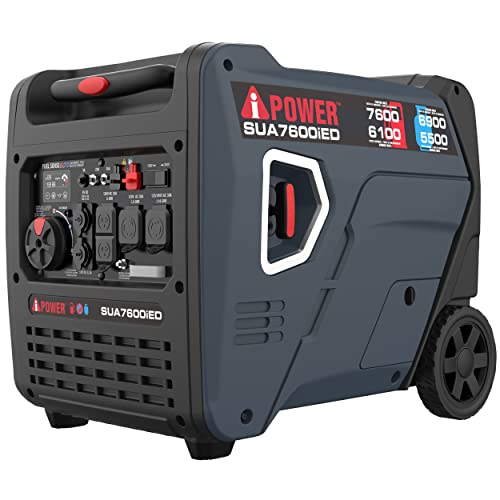
- Best Inverter for Level 2: A-iPower 7600W Dual Fuel Quiet Inverter Generator, pure sine wave 240V output, cleanest power for onboard EV charger compatibility
- Best 8,000W Inverter Option: AIVOLT 8000W Dual Fuel Super Quiet Inverter Generator, 240V-capable inverter output, dual fuel, higher wattage than 7,500W options
- Best High-Output Inverter: Westinghouse 11000W Tri-Fuel Portable Inverter Generator, 9,500 running watts of pure sine wave, tri-fuel, supports 40A Level 2 EVSE
- Best Tri-Fuel Level 2: Westinghouse 13500W Tri-Fuel Home Backup Generator, 50-amp outlet for maximum Level 2 speed, highest satisfaction rating on this list
- Maximum Level 2 Output: DuroMax XP15000HXT 15,000-Watt Tri Fuel Generator, dual 50-amp outlets, highest portable output available for Level 2 EV charging
What Level 2 EV Charging Requires from a Generator
Level 2 EV charging operates on 240 volts, not 120 volts. Every portable generator on this list includes a 240V outlet (typically L14-30 for 30 amps or 14-50 for 50 amps), which is the connection point for a Level 2 EVSE (Electric Vehicle Supply Equipment). The generator’s continuous wattage must exceed the EVSE’s draw: a 24A Level 2 EVSE draws 5,760 watts at 240V, a 30A EVSE draws 7,200 watts, and a 40A EVSE draws 9,600 watts. This is why Level 2 generator charging requires 7,500 watts or above as a practical floor.
The output quality requirement also increases at Level 2. Onboard EV chargers that receive 240V input at higher amperage are more sensitive to harmonic distortion than Level 1 chargers. Inverter generators (A-iPower 7600W, AIVOLT 8000W, Westinghouse 11000W) produce cleaner sine wave output than conventional generators, which makes them the preferred choice for Level 2 charging even at the same wattage. Conventional generators with 240V outputs are compatible in most cases but inverter quality reduces risk for sensitive charging systems.
The practical Level 2 charging speed from each wattage tier: a 7,200W generator (30A at 240V) adds 20 to 30 miles of range per hour for most EVs. A 9,600W generator (40A at 240V) adds 28 to 40 miles per hour. A 11,500W generator (48A at 240V) approaches the 30 to 50 mile-per-hour range that most Level 2 home EVSE can deliver. These rates make Level 2 generator charging practical for off-grid overnight charging, emergency range recovery for longer trips, or supplementing solar charging at remote properties.
For context on what these generators can do beyond EV charging, the best large portable generators guide covers this wattage class for whole-home backup. For buyers who want the broadest overview including Level 1 options, the best portable generators to charge an EV article covers 2,200W through 15,000W.
In-Depth Reviews: Best Generator for Level 2 EV Charging
Westinghouse 7500W EFI Dual Fuel Portable Generator
The entry point for Level 2 generator EV charging sits at 7,500 watts. The Westinghouse 7500W EFI Dual Fuel includes an L14-30 outlet (240V, 30A), which supports a Level 2 EVSE at up to 24 amps (5,760W) with headroom for other simultaneous loads. At 24A, charging speed is roughly 18 to 25 miles of range per hour for most EVs. Fuel injection provides the consistent cold-weather starting that matters if this generator is used at a remote property or during a winter outage. Dual fuel allows propane operation for extended off-grid charging scenarios where gasoline resupply is inconvenient. The most thoroughly owner-validated 7,500W generator available makes this the natural entry point for Level 2 capability.
A-iPower 7600W Dual Fuel Quiet Inverter Generator
When the choice is between 7,500W conventional and 7,600W inverter at a similar output tier, the inverter wins for EV charging. The A-iPower 7600W Dual Fuel Inverter produces pure sine wave AC at 240V, which the onboard chargers in Tesla, Rivian, and most other modern EVs respond to more cleanly than the output of a conventional generator. The practical charging rate is similar to the Westinghouse 7500W at the 24A tier, but the inverter output quality reduces the risk of charging faults, delayed charging sessions, or onboard charger errors that are more common with conventional generator power at Level 2 amperage. Dual fuel adds propane flexibility for extended off-grid use.
AIVOLT 8000W Dual Fuel Super Quiet Inverter Generator
Eight thousand watts means the L14-30 outlet runs a 30A Level 2 EVSE (7,200W) at its full rated amperage without pushing the generator to its capacity ceiling. On the AIVOLT 8000W Dual Fuel Inverter, that 800W of headroom above the EVSE draw is the difference between a generator that runs at 90% load (hot, louder, shorter engine life) and one running at 80% load with a comfortable thermal margin. At 30A, charging rate improves to roughly 22 to 30 miles of range per hour. The inverter circuit and dual fuel capability round out a generator that covers full-rated Level 2 speed from a clean-power source without the premium of the Westinghouse 11000W tier.
Westinghouse 11000W Tri-Fuel Portable Inverter Generator
Level 2 EV charging at 40 amps (9,600W at 240V) is where the Westinghouse 11000W Tri-Fuel Inverter fits naturally. With 9,500 running watts of inverter output and tri-fuel flexibility, it handles a 40A Level 2 EVSE at the edge of its capacity while tri-fuel operation (gas, propane, or natural gas) makes extended off-grid charging practical. Charging speed at 40A approaches 28 to 40 miles per hour for most EV models, which means an EV with a depleted 75kWh battery can recover to 80% charge (60kWh) in roughly 5 to 6 hours overnight from this generator on natural gas. Remote start and the Westinghouse reliability record make this the premium inverter choice for serious off-grid EV use.
Westinghouse 13500W Tri-Fuel Home Backup Portable Generator
A 50-amp outlet at 240V supports Level 2 charging at 48 amps (11,520W), which is the ceiling of what most residential Level 2 EVSE can deliver. The Westinghouse 13500W Tri-Fuel includes a 50-amp outlet alongside a 30-amp outlet, which means it can drive a full 50A EVSE setup while the generator runs at roughly 85% load on 12,500 running watts. At 48A, most EVs reach 30 to 50 miles of range per hour depending on onboard charger capacity. Tri-fuel connectivity to a natural gas line turns this into a semi-permanent Level 2 charging solution for properties that lack grid power but have a gas utility connection.
DuroMax XP15000HXT 15,000-Watt Tri Fuel Generator
When the application is fleet charging multiple EVs, powering an entire remote property, or running a 50A Level 2 EVSE alongside full-home backup loads simultaneously, the DuroMax XP15000HXT is the machine that handles all of it. Dual 50-amp outlets support two simultaneous 50A Level 2 EVSE connections, which means two EVs can charge at near-maximum Level 2 rates simultaneously from one generator. Tri-fuel flexibility, the highest output in the portable generator class, and a transfer switch-ready panel make this the correct choice for operators who need industrial-scale EV charging capability in a portable package.
Level 2 Generator Charging Setup Guide
Required equipment
To charge an EV at Level 2 from a generator: a Level 2 EVSE with a 14-30 or 14-50 plug (or a direct hardwire EVSE with appropriate pigtail), a generator with a matching 240V outlet, and a NEMA 14-30 or 14-50 extension cord (rated for outdoor use at the generator’s amperage). Check that the EVSE plug matches the generator outlet before purchasing. The EVSE must be set to an amperage that fits within the generator’s continuous wattage: 24A (5,760W), 30A (7,200W), or 40A (9,600W), depending on the generator.
Matching EVSE amperage to generator capacity
The critical calculation: generator running watts divided by 240V equals the maximum EVSE amperage. 7,500W divided by 240V equals 31.25A: a 30A EVSE fits, a 32A EVSE does not. 9,500W divided by 240V equals 39.6A: a 32A or 40A EVSE fits. 12,500W divided by 240V equals 52A: a 50A EVSE fits. When in doubt, set the EVSE one tier lower than the calculation maximum to provide thermal headroom for the generator engine.
FAQs: Level 2 EV Charging from a Generator
Q: Does Level 2 EV charging require an inverter generator?
Inverter generators are strongly preferred for Level 2 because they produce cleaner sine wave output at higher amperage, which reduces the risk of charging faults and is compatible with the power quality requirements of modern EV onboard chargers. Conventional generators can technically charge at Level 2 through their 240V outlets, but the output quality is lower, and some EVs may fault or charge at reduced rates. The A-iPower 7600W, AIVOLT 8000W, and Westinghouse 11000W inverter options on this list eliminate that uncertainty.
Q: Will using a generator for Level 2 charging void my EV warranty?
Generator charging itself does not void EV warranties, but using equipment that damages the onboard charger can create warranty disputes. Using an inverter generator with pure sine wave output (all recommended options on this list) and an EVSE from a reputable brand reduces this risk. Review your EV manufacturer’s guidance on alternative charging sources; most major manufacturers (Tesla, Ford, Chevrolet, Hyundai, Rivian) explicitly address generator charging in their documentation.
Final Verdict
For the most practical entry-level Level 2 generator charging with the widest owner base and dual fuel flexibility, the Westinghouse 7500W EFI is the starting recommendation at the 30A Level 2 tier.
For buyers who want inverter output quality at Level 2 amperage, the Westinghouse 11000W Tri-Fuel Inverter delivers clean 40A Level 2 charging speeds with tri-fuel flexibility for extended off-grid use.
And for maximum Level 2 charging speed or multi-EV fleet charging from one portable unit, the DuroMax XP15000HXT is the ceiling of what portable generator technology can deliver for EV charging purposes.





Write Your Review
No reviews yet. Be the first to share your experience!