




Quick Picks
- Best Overall: Champion 8500W Tri-Fuel Inverter Generator
- Best for Large RVs: Westinghouse 12000W Tri-Fuel Inverter Generator
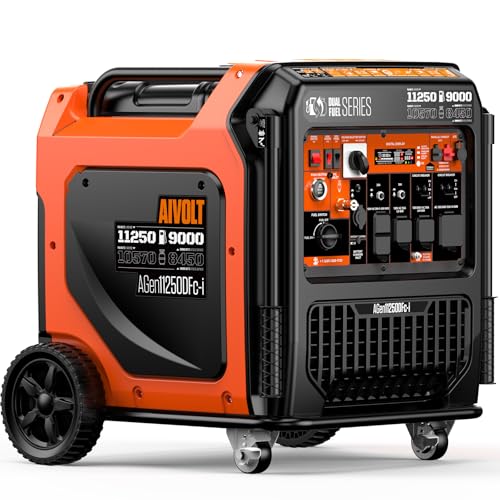
- Best High-Power Value: AIVOLT 11250W Dual Fuel Inverter Generator
- Best Mid-Range: Westinghouse 8200W Tri-Fuel Inverter Generator
- Best Dual Fuel: Westinghouse 12000W Dual Fuel Inverter Generator
- Best for Moderate Loads: GENMAX 6250W Tri-Fuel Inverter Generator
- Most Portable: Westinghouse iGen4500DFc 5000W Dual Fuel
Running a 50 amp RV off a portable inverter generator is one of those setups that sounds ambitious until you actually try it. The 50 amp service in most Class A and large Class C rigs draws from two separate 120-volt legs – up to 12,000 watts of combined capacity when everything is running at once. In reality, most RVers never hit that ceiling. But you still need a generator that can handle simultaneous loads: the main air conditioner, the roof vent fan, the refrigerator, the microwave, and charging devices all running at the same time.
That’s what separates a capable 50-amp inverter generator from one that trips your RV’s breaker the moment you turn on the coffee maker. The seven generators on this list were chosen specifically for their ability to power 50 amp rigs – whether you’re boondocking in the desert or waiting out a storm without hookups.
A true 50 amp RV service runs two 120V legs simultaneously, totaling up to 12,000 watts. For extended off-grid use, aim for a generator with at least 9,000-10,000 running watts – or pair a smaller unit with careful load management.
What Makes a Generator “50 Amp RV Ready”
The phrase “50 amp RV ready” on a generator spec sheet usually means one thing: it has a 50 amp (NEMA 14-50R) outlet built in. That outlet lets you plug your RV’s shore power cable directly into the generator without adapters. But having the right outlet doesn’t automatically mean the generator can sustain the loads a large RV demands.
For a 50 amp rig with one air conditioner, most 7,500-9,000 watt generators handle the job comfortably with headroom to spare. If your RV has two rooftop AC units – common in Class A coaches and fifth wheels over 35 feet – you’ll want at least 10,000-11,000 running watts to avoid voltage sag and mid-afternoon brownouts. Our guide to generators for RVs with 2 AC units breaks down the dual-AC power math in detail.
Beyond raw wattage, inverter generators offer a key advantage for RV use: clean power output with low total harmonic distortion. Inverter technology protects sensitive electronics, and modern RVs are packed with them – from variable-speed compressors to smart panel displays to CPAP machines.
Our Top 7 Picks
1. Champion Power Equipment 8500W Tri-Fuel Inverter Generator
Pull into a campsite on a 95-degree afternoon, flip on both the AC and the refrigerator, and the Champion 8500W doesn’t miss a beat. That’s the scenario that pushed this generator to the top of this list. With 8,500 starting watts and 7,500 running watts, it handles a single 15,000 BTU rooftop AC plus the typical RV electrical load without hunting for power.
The wireless remote start is genuinely useful – you can fire it up from inside the RV before you step out to connect the shore cable. Champion’s StartLINK app adds Bluetooth monitoring, so you can check runtime and load from your phone without walking outside. Tri-fuel capability (gas, propane, and natural gas) means flexibility when one fuel type is scarce at a remote campsite.
Noise output sits in the 60-64 dB range at quarter load – not whisper-quiet, but acceptable for campgrounds with standard generator hours. The Champion 8500W Tri-Fuel includes a dedicated 50 amp outlet alongside 30 amp and standard 20 amp receptacles, so no adapters required for your RV’s shore power cord.
Best for: RV owners who want a trusted brand, tri-fuel flexibility, and smart app features in a single mid-to-large capacity inverter generator.
2. Westinghouse 12000W Tri-Fuel Inverter Generator
What happens when you flip on both AC units in a 40-foot Class A at noon in July? If the generator can’t sustain the combined surge, you get a tripped breaker and a hot RV. The Westinghouse 12000W Tri-Fuel is one of the few portable inverter generators that genuinely handles that situation – 12,000 peak watts and 9,500 running watts from a single unit.
The tri-fuel system covers gasoline, propane, and natural gas, which matters on longer trips where campsite hookup availability varies. Remote electric start comes standard, and the CO sensor shuts down the unit automatically if carbon monoxide builds up – a critical safety feature given that generators sometimes get placed too close to RV vents at busy campgrounds.
At this power level, weight is a real trade-off. Moving this generator requires two people or a wheel kit. But for large fifth wheels and Class A coaches where dual AC is non-negotiable, the Westinghouse 12000W Tri-Fuel is one of the most complete inverter options available at this wattage range.
Best for: Large RVs with dual air conditioners, extended off-grid trips, and owners who want maximum headroom with no load management required.
3. AIVOLT 11250W Dual Fuel Inverter Generator
AIVOLT isn’t a name that comes up in every generator conversation – which is part of what makes it worth paying attention to. The 11250W sits at a power level that few portable inverter generators reach, and AIVOLT manages to hit it with a clean spec sheet: dual fuel (gas and propane), a dedicated 50 amp RV-ready outlet, CARB compliant for all 50 states, and remote, electric, and recoil start options all included.
The output is clean enough for sensitive RV electronics, and the 50 amp outlet is a dedicated circuit. At 11,250 peak watts and roughly 9,000 running watts, it comfortably powers a single large AC plus full kitchen loads, and can sustain dual-AC operation on larger rigs with basic load management.
One honest note: AIVOLT has less dealer support infrastructure than Westinghouse or Champion. If something needs servicing on the road, you’re more likely dealing with the manufacturer directly. For buyers who want high wattage and CARB compliance without paying the top-tier price, the AIVOLT 11250W is a serious contender.
Best for: RV owners who need high-wattage dual fuel performance and are comfortable with a newer brand in exchange for better value at this wattage tier.
4. Westinghouse 8200W Tri-Fuel Inverter Generator
Compared to the 12000W Westinghouse reviewed above, this model trades about 1,300 running watts for a more manageable form factor. That trade makes sense for a lot of 50 amp RV owners – specifically those with a single rooftop AC, a standard residential refrigerator, and moderate appliance loads rather than a full coach’s worth of simultaneous draws.
The tri-fuel capability uses the same platform as the larger model: gas, propane, or natural gas with a simple fuel-select switch. Remote electric start and CO sensor shutdown are both included. The 50 amp outlet handles direct RV connection without adapters, and the transfer-switch-ready design means this works just as well as a home backup generator when you’re not on the road.
The Westinghouse 8200W Tri-Fuel lands in a comfortable middle ground – more capable than entry-level RV generators, less imposing than the 12000W tier, and backed by Westinghouse’s service network.
Best for: Single-AC 50 amp rigs, owners who also want a versatile home backup generator, and those who prefer staying within the Westinghouse brand family.
5. Westinghouse 12000W Dual Fuel Inverter Generator
The raw output here is the headline: 12,000 peak watts, 9,500 running watts, dual fuel. This model is functionally very close to the tri-fuel version reviewed above. The main difference is that it runs on gasoline or propane, while the tri-fuel version adds natural gas as a third option. For most RV owners, dual fuel is more than enough.
What stands out is the noise management for this wattage class. Most generators producing 9,000-plus running watts are loud – the kind that earns dirty looks at a family campground. Westinghouse has built meaningful noise control into this platform, and the result is a generator that stays within acceptable ranges at typical RV loads rather than running wide-open at all times.
Remote electric start, transfer-switch-ready output, and the 50 amp RV outlet are all standard. The Westinghouse 12000W Dual Fuel is the pick for someone who wants maximum power and trusts the Westinghouse name, without paying extra for natural gas compatibility they may never use.
Best for: Large RV owners who want top-tier wattage from a well-supported brand and are satisfied with gas and propane as their two fuel options.
6. GENMAX 6250W Tri-Fuel Inverter Generator (2026 Model)
Context matters with this one. The GENMAX 6250W is the updated 2026 model with a dedicated 50 amp outlet – which is why it belongs on this list despite the lower wattage. If your 50 amp RV typically runs one AC, a modest kitchen load, and standard lighting, 6,250 peak watts covers the practical day-to-day demand without the bulk and fuel consumption of a larger generator.
The Bluetooth app control and 2-wire auto start/stop are modern features for this tier. Tri-fuel covers gas, propane, and natural gas. The CO sensor is standard. And at this wattage class, the unit is significantly lighter and easier to move than the 10,000-12,000W options above.
The honest limitation: don’t plan on running dual AC or a large electric resistance load simultaneously. The GENMAX 6250W is a smart pick for moderate-draw 50 amp rigs – travel trailers, smaller Class C rigs, and camper vans where the 50 amp connector is present but full simultaneous load is rarely needed.
7. Westinghouse iGen4500DFc 5000W Dual Fuel Inverter Generator
Let’s be straightforward about this one: 5,000 peak watts is below what a fully loaded 50 amp RV needs. If you’re running two air conditioners simultaneously, this generator will trip your breaker. That’s not a criticism of the iGen4500DFc – it’s a genuinely excellent inverter generator – it just means you need to be honest about your actual load before choosing it.
Where it earns its spot on this list: it’s one of the quietest dual-fuel inverters in this wattage class, it weighs significantly less than everything above it, and it handles a 50 amp RV’s essential loads when you’re running things sensibly. One AC unit, the refrigerator, charging devices, and basic lighting – that’s a comfortable operating range. The 50 amp outlet is built in, and the remote electric start works reliably.
For RV owners who run one AC at a time and practice basic load management – turning off the microwave before starting the AC – a well-chosen 5,000W inverter generator can power a 50 amp rig comfortably through a full weekend trip.
The Westinghouse iGen4500DFc makes the most sense for lighter-use scenarios: weekend trips, rigs where the 50 amp service is present but you’re not maxing it out, or owners who want the quietest possible option and are willing to manage their power draw.
Best for: Single-AC 50 amp rigs where portability and noise level matter more than maximum wattage headroom.
How to Choose the Right Generator for Your 50 Amp RV
Understand Your Actual Power Draw
The biggest mistake RV owners make when sizing a generator is assuming they need to cover their rig’s theoretical maximum. A 50 amp RV can theoretically draw 12,000 watts – but most people never hit that ceiling because they’re not running every appliance simultaneously. Do a realistic audit: what do you actually run at the same time during a typical afternoon? That number is your real minimum, not the spec plate on your breaker panel.
For single-AC Class C and travel trailer owners, 7,500-8,500 running watts is usually the comfortable range. For dual-AC Class A and fifth wheel owners, step up to the 10,000-12,000W tier. Our dedicated guide to 50 amp generators covers the load math in detail for common RV appliance combinations.
Why Inverter Technology Matters for RV Use
Modern RVs are packed with sensitive electronics – variable-speed compressors in newer AC units, smart panel systems, entertainment setups, and medical devices. Conventional generators produce power with relatively high harmonic distortion, which can shorten the life of these components or cause erratic behavior over time.
Inverter generators produce cleaner sine wave output – closer to what comes from a standard wall outlet. All seven generators on this list use inverter technology, which is why they’re appropriate for the electronics-heavy environment of a modern RV. For a broader comparison of inverter versus conventional generator performance, see our guide on inverter generators for RVs.
Fuel Flexibility on Long Trips
Gas availability isn’t guaranteed everywhere RVs go. Propane is often more accessible in remote areas, and many RVers already carry large propane tanks for their range and water heater. Tri-fuel generators add natural gas as a third option, useful if you’re parked at a site with a natural gas hookup for extended periods. Five of the seven generators on this list are tri-fuel or dual-fuel – if you travel to remote areas, prioritize propane capability at minimum.
Noise at the Campground
Most campgrounds with generator hours allow operation between roughly 8 AM and 10 PM. Within those hours, noise still matters for your neighbors and your own comfort. Inverter generators automatically throttle engine speed to match the load, which means they get quieter when the AC cycles off and you’re just running the fridge. The smaller generators on this list are noticeably quieter than the high-wattage options – a genuine trade-off worth weighing against your power needs.
Frequently Asked Questions
Can a 5,000W generator run a 50 amp RV?
Yes, with limitations. A 5,000W generator can power a 50 amp RV as long as you’re not running all high-draw appliances simultaneously. One air conditioner, the refrigerator, and standard loads are manageable. Two AC units running at the same time will likely exceed the generator’s capacity and trip your main breaker. Load management becomes part of the routine with a smaller generator.
What size inverter generator do I need for a 50 amp RV?
For a single-AC 50 amp rig, a generator in the 7,500-9,000 running watt range handles typical loads with headroom to spare. For dual-AC rigs or large Class A coaches with heavy appliance loads, aim for at least 10,000-11,000 running watts. A dedicated 50 amp (NEMA 14-50R) outlet is a required feature regardless of wattage – confirm it’s listed in the specs before purchasing.
Are inverter generators better than conventional generators for RV use?
For most RV applications, yes. Inverter generators produce cleaner power that’s safe for sensitive electronics, automatically adjust engine speed to match the load, and tend to be more portable at equivalent wattage. The trade-off is typically a higher upfront cost compared to conventional generators at the same wattage.
Can I run two smaller generators in parallel to power a 50 amp RV?
Some inverter generators support parallel operation, connecting two identical units to effectively double output. This can work if you already own one compatible inverter generator and want to add capacity. However, parallel kits only work with same-brand compatible models, and the combined setup is more logistically complex than a single high-output generator. For 50 amp RV use, a single capable unit is usually the more practical choice.
Final Verdict
For most 50 amp RV owners, the Champion 8500W Tri-Fuel hits the balance point between sufficient power, genuine inverter quality, and practical features like wireless remote start and app monitoring. It handles single-AC loads with headroom to spare and covers the majority of real-world RV power scenarios without the added bulk of a 12,000W unit.
If you’re running a large Class A or fifth wheel with dual AC, the Westinghouse 12000W Tri-Fuel or Dual Fuel delivers the most complete coverage with no load management required.
The GENMAX 6250W and Westinghouse iGen4500DFc are the right picks for lighter-use 50 amp rigs where portability and noise level outweigh the need for maximum wattage. They’re excellent for weekend getaways with one AC and sensible appliance use.
For a broader look at RV generator options across all fuel types and sizes, our complete best RV generators guide covers the full spectrum from compact camping units to whole-coach backup power.





Write Your Review
No reviews yet. Be the first to share your experience!