




Quick Picks: Best 1500 Watt Solar Generators
- Best Step-Up from 1500Wh: EcoFlow DELTA 2 Max 2048Wh – fast X-Stream charging, 2400W output, expandable to 4096Wh, the natural upgrade for buyers who find 1500Wh limiting
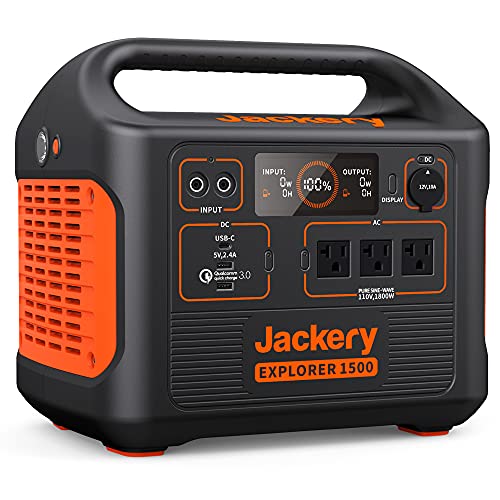
- Best Classic 1500Wh: Jackery Explorer 1500 – 1534Wh, 1800W output, proven Jackery reliability with extensive SolarSaga panel compatibility
- Best Expandable 2000Wh: BLUETTI AC200L 2048Wh – expandable to 8192Wh with external modules, 2400W output, for buyers who want to grow beyond 1500Wh over time
- Best Compact 1500Wh: Anker SOLIX F1500 – 1536Wh, 1800W output, compact Anker engineering with fast wall charging and clean design
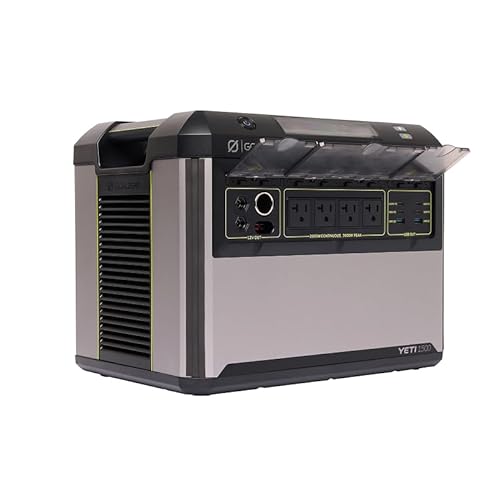
- Best New LiFePO4 1500Wh: Goal Zero Yeti 1500 6th Gen – 1505Wh LiFePO4, 2000W output, updated with long-cycle chemistry in the classic Yeti form factor
- Best Value at 1500Wh: Growatt Infinity 1500 – 1512Wh, 2000W output, strong specifications at competitive pricing for the 1500Wh class
The 1500Wh solar generator class bridges the gap between compact 1000Wh camping stations and the full-home-backup 2000Wh tier. At 1500Wh, a solar generator can run a refrigerator overnight alongside lighting and device charging, sustain a CPAP machine through multi-night camping trips, and power a small window AC for brief cooling sessions. It is the practical minimum for buyers whose primary use case involves an overnight load that exceeds what 1000Wh stations sustain reliably.
Buyers shopping the 1500Wh class often find themselves considering whether to commit to the 1500Wh tier or spend slightly more for a 2000Wh station. The calculus depends on use: for camping, van life, and medical device backup, 1500Wh is adequate. For home backup that includes an air conditioner or full-household coverage, 2000Wh is the more appropriate capacity. This guide covers the best 1500Wh options alongside the strongest 2000Wh upgrades for buyers at the boundary between these two tiers.
The 1500Wh capacity tier consistently delivers the best watts-per-dollar value in the solar generator market. The cost difference between a strong 1500Wh station and a comparable 2000Wh station is typically significant, while the load difference is approximately 25-30% more runtime per charge. For buyers who have clearly defined their load profile and confirmed that 1500Wh covers it, the 1500Wh tier is the most cost-efficient choice.
What 1500Wh Handles That 1000Wh Cannot
The incremental advantage of 1500Wh over 1000Wh is approximately 5-7 additional hours of refrigerator operation, a full extra overnight period for CPAP users, or the capacity margin to run additional small loads simultaneously alongside a refrigerator without cutting the overnight runtime short. For camping trips of 2-3 nights where solar recharge is limited, the 1500Wh buffer prevents the mid-trip low-battery anxiety that 1000Wh stations create when solar conditions are inconsistent. For the full range of load scenarios beyond 1500Wh, the home backup solar generator guide covers the 2000Wh+ capacity tier.
Best 1500 Watt Solar Generators – Reviewed
EcoFlow DELTA 2 Max – The Smart Step-Up to 2048Wh
The EcoFlow DELTA 2 Max at 2048Wh is positioned here as the recommended upgrade for 1500Wh buyers who want future-proofing. At 2400W output and 2048Wh of LiFePO4 capacity with X-Stream fast charging (0-80% in under 80 minutes), the DELTA 2 Max outperforms every native 1500Wh station in capacity, output, and recharge speed. The station is expandable to 4096Wh with an additional battery module, providing a clear upgrade path if the initial 2048Wh proves insufficient over time.
For buyers who are comparing 1500Wh options and 2000Wh options, the DELTA 2 Max presents a compelling case for spending the additional margin: the extra 500Wh of capacity adds one full overnight refrigerator cycle, the higher output wattage handles more demanding appliances, and the expansion path prevents the need to replace the station entirely when needs grow. EcoFlow’s ecosystem includes compatible solar panels, smart plug integration, and app monitoring. For buyers at the top of the 1500Wh budget who can stretch to 2048Wh, the DELTA 2 Max is the correct choice.
Best for: Buyers deciding between the 1500Wh and 2000Wh tiers who want long-term value, anyone who anticipates needing more than 1500Wh within the next year or two, EcoFlow ecosystem users who want the most capable mid-range station with expandability.
Jackery Explorer 1500 – The Established 1500Wh Benchmark
The Jackery Explorer 1500 is the reference product for the 1500Wh class, extensively reviewed, reliably available, and backed by Jackery’s established panel compatibility documentation. At 1534Wh and 1800W output, it handles all standard 1500Wh use cases: two-night camping without solar, refrigerator overnight plus morning coffee maker and device charging, or CPAP for three consecutive nights from a single charge. SolarSaga panel compatibility ranges from 100W to 400W configurations with documented recharge time estimates for each.
Jackery’s long market presence in the 1500Wh class means the Explorer 1500 has a deep pool of real-world reviews across diverse use cases, camping, home backup, van life, and construction site use. For first-time solar generator buyers at the 1500Wh tier who want a well-reviewed, proven product rather than a newest-generation alternative, the Explorer 1500’s track record provides confidence that specifications match real-world performance. For a broader comparison of camping-focused solar generators, see the RV camping power guide.
Best for: First-time solar generator buyers who want the most proven 1500Wh option with deep real-world reviews, camping and van life users who want Jackery’s panel compatibility documentation, anyone who values a long track record over the newest model specifications.
BLUETTI AC200L – Expandable Entry into the 2000Wh Class
The BLUETTI AC200L at 2048Wh with expandability to 8192Wh via external battery modules serves 1500Wh shoppers who anticipate growing into larger capacity. At 2400W output and dual charging inputs that accept simultaneous AC wall and solar charging, the AC200L recharges faster than most single-input 1500Wh stations. For buyers who start with a 1500Wh mindset but want a platform that scales without station replacement, the AC200L’s expansion path to 8192Wh is the practical future-proofing that no native 1500Wh station can match.
LiFePO4 chemistry provides 3500+ cycles at 80% capacity, approximately 10 years of daily use for a station charged and discharged once daily. BLUETTI’s external battery modules (B230, B300) add capacity in increments, allowing buyers to invest in the base station first and add capacity as their budget and needs develop. For buyers comparing the BLUETTI AC200L and EcoFlow DELTA 2 Max at the 2000Wh tier, the AC200L’s higher expansion ceiling and BLUETTI’s specific module ecosystem make it the better choice for long-term capacity planning.
Best for: 1500Wh shoppers who want the largest expansion ceiling in the mid-range station class, buyers planning to add capacity incrementally over multiple years, anyone who wants BLUETTI’s specific external battery module ecosystem over competitors’ built-in expansion approaches.
Anker SOLIX F1500 – Compact Engineering at 1536Wh
The Anker SOLIX F1500 applies Anker’s compact power engineering to the 1536Wh class, delivering 1800W output in a form factor optimized for the buyers who move the station frequently, campers, van lifers, and homeowners who bring the station between indoor and outdoor use regularly. The fast wall charging speed matches competitors in the class, and Anker’s GaN-based power conversion components contribute to the compact size without reducing output capability.
Anker’s customer support reputation and warranty coverage provide a strong backstop for buyers making a significant purchase in this class. The SOLIX F1500’s compatible solar panel ecosystem allows direct outdoor recharging with Anker’s panel lineup. For 1500Wh buyers who prioritize Anker’s build quality, compact design, and customer service track record alongside competitive specifications, the F1500 is the Anker ecosystem answer at this capacity tier.
Best for: Buyers who value Anker’s compact engineering and customer support, frequent movers who carry the station regularly and appreciate reduced size and weight, anyone who wants a 1536Wh station with Anker’s warranty backing.
Goal Zero Yeti 1500 6th Gen – LiFePO4 in the Classic Yeti Form
The updated 6th generation Goal Zero Yeti 1500 brings LiFePO4 battery chemistry to the classic Yeti 1500 platform, extending cycle life significantly over earlier NMC-chemistry Yeti models. At 1505Wh and 2000W output, the highest output of any native 1500Wh station on this list, the 6th Gen Yeti handles demanding loads that lower-output 1500Wh stations cannot start. Goal Zero’s established ecosystem of Boulder panels, power links, and compatible accessories integrates with the 6th Gen Yeti for buyers who are expanding an existing Goal Zero setup.
The 2000W output tier opens applications that 1500-1800W output stations close off: a small window AC at 800-1200W startup, a microwave at full 1000W power running alongside other loads, or a power tool at full draw. For buyers who want a 1500Wh station that operates at the top of the output range for its class, the 6th Gen Yeti 1500’s 2000W output is the practical differentiator. For a full comparison of solar generators across capacity classes, see the portable solar generator guide.
Best for: Goal Zero ecosystem users adding a 1500Wh station with LiFePO4 longevity, buyers who need 2000W output in the 1500Wh class for high-draw appliance operation, anyone upgrading from an older NMC-chemistry Yeti 1500 to the updated LiFePO4 platform.
Growatt Infinity 1500 – Strong Value at 1500Wh
The Growatt Infinity 1500 at 1512Wh and 2000W output delivers competitive specifications for the 1500Wh class at a price point that typically undercuts the established brand alternatives. For buyers who prioritize watts-per-dollar value and are comfortable with a newer brand in the category, the Infinity 1500 provides equivalent capacity and output to the class leaders. Growatt is an established solar inverter and battery company with significant manufacturing experience, bringing a different background than traditional consumer electronics brands to the portable power station market.
The 2000W output matches the Goal Zero Yeti 1500 6th Gen at the top of the output range for native 1500Wh stations. LiFePO4 chemistry provides long cycle life comparable to competitors. For buyers whose primary criterion is maximum specifications per dollar at the 1500Wh class, the Growatt Infinity 1500 consistently ranks at the top of value comparisons. The trade-off versus established brands is a smaller pool of long-term real-world reviews and a less developed accessory ecosystem.
Best for: Value-focused buyers who want the best specifications per dollar at the 1500Wh class, buyers comfortable with newer brands who are familiar with Growatt’s solar industry background, anyone who wants 2000W output at the 1500Wh tier at the most accessible pricing.
For buyers finalizing the 1500Wh versus 2000Wh decision: if the primary use is camping or van life where portability and travel compatibility matter, a native 1500Wh station is the correct choice, lighter, more compact, and adequate for the load. If the primary use is home backup for an entire overnight period including refrigerator plus lighting plus device charging simultaneously, the 2000Wh tier provides the margin that prevents running out of power before morning.
Choosing the Right 1500Wh Station
Output Wattage Separates the Tiers
In the 1500Wh class, stations range from 1800W to 2000W output. The difference matters for specific appliances: a window AC (800-1200W startup), a microwave at full power (1000W), or a power tool at full draw (1200W+) require stations closer to the 2000W output tier for comfortable operation. For loads limited to refrigerator, CPAP, lighting, and device charging, 1800W output is sufficient. Identify the highest-draw appliance in the intended use and select accordingly.
Solar Recharge Speed for Camping Use
For camping where solar is the primary recharge method, check both the station’s maximum solar input and plan the panel array accordingly. Most 1500Wh stations accept 300-500W of solar input. A 200W panel recharges a 1500Wh station in approximately 8-10 hours; a 400W array cuts this to 4-5 hours, workable for daily camping recharge. Stations with higher solar input ratings recharge faster per hour of peak sun, which matters significantly during overcast periods and shorter winter days.
FAQs
Is 1500Wh enough for home backup?
For essential loads only, refrigerator cycling, LED lighting, phone and laptop charging, a 1500Wh station covers approximately one full overnight period (8-10 hours). For multi-day outages or coverage that includes an air conditioner, 1500Wh is insufficient and the 2000Wh+ tier is the appropriate choice. For the specific overnight single-outage scenario where grid power typically returns by morning, 1500Wh is the minimum adequate capacity for essential home backup.
How many solar panels do I need to recharge a 1500Wh station?
A 200W panel recharges a 1500Wh station from near-empty in approximately 8-10 hours of direct sun. A 400W panel array (two 200W panels) recharges in 4-5 hours. For daily camping recharge, 200W is functional; for faster recovery or cloudier conditions, 400W is more reliable. Check the station’s maximum solar input rating, some 1500Wh stations cap input at 200-300W, limiting how much larger arrays can help.
Final Verdict
For committed 1500Wh buyers who want the most proven product in the class, the Jackery Explorer 1500 remains the reference platform with the deepest pool of real-world reviews and reliable panel compatibility. For buyers with access to the extra budget, the EcoFlow DELTA 2 Max at 2048Wh outperforms every 1500Wh station in capacity, output, and expandability, a clear upgrade if the use case justifies it.
For value-focused buyers, the Growatt Infinity 1500 delivers 2000W output and 1512Wh at competitive pricing. And for Goal Zero ecosystem users, the updated Goal Zero Yeti 1500 6th Gen brings LiFePO4 longevity to the classic Yeti 1500 platform with the 2000W output tier that makes it the most capable native 1500Wh station on this list.





Write Your Review
No reviews yet. Be the first to share your experience!