





Quick Picks: Best Portable Gas Generator for Camping
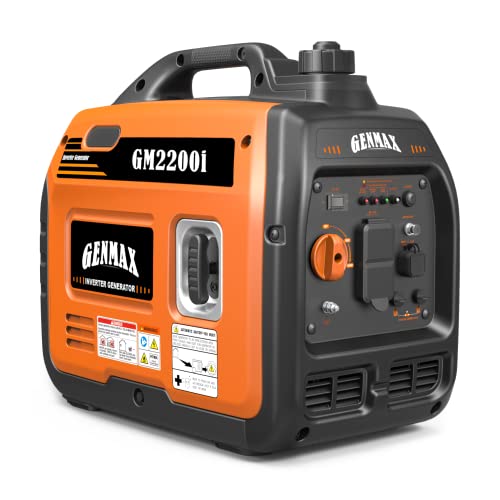
- Best Ultra-Portable: GENMAX Eco-Mode Ultra Lightweight – 2,400+ reviews, designed for camping, under $350
- Best Budget: PowerSmart 2500W Gas Inverter – 4.6 stars, under $350, 5.5-hour runtime
- Best Brand Value: Westinghouse 2550W Super Quiet – RV Ready outlet, parallel capable
- Best Mid-Range: 3500W Portable Inverter – clean power, quiet, under $420
- Best for Base Camp: FIRMAN 4550W Dual Fuel – 4,550W peak, gas or propane, RV Ready
- Best All-Rounder: AIVOLT 4300W RV Ready – 4,300W quiet inverter, EPA compliant
Why Gas Generators Still Dominate Camping Power
Battery power stations are excellent for quiet, emissions-free camping. But when you need to run multiple appliances all day, recharge off the grid, or power an air conditioner in hot weather, a gas generator delivers what batteries can’t: unlimited runtime as long as you have fuel, and immediate full-power availability regardless of how long you’ve been parked.
Gasoline is the most widely available portable energy source in the country. Every gas station along a camping route carries it. That accessibility – the ability to refuel anywhere – makes gas generators the practical choice for road trip camping, multi-week trips, and any camping scenario where recharging from a wall outlet isn’t possible.
Modern camping gas generators are quieter, lighter, and more fuel-efficient than the gas generators of a decade ago. Inverter technology, eco-mode throttling, and improved engine designs have brought the noise level of today’s 2,500W camping generators down to 50 to 58 decibels at 25 feet – quieter than a normal conversation. The gas generator stereotype of a loud, smelly machine is increasingly outdated.
In-Depth Reviews: Best Portable Gas Generators for Camping
GENMAX Eco-Mode Ultra Lightweight – Best Ultra-Portable
The GENMAX EPA-compliant generator with eco-mode is purpose-built for campers who prioritize weight and portability above all else. With 2,407 reviews at 4.2 stars and a price under $350, it’s one of the most reviewed compact gas generators for camping on the market. The eco-mode feature automatically adjusts engine speed to match the actual load – quieter and more fuel-efficient at light loads like phone charging and camp lighting, stepping up power smoothly when larger loads activate.
EPA compliance confirms it meets current emissions standards and is legal to operate in all states and at most campgrounds with generator policies based on emissions compliance. For car campers who prioritize a generator that’s easy to lift, transport, and fit in a crowded vehicle cargo area alongside camping gear, this is the most review-backed lightweight option on the list.
Best for: campers who prioritize portability and proven real-world performance over maximum wattage output.
PowerSmart 2500W Gas Inverter – Best Budget
The PowerSmart HB5020 delivers 2,500W peak from a 79.8cc gas engine at a price under $350, earning a 4.6-star average across 440 reviews – the highest rating on this list. The 5.5-hour runtime at 50% load covers a full evening of camp use on one fill. Clean inverter output makes it safe for laptops, camera batteries, CPAP machines, and any sensitive electronics that need clean sine wave power rather than the dirty power of conventional generators.
At this price and rating, it’s hard to find a more cost-effective path to reliable camping gas power. The compact design fits easily in most vehicle cargo areas, and the carry handle makes one-handed transport manageable for most adults.
Best for: campers who want the best quality-to-price ratio available, proven by a strong review rating, in a compact gas inverter package.
Westinghouse 2550W Super Quiet – Best Brand Value
The Westinghouse 2550W portable inverter generator brings a trusted name in power equipment to the camping generator category at a price around $450. The super quiet design, RV Ready 30A outlet, and parallel capability make it practical for both tent camping and RV use – a single generator that covers both scenarios without compromise. With 133 reviews at 4.3 stars, it carries Westinghouse’s quality reputation with solid buyer validation.
The parallel capability is particularly useful for camping groups who start with one unit and later need more power for an AC unit or larger campsite setup. Two identical units can be linked to produce double the output, avoiding the need to buy a larger generator for occasional high-demand situations.
Best for: campers who value brand reputation and want a generator that works for both camping and RV use, with future scalability through parallel pairing.
3500W Portable Gas Inverter – Best Mid-Range
The 3500W portable inverter generator delivers quiet, lightweight power at a price around $415 – a step up in output from 2,500W alternatives without a major price increase. At 3,500W peak, it handles a small RV AC unit, a full camp kitchen, and device charging running together. With 40 reviews at 4.4 stars and an RV Ready designation, it covers the gap between compact 2,500W camping inverters and the heavier 4,000W+ units on this list.
The inverter design keeps noise low and power output clean. For family camping trips where a larger group means more simultaneous power demand – multiple devices charging, a camp refrigerator, a fan or small AC – the 3,500W range is the practical sweet spot between too little and too much.
Best for: family campers and group camping setups where 2,500W isn’t quite enough but the size and cost of 4,000W units is more than needed.
FIRMAN 4550W Dual Fuel – Best for Base Camp
The FIRMAN H03655 brings 4,550W of gas output and 4,100W on propane to the base camp scenario where a larger group needs full appliance power over multiple days. With a RV Ready outlet, CO Alert, dual fuel capability, and 201 reviews at 4.2 stars, it handles the full base camp load: a rooftop AC unit, a full camp kitchen with an electric grill, refrigerator, and device charging for a group. At a price around $700, it’s the premium option for group camping or extended base camp setups.
The propane fuel option is a genuine advantage for multi-day base camps far from gas stations. A full 20-pound propane cylinder runs the FIRMAN for a full day at moderate load. For camping trips where driving to town for gasoline is impractical, propane delivery or pre-filled cylinders keep the camp powered without interruption.
Best for: family base camps, group camping setups, and extended wilderness trips where maximum output and fuel flexibility matter more than portability.
AIVOLT 4300W RV Ready – Best All-Rounder
The AIVOLT 4300W inverter generator delivers RV Ready capability, quiet operation, and EPA compliance at a price under $500 – the best value at the 4,000W+ output tier on this list. With 154 reviews at 4.1 stars, it handles both camping and RV use without requiring a larger investment. At 4,300W peak, it starts a standard 13,500 BTU RV AC unit and runs the full campsite load simultaneously.
The super quiet inverter design makes it appropriate for campgrounds with noise restrictions. For campers who split time between tent camping and motorhome use with the same generator, the 4,300W output and RV Ready outlet make it the most versatile single-generator solution at its price point. For general guidance on choosing between camping inverter generator sizes, the wattage breakdown by use case covers the full range.
Best for: campers who want a single generator that works for both tent camping and RV use, with enough output for AC operation, at a price under $500.
Gas Generator Fuel Comparison for Camping
| Factor | Gasoline | Propane (where dual fuel) |
|---|---|---|
| Availability | Every gas station | Hardware stores, campgrounds, truck stops |
| Storage life | 30-90 days (with stabilizer) | Indefinite in sealed tank |
| Transport | Approved fuel cans required | Standard DOT-approved cylinders |
| Campsite odor | Noticeable during refueling | Minimal |
| Cold weather start | Can be difficult below 20°F | More reliable in cold conditions |
| Energy per gallon | ~131,000 BTU/gallon | ~91,000 BTU/gallon |
| Cost | Market price (varies) | Slightly higher per BTU |
How to Choose a Portable Gas Generator for Camping
1. Estimate Your Daily Watt-Hour Need
Add up what you’ll run and for how long each day. A camp fridge (45W x 24h = 1,080Wh), phone charging (20W x 3h = 60Wh), a camp lantern (20W x 5h = 100Wh), and a laptop (60W x 2h = 120Wh) totals about 1,360Wh per day – well within the range of any generator on this list running for 2 to 3 hours. A gas generator doesn’t need to run all day – it runs when you need to recharge or power larger appliances, then shuts off the rest of the time.
2. Consider How You’ll Transport It
Weight and dimensions matter significantly for camping generators. The ultra-lightweight GENMAX and PowerSmart 2500W are easily handled by one person. The FIRMAN 4550W weighs significantly more and requires two people or a wheel kit for easy movement. Match the generator size to the vehicle and camping style – a compact car camper and a pickup-driving base camper have different portability requirements.
3. Fuel Storage and Safety
Gasoline requires approved vented fuel containers for transport – standard plastic fuel cans work for most camping scenarios. Don’t store fuel inside a vehicle cabin. Allow the generator to cool for at least 2 minutes before refueling. For multi-day remote camping, carry enough fuel for your expected runtime plus a 50% buffer for unexpected extended use or reduced fuel efficiency in hot weather or at altitude.
4. Runtime vs. Tank Size
A larger fuel tank means fewer refueling stops but also more weight. Most camping inverter generators run 5 to 9 hours at 50% load on a full tank. For a campsite where the generator runs 3 to 4 hours in the evening, a standard 1-gallon tank is sufficient. For all-day base camp operation, look for tanks of 1.5 gallons or more, or plan for a midday refuel.
FAQs About Gas Generators for Camping
Q: Can I use a gas generator at national park campgrounds?
It depends on the specific campground. Many national park developed campgrounds allow generators during daytime hours (typically 8am to 8pm). Primitive and backcountry sites generally prohibit generators. Some popular national park campgrounds (Yosemite Valley, Grand Canyon South Rim) prohibit generators entirely in certain loops. Always check the specific campground’s rules at recreation.gov or the park’s website before relying on a generator.
Q: How far should a gas generator be from a tent?
Keep any gas generator at least 20 feet from tents, sleeping areas, and any enclosed space. Position the exhaust pointing away from the camping area. Carbon monoxide from generators is odorless and accumulates rapidly – even partial enclosure with tarps or canopies can trap CO to dangerous levels. Never run a generator inside a tent vestibule, screen room, or vehicle.
Q: How do I store a camping gas generator between trips?
For storage over 30 days, run the fuel tank dry or add fuel stabilizer before storing. Change the oil per the manufacturer’s schedule (typically every 50 to 100 hours of operation). Store in a dry, ventilated area away from the living space – a garage or shed is ideal. Before the next camping season, check the spark plug, clean or replace the air filter, and test-run the generator at home before depending on it at a remote campsite.
Q: Is a dual fuel gas generator worth it for camping?
For occasional weekend camping close to gas stations, a single-fuel gas generator is simpler and slightly less expensive. For extended road trips, multi-week base camps, or camping in remote areas, the dual fuel option is worth the modest price premium. Propane doesn’t degrade in storage, is available at most campground stores, and reduces the need to carry multiple gasoline cans. The FIRMAN 4550W on this list is the dual fuel option for campers who want that flexibility.
Final Verdict: Best Portable Gas Generator for Camping
For most camping scenarios, the PowerSmart 2500W Gas Inverter delivers the best balance of price, rating, and camping-appropriate output. A 4.6-star average at under $350 is the strongest value proposition on this list, and 2,500W covers typical camping loads without the bulk and cost of higher-output units.
Campers who prioritize portability above all else should consider the GENMAX Eco-Mode Ultra Lightweight – over 2,400 reviews confirm its field reliability, and the ultra-lightweight design makes it the easiest to transport. For family base camps that need more power including RV AC operation, the AIVOLT 4300W delivers full-campsite capability at under $500, while the FIRMAN 4550W Dual Fuel adds propane flexibility for extended remote trips.
A gas generator for camping doesn’t need to run all day. It runs for a few hours in the evening to top up the camp fridge, charge everything that needs charging, and power the campsite lighting. Size for that actual use case, not for maximum theoretical load, and you’ll carry less weight and spend less money on the right generator for the job.


Write Your Review
No reviews yet. Be the first to share your experience!