


Quick Picks: Best Portable Generator to Run a Refrigerator
- Best Quiet Option: Westinghouse 2200W Super Quiet Inverter Generator, handles fridge surge and run load with ultra-quiet eco-mode operation
- Best Budget 2,350W: WEN 56235i 2350W Super Quiet Inverter Generator, clean sine wave, fuel-efficient eco mode, sized for single-fridge backup
- Best Dual Fuel 4,000W Inverter: maXpeedingrods 4000W Dual Fuel Inverter Generator with Bluetooth, gas or propane, clean power for fridge and kitchen loads
- Best Compact 4,000W: Champion Power Equipment 4000W RV Ready Inverter Generator, runs fridge plus appliances simultaneously, portable design
- Best for Fridge Plus Home Loads: Westinghouse 4650W Dual Fuel Portable Generator, 30-amp outlet, runs refrigerator alongside other household essentials
- Best All-Around Backup: Westinghouse 7500W EFI Dual Fuel Generator, runs full kitchen including refrigerator, freezer, and microwave simultaneously
What It Actually Takes to Run a Refrigerator on a Generator
A standard refrigerator draws 100 to 200 watts when the compressor is running, but the compressor starting surge is the real sizing requirement. Most refrigerators surge to 800 to 1,500 watts for the half-second when the compressor kicks on, which is three to five times the running draw. A generator that cannot meet that surge trips the motor protection circuit, the fridge compressor shuts off, and you are left with a warm refrigerator. The minimum safe generator size for a single standard fridge is approximately 2,000 watts with enough surge capacity (typically 3,000 to 4,000 watts) to cover the starting spike cleanly.
Inverter generators are the preferred choice for refrigerator use because they produce pure sine wave output. Modern refrigerators use electronic control boards to manage compressor cycles, defrost timing, and temperature sensing. These boards are designed for clean sine wave power. While most modern fridges tolerate modified sine wave output without immediate damage, pure sine wave from an inverter generator is a better long-term match for the electronics and keeps the compressor operating at peak efficiency.
The practical fridge-sizing calculation: take your fridge’s rated wattage (found on the energy label inside the door or on the back of the unit) and multiply by three to get the surge requirement. A 150-watt fridge needs 450 watts of surge capacity minimum, but in practice, using a generator with at least 2,000 running watts and 3,000 watts of surge capacity provides reliable fridge operation without close-to-the-edge load management.
For buyers running a dedicated chest freezer in addition to a refrigerator, the best solar generators for refrigerators article covers battery-based alternatives that can run quietly overnight without fuel. For buyers looking at whole-kitchen backup including the refrigerator as part of a larger home backup plan, the best portable generators for home backup covers that broader use case.
In-Depth Reviews: Best Portable Generator to Run a Refrigerator
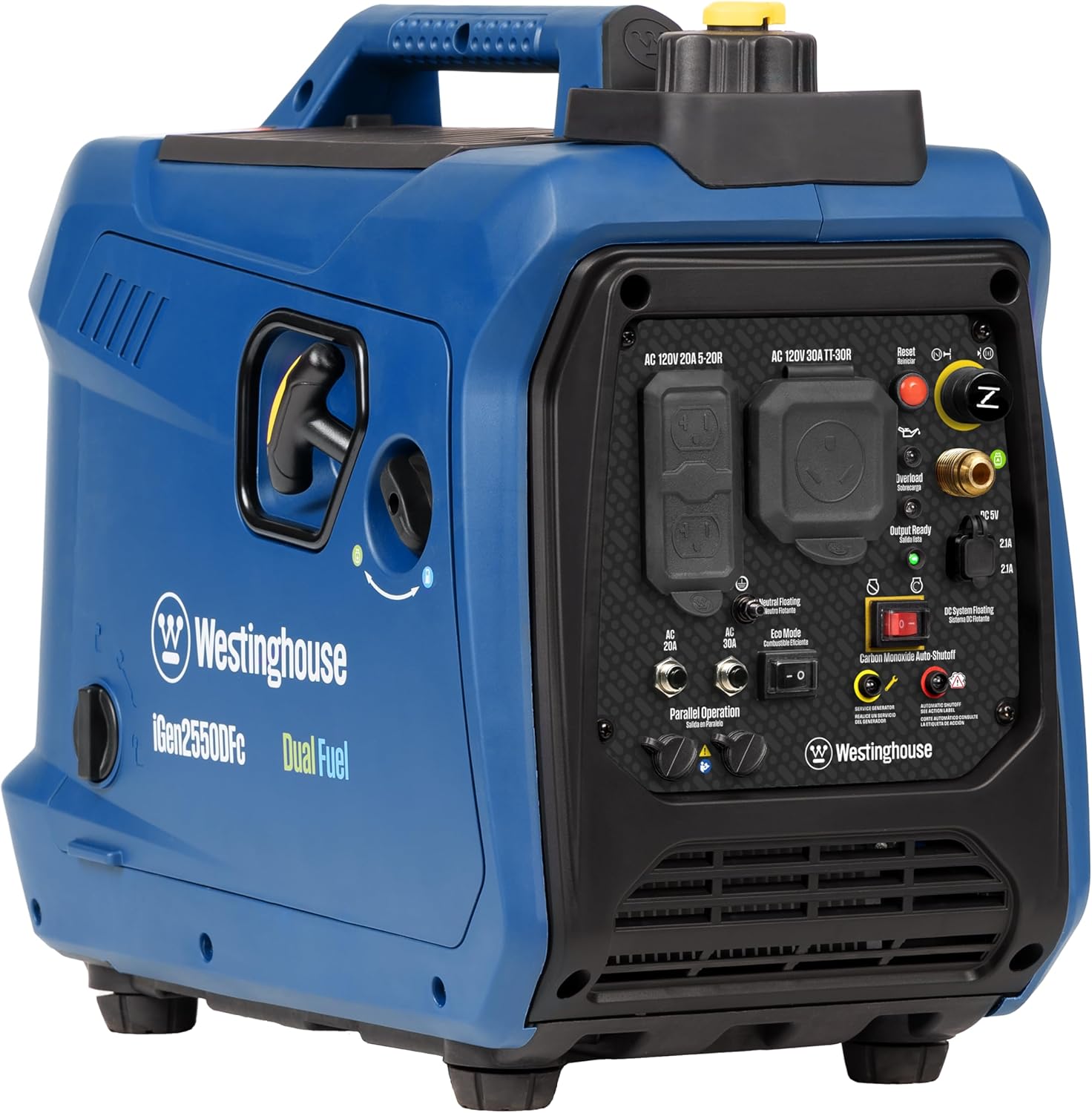
Westinghouse 2200W Super Quiet Inverter Generator
Most people discover what a fridge actually draws when the power goes out and they start running the numbers on their generator. The answer, for the vast majority of standard refrigerators, is 100 to 200 watts of running load, easily handled by almost any generator. The challenge is the surge. The Westinghouse 2200W Inverter provides 2,200 running watts and 2,800 surge watts, which is sufficient for virtually all standard household refrigerators with meaningful headroom for the surge event. The inverter output protects the fridge’s control electronics. The quiet eco-mode operation makes this generator appropriate for residential use where noise complaints from extended outage operation are a concern.
WEN 56235i 2350W Super Quiet Inverter Generator
The 150-watt edge the WEN 56235i has over a 2,200W generator is more meaningful for refrigerators than it sounds. A refrigerator compressor starting while a chest freezer in the garage also kicks on simultaneously, plus a small fan running inside, can push the 2,200W-class generator to its limit. The WEN 56235i provides that additional margin without a meaningful size, weight, or noise premium over the 2,200W models. For households with one refrigerator as the primary outage concern and modest other loads, this is the lean-sized inverter that covers the job without overshooting it.
maXpeedingrods 4000W Dual Fuel Inverter Generator with Bluetooth
Four thousand watts changes the fridge-running scenario from “this generator does one job” to “this generator runs the kitchen.” The maXpeedingrods 4000W Dual Fuel Inverter runs a refrigerator, a chest freezer, a coffee maker, and phone chargers simultaneously from clean inverter power without approaching its capacity ceiling. The Bluetooth monitoring feature lets you check generator status from inside the house during an outage, which matters when the generator is positioned away from the living area. Dual fuel provides propane operation as an alternative to gasoline, useful for outages where extended run time from a propane tank is more practical than repeated gasoline runs.
Champion Power Equipment 4000W RV Ready Portable Inverter Generator
Champion’s positioning in the generator market is reliable performance at a price that does not require justification. The Champion 4000W RV Ready Inverter delivers exactly what refrigerator backup requires: clean sine wave output, 4,000 watts of running power for fridge plus additional kitchen appliances, and a portable form factor that stores and deploys easily. The RV Ready designation includes a 30-amp TT-30 outlet for direct RV connection, which also means this generator integrates cleanly with whole-home transfer connections that use TT-30 to 14-30 adapters. For households whose outage preparation centers on food preservation first, this is a balanced choice at the 4,000W tier.
Westinghouse 4650W Dual Fuel Portable Generator
The refrigerator is not the only kitchen appliance that needs to run during an extended power outage. The Westinghouse 4650W Dual Fuel runs a refrigerator alongside a chest freezer, a microwave for brief use, a sump pump if the outage involves flooding, and phone and device charging simultaneously. The 30-amp outlet enables connection to a home transfer panel for circuit-based whole-kitchen coverage. Dual fuel provides flexibility between gasoline and propane for extended multi-day outage scenarios. For households in outage-prone areas who want refrigerator backup as part of a broader kitchen-ready power plan, the 4,650W tier is the practical sweet spot.
Westinghouse 7500W EFI Dual Fuel Portable Generator
Running just a refrigerator from a 7,500W generator is like using a pickup truck for grocery runs. It technically works, but the real value is what else it handles at the same time. The Westinghouse 7500W EFI runs every kitchen appliance simultaneously: refrigerator, chest freezer, microwave, coffee maker, toaster, and a window AC in an adjacent room, all without any load management. For households with large families, medical equipment needs, or simply a preference for whole-home outage coverage rather than selective power, the 7,500W tier is the minimum for true no-compromise backup. EFI means it starts reliably in cold weather without carburetor maintenance concerns.
Refrigerator Generator Buying Guide
How to size a generator for your specific refrigerator
Find your refrigerator’s wattage on the energy label (inside the door or on the rear panel). Multiply the running wattage by 3 to estimate the starting surge requirement. Add the wattage of any other appliances you intend to run simultaneously. The generator’s starting/surge wattage must exceed the total surge load; the generator’s running wattage must exceed the total running load. For most single-refrigerator situations with light additional loads, a 2,000 to 2,500W inverter generator is the minimum appropriate size.
Runtime calculation for outage planning
A 2,200W inverter generator at 25% load (refrigerator cycling plus a few chargers) runs approximately 8 to 10 hours on a tank of gasoline. For a 48-hour outage with 24 hours of generator use per day (12 hours on, 12 hours off for fuel efficiency and noise reduction), this requires two to three tank refills. Generators above 4,000W run the refrigerator at an even lower load percentage, which improves fuel efficiency and extends tank life further.
FAQs: Running a Refrigerator on a Generator
Q: How long can food stay safe without power?
The FDA guideline: an unopened refrigerator maintains safe food temperatures (below 40°F) for approximately 4 hours without power if the door remains closed. A full chest freezer maintains safe temperatures for 48 hours; a half-full freezer for 24 hours. Running a generator for 4 to 6 hours twice per day can extend food safety through most multi-day outage scenarios without requiring continuous generator operation.
Q: Can I run a refrigerator and a window AC from the same generator?
A standard refrigerator (150W running) plus a 5,000 BTU window AC (450 to 550W running, 1,500W starting surge) requires approximately 3,000W surge capacity and 700W running capacity. A 3,000 to 4,000W generator handles this combination. The Champion 4000W and maXpeedingrods 4000W on this list cover this use case with headroom. At the 2,200W tier, the refrigerator and window AC cannot run simultaneously due to the AC compressor starting surge.
Final Verdict
For most households whose primary outage goal is keeping the refrigerator running with quiet operation and minimal fuel use, the WEN 56235i 2350W provides the right sizing with clean inverter power and eco-mode efficiency.
For households who want to run the full kitchen (refrigerator, freezer, and occasional microwave) from one machine without load management, the Westinghouse 4650W Dual Fuel covers all those loads simultaneously with dual fuel flexibility for extended outage duration.




Write Your Review
No reviews yet. Be the first to share your experience!