


Quick Picks: Best Small Solar Generators
- Best Speed at Small Scale: EcoFlow RIVER 3 – 245Wh LiFePO4, 1-hour wall charge, X-Boost for up to 600W appliance compatibility from a compact 6.6 lb station
- Best All-Round Small Station: EcoFlow RIVER 3 Plus – 286Wh LiFePO4, fast charging, higher capacity ceiling than the base RIVER 3 with identical compact form factor
- Best Modern Small Platform: Jackery Explorer 240 v2 – 256Wh LiFePO4, updated chemistry from the original Explorer 240, 300W output in the lightest Jackery enclosure
- Best Value Small Station: Anker 521 PowerHouse – 256Wh, 200W output, Anker’s proven compact platform at the most accessible small-station pricing
- Best Solar-Ready Kit: Jackery Explorer 300 Plus Fast Charge Kit – 288Wh LiFePO4, 4000-cycle chemistry, bundled for immediate solar panel use
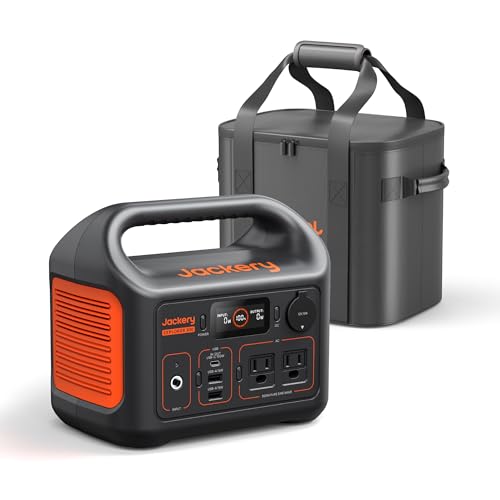
- Best Proven Budget Pick: Jackery Explorer 300 with Bag – 292Wh, the original proven 300Wh platform in a travel-ready carrying case
Small solar generators occupy the most practical tier in the portable power station market: light enough to carry in a daypack, compact enough to slide under an airplane seat, and capable enough to handle a full weekend of device charging, CPAP operation, and camp lighting without a wall outlet. The stations in this class range from 245Wh to 293Wh — a capacity range that covers all travel and camping device charging loads, one to two nights of CPAP operation, and supplemental power for extended hiking or kayaking trips where outlet access is unavailable for days at a time.
Within the small generator category, the differentiation that matters most is wall recharge speed, battery chemistry, and output wattage. Some 250Wh stations recharge in under 60 minutes from a wall outlet; others take 6-8 hours for the same charge. Some use LiFePO4 chemistry with 3000-4000 cycles; others use older NMC chemistry with 500-800 cycles. The output wattage difference between 200W and 600W effective determines whether the station can run a hair dryer on low, a small induction cooktop, or only standard device charging loads. Buyers who understand these differentiators choose significantly better for their specific use than buyers who compare watt-hour capacity alone.
The practical test for a small solar generator is the weekend camping scenario: two nights, no wall access, one person with a CPAP (no humidifier, 40W average), a laptop (60W for 3 hours per day), and a smartphone (10W for 2 hours per day). Total consumption is approximately 230-260Wh over two nights — right at the capacity of the smallest stations on this list. With a 60-100W solar panel recharging during daylight, the combined system covers the entire trip indefinitely in good sun. Without solar, a single 245-293Wh station covers the two-night scenario with little margin to spare.
What Small Solar Generators Handle Well
Smartphone charging (15-20 cycles per charge), laptop charging (3-4 full cycles), CPAP without humidifier one to two nights, camera batteries and drone batteries, LED string lights all night, portable Bluetooth speakers full weekend, USB-C device charging at up to 100W per port, small fans at low setting. For loads that require more than 300W continuous — induction cooktops, hair dryers, blenders — only the EcoFlow RIVER 3’s X-Boost mode extends coverage to 600W effective. For power needs that exceed this class, the 500-watt solar generator guide covers the next capacity tier, and the 1,000-watt solar generator guide covers the practical minimum for home backup applications.
Best Small Solar Generators – Reviewed
EcoFlow RIVER 3 – Fastest Small Station Available
The EcoFlow RIVER 3 at 245Wh and 300W output (600W via X-Boost) is the fastest-charging small solar generator in its class. EcoFlow’s X-Stream technology brings the RIVER 3 from 0 to 100% in under 60 minutes from a standard wall outlet — faster than any other station in the under-300Wh category. For travelers with tight layovers, campers who have one hour at a campground outlet before leaving, or emergency preparedness users who need a full charge quickly, this recharge speed is the RIVER 3’s defining advantage over all small-station competitors.
X-Boost extends effective appliance compatibility to 600W — doubling the output for specific appliances that draw beyond the 300W inverter rating. LiFePO4 chemistry provides 3000+ cycle rated life for regular use over many years. The 245Wh capacity is the lowest on this list, which is the trade-off for the smallest form factor. At 6.6 lbs, the RIVER 3 is one of the lightest stations at this capacity tier. For small station buyers who prioritize wall recharge speed above all else, the RIVER 3 holds the class benchmark regardless of what competitors offer.
Best for: Travelers and campers who need the fastest 0-100% wall recharge in the sub-300Wh class, EcoFlow ecosystem users who want the smallest platform with X-Boost compatibility, anyone whose primary constraint is available wall time between activities rather than total capacity.
EcoFlow RIVER 3 Plus – More Capacity, Same Small Form
The EcoFlow RIVER 3 Plus extends the RIVER 3 platform to 286Wh while maintaining the same compact physical footprint and fast-charging capability of its smaller sibling. The 286Wh capacity covers the two-night CPAP scenario more comfortably than the base RIVER 3’s 245Wh, and provides enough margin for continuous laptop and phone charging through a 3-day camping trip without cutting any load. X-Boost remains active at the Plus level, keeping the 600W effective output capability for occasional high-draw applications.
LiFePO4 chemistry provides the same 3000+ cycle life as the base RIVER 3, and wall charging speed remains in the under-75-minute range from a standard outlet. EcoFlow’s RIVER-compatible panel lineup covers both stations with documented recharge time data. For buyers who want slightly more capacity than the RIVER 3 baseline without any change in physical footprint, output capability, or charging approach, the RIVER 3 Plus is the correct step up from the base model.
Best for: Buyers who want the RIVER 3’s fast charging and X-Boost capability with more capacity headroom for 2-3 day camping trips, EcoFlow ecosystem users who want the 286Wh tier over the 245Wh base, anyone planning two-night trips where the RIVER 3’s 245Wh is just below comfortable margin.
Jackery Explorer 240 v2 – Current-Generation 240Wh Platform
The Jackery Explorer 240 v2 updates the original Explorer 240 with LiFePO4 battery chemistry — the critical upgrade that extends cycle life from the 500-800 cycles of the original to 3000+ cycles in the v2. At 256Wh and 300W output, it covers all standard small station use cases: CPAP one night, full device charging over a weekend, camera and drone battery cycles. The LiFePO4 upgrade makes the 240 v2 appropriate for daily or near-daily use without the capacity fade that made the original Explorer 240 a better occasional-use station.
Jackery’s SolarSaga panel compatibility extends to the Explorer 240 v2 with documented recharge time data. A 60W SolarSaga panel in 5-6 hours of direct sun fully recharges the 256Wh station — practical for day-hiking use where the station and a small panel charge simultaneously in the sun while camp activities continue. For Jackery ecosystem users who want the smallest current-generation LiFePO4 station, or for buyers who want the Explorer 240’s proven form factor with the chemistry upgrade that extends its service life significantly, the 240 v2 is the correct current platform.
Best for: Jackery ecosystem users who want the smallest current-generation LiFePO4 station, regular campers who use the station frequently enough that LiFePO4 cycle life matters, buyers upgrading from an original Explorer 240 who want the chemistry improvement without changing size.
Anker 521 PowerHouse – Proven Value at 256Wh
The Anker 521 PowerHouse at 256Wh and 200W output covers all standard small station use cases — device charging, CPAP operation, lighting — at the most accessible pricing of any station from a major brand in this capacity class. For first-time solar generator buyers who want to start with a proven product from a well-known brand at the lowest cost of entry, the Anker 521 delivers straightforward small-station capability without the complexity of feature comparisons between more differentiated competitors.
Anker’s warranty and customer support infrastructure back the 521 with accessible service for any issues — a meaningful consideration for buyers making their first portable power station purchase who want clear recourse if something goes wrong. Compatible solar panels allow outdoor recharging through Anker’s accessory lineup. The 200W output covers all charging and lighting loads but does not extend to high-draw appliances, which is appropriate for a station at this price point and capacity. For buyers whose primary use is weekend camping device charging and who want the lowest cost from a recognized brand, the Anker 521 is the entry point.
Best for: First-time buyers who want a proven small station at the lowest major-brand pricing, anyone whose use is purely device charging and does not need high-output appliance capability, Anker ecosystem users who want a compact station compatible with Anker’s accessory lineup.
Jackery Explorer 300 Plus Fast Charge Kit – Solar-Ready Bundle
The Jackery Explorer 300 Plus Fast Charge Kit brings the current-generation LiFePO4 Explorer 300 Plus together with the cables and accessories needed for immediate solar panel use. At 288Wh and 300W output, the Explorer 300 Plus is Jackery’s highest-capacity small station with 4000-cycle LiFePO4 chemistry — the longest-rated cycle life on this list. The Fast Charge Kit format includes the hardware for fast charging and solar integration, making it the most complete out-of-box small station purchase for buyers who plan to use solar panels from day one.
The 4000-cycle LiFePO4 chemistry at the 288Wh tier means the Explorer 300 Plus maintains usable capacity significantly longer than any NMC station at this size — at daily cycling, approximately 10-11 years before dropping to 80% capacity. Jackery’s SolarSaga panel documentation covers the Explorer 300 Plus with specific recharge scenarios. For buyers who want the highest cycle life in the small generator class and want a solar-ready complete kit rather than buying components separately, the Explorer 300 Plus Fast Charge Kit is the correct premium small station purchase. For a broader look at Jackery’s lineup, the Jackery solar generator guide covers all current models.
Best for: Buyers who want the highest cycle life (4000 LiFePO4 cycles) in a small generator for frequent daily use, anyone who plans to use solar panels from day one and wants a complete bundled kit, Jackery ecosystem users who want the current-generation 300Wh platform at the top of the small station tier.
Jackery Explorer 300 with Bag – Proven Original with Travel Accessories
The Jackery Explorer 300 with Carrying Bag pairs the original Explorer 300 — the most extensively reviewed 300Wh station in the market — with a purpose-built carrying case that protects the station during transport and simplifies packing for camping trips. At 292Wh and 300W output, it covers all standard small station use cases with the deepest pool of real-world reviews of any station at this capacity, making it the small station with the most available buyer and owner experience to draw on before purchase.
The carrying bag bundle eliminates one of the common pain points of small station transport — protecting the station’s screen, output ports, and enclosure during rough packing in a hiking bag or camping bin. The Explorer 300 uses NMC battery chemistry (500-800 cycles), which is lower than the LiFePO4 alternatives on this list. For buyers who use the station occasionally rather than daily — a few times per month for camping — this chemistry difference is less relevant than for daily users. For first-time buyers who want the most proven and documented small station with the carrying accessories included from purchase, the Explorer 300 with Bag is a practical choice. For a broader comparison of small and compact stations, see the 300-watt solar generator guide.
Best for: First-time buyers who want the most proven and reviewed 300Wh station with carrying accessories included, occasional campers who use the station a few times per month and do not need LiFePO4 longevity, anyone who wants a protected travel-ready small station without buying a case separately.
The most common upgrade path in the small station category is from the 250-300Wh tier to the 500Wh class after one or two camping trips. The driver is almost always a 12V compressor cooler — once a buyer adds a cooler to their camping setup, the 8-10 hour runtime from a 300Wh station requires daily recharge, while a 500Wh station with a 100W solar panel sustains the cooler indefinitely. Buyers who plan to add a 12V cooler within 12 months should start at the 500Wh class rather than moving through the small station tier on the way there.
FAQs
What is a “small” solar generator?
In practice, small solar generators refer to stations in the 200-500Wh capacity range — compact enough to carry easily, light enough to take camping or traveling, and affordable enough for a first-time purchase. The most common small stations cluster in the 250-300Wh range, which provides one overnight of CPAP operation, full weekend device charging, and lighting loads without requiring a recharge. Anything above 500Wh begins to transition toward the mid-capacity class where home backup and sustained camping loads are the primary use case. Anything below 200Wh is typically described as a portable power bank rather than a solar generator.
Can a small solar generator power a CPAP?
Yes. A CPAP machine without a heated humidifier draws 30-60W depending on pressure settings. At 40W average, a 256Wh station provides approximately 5-6 hours of CPAP runtime — adequate for one night of sleep. The 286-293Wh stations on this list provide 6-7 hours of CPAP runtime on a single charge, covering one full night with margin. For CPAP users who need two nights between charges, a 500Wh station is more appropriate. With a humidifier enabled, CPAP draw rises to 100-150W, reducing runtime to 1.5-2.5 hours from a 250Wh station — making a humidifier-enabled CPAP a poor match for the small generator class.
Final Verdict
For buyers who want the fastest wall recharge in the small generator class, the EcoFlow RIVER 3 at under 60 minutes is the benchmark. For the highest cycle life in a small station, the Jackery Explorer 300 Plus Fast Charge Kit at 4000 LiFePO4 cycles is built for buyers who will use the station daily over many years.
For the most accessible entry point from a major brand, the Anker 521 PowerHouse delivers proven small-station capability at the lowest typical pricing. And for buyers who want the most proven and reviewed 300Wh platform with travel accessories included, the Jackery Explorer 300 with Bag remains the most documented small solar generator in the market.




Write Your Review
No reviews yet. Be the first to share your experience!