



Quick Picks: Best Portable Generators for Cold Weather
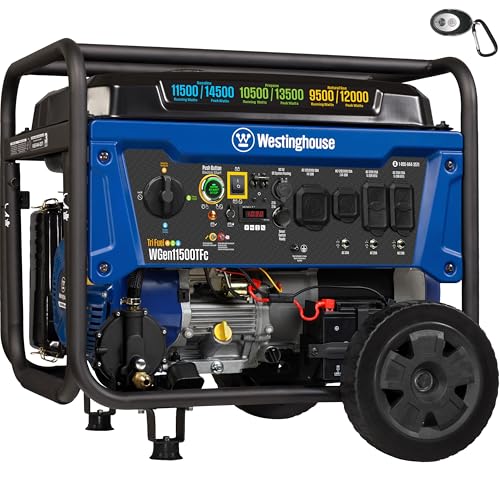
- Best High-Output Cold Weather Generator: Westinghouse 14,500W Tri-Fuel Generator, remote start and tri-fuel flexibility for reliable winter startup
- Best Dual Fuel Cold Weather Generator: Westinghouse 12500W Dual Fuel Generator, remote electric start with gasoline/propane for winter home backup
- Best Mid-Size Propane Option: GENMAX 3500W Gas or Propane Generator, quiet operation with propane startup advantage in freezing temperatures
- Best Portable Cold Weather Inverter: Champion 2500W Ultralight Inverter Generator, compact cold-weather capable inverter with CO Shield safety
- Best Battery-Based Cold Weather Option: EcoFlow DELTA 3 Classic Solar Generator, LiFePO4 battery operates in cold without fuel gelling concerns
What Makes a Generator Reliable in Cold Weather
Cold weather tests every mechanical component of a portable generator, and the failures that occur most often in winter are predictable: carburetors that do not start reliably below 20 degrees Fahrenheit, gasoline that gels or absorbs moisture from condensation over storage periods, pull-start cords that stiffen and resist in freezing temperatures, and engine oil that thickens and reduces lubrication effectiveness until the engine warms up. Understanding these failure modes helps identify the generator specifications and practices that prevent them.
Electric start (key turn or remote) is the most impactful cold-weather feature because it eliminates the pull-cord problem entirely. A pull-start on a carbureted engine in sub-freezing temperatures can require 20 or more pulls before the engine catches, compared to two to three attempts in warm weather. Electric start bypasses this entirely. Propane fuel is the second key cold-weather advantage: propane does not gel or absorb moisture, starts as reliably at negative 20 degrees Fahrenheit as at 70 degrees, and stored propane tanks hold their fuel quality indefinitely without the degradation that gasoline experiences after 30 to 90 days in storage.
Engine oil viscosity is a cold-weather generator factor that is frequently overlooked. Standard generator oil (SAE 30 monograde) thickens significantly below freezing and can cause hard starts, reduced lubrication during the critical first minutes of cold operation, and increased engine wear. For generators used in sub-freezing conditions, switch to a multi-viscosity oil rated for cold weather operation (SAE 5W-30 or 10W-30, depending on the manufacturer’s specification for your generator model). Running the generator with the correct cold-weather oil dramatically reduces startup difficulty and extends engine life in northern climates.
For homeowners comparing full cold-weather home backup options, the best portable generators for home backup covers the broader home backup category. For buyers who want the propane and natural gas cold-weather advantage, the best tri-fuel generators guide covers generators that run on all three fuel types.
In-Depth Reviews: Best Generators for Cold Weather
Westinghouse 14,500W Tri-Fuel Home Backup Portable Generator
The Westinghouse 14,500W Tri-Fuel combines the two most important cold-weather generator features: remote electric start and propane fuel capability. Remote start means the generator can be started from indoors before going outside to supervise it in below-freezing conditions. Propane operation eliminates fuel gelling concerns and extends stored fuel reliability beyond what gasoline provides. At 14,500 peak watts, it covers any residential winter backup scenario: electric heat backup via baseboard heaters, water heater, refrigerator, and lighting simultaneously. For homeowners in cold northern climates where winter power outages are the primary use case, the combination of tri-fuel flexibility and remote start makes this the highest-confidence large generator on this list.
Westinghouse 12500W Dual Fuel Home Backup Portable Generator
The Westinghouse 12500W Dual Fuel is a consistently top-rated home backup generator with remote electric start and dual fuel (gasoline/propane) operation. 4.7-star owner rating reflects real-world user satisfaction across multiple years of market availability. The propane capability is the direct cold-weather feature: when temperatures drop below 20 degrees and gasoline cold starts become unreliable, switching to propane provides consistent ignition without the cold-start struggle. Twelve thousand five hundred watts of output covers whole-home backup in winter: electric furnace fan, water heater, refrigerator, and all household circuits simultaneously. For homeowners who want a proven, highly-rated dual fuel generator with remote start for winter backup, the Westinghouse 12500W is the reference choice at this tier.
GENMAX 3500W Super Quiet Gas or Propane Powered Generator
The GENMAX 3500W with gas or propane operation is the mid-range cold-weather option in this guide. At 3,500W, it covers essential backup loads for a medium-sized home during a winter outage: furnace fan (600 to 1,200W), refrigerator, lighting, and device charging simultaneously. The propane fuel option is the primary cold-weather advantage: running on propane eliminates carburetor cold-start issues and stored fuel degradation between winter events. Super quiet inverter-quality operation at this output tier allows placement near the home without excessive noise impact. For homeowners who need 3,500W winter backup with propane capability at a mid-range output level, the GENMAX covers the essential winter load without the cost of larger whole-home backup generators.
Champion 2500W Ultralight Inverter Generator
The Champion 2500W Ultralight Inverter provides 2,500W of inverter output in a portable package with CO Shield carbon monoxide safety. CO Shield is a cold-weather relevant feature because cold weather increases the temptation to place generators in partially enclosed spaces (garages, covered porches) for warmth and protection from wind, which raises CO risk significantly. The CO Shield automatically shuts the generator down if carbon monoxide levels reach dangerous levels, providing an important safety layer for cold-weather generator use near structures. At 2,500W, it handles the essential portable backup load for camping, RV winter use, and small-home backup. For buyers who want a portable cold-weather generator at a lighter weight with active CO protection, the Champion 2500W Ultralight is the appropriate choice.
EcoFlow DELTA 3 Classic Solar Generator with 220W Solar Panel
The EcoFlow DELTA 3 Classic with 220W solar panel takes a completely different approach to cold-weather power: a battery-based system that avoids all the fuel, carburetor, and cold-start concerns of gasoline generators. LiFePO4 battery chemistry maintains functionality at temperatures as low as negative 4 degrees Fahrenheit (negative 20 degrees Celsius), though with reduced effective capacity in extreme cold. The DELTA 3 Classic’s 1,024Wh provides several hours of essential backup (furnace fan, device charging, lighting) during a winter outage without the mechanical cold-start challenge, the exhaust requirements, or the fuel storage considerations of a gasoline generator. For buyers in areas with brief, frequent winter outages who want the convenience of a battery system without fuel management, the DELTA 3 Classic is the appropriate cold-weather battery backup choice.
Cold Weather Generator Buying Guide
Propane vs gasoline in cold weather
Propane has several cold-weather advantages over gasoline: it does not gel or absorb moisture in storage, it vaporizes readily even at temperatures below negative 40 degrees Fahrenheit (though tank pressure drops in extreme cold, which can affect flow at very low temperatures), and stored propane tanks maintain fuel quality indefinitely without the 30 to 90 day degradation cycle that requires gasoline stabilizer. For generators stored between winter events, propane eliminates the need for fuel treatment and carb cleaning that gasoline generators require. The limitation is tank size: most homeowners have 20-pound tanks (approximately 4.7 gallons of propane equivalent) or 100-pound tanks (approximately 23 gallons), which provides 6 to 24 hours of typical backup runtime depending on generator load.
Cold weather storage and maintenance for generators
For gasoline generators stored through winter: run the carburetor dry (or use fuel shutoff) before storage, add fuel stabilizer to the tank if leaving gas in it, use the correct multi-viscosity oil for your climate, and store the generator in a location protected from moisture and freezing precipitation. For propane generators: close the propane valve when not in use and inspect hose connections periodically. For battery-based generators: store them at 50 to 80 percent charge (not fully depleted) in a location above freezing when possible, as extreme cold storage below 14 degrees Fahrenheit can permanently reduce LFP cell capacity over time.
FAQs: Portable Generators for Cold Weather
Q: Do generators work in the cold?
Yes, generators work in cold weather, but performance and starting reliability can be affected. Gasoline generators below 20 degrees Fahrenheit may require multiple starting attempts, especially without electric start. Propane and natural gas generators start more reliably in extreme cold. Battery-based systems (like the EcoFlow DELTA 3) operate in cold but with reduced effective capacity at temperatures below freezing. The key to reliable cold-weather operation is electric or remote start, appropriate engine oil for the temperature range, and propane fuel capability for extreme cold scenarios.
Q: Can I run a generator in the snow?
You can run a generator in snow, but with precautions. Cover the generator with a generator tent or cover to protect the air intake and electrical outlets from precipitation, while maintaining clearance around the exhaust for CO dispersal. Do not run a generator in an enclosed space, a garage, or under a solid cover with no ventilation. Carbon monoxide from generator exhaust at concentrations that accumulate in enclosed spaces is rapidly fatal. Keep the generator at least 20 feet from any door, window, or vent. In deep snow, elevate the generator on a platform or pallet to prevent the intake from being blocked by snow accumulation.
Final Verdict
For homeowners who need whole-home winter backup with maximum cold-weather reliability, the Westinghouse 12500W Dual Fuel with its 4.7-star rating and remote electric start plus propane capability is the reference recommendation for reliable cold-weather home backup.
For buyers who want tri-fuel flexibility for natural gas, propane, and gasoline options at 14,500W, the Westinghouse 14,500W Tri-Fuel provides remote start and maximum fuel option flexibility for severe winter outage scenarios.
And for buyers who want cold-weather backup without gasoline or propane management, the EcoFlow DELTA 3 Classic provides LiFePO4 battery power that operates in cold weather with no fuel, no carburetor cold-start issues, and no exhaust concerns for shorter outage scenarios.





Write Your Review
No reviews yet. Be the first to share your experience!