




Best Solar Generators for Freezers in 2026
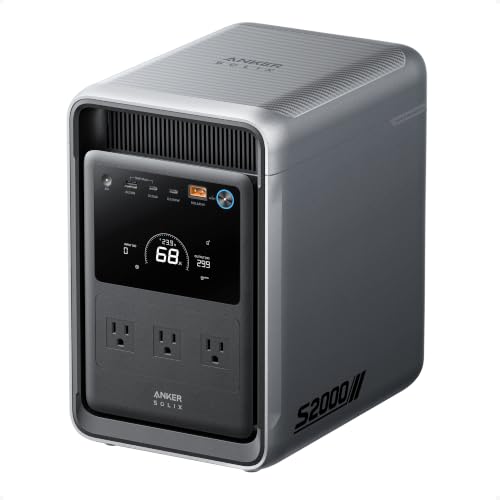
- Best Overall: Anker SOLIX S2000 – 2,010Wh LFP, marketed for 35-hour fridge backup, 3,000W peak
- Best Quiet Operation: Jackery Explorer 2000 v2 – 2,042Wh, silent mode under 30dB, 4,400W surge
- Best Solar Bundle: BLUETTI Elite 200 V2 + 200W Solar Panel – 2,073Wh, 3,900W Power Lifting, panel included
- Best Budget Option: FOSSiBOT F1800 – 1,024Wh, 1,800W output, 10ms UPS, lowest entry cost
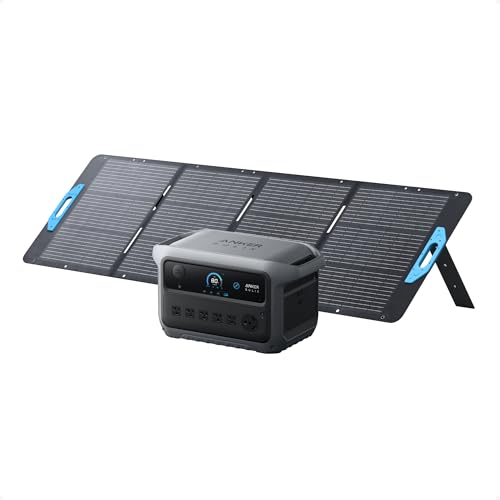
- Best Solar + Station Bundle: Anker SOLIX C2000 Gen 2 + 200W Solar Panel – 2,048Wh, 4,000W peak, solar panel included
- Best Value Mid-Range: ALLPOWERS S2000 PRO – 1,451Wh, 2,400W output, 4,000W surge
When the power goes out, your freezer is on a clock. Frozen food stays safe for roughly 48 hours if the freezer door remains closed – but that assumes the freezer maintains temperature, which requires power. A chest freezer drawing 100W to 200W running power seems easy to handle, but the startup surge when the compressor kicks on can reach 400W to 800W or more, and the freezer cycles on and off all day. A solar generator that handles the surge reliably and holds enough capacity to last overnight is what stands between your food supply and a costly loss.
This guide covers the best solar generators for powering chest freezers and upright freezers during outages. The math is favorable: a 150W average chest freezer running from a 2,000Wh station gives you roughly 13 hours of continuous power – more than enough for an overnight outage, and potentially through the critical 24-hour window if the freezer cycles efficiently. For multi-day outages, solar recharge during the day can extend coverage substantially. If you are planning for broader home backup beyond just the freezer, our best solar generators for home backup guide covers whole-home scenarios in depth.
How to Size a Solar Generator for Your Freezer
Start with your freezer’s actual power draw. A standard chest freezer runs between 100W and 200W when the compressor is active, averaging 100W to 150W when accounting for its duty cycle (the compressor does not run constantly). An upright freezer typically draws 150W to 250W due to door gaskets that are less efficient than chest designs. At these loads, a 2,000Wh station provides 10 to 20 hours of coverage – enough for most single-day outages.
Startup surge is the second critical number. A chest freezer rated at 150W running may surge to 600W when the compressor starts. An upright freezer at 200W running may surge to 800W to 1,000W. Your solar generator needs a peak output rating that safely exceeds the surge value. Most 1,500W+ stations handle freezer surges without issue, but verify your specific freezer’s surge draw if possible. Features like BLUETTI’s Power Lifting mode explicitly help with surge-heavy compressor loads by temporarily boosting output. For more on budget options that still handle surge loads, see our best budget solar generators guide.
The 48-hour food safety window for frozen food assumes the freezer door stays closed. Every time you open the door, you lose cold air and the compressor runs longer to compensate. During an outage, treat your freezer like a cooler: open it as infrequently as possible and close it quickly. A well-stocked, closed chest freezer can maintain safe temperatures for 48 hours even without power at all – but a solar generator extends that window indefinitely with solar recharge.
For multi-day outages, solar recharge is what transforms a one-night solution into an indefinite one. A 200W solar panel producing 800Wh to 1,000Wh on a good day can replace the energy a chest freezer consumes in 6 to 8 hours of continuous operation. Two panels bring that to 1,600Wh to 2,000Wh per day – enough to offset a full day of chest freezer operation and keep the station topped up for overnight use. For off-grid setups where the freezer runs year-round from solar, see our best solar generators for off-grid living guide for system sizing guidance.
The 6 Best Solar Generators for Freezers
Anker SOLIX S2000 – Best Overall Freezer Backup Station
The Anker SOLIX S2000 is specifically marketed with a 35-hour refrigerator backup claim, reflecting Anker’s confidence in this station’s ability to handle sustained compressor loads. That 35-hour figure is based on a 700L refrigerator at 25C ambient – your actual chest freezer runtime will vary based on freezer size, ambient temperature, and how often the door is opened. A typical 7 cubic foot chest freezer averaging 100W will run for approximately 20 hours from the S2000’s 2,010Wh LFP battery.
The 3,000W peak output comfortably handles freezer startup surges, and the 1,500W continuous output runs the compressor during its duty cycle without strain. Anker’s LFP chemistry in the S2000 is rated for 3,000+ charge cycles at 80% capacity retention – important for a station that may be used as a primary backup appliance and cycled repeatedly over years. The unit is compact relative to its capacity and integrates well with Anker’s solar panel ecosystem for daytime recharge during outages.
Best for: Homeowners who want a purpose-positioned freezer backup station with a proven track record of handling sustained compressor loads and a clear runtime claim to plan around.
Jackery Explorer 2000 v2 – Best for Quiet Indoor Operation
The Jackery Explorer 2000 v2 brings 2,042Wh of LFP capacity, 2,200W continuous output, and a standout feature for indoor use: a silent mode that keeps fan noise under 30dB. During overnight outages when the station is running inside the home near the freezer, fan noise from the solar generator can be disruptive. The Explorer 2000 v2’s silent mode addresses this directly, making it the best choice for users who want the station in a living space or bedroom-adjacent area.
The 4,400W surge rating is the highest on this list, providing exceptional startup surge headroom even for large upright freezers with demanding compressor motors. At a 150W average freezer load, the 2,042Wh battery delivers roughly 13 hours of continuous coverage. The unit accepts solar input for daytime recharge and Jackery’s panel ecosystem is one of the most mature on the market. The Explorer 2000 v2 also works well as a general home backup station alongside its freezer duty, covering lights, phone charging, and small appliances simultaneously.
Best for: Users who want to run the solar generator indoors near the freezer overnight without disruptive fan noise, and who need the highest surge rating to handle large upright freezer compressors.
BLUETTI Elite 200 V2 + 200W Solar Panel – Best Complete Solar Bundle for Freezer Backup
The BLUETTI Elite 200 V2 bundled with a 200W solar panel provides a complete out-of-the-box freezer backup solution with immediate solar recharge capability. The 2,073Wh LFP battery and 2,600W continuous output handle chest and upright freezer loads comfortably, and the included 200W panel adds approximately 800Wh to 1,000Wh of recharge capacity on a good solar day – enough to replace about 6 to 8 hours of chest freezer operation.
The Power Lifting mode is particularly relevant for freezer applications. Compressor startup surges can be brief but demanding, and Power Lifting temporarily boosts the station’s output to 3,900W to handle those moments. This is especially useful for older or larger freezers with less efficient motors that have more pronounced startup surges. The bundle’s solar panel means users who experience multi-day outages can extend their freezer coverage through repeated charge-discharge cycles without relying on grid power at all.
Best for: Users who want a complete solar bundle ready to deploy immediately, with Power Lifting for challenging surge loads and a solar panel for extended multi-day outage coverage.
FOSSiBOT F1800 – Best Budget Solar Generator for a Single Freezer
The FOSSiBOT F1800 is the budget option on this list, offering 1,024Wh of LFP capacity, 1,800W continuous output, and a 3,600W surge rating at the lowest entry cost. For a single chest freezer during a one-night outage, the F1800 provides approximately 6 to 8 hours of coverage at a 150W average load – enough for most single-night outages but not multi-day scenarios without solar recharge.
The 10ms UPS (uninterruptible power supply) switching time is a noteworthy feature for the budget tier. When grid power cuts out, the F1800 switches to battery power in under 10 milliseconds, which is fast enough to prevent most compressor controllers from experiencing a disruptive interruption. The 1,800W output and 3,600W surge handles standard chest freezer loads without issue. For users who want a capable, no-frills station for single-appliance backup without spending on a 2,000Wh unit, the F1800 is a practical entry point. Our best 1,500-watt solar generators guide covers similar options in this output range.
Best for: Budget-conscious buyers who need a single chest freezer covered overnight, with fast UPS switching for seamless power transitions and a 3,600W surge for reliable compressor starts.
Anker SOLIX C2000 Gen 2 + 200W Solar Panel – Best Premium Solar Bundle
The Anker SOLIX C2000 Gen 2 bundled with a 200W solar panel combines Anker’s fastest-charging 2,000Wh-class station with immediate solar capability. The C2000 Gen 2’s 4,000W peak output gives it the second-highest surge rating on this list, handling even large upright freezer compressor starts with margin. At a 150W average chest freezer load, the 2,048Wh LFP battery provides approximately 13 hours of coverage before the battery needs replenishment from the included solar panel.
The C2000 Gen 2’s 58-minute full-charge time is a significant practical advantage: if grid power returns briefly during an extended outage, you can fully recharge the station in under an hour and be prepared for the next power interruption. The 200W solar panel keeps the battery topped off during daylight hours for multi-day coverage without grid dependency. Anker’s build quality and warranty support make this a solid long-term investment for a household appliance that may be in regular use for years.
Best for: Users who want a premium solar bundle with the fastest recharge time in the class, high surge capability, and Anker’s build quality and support backing a long-term freezer backup solution.
ALLPOWERS S2000 PRO – Best Value Mid-Range Option
The ALLPOWERS S2000 PRO offers 1,451Wh of LFP capacity with 2,400W continuous output and a 4,000W surge rating – specs that comfortably exceed what most chest or upright freezers require, at a value price point that undercuts the 2,000Wh+ units above. The 4,000W surge ties with the Anker SOLIX C2000 Gen 2 for the highest peak rating, making the S2000 PRO an unexpectedly strong surge performer given its mid-range positioning.
At a 150W average freezer load, the 1,451Wh capacity provides roughly 9 to 10 hours of coverage – adequate for most overnight outages but shorter than the 2,000Wh units. For users who pair this station with a solar panel, the daytime recharge can extend multi-day coverage. The ALLPOWERS S2000 PRO fills the gap between the budget FOSSiBOT F1800 and the 2,000Wh+ premium tier, offering more capacity and output than the budget options while remaining more accessible than the top-tier stations. It is a sensible choice for users who want solid surge performance without paying for a full 2,000Wh+ unit.
A 1,451Wh station running a 150W average chest freezer provides about 9 hours of runtime. If the outage starts at 8 PM and ends by 5 AM, you have coverage through the night with battery to spare. Pair it with a 200W solar panel and you can extend that indefinitely as long as you get a few hours of sun each day to recharge.
Best for: Value-focused buyers who want solid surge capacity and more than 8 hours of freezer runtime without spending on a 2,000Wh+ unit, and who are comfortable pairing with a solar panel for extended coverage.
Frequently Asked Questions
How long will a solar generator run a chest freezer?
Runtime depends on the freezer’s average power draw and the station’s usable capacity. A typical 7 cubic foot chest freezer averages 100W to 150W accounting for its compressor duty cycle. From a 2,000Wh station, that yields approximately 13 to 20 hours of runtime. A 1,500Wh station provides 10 to 15 hours. Keep in mind that these are averages: the actual draw fluctuates as the compressor cycles on and off, and ambient temperature significantly affects how hard the compressor works. A freezer in a 90-degree garage draws more power and provides less runtime than the same freezer in a cool basement. Keeping the freezer full – or filling empty space with water jugs – reduces how hard the compressor works and extends runtime.
Should I get a solar generator with UPS (uninterruptible power supply) for my freezer?
UPS switching is a useful but not strictly required feature for freezer backup. A freezer compressor can generally tolerate a power interruption of several seconds without damage or food safety risk – it is a simple motor load, not sensitive electronics. That said, UPS switching under 20ms (like the FOSSiBOT F1800’s 10ms) does provide a cleaner transition and can prevent the compressor from experiencing a hard restart. If your freezer has a digital control panel or smart features, faster switching reduces the chance of those systems resetting. For a purely mechanical chest freezer, UPS speed is a minor consideration. For an upright freezer with digital displays and electronic controls, faster UPS switching is a more meaningful feature.
Final Verdict
The Anker SOLIX S2000 is the top pick for most users, combining a well-marketed freezer-specific runtime claim, proven LFP chemistry, and a 3,000W peak output that handles freezer surges reliably. For those who value quiet indoor operation, the Jackery Explorer 2000 v2’s silent mode under 30dB is a genuine differentiator for overnight use. The BLUETTI Elite 200 V2 solar bundle and the Anker SOLIX C2000 Gen 2 solar bundle both provide complete out-of-the-box solutions with immediate solar recharge capability for multi-day coverage.
For budget-conscious buyers, the FOSSiBOT F1800 covers a single chest freezer overnight at a lower entry cost, and the ALLPOWERS S2000 PRO bridges the gap to the premium tier with strong surge performance. Whatever station you choose, the key metrics are: peak output above 3,000W for surge headroom, capacity above 1,500Wh for overnight coverage, and a plan for solar recharge if your outages extend beyond one day. A 200W solar panel paired with any 1,500Wh+ station in this guide can sustain a chest freezer through an extended multi-day outage with daily sun.




Write Your Review
No reviews yet. Be the first to share your experience!