


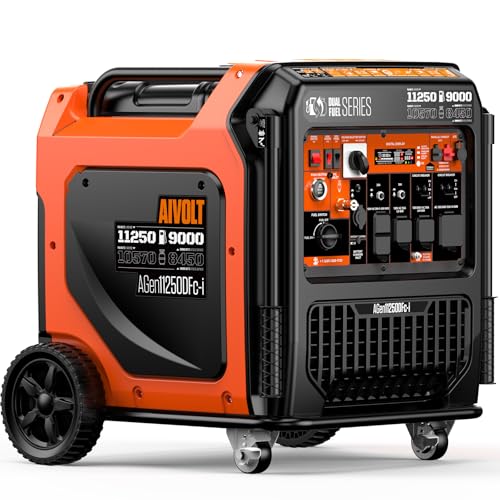


Quick Picks: Best Propane Generators for Off Grid
- Best Overall Propane Off-Grid Generator: High-output dual fuel for off-grid cabins and homesteads with 100-lb propane tank support
- Best Quiet Propane Generator for Off Grid: Inverter-quality dual fuel for noise-sensitive off-grid living with clean power for electronics
- Best Propane Generator for Off-Grid Cabin: Whole-home output on propane for remote cabins where gasoline logistics are impractical
- Best Hybrid Propane + Solar Off-Grid Setup: Battery station paired with propane generator recharge for all-season off-grid power
- Best Value Propane Off-Grid Generator: Affordable dual fuel for seasonal off-grid use without year-round propane consumption
Propane is the optimal generator fuel for off-grid applications because it solves the two primary problems of gasoline in remote settings: storage safety and fuel degradation. A 500-gallon buried propane tank, standard equipment for many off-grid properties that also use propane for heating and cooking, provides 400–600 hours of generator runtime at moderate load, representing months of off-grid power independence. Unlike gasoline, propane stores indefinitely without stability concerns and doesn’t attract water or degrade during periods of non-use between seasonal visits. For off-grid properties with any propane infrastructure already in place, a propane-capable generator is the natural complement to the existing fuel system.
Off-grid propane generator selection differs from home backup generator selection in several ways: runtime per fuel unit matters more (propane efficiency versus gasoline), fuel source (bulk tank on-site versus portable cylinders), and load profile (typically continuous or frequent use rather than occasional emergency backup). For off-grid properties that rely on the generator as a primary or daily power source, sizing, fuel consumption, and reliability are more important than they are for occasional home backup use. Our off-grid generator guide covers the full selection criteria for primary off-grid power.
5 Best Propane Generators for Off Grid: Reviews
1. Best Overall Propane Off-Grid Generator
For off-grid properties with a bulk 500-gallon propane tank and whole-cabin power requirements, a dual fuel 9,500W generator like the Westinghouse WGen9500DF on propane delivers 8,500W continuous, sufficient for cabin heating (electric resistance or heat pump), water pump, lighting, kitchen appliances, and workshop tools simultaneously. The unlimited runtime from a bulk propane supply converts what would be a generator-management task (fuel procurement, gasoline storage, stabilizer treatment) into an infrastructure system that operates like utility power, the propane supplier refills the tank periodically and the generator runs on demand without hands-on fuel logistics.
For off-grid properties where propane already supplies heating, cooking, or refrigeration, the incremental cost of adding generator fuel to the existing propane supply is modest, the infrastructure is already in place. The generator propane connection taps the same supply line through a dedicated regulator, requiring a licensed gas fitter for the connection but no separate fuel infrastructure investment. For properties that use both propane and gasoline, the dual fuel configuration provides full-output flexibility on gasoline when the bulk tank is between fills, or when higher output is needed for peak loads.
Best for: Off-grid cabin and homestead owners with bulk propane infrastructure who need 8,500W+ continuous output for whole-property power from a propane fuel source.
2. Best Quiet Propane Generator for Off Grid
Quiet operation matters for off-grid living in ways it doesn’t for occasional home backup: if the generator runs daily for 6–8 hours, its noise profile affects the quality of life on the property continuously rather than occasionally. Inverter-quality dual fuel generators in the 3,500–6,000W class run 52–62 dBA at rated load, significantly quieter than conventional 7,500–9,500W units at 70–74 dBA, while providing adequate power for most off-grid cabin loads that don’t include electric resistance heating or large power tools.
The GENMAX GM6000iED (62 dBA, 6,000W, dual fuel) covers the common off-grid cabin load profile, heat pump (2,000W running), well pump (1,000W), refrigerator (200W), lighting (200W), electronics (400W), with capacity to spare, at noise levels compatible with outdoor conversation at 30 feet. For off-grid properties where quiet living is a primary value, the 8–10 dBA noise reduction of an inverter generator versus a conventional unit translates to a significant daily quality-of-life difference during generator operation hours.
Best for: Off-grid homeowners who run the generator daily and prioritize quiet operation for quality of life during generator hours, with loads under 6,000W.
3. Best Propane Generator for Remote Off-Grid Cabin
Remote cabin off-grid use has specific requirements that differ from homestead use: the generator may be stored for months between seasonal visits, loads may be modest (lighting, refrigerator, water pump) rather than whole-home scale, and access for service may be limited. A dual fuel generator that runs on propane from a 100-pound cylinder staged at the cabin provides 12–20 hours of cabin essential load operation per cylinder, adequate for a weekend visit and the first few days of an extended stay, with cylinder exchange or backup gasoline for extended periods.
Propane’s infinite shelf life is particularly valuable for seasonal cabin use: a 100-pound propane cylinder staged at the cabin at the end of the previous season is fully functional when the cabin reopens months later, unlike gasoline which requires fresh supply or stabilizer treatment and may not start a carbureted generator reliably after extended storage. For remote cabins where the owner makes infrequent visits, propane capability eliminates the fuel quality management that makes gasoline problematic for seasonal use.
Best for: Remote seasonal cabin owners who need propane operation for indefinite fuel storage during off-season periods, with modest load requirements during visits.
4. Best Hybrid Propane + Solar Off-Grid Setup
The optimal off-grid power configuration for most properties combines solar panels and battery storage as the primary power source with a propane generator as the backup and recharge source during low-solar periods. In this hybrid setup, the solar + battery system covers most loads most of the time, eliminating fuel consumption during sunny periods. The propane generator activates automatically (or manually) when the battery drops below a set threshold, recharging the battery rapidly from propane while powering loads, then shutting off when the battery is full. This significantly reduces generator runtime (and propane consumption) compared to generator-only off-grid power.
For a hybrid setup, a battery station with generator input (EcoFlow DELTA Pro with EcoFlow Smart Generator, or a traditional inverter-charger setup) provides the management layer between solar, battery, and generator. A 3,600–5,000Wh battery with 400W of solar panels and a 5,000–7,500W propane generator as backup provides year-round off-grid power independence with generator use primarily during winter low-sun periods, potentially reducing propane consumption by 60–80% versus generator-only operation.
Best for: Off-grid property owners who want to minimize generator runtime and propane consumption through solar + battery primary power with propane generator backup.
5. Best Value Propane Off-Grid Generator
For seasonal off-grid use where the generator runs fewer than 200 hours per year and the primary fuel is propane from portable cylinders, a value-tier 5,500–7,500W dual fuel generator provides adequate propane capability at the lowest entry cost. At this usage level, the longevity difference between value and premium engines is not significant, a value generator at 200 hours per year will last 20+ years before accumulating the hours that stress engine components. The reduced feature set of value-tier generators (electric start only, fewer outlets, simpler controls) is acceptable for seasonal cabin use where the generator is supervised during operation and loads are modest.
The key value-tier specification to verify for propane use is the propane output rating: some value-tier dual fuel generators show significant output reduction on propane (15–25%) versus gasoline, which may push a borderline 7,500W unit below the actual load requirement when operating on propane. Verify propane output (not just gasoline output) against your actual load before purchasing a value unit for propane-primary off-grid use.
Best for: Seasonal cabin owners and occasional off-grid users who need basic propane capability at the lowest entry price with under 200 hours per year expected use.
Off-Grid Propane Generator Fuel Planning
Bulk Tank vs Portable Cylinders
A 500-gallon buried propane tank (standard residential propane infrastructure) provides approximately 14,500 lbs of propane, 7,250 hours of 9,500W generator runtime at 2 lbs/hour at 50% load. This represents roughly 3 years of daily 6-hour generator operation before a refill. For permanent off-grid properties, the bulk tank is the correct choice. For seasonal cabins with intermittent visits, 100-pound portable cylinders (staged from a local propane dealer) provide adequate supply without the cost and installation of a buried tank.
Frequently Asked Questions
Can you run a generator on propane off grid?
Yes, propane is one of the best fuels for off-grid generators precisely because of its indefinite shelf life, clean combustion (less carbon buildup versus gasoline), and compatibility with bulk tank infrastructure common on rural properties. Dual fuel generators switch between propane and gasoline with a simple valve, providing full flexibility. For permanent off-grid properties, connecting to a bulk propane tank via a licensed gas fitter provides the most convenient and cost-effective off-grid generator fuel system.
Final Verdict
For off-grid propane generator use, the key choice is output tier and fuel source configuration: a 9,500W dual fuel unit connected to a bulk propane tank covers whole-property loads permanently; a quiet 6,000W inverter dual fuel covers cabin loads daily with acceptable noise; a value 7,500W dual fuel on portable cylinders covers seasonal cabin visits economically. Match the generator to the actual load profile and visit frequency of your specific off-grid property.





Write Your Review
No reviews yet. Be the first to share your experience!