



Quick Picks: Best AC Portable Solar Generators
- Best Overall AC Solar Generator: Highest AC output with fastest solar recharge for powering AC appliances and home essential loads
- Best AC Solar Generator for Air Conditioners: 2000W+ AC output with high surge capacity to start window AC units and portable AC systems
- Best Compact AC Solar Generator: Under 20 lbs with true AC output for travel, camping, and light home backup
- Best AC Solar Generator for Home Backup: Large capacity with multiple AC outlets for running several home appliances simultaneously
- Best Value AC Solar Generator: Most affordable option with genuine AC output and solar recharge capability
An “AC portable solar generator” is a battery power station that outputs standard 120V AC power, the same type of power that comes from a wall outlet, rather than only 12V DC or USB power. The “AC” designation matters because some portable battery units labeled as solar generators only output 12V DC and USB, which cannot power standard household appliances. A true AC solar generator includes a built-in inverter that converts battery DC power to 120V AC, enabling it to run any appliance that plugs into a standard outlet: refrigerators, laptops, TVs, coffee makers, CPAP machines, and power tools.
For buyers comparing AC solar generators, the critical specifications are AC output watts (the maximum appliance wattage it can power simultaneously), AC surge watts (the peak wattage for starting motor loads like refrigerators and AC compressors), and battery capacity in watt-hours (total stored energy). Solar recharge input rate determines how quickly the battery recharges from panels. See our solar generators for home backup guide for comprehensive high-capacity AC solar generator coverage, and our 1000W portable solar generator guide for compact options.
5 Best AC Portable Solar Generators: Reviews
1. Best Overall AC Portable Solar Generator
The best overall AC portable solar generator delivers 2,000W+ of pure sine wave AC output, the clean power type required for sensitive electronics, medical devices, and appliances with variable-speed motors, combined with 1,000–2,000Wh of battery capacity and 400–800W of solar input capability. Pure sine wave output is the standard on all premium AC solar generators; modified sine wave units (less expensive but less clean) are appropriate only for basic loads like LED lights and simple appliances, not for electronics with power supplies or AC motors.
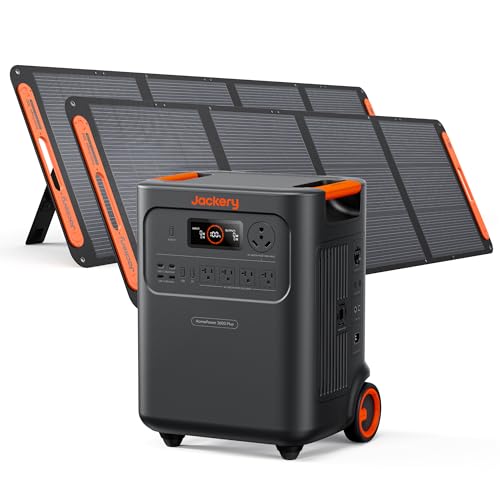
The EcoFlow DELTA 2 (1,024Wh, 1,800W AC, 500W solar input), Jackery Explorer 2000 Plus (2,042Wh, 3,000W AC, 800W solar input), and Bluetti AC200P (2,000Wh, 2,000W AC, 700W solar input) represent the mid-tier AC solar generator class that balances output, capacity, portability, and price. For buyers who need to run a 1,500W load (small air conditioner, electric kettle, or power tools) from solar-charged battery power, this tier provides the necessary output with 1–2 hours of runtime per 1,500W load from a full charge, and solar recharge extending capacity during daylight.
Best for: Buyers who need 2,000W+ pure sine wave AC output for appliances and electronics with 1,000–2,000Wh capacity and practical solar recharge.
2. Best AC Solar Generator for Air Conditioners
Running an air conditioner from a solar generator requires adequate AC output watts and surge capacity for the compressor startup. A standard 5,000 BTU window AC draws 500W running with a 1,500W startup surge. An 8,000 BTU unit draws 700W running with up to 2,500W surge. A 10,000 BTU portable AC draws 900W running with 2,700W surge. To run any of these from a solar generator, the unit must have: AC output at least 1,000W for the 5,000 BTU unit, adequate surge capacity (2–3× running watts), and sufficient battery capacity for the desired runtime.
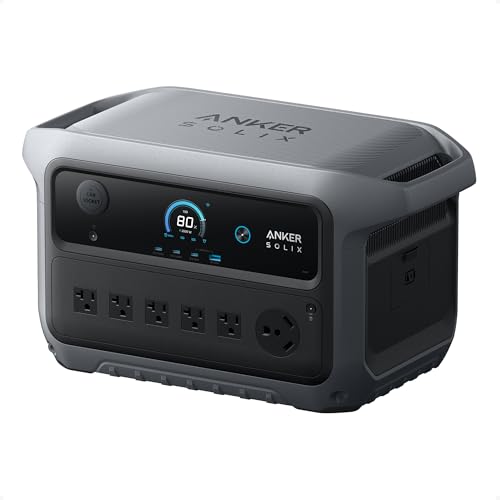
The EcoFlow DELTA Pro (3,600W AC output, 7,200W surge), Anker SOLIX F3800 (6,000W AC, 12,000W surge), and Jackery Explorer 3000 Pro (3,000W AC, 6,000W surge) handle window and portable AC units with adequate surge margin. Battery runtime for AC use: a 3,600Wh battery running a 700W 8,000 BTU AC provides approximately 4.5 hours, or indefinitely when paired with 400W+ of solar panels that match or exceed the AC’s running power. For buyers who specifically need to run air conditioning from solar power during outages, these high-output units are the appropriate specification.
Best for: Buyers who need to run window or portable AC units from solar power during outages or off-grid use, requiring 3,000W+ AC output and high surge capacity.
3. Best Compact AC Solar Generator
Compact AC solar generators under 20 lbs deliver 1,000–1,500W of AC output from a portable, carry-handle design optimized for travel, car camping, and light home backup. The Jackery Explorer 1000 (10.1 lbs, 1,000W AC), EcoFlow DELTA Mini (11.8 lbs, 1,400W AC), and Anker SOLIX C1000 (22 lbs, 1,800W AC) represent the compact-but-capable AC solar tier. At these weights, they fit in airline carry-on luggage, backpack pouches, and vehicle cargo areas alongside camping gear without the weight penalty of full-size units.
The tradeoff versus full-size AC solar generators is battery capacity (typically 500–1,000Wh versus 1,500–3,600Wh) and solar input rate (100–300W versus 400–800W). For travel use where the unit is primarily used for device charging and occasional appliance use rather than whole-day load coverage, compact AC solar generators provide the necessary functionality at the minimum weight. For home backup use where extended runtime and solar self-sufficiency matter, the full-size tier is more appropriate.
Best for: Travelers, car campers, and light home backup buyers who need compact under-20-lb AC output without the weight of full-size units.
4. Best AC Solar Generator for Home Backup
Home backup-optimized AC solar generators prioritize battery capacity (2,000–3,840Wh base, expandable), high solar input (400–1,200W for meaningful outage recharge), multiple AC outlets for simultaneous load coverage, and robust inverter output for sustained home appliance operation. For a typical home essential circuit load of 500W continuous (refrigerator + lighting + CPAP + phone charging), a 2,000Wh AC solar generator provides 3.5–4 hours of coverage from a full charge, with 400W of solar panels replacing the consumed energy during 4+ hours of sun exposure, achieving near-infinite runtime under favorable conditions.
The home backup use case requires attention to two specifications beyond AC output: continuous AC output at rated watts (some units derate at high temperatures) and surge capacity for refrigerator compressor starts (typically 600–1,200W surge on a 150–200W running load). All recommended AC solar generators in this guide are rated for their stated continuous output under normal operating conditions, and all include adequate surge capacity for household refrigerators as the most common high-surge home backup load.
Best for: Homeowners who need multi-hour essential circuit backup with AC outlet output and solar recharge capability for extended outage coverage.
5. Best Value AC Solar Generator
Value AC solar generators in the $300–$600 range at 500–1,000W AC output with 256–1,000Wh capacity provide genuine AC outlet power for essential loads at the lowest entry price. Brands including Bluetti EB3A (268Wh, 600W AC), EcoFlow RIVER 2 (256Wh, 300W AC), and Jackery Explorer 500 (518Wh, 500W AC) offer reliable AC output with solar compatibility at accessible pricing. These units are appropriate for light load use: phone and laptop charging (under 100W), LED lighting, small fans, and CPAP operation, not for running appliances with significant power draws.
The buyer who benefits from a value AC solar generator is typically looking for an emergency backup that covers the two or three most critical household needs (medical device, refrigerator for a few hours, lighting) without the $800–$2,000 investment of mid-tier units. For first-time solar generator buyers who want to understand the technology and use pattern before committing to a larger capacity unit, the value tier provides a low-risk entry point with genuine AC output capability.
Best for: First-time buyers and budget-constrained buyers who need basic AC outlet power for critical devices at under $600.
AC Solar Generator Buying Guide
Pure Sine Wave vs Modified Sine Wave
All recommended AC solar generators in this guide output pure sine wave AC, the clean power type required for electronics with power supplies, variable-speed motors, and medical devices. Modified sine wave units (found in some low-cost options under $200) produce choppy AC that can damage sensitive electronics over time and causes buzzing in audio equipment. For any use case involving computers, TVs, appliances with electronic controls, or medical devices, pure sine wave is the required specification, not an upgrade.
Matching Solar Panels to Your Unit
Match panel wattage to the unit’s maximum solar input rating (listed in watts). Most 1,000W-class units accept 200–400W solar input via MC4 connector. Connect panels in series or parallel to match the unit’s voltage (typically 12–60V) and wattage specifications. Mismatched panel voltage (too high) can damage the solar controller; mismatched wattage (too high) results in the excess simply being unused. Use the manufacturer’s recommended panels for guaranteed compatibility.
Frequently Asked Questions
Can an AC solar generator run a coffee maker?
A standard drip coffee maker draws 900–1,200W. An AC solar generator with at least 1,000W output handles it, the unit runs the coffee maker until the battery is depleted (typically 1–2 cups before a 1,000Wh battery reaches 50% depletion at 1,000W draw). For regular coffee making from solar power, a 2,000Wh unit with 400W+ solar panels is the practical minimum for repeated use without full discharge.
Final Verdict
AC portable solar generators from EcoFlow, Jackery, and Bluetti define the category from compact travel units to whole-home backup stations. For most buyers, the EcoFlow DELTA 2 or Jackery Explorer 2000 Plus at 1,800–3,000W AC output and 1,000–2,000Wh capacity covers the widest range of use cases from camping to home backup. Confirm the AC output watts and surge capacity match your highest-draw appliance before purchasing.





Write Your Review
No reviews yet. Be the first to share your experience!