




Quick Picks
- Best Overall: Jackery HomePower 3000 – native TT-30R outlet, 3,072Wh, 7,200W surge
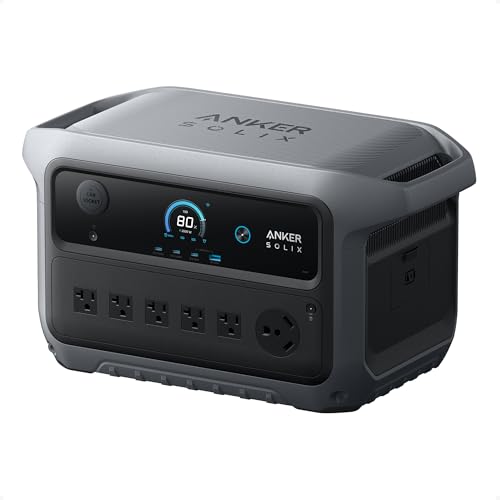
- Best Fast-Charging: Anker SOLIX C2000 Gen 2 – full recharge in 58 minutes, 2,400W continuous
- Best Compact with TT-30: DABBSSON 3000L – built-in TT-30 port, compact design, 3,072Wh
- Best Quiet Operation: Jackery Explorer 2000 v2 – under 30dB, 39.5 lbs, 2,042Wh
- Best Solar Bundle: BLUETTI Elite 200 V2 + 350W Solar Panel – solar included, 2,600W output
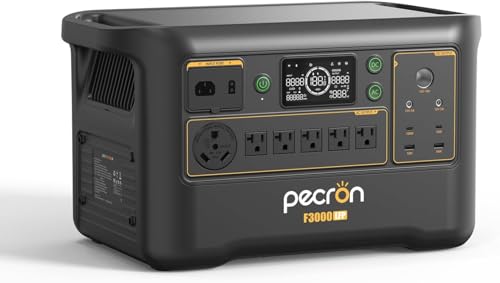
- Best Value 3,000Wh: PECRON F3000LFP – expandable to 10,752Wh, competitive entry price
Travel trailers occupy a useful middle ground in the RV world – smaller and lighter than Class A or Class C motorhomes, but still equipped with the standard 30-amp shore power connection that gives them access to real household-grade electricity. That TT-30R inlet is the key to making a solar generator work for a travel trailer. By connecting the generator’s output to the trailer’s shore power inlet with a standard adapter, you power the entire trailer’s electrical system – the AC unit, refrigerator, outlets, and lighting – through a single connection point. The solar generator effectively replaces the campground pedestal.
The load math for a travel trailer is worth understanding before choosing a unit. A typical smaller travel trailer runs a window or rooftop AC unit in the 5,000-10,000 BTU range, drawing roughly 500-1,000W while running. Add a 12V compressor refrigerator cycling at about 150W average, and miscellaneous loads (phone charging, a fan, LED lights) at another 150W, and you’re looking at 800-1,100W of running load when the AC is active. A 3,072Wh unit at 1,100W gives approximately 2.8 hours of full-load operation – but with solar panels recharging during daylight hours, practical coverage extends to 6-8 hours or more in good sun conditions. For travel trailers specifically wired for 30A service, see our full guide to the best solar generators for 30-amp RVs.
Best Solar Generators for Travel Trailers – Full Reviews
Jackery HomePower 3000 – Native TT-30R Outlet for Direct Connection
The Jackery HomePower 3000 is purpose-built for trailer and RV applications with a native TT-30R outlet on the unit itself – the same connection type used by the shore power inlet on most travel trailers. This eliminates the need for adapters and ensures the generator delivers the full 30A capacity that travel trailer wiring expects. The 3,072Wh LFP battery pairs with a 3,600W continuous output and 7,200W surge rating, giving it substantial headroom for startup spikes from the AC compressor and other motor loads.
At 3,072Wh, the HomePower 3000 is realistically sized for day-to-day travel trailer use. Running the AC intermittently alongside the refrigerator and standard 12V loads, most trailer owners will find this unit covers an afternoon and evening at a dry camp site without issue – especially when solar panels are added for daytime recharge. The combination of native TT-30R output, high surge capacity, and LFP durability makes this the most directly travel-trailer-optimized unit on this list.
Best for: Travel trailer owners who want direct plug-in capability without adapters and enough capacity to run AC and standard loads through an afternoon and evening.
Anker SOLIX C2000 Gen 2 – Fastest Recharge When Shore Power Is Available
The Anker SOLIX C2000 Gen 2 brings a 2,048Wh LFP battery with 2,400W continuous and 4,000W peak output – strong enough for a smaller travel trailer’s AC unit alongside other loads. Its defining advantage is a 58-minute full AC recharge time, which is particularly valuable for travel trailer owners who stop at full-hookup sites periodically. Plugging in overnight completely restores the battery, and the trailer then runs on solar and stored power through the next dry-camp day.
The 2,400W continuous rating comfortably handles a 5,000 BTU window unit (approximately 500W running) with significant overhead for other loads. For rooftop 13,500 BTU units common on larger trailers, this unit would need to be used selectively – running the AC for cooling periods rather than continuously. Connection to the trailer’s shore power inlet requires a standard TT-30 adapter, which is widely available and inexpensive. For AC-heavy use cases, our guide to best solar generators for RV air conditioners covers sizing in more detail.
Best for: Travel trailer owners who mix full-hookup stops with dry camping and want fast overnight recharge to maintain a fully topped battery between solar-powered days.
Connecting a solar generator to a travel trailer’s shore power inlet is the cleanest way to power the whole trailer from one source. A TT-30R to standard 30A adapter lets any generator with high-output AC outlets connect directly to the trailer’s electrical system, powering every circuit inside the trailer simultaneously.
DABBSSON 3000L – Compact Design with Built-In TT-30 Port
The DABBSSON 3000L delivers 3,072Wh of semi-solid LFP capacity in a noticeably compact form factor for its class, with a built-in TT-30 port that mirrors the Jackery HomePower 3000’s direct-connection advantage. The 3,000W base output rating extends to 3,600W through P-Boost technology for handling startup surges from compressor-driven appliances. For travel trailer owners with limited storage space – a real constraint when the generator needs to fit in a pass-through bay or truck bed – the DABBSSON’s smaller physical footprint is a meaningful practical benefit.
The semi-solid LFP cell design DABBSSON uses shares the core safety and longevity characteristics of conventional LFP chemistry while allowing for denser cell packaging, which contributes to the compact dimensions. At 3,072Wh, this unit matches the capacity of the Jackery HomePower 3000 while occupying less space – the primary reason to choose it when physical size is a constraint. The built-in TT-30 port means no adapters are needed for direct shore-power-inlet connection, simplifying the setup at a dry camp site.
Best for: Travel trailer owners who need direct TT-30 connection and 3,000Wh capacity but are working with limited storage space in the truck bed or trailer pass-through compartment.
Jackery Explorer 2000 v2 – Quietest Operation Under 30dB
The Jackery Explorer 2000 v2 is rated at under 30dB during operation – quieter than a normal conversation – which makes a practical difference in campground settings where generator noise is a social and sometimes regulatory issue. At 39.5 pounds, it is also the most portable unit on this list by a substantial margin, making it genuinely manageable for solo travelers who need to move the generator between vehicle and campsite regularly. The 2,042Wh LFP battery and 2,200W continuous output are sized appropriately for a smaller travel trailer with modest AC needs.
The 30dB noise rating reflects this unit’s fanless or minimal-fan thermal management design rather than any output limitation. It runs at full rated power quietly, which is the relevant characteristic for campsite use. At 2,200W, it comfortably powers a 5,000 BTU window unit alongside refrigerator and standard 12V loads, though larger rooftop AC units may push its limits. Connection to the trailer’s shore power inlet uses a standard TT-30 adapter. For travel trailer owners who primarily camp in established campgrounds with noise restrictions, the acoustic profile is a genuine selling point.
Best for: Solo travelers and campground users where generator noise is a concern, and anyone who regularly carries the generator between vehicle and campsite and prioritizes light weight.
At a dry camp site with six hours of usable solar input, a 3,072Wh travel trailer generator can realistically sustain 6-8 hours of real-world load coverage including intermittent AC use. The solar recharge rate depends heavily on panel wattage and sun angle – a 200W panel in good conditions adds roughly 1,000-1,200Wh over a six-hour solar window.
BLUETTI Elite 200 V2 + 350W Solar Panel – Complete Solar Kit for Campsite Recharge
The BLUETTI Elite 200 V2 paired with a 350W solar panel is the only solar-inclusive bundle on this list, making it the strongest option for travel trailer owners who want a self-contained power solution that does not depend on AC grid access for recharging. The 2,073Wh LFP battery and 2,600W continuous output (3,900W Power Lifting mode) give this unit real capacity for a smaller travel trailer, and the 350W panel provides meaningful daytime recharge – roughly 1,500-2,000Wh on a good solar day, enough to substantially extend or fully replenish daily capacity.
The Power Lifting mode is particularly relevant for travel trailer use because AC compressor motors – whether in a window unit or a small rooftop – draw significantly more current on startup than during running operation. A 5,000 BTU unit that runs at 500W may spike to 1,200-1,500W on startup; Power Lifting mode handles those transient loads without tripping output protection. BLUETTI’s app monitoring provides visibility into both power draw and solar input simultaneously, which helps manage load decisions when running on battery reserve. This bundle fits naturally into the broader context of off-grid solar generator setups where grid charging is not a primary strategy.
Best for: Travel trailer owners who camp primarily at primitive or dispersed sites without shore power and want solar recharge capability included without a separate panel purchase.
PECRON F3000LFP – Best Value 3,000Wh with Expansion Path
The PECRON F3000LFP delivers 3,072Wh of LFP capacity and 3,600W of continuous output at a competitive entry point relative to the other 3,000Wh units on this list. Its expansion capability – scalable to 10,752Wh through additional battery modules – means this unit can grow from a travel trailer generator into a substantially larger backup system as needs change. The 3,600W continuous rating handles most travel trailer loads including rooftop AC units, and the LFP chemistry provides the same safety and longevity profile as the rest of the units here.
For travel trailer owners who are new to solar generators and uncertain how much capacity they actually need in practice, the PECRON offers a lower-cost entry into the 3,000Wh tier with a credible upgrade path. Connection to the trailer’s TT-30R shore power inlet uses a standard adapter. The expandability to 10,752Wh also makes this a viable foundation for owners who eventually want to run more demanding loads – a 13,500 BTU rooftop AC, a microwave, and high-draw accessories simultaneously. See our guide to the best 30-amp solar generators for additional context on sizing for 30A trailer systems.
Best for: Budget-conscious travel trailer owners who want genuine 3,000Wh capacity at a lower entry cost and the option to expand capacity later without replacing the core unit.
FAQ
How do you connect a solar generator to a travel trailer?
The standard method is to connect the solar generator’s AC output to the travel trailer’s shore power inlet – the 30-amp TT-30R receptacle typically located on the exterior of the trailer near the front. If the solar generator has a native TT-30R outlet (as the Jackery HomePower 3000 and DABBSSON 3000L do), you can connect directly with a standard TT-30 shore power cord. If the generator uses standard household AC outlets (NEMA 5-15 or 5-20), you need a dogbone adapter that converts the trailer’s TT-30R inlet to standard outlet connections. Once connected to the shore power inlet, the generator powers every circuit in the trailer simultaneously – outlets, lights, AC unit, and the onboard battery charger if the trailer has one – exactly as a campground pedestal would. The key constraint is the generator’s total output rating; stay within that limit across all loads running at the same time.
Can a solar generator run a travel trailer air conditioner?
Yes, with the right sizing. A 5,000-8,000 BTU window-style AC unit draws roughly 500-800W running and surges to 1,200-1,500W on startup. Any of the 3,000Wh units on this list – with 3,600W continuous and 7,200W surge ratings – handle that load with substantial margin. Smaller rooftop 13,500 BTU units draw 1,200-1,500W running with startup surges to 2,500-3,000W; the Jackery HomePower 3000, DABBSSON 3000L, and PECRON F3000LFP all handle this with their 7,200W surge ratings. The practical constraint is runtime – running AC continuously at 1,200-1,500W will exhaust a 3,072Wh battery in roughly two hours without solar recharge. For sustained AC use, pairing solar panels for continuous recharge or running the AC intermittently (cooling the trailer, then switching to fan-only) extends practical coverage significantly. For full AC sizing detail, see the best solar generators for RV air conditioners guide.
Final Verdict
For most travel trailer owners, the right choice comes down to whether a native TT-30R outlet is a priority and how much capacity the specific trailer and use pattern requires. The Jackery HomePower 3000 is the most direct fit: it ships with a built-in TT-30R outlet, delivers 3,072Wh of LFP capacity with a 7,200W surge rating, and connects to most travel trailers without any adapters. The DABBSSON 3000L matches that direct-connect capability in a smaller physical form factor, which matters when storage space is tight.
Owners who stop at full-hookup sites regularly should consider the Anker SOLIX C2000 Gen 2 for its 58-minute full recharge time – a rapid overnight top-up before a dry-camp day. Those who camp primarily off-grid will find the BLUETTI Elite 200 V2 + 350W Solar Panel the most self-contained solution with solar recharge already included. For maximum value at the 3,000Wh tier with room to expand, the PECRON F3000LFP offers the most headroom for future capacity growth without replacing the core unit.





Write Your Review
No reviews yet. Be the first to share your experience!