



Quick Picks: Best Generators for Off-Grid Living
- Best Overall: EcoFlow DELTA Pro 3 – 4,096Wh expandable to 12kWh, 4,000W output, whole-cabin capability
- Best Mid-Range Solar: Jackery Explorer 2000 v2 – 2,042Wh, 640+ reviews, recharges in under 2 hours
- Best All-In-One Kit: Anker SOLIX C1000 Gen 2 with 200W solar panel – 990+ reviews, ready to deploy
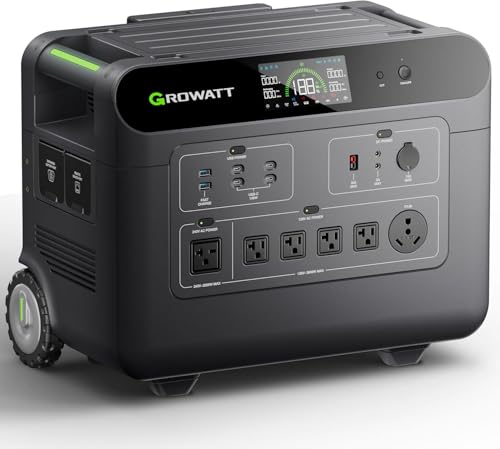
- Best Large Battery Storage: GROWATT HELIOS 3600 – 3,600Wh for 2+ days of cabin essentials
- Best Gas Backup: WEN 2800W Dual Fuel Inverter – 5,300+ reviews, clean power, gas or propane
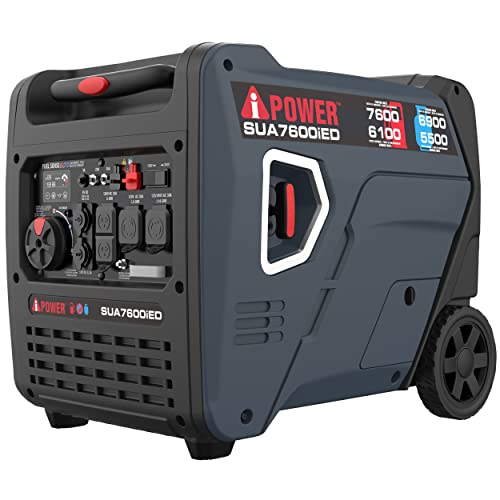
- Best Heavy-Load Gas: A-iPower 7600W Dual Fuel – 7,600W peak for power tools, well pumps, AC
Solar Battery Stations vs. Gas Generators for Off-Grid Living
Most off-grid households end up running both. The question is knowing which does what, and sizing each correctly for the role it plays.
Solar battery stations are the right choice for daily living loads: lights, refrigerator, phone charging, laptop, TV. They operate silently, produce no emissions, and recharge from the sun without any ongoing fuel cost. Gas generators are the right choice for heavy occasional loads: power tools, well pumps, welding, or recharging a depleted battery bank during an extended cloudy period.
A single solar battery station in the 2,000 to 4,000Wh range covers the average off-grid cabin’s daily electrical needs when paired with a 200 to 400-watt solar input. When that’s not enough – whether because of heavy tool use, a multi-day overcast period, or a large load spike – a dual fuel gas generator picks up the difference without burning solar capacity reserves.
The off-grid setups that work best long-term are the ones that don’t rely entirely on a single power source. Solar battery for quiet daily use. Gas generator as the backup that only runs when needed. The combination lowers fuel costs, reduces noise, and extends the life of both systems by keeping each running within its intended role.
In-Depth Reviews: Best Generators for Off-Grid Living
EcoFlow DELTA Pro 3 – Best Overall for Off-Grid
The EcoFlow DELTA Pro 3 is the most capable power station on this list for full-time off-grid living. At 4,096Wh of base capacity, 4,000W of AC output, and the ability to expand to 12kWh by adding EcoFlow’s extra batteries, it’s designed for exactly the kind of long-term reliability that off-grid living demands. With 539 reviews at 4.4 stars, it’s well-validated at scale.
For a small to medium off-grid cabin, the base 4,096Wh covers a refrigerator for 24+ hours, a 55-inch TV for 35 hours, lights and device charging for multiple days, and a CPAP machine for multiple nights – all from a single charge. The 2,600W solar input accepts a large panel array and can fully recharge the unit in 3 to 5 hours of strong sunlight, making it genuinely self-sufficient for most off-grid solar setups.
The LiFePO4 battery chemistry is rated for 4,000 charge cycles before degrading to 80% capacity. At one full cycle per day in heavy off-grid use, that’s over 10 years of service before any meaningful capacity loss. For a long-term off-grid installation, that lifecycle matters more than any spec on the datasheet.
Best for: full-time off-grid homeowners who want a single expandable unit capable of growing with their power needs, with enough daily capacity to cover an entire cabin on solar alone.
Jackery Explorer 2000 v2 – Best Mid-Range Solar Station
The Jackery Explorer 2000 v2 delivers 2,042Wh of LiFePO4 capacity and 2,200W of AC output with 642 verified reviews backing its performance. At around $750, it covers the daily power needs of a small cabin – refrigerator, lights, a fan, device charging – with enough reserve to run through an overcast day without dropping to critically low battery levels.
The fast charging is a standout feature for off-grid use: 0 to 80% in under an hour via wall outlet, and full charge in under 2 hours. When grid power is occasionally available at a nearby town or neighbor’s property, that’s meaningful. It also accepts up to 1,200W of solar input, which means a 400-watt panel array can fully recharge it in 3 to 4 hours of direct sunlight.
For a weekend cabin, seasonal property, or small permanent off-grid dwelling, 2,000Wh covers the everyday essentials. It won’t run a well pump or power tools, but it keeps the refrigerator cold, the lights on, and every device charged through the typical off-grid day.
The Jackery app gives remote monitoring of battery level, solar input rate, and active load, which is useful for planning energy use across a day when solar input is variable.
Best for: small cabin owners, seasonal off-grid users, or anyone starting their off-grid power setup who wants proven reliability at a mid-range price.
Anker SOLIX C1000 Gen 2 with 200W Solar Panel – Best All-In-One Kit
The Anker SOLIX C1000 Gen 2 bundle ships with a 200W solar panel included, making it the most immediately deployable off-grid option on this list. Plug in the panel, connect it to the power station, and you have a functioning solar generator on day one – no separate panel sourcing required. With 991 reviews at 4.6 stars, it’s the most reviewed bundle package on this list.
The C1000 Gen 2 holds 1,056Wh at 2,000W continuous output. That powers a refrigerator for about 6 to 7 hours, a CPAP all night, lights and devices for a full day. The 200W panel adds roughly 600 to 800Wh of capacity per sunny day, which nearly covers the daily draw of a minimal off-grid setup. For larger loads or less sun, a second panel can be added to the input chain.
Anker’s fast charging is notable: 0 to 80% in under an hour via AC input when grid power is briefly available. For an off-grid setup that occasionally visits a grid-powered location, that’s a practical recharge window. At around $700 for the station and panel together, this is the most cost-effective complete solar kit on this list.
Best for: first-time off-grid buyers who want a ready-to-use solar kit without sourcing compatible panels separately, or a compact, well-reviewed option for a van build or small cabin.
GROWATT HELIOS 3600 – Best Large Battery Storage
The GROWATT HELIOS 3600 offers 3,600Wh of storage capacity – the second largest on this list – at a price around $1,600. For an off-grid setup that needs to carry power through multiple overcast days without running a gas generator, 3,600Wh provides meaningful buffer that 2,000Wh units simply can’t match.
At 3,600Wh running a refrigerator (150W), a CPAP (45W), and LED lighting (50W) simultaneously – about 245W total – the unit lasts over 14 hours. On a minimal load of just a refrigerator and lights, it extends past 20 hours. For a setup that fully recharges daily from solar, that reserve means two or three overcast days won’t force an emergency gas generator run.
With 91 reviews at 4.4 stars, it has less validation than the Jackery or Anker options. The GROWATT brand has grown its presence in the power station market significantly, and the HELIOS 3600’s capacity-to-price ratio is competitive at its tier. For off-grid buyers focused on maximizing storage per dollar in the mid-range, it fills a gap between the $750 Jackery and the $2,300 EcoFlow.
Best for: off-grid homeowners who want maximum battery reserve at a mid-range price, particularly in areas with variable sun or during winter months with reduced solar input.
WEN 2800W Dual Fuel Inverter – Best Gas Backup for Off-Grid
The WEN DF280iX is the most reviewed generator on this list with over 5,300 verified reviews at 4.4 stars. In a category where reliability and longevity are the primary concerns, that validation record makes a meaningful difference. At a price under $450 in a dual fuel inverter configuration, it’s also the most affordable gas option here.
For off-grid use, the dual fuel capability (gas and propane) is particularly valuable. Propane stores indefinitely in a tank, doesn’t require fuel stabilizer, and is readily available for delivery to remote properties. Running on a large propane tank, the WEN can serve as a reliable backup that operates for weeks or months without a fuel resupply. At 2,800W peak with inverter output, it handles recharging a depleted battery station while simultaneously running the cabin’s essential loads.
The clean sine wave output protects the electronics in solar battery stations during recharging, which matters for preserving the life of an expensive battery investment. Running a solar station’s AC input from a conventional generator with high THD can gradually damage the battery management system over time.
Best for: off-grid setups that use a solar battery station as the primary source and need a reliable, long-runtime gas backup for extended overcast periods or occasional heavy loads.
A-iPower 7600W Dual Fuel – Best for Heavy Off-Grid Loads
The A-iPower SUA7600iED addresses the one scenario that battery stations can’t handle well: large instantaneous loads like well pumps, pressure tanks, farm equipment, power tools, or welding equipment. At 7,600W peak with dual fuel capability and 2,368 reviews at 4.2 stars, it’s the most reviewed high-wattage option available for off-grid heavy load work.
For a rural off-grid homestead that needs to run a well pump (1,000 to 2,000W starting), a table saw (1,500W), or charge a large battery bank while running the house simultaneously, 7,600W provides the headroom that smaller gas generators can’t. The inverter output keeps the power clean enough for sensitive electronics, and the dual fuel capability (gas and propane) extends operational flexibility for remote properties where gasoline delivery may be infrequent.
In an off-grid homestead, the well pump is often the single most demanding load. At startup, a 1-horsepower pump draws over 3,000 watts for several seconds. A gas generator sized to that peak – not just the running load – is the difference between reliable water access and a generator that trips its breaker every time the pump cycles on.
The telescopic handle and wheel kit make it manageable for moving between storage and work areas despite its size. CARB compliance means it’s legal in all 50 states, including California.
Best for: rural off-grid homesteaders running a well pump, farm equipment, or workshop tools that exceed what battery stations can handle, and need a high-capacity dual fuel backup for serious workloads.
Off-Grid Power Planning: How Much Do You Actually Need?
Step 1: Calculate Your Daily Watt-Hour Budget
List every device you’ll run, how many watts it draws, and how many hours per day you’ll use it. Multiply watts by hours for each device and add them up. That total is your daily watt-hour demand. A small cabin running a refrigerator (150W x 24h = 3,600Wh), lights (50W x 6h = 300Wh), laptop (60W x 4h = 240Wh), and phone charging (20W x 2h = 40Wh) needs about 4,180Wh per day – right at the base capacity of the EcoFlow DELTA Pro 3.
Step 2: Size Your Solar Input to Your Daily Budget
Divide your daily watt-hour budget by the average peak sun hours at your location (typically 4 to 6 hours in most of the US). The result is the solar panel wattage needed to fully recharge daily. For 4,000Wh at 5 peak sun hours, you need approximately 800W of solar panel capacity. A 400W panel array recharges 2,000Wh per day on average – right for the Jackery Explorer 2000 v2. Larger setups need proportionally larger panel arrays.
Step 3: Add a Battery Reserve Buffer
Off-grid power planning should include 2 to 3 days of reserve capacity beyond your daily demand. If your daily draw is 2,000Wh and you want 2 days of reserve for overcast weather, you need 4,000Wh of total battery storage. This buffer determines whether cloudy days are a minor inconvenience or a crisis requiring emergency gas generator use.
Step 4: Plan Your Gas Generator Role
Define exactly what the gas generator is for before buying it. If it’s only for recharging the battery bank during extended overcast, a 2,000 to 3,000W inverter unit is sufficient. If it also needs to power heavy tools or a well pump, size up to 5,000W or more. For heavy off-grid workloads, a 7,000W+ dual fuel generator like the A-iPower covers the full range without compromise.
Step 5: Fuel Storage Strategy
For remote off-grid properties, propane is often the most practical gas generator fuel. It stores indefinitely in a tank, can be delivered in bulk quantities, and burns cleaner than gasoline – extending engine service intervals. A 100-gallon propane tank holds roughly 850,000 BTU of energy, enough to run a 2,800W generator at full load for approximately 175 hours. For a backup generator that only runs 5 to 10 hours per month, that’s 18 months of fuel on one delivery.
FAQs About Generators for Off-Grid Living
Q: Can I run an off-grid home entirely on solar battery power?
For a small to medium cabin with modest electrical loads – refrigerator, lights, device charging, entertainment – a sufficiently large solar battery setup can cover daily needs without any gas generator. The EcoFlow DELTA Pro 3 expanded to 12kWh with a 2,000W+ solar array can realistically power a small home indefinitely in a location with adequate sun. In practice, most full-time off-grid homesteads include a gas generator for heavy loads, extended overcast periods, or charging buffer during winter months with reduced solar hours.
Q: What size generator do I need for an off-grid cabin?
For a solar battery station, 2,000 to 4,000Wh covers a small off-grid cabin’s daily essentials. For a gas backup generator, 2,000 to 3,000W is sufficient if its only role is recharging the battery bank. If it also needs to run a well pump or heavy tools, size to 5,000W or above. The right answer depends on what appliances you need to run simultaneously, not just the total daily watt-hours. For guidance on portable battery generators for home use, a full capacity breakdown by appliance is covered there.
Q: How long will a solar battery station last off-grid?
LiFePO4 battery stations like all six on this list are rated for 3,000 to 4,000 full charge cycles. At one cycle per day in daily off-grid use, that’s 8 to 11 years before capacity drops to 80% of original. In practice, most off-grid users don’t fully cycle their battery daily – partial cycles extend calendar lifespan further. The DELTA Pro 3 and Jackery Explorer 2000 v2 are both rated for 4,000 cycles, representing some of the longest lifespans available at their price points.
Q: Is a dual fuel generator better for off-grid use?
Yes, for the specific conditions of off-grid living. Propane stores indefinitely without stabilizer, can be bulk-delivered to remote properties, and doesn’t degrade sitting in a tank over a winter. Gasoline goes stale in 30 to 90 days without stabilizer treatment, and accessing a gas station can be impractical for remote properties. Dual fuel gives you the option to run on gasoline when it’s available and convenient, and propane when long-term storage or remote delivery makes more sense.
Q: Can a solar battery station run a well pump?
It depends on the pump’s wattage and the station’s rated output. Most 1/2 HP well pumps draw 900 to 1,200W running and spike to 2,000 to 3,000W on startup. The EcoFlow DELTA Pro 3 at 4,000W continuous output can handle most standard well pumps without issue. The Jackery Explorer 2000 v2 at 2,200W covers smaller pumps but may struggle with startup surges from larger ones. For reliable well pump operation, check the generator’s rated surge wattage against the pump’s starting wattage before relying on it as the primary water source.
Final Verdict: Best Generators for Off-Grid Living
For a full-time off-grid home that wants to minimize generator runtime and run primarily on solar, the EcoFlow DELTA Pro 3 is the strongest single investment. Its 4,096Wh base capacity, 4,000W output, and expandability to 12kWh make it a long-term platform that grows with the property rather than a unit that gets replaced in a few years. At around $2,300, it’s a serious investment – but measured against a decade-plus of reliable off-grid service, the cost per day is lower than it appears.
For buyers building an off-grid system at a measured pace, start with the Anker SOLIX C1000 Gen 2 bundle: solar panel included, nearly 1,000 reviews of validation, and a price under $750. It’s the most practical entry point into off-grid solar living. Add the WEN 2800W Dual Fuel as a backup, and the combination of 1,056Wh solar storage and a clean-power gas backup covers most small cabin scenarios at a combined investment under $1,200.
For rural homesteads that run water pumps, farm equipment, or a workshop, the A-iPower 7600W Dual Fuel is the gas workhorse that handles loads battery stations can’t. Pair it with a large solar battery station for daily living loads, and you have a genuinely complete off-grid power system.
The best off-grid power setup isn’t the one with the most watts or the biggest battery – it’s the one that matches each power source to the job it does best: solar battery stations for quiet daily living, gas generators for the heavy work that happens once in a while.





Write Your Review
No reviews yet. Be the first to share your experience!