




Quick Picks: Best Generators for Welding
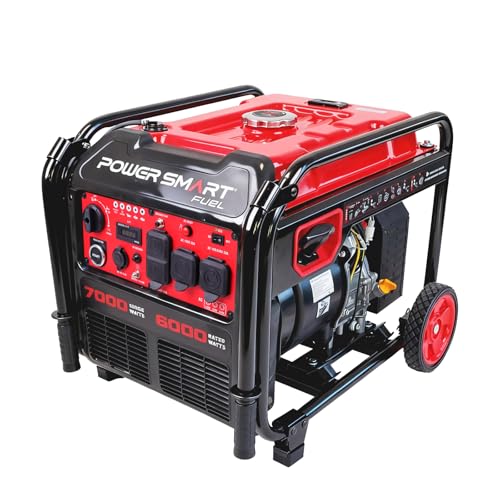
- Best Budget Welding Generator: PowerSmart 7000W Open Frame Inverter Generator, clean inverter output, 7000 starting watts for small MIG and stick welders
- Best Quiet Welding Generator: AIVOLT 8000W Dual Fuel Super Quiet Inverter Generator, inverter output for sensitive wire-feed welders, propane or gasoline
- Best Mid-Range Welding Generator: Westinghouse 7500W EFI Dual Fuel Generator, fuel injection, remote start, 7500 watts for most workshop welding scenarios
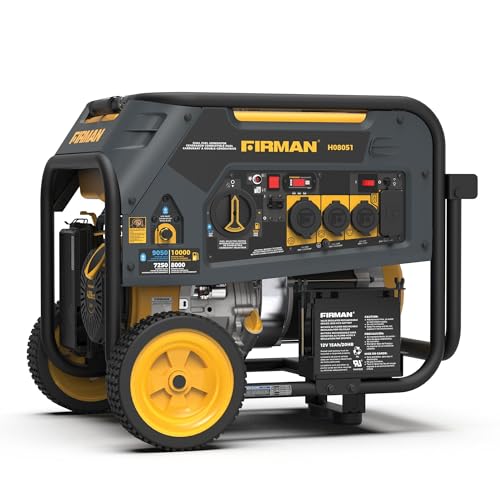
- Best Dual Fuel Welding Generator: FIRMAN H08051 8000W Dual Fuel Generator, 8000 running watts, 10000 peak, GFCI outlets for jobsite use
- Best High-Output Welding Generator: A-iPower 10000W Electric Start Portable Generator, 10000 watts for large plasma cutters and industrial welders
- Best Premium Quiet Welding Generator: AIVOLT 8000W Dual Fuel Inverter Generator, super quiet inverter with dual fuel for remote welding sites
Matching Generator Output to Your Welder
Running a welder from a generator requires understanding two separate electrical specifications that most buyers underestimate: the welder’s rated input wattage at the amperage setting you actually use, and the generator’s true running watt capacity under continuous load. A 200-amp MIG welder operating at 130 amps draws approximately 3,500 to 4,500 watts of input power (not 200 amps multiplied by 120 volts). The actual load depends on duty cycle, wire speed, and the metal thickness being welded. Generator recommendations for welders typically call for 30 to 50 percent more capacity than the welder’s rated draw to accommodate starting surges and maintain stable voltage under varying load.
The second critical variable is voltage. Stick welders and basic MIG welders designed for 120V operation run on standard generator outlets. TIG welders, plasma cutters, and professional MIG machines rated for 240V operation require a generator with a 240V output, typically a NEMA 14-50 or L14-30 outlet providing 50 or 30 amps at 240V. Not every generator includes a 240V outlet; verify before purchase if your welder requires it.
Inverter generators produce cleaner power (lower total harmonic distortion) than conventional generators, which benefits wire-feed welders (MIG, flux-core, TIG) that rely on stable voltage for consistent arc quality. Conventional generators with significant harmonic distortion can cause irregular arc behavior, inconsistent wire feed, and increased spatter on MIG setups. For TIG welding in particular, where arc stability directly determines weld quality, inverter generator output is strongly preferred over conventional open-frame generators when grid power is unavailable.
For buyers who need generators for general construction site use alongside welding, the best generators for construction guide covers site power needs beyond welding. For buyers comparing wattage tiers for workshops with multiple power tools and a welder running simultaneously, the best 10000 watt generators covers the high-capacity portable tier.
In-Depth Reviews: Best Generators for Welding
PowerSmart 7000W Open Frame Inverter Generator
Seven thousand watts of inverter output in a conventional open-frame form factor is the combination that makes the PowerSmart 7000W Inverter relevant for welding applications. Most inverter generators at this wattage tier use enclosed housings that limit airflow during sustained high-load operations like continuous welding cycles. The open-frame inverter design allows the generator to run at sustained output without the thermal buildup that can trigger thermal shutdowns during long welding sessions. For small workshops running a 140-amp stick welder or a basic 180-amp MIG machine at moderate duty cycles, 7,000 watts provides adequate output with a buffer for voltage-sensitive inverter electronics on the welder’s control board.
AIVOLT 8000W Dual Fuel Super Quiet Inverter Generator
Quiet operation on a welding generator matters when the work location is residential, the welder is working in an occupied structure, or noise ordinances limit generator decibels at the jobsite. The AIVOLT 8000W Dual Fuel Super Quiet Inverter runs at inverter noise levels despite its 8,000W output class, which places it in a narrow category of large-output quiet generators. Propane operation allows fuel storage at remote sites where gasoline logistics are inconvenient. The 8,000W inverter output runs a 200-amp MIG welder at moderate amperages, a grinder or angle grinder simultaneously, and site lighting without load management concerns.
Westinghouse 7500W EFI Dual Fuel Portable Generator
Fuel injection on the Westinghouse 7500W EFI Dual Fuel means reliable cold-weather starts at job sites where pulling cords on carbureted engines in January is a productivity problem. Remote electric start allows the generator to warm up before the welder is ready without leaving the workspace. 7,500 running watts handles a standard 180-amp MIG welder at full rated output plus site power simultaneously. As the most widely validated home backup and job site generator at this output tier, the Westinghouse 7500W EFI’s real-world reliability record is among the most thoroughly documented of any generator in this wattage class.
FIRMAN H08051 8000W Dual Fuel Portable Generator
The FIRMAN H08051 is designed explicitly for heavy-duty extended operation in the kind of sustained-load scenarios that welding creates. The FIRMAN H08051 provides 8,000 running watts and 10,000 peak watts with dual fuel flexibility. GFCI-protected outlets meet jobsite electrical safety requirements where inspectors verify equipment compliance. A 14-hour runtime at 50% load on a 5-gallon tank covers a full working day of intermittent welding without refueling. For contractors who need a generator that handles both welding machine supply and general jobsite power simultaneously, the H08051’s combination of output, fuel flexibility, and jobsite-appropriate safety features covers those requirements.
A-iPower 10000W Electric Start Portable Generator
Large plasma cutters (60-amp, 80-amp cutting capacity) and professional TIG welding machines with high-frequency arc start draw more power under load than most portable generators below 10,000 watts can sustain. The A-iPower 10000W provides the output headroom that these machines require without the cost of commercial standby power. 10,000 running watts accommodates a large professional welder at full amperage setting with power remaining for work lighting, a grinder, and auxiliary tools running simultaneously. For fabrication shops operating from generator power during site work or outages where multiple operators share the same generator, this output tier eliminates the load coordination that smaller generators require.
AIVOLT 8000W Dual Fuel Inverter Generator
The AIVOLT 8000W Dual Fuel Inverter is the premium quiet welding generator option for buyers who need 8,000W of inverter-grade clean output with propane capability at remote sites where gasoline storage is impractical. Pure sine wave output at this wattage tier is particularly relevant for welders with inverter-based power supplies (most modern TIG and MIG machines use inverter power supply technology internally), where unstable input power from a conventional generator can stress the welder’s internal electronics over time. For professional welders who use the same generator regularly over years of field work, the reduced harmonic distortion of inverter output represents a meaningful investment in welder longevity.
Generator Sizing Guide for Welding
120V welders (small MIG, stick, flux-core)
Most entry-level and hobbyist welders operate on 120V at 20 to 30 amps. These machines draw approximately 2,000 to 3,600 watts at full rated amperage. A 5,000 to 7,000W generator provides sufficient headroom for these welders plus site accessories. The 7,000W PowerSmart on this list is the appropriate tier for a 120V welder with concurrent site power needs.
240V welders (professional MIG, TIG, plasma cutters)
Professional 240V welders operating at 160 to 200 amps draw 4,000 to 7,000 watts of input power. An 8,000 to 10,000W generator with a 240V output outlet (NEMA 14-50 or L14-30) is the correct pairing. Verify the generator includes a 240V outlet before purchasing for a 240V welder. Not all generators at this wattage tier include one as standard.
FAQs: Generators for Welding
Q: Can I run a stick welder on a 3500W generator?
A small 120V stick welder rated at 90 amps can run on a 3,500W generator at reduced amperage settings (60 to 80 amps). At full rated amperage, a 90-amp stick welder draws approximately 2,000 to 2,500 watts, which a 3,500W generator handles. However, for sustained welding with any overhead margin for starts and fluctuations, 5,000W or more is the practical minimum for comfortable welding operations. A 3,500W generator limits you to lighter-gauge material and shorter bead lengths before the generator approaches its capacity ceiling.
Q: Do I need a special generator cord for welding?
For 120V welders, a standard 12-gauge extension cord of appropriate length works for most applications. For 240V welders connected to a generator’s L14-30 or 14-50 outlet, a welder-rated 240V extension cord or a direct connection with the appropriate adapter is needed. Running a 240V welder on undersized cord causes voltage drop that affects arc quality and can damage the welder’s power supply over time. Use 10-gauge or heavier wire for 240V welding generator connections.
Final Verdict
For most welding applications running 120V MIG or stick welders at job sites, the Westinghouse 7500W EFI Dual Fuel provides reliable fuel-injected starts, remote operation, and dual fuel flexibility in the most validated generator at this output tier.
For professional welders who need quiet 8,000W inverter output with propane capability at remote sites, the AIVOLT 8000W Dual Fuel Inverter delivers clean power that protects modern inverter-based welding machines over extended use.
And for fabrication shops and contractors running large plasma cutters or professional 240V TIG machines at full amperage, the A-iPower 10000W provides the output ceiling that eliminates load restrictions during simultaneous multi-tool operation.





Write Your Review
No reviews yet. Be the first to share your experience!