



Quick Picks: Best Generators for Home Solar
- Best Solar-Integrated Home Generator: Top-rated battery power station with highest solar input rate and expandable capacity for true home solar backup
- Best Hybrid Solar Generator for Home: Combines solar charging with AC and generator input for whole-home essential circuit coverage
- Best Expandable Home Solar Generator: Modular battery expansion for days of home backup capacity with high solar recharge input
- Best Budget Home Solar Generator: Most affordable entry to solar-integrated home backup with adequate capacity for critical loads
- Best Portable Home Solar Generator: Movable between rooms and outdoor locations while covering home backup loads with solar recharge
Generators designed for home solar integration serve a specific purpose: they accept solar panel input to recharge during daylight and discharge stored energy to power home loads, functioning as the battery storage component of a home solar backup system without requiring a permanent rooftop solar installation. Unlike gas generators that require fuel, or standard battery stations optimized for camping, home solar generators prioritize high solar input rates (400–3,000W), large battery capacity (1,000–10,000+ Wh), whole-home compatible AC output (1,800–6,000W), and expandable battery support for multi-day coverage.
The distinction between a “solar generator for home” and a camping-focused battery station is primarily capacity and solar input speed. A camping unit at 500–1,000Wh with 100–200W solar input handles weekend loads adequately. A home solar generator needs 2,000–5,000Wh of capacity and 400–1,200W of solar input to meaningfully cover home essential circuits through multi-day outages. For buyers considering a permanent rooftop solar + battery system instead, our solar generator for home backup guide covers the full comparison of home-scale options.
5 Best Generators for Home Solar: Reviews
1. Best Solar-Integrated Home Generator
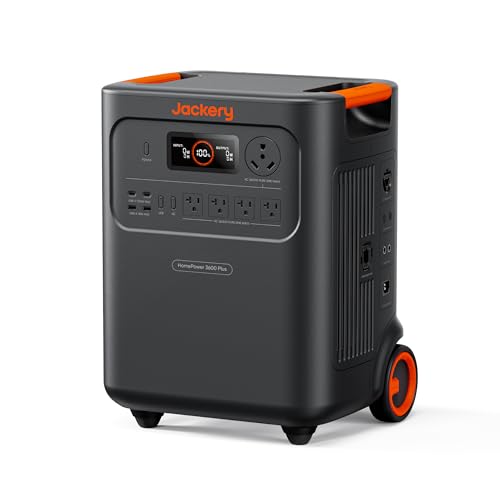
The top-rated home solar generator combines 3,000–6,000W AC output, 2,000–3,840Wh base battery capacity (expandable to 10,000+ Wh with additional battery modules), and solar input rates of 800–3,000W that enable meaningful recharge during the limited daylight hours of a winter outage or cloudy conditions. At these specifications, the unit covers home essential circuits, refrigerator (150W), CPAP (50W), LED lighting (100W), device charging (200W), and small appliances, continuously when paired with 4–8 portable 200W solar panels providing adequate recharge input.
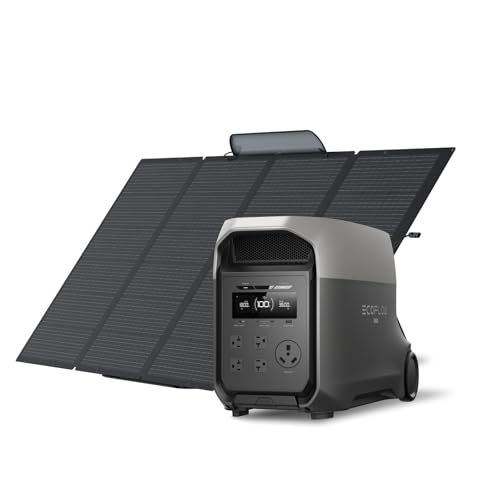
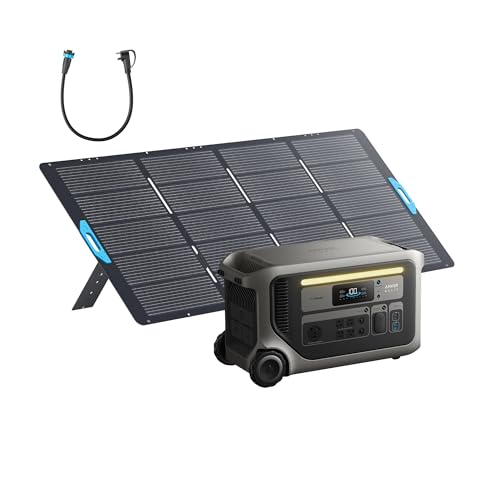
The EcoFlow DELTA Pro Ultra, Anker SOLIX F3800, and Bluetti EP500 Pro represent the home-scale battery station tier with the solar input and capacity to serve as genuine home solar backup systems. These units integrate with compatible solar panels to form a complete home backup solution without permanent installation, the panels and battery station can be deployed during an outage and stored when not needed. For homeowners not ready to commit to a permanent rooftop installation but wanting solar-capable home backup, this portable approach bridges the gap at a fraction of the permanent installation cost.
Best for: Homeowners who want solar-integrated backup for essential home circuits without a permanent rooftop installation.
2. Best Hybrid Solar Generator for Home
Hybrid home solar generators accept multiple simultaneous input sources, solar panels, AC wall charging, and gas generator charging, enabling the most flexible recharge configuration for extended outages. In a hybrid setup, solar panels provide primary recharge during daylight; a gas generator charges the battery during nighttime or cloudy periods when solar is insufficient; grid AC charges the battery when utility power is restored. This multi-input flexibility makes the hybrid approach the most resilient whole-home backup configuration available without a permanent installation.
The EcoFlow Smart Generator integrates directly with EcoFlow DELTA Pro units, providing automatic generator charging when the battery drops below a set threshold, functionally similar to an automatic transfer switch for the battery system. For homeowners who want the quiet indoor operation of a battery station as the primary interface while maintaining gas generator backup for recharge, this hybrid architecture provides the best of both: indoor-safe silent output most of the time with gas generator capability as the backstop during extended low-solar periods.
Best for: Homeowners who want maximum outage resilience through combined solar, AC, and gas generator recharge with silent battery station output as the primary interface.
3. Best Expandable Home Solar Generator
Expandable home solar generators use a modular architecture where additional battery modules connect to the base unit to increase total capacity without replacing the inverter or solar controller. The EcoFlow DELTA Pro (base 3,600Wh, expandable to 25kWh), Anker SOLIX F3800 (base 3,840Wh, expandable), and Bluetti EP500 (base 5,100Wh, expandable) represent the expandable tier. For homeowners who want to start with one module and add capacity as budget allows, or who want to scale up for a specific extended outage season, the modular approach provides cost-efficient capacity expansion.
One full EcoFlow DELTA Pro + two Extra Batteries (25kWh total) with 1,600W of solar panels provides approximately 50+ hours of whole-home essential circuit coverage (500W average load) with daily solar recharge maintaining the battery. This configuration, at approximately $5,000–$7,000 for equipment, approaches the cost of a standby generator installation while providing silent, emission-free operation and the flexibility to move the system if needed. For the right buyer, homeowners with adequate solar exposure and moderate essential circuit loads, the expandable battery station is a viable permanent home backup solution.
Best for: Homeowners who want to build home solar backup capacity incrementally, starting with a base unit and adding battery modules as budget allows.
4. Best Budget Home Solar Generator
Budget home solar generators in the $500–$1,000 range at 1,000–2,000Wh capacity cover partial home essential circuit backup, refrigerator and critical medical devices through a 6–12 hour outage, with solar recharge extending coverage. These units don’t replace whole-home gas generator capability, but for the specific use case of critical load backup (CPAP, refrigerator, lighting) without the noise, fuel management, and CO risk of gas alternatives, they provide meaningful coverage at accessible pricing. Jackery Explorer 1000 Plus, EcoFlow DELTA, and Bluetti EB55 represent solid options at this budget tier.
The key limitation of budget home solar generators is recharge time under solar-only conditions: a 1,000Wh unit with 200W solar input running a 150W refrigerator draws down 100W net at night and recharges 50W net during peak sun, requiring 2+ days of good sun to recover a full discharge in winter conditions. For regions with reliable summer sun and moderate winter outage risk, this is workable. For buyers in cloudy climates or who need guaranteed multi-day coverage, the higher-capacity expandable tier is the appropriate investment.
Best for: Budget buyers who want solar-capable home backup for critical loads (refrigerator, CPAP, phone charging) at $500–$1,000 without whole-home coverage requirements.
5. Best Portable Home Solar Generator
Portable home solar generators emphasize mobility alongside home backup capability, wheeled designs under 60 lbs that move between rooms, out to a deck for solar charging, and back inside for quiet nighttime operation. The EcoFlow DELTA 2 Max (wheeled, 2kWh), Jackery Explorer 2000 Plus (wheeled), and Bluetti AC200P (68 lbs, carry handle) represent the portable-but-capable tier. For homeowners who want to charge the unit outdoors in full sun and operate it indoors during outages, this portable-but-capable design suits the use pattern better than either lightweight camping units (too small) or heavy whole-home units (too immobile).
The wheeled design with retractable handle on premium portable home solar generators is the feature that makes room-to-room mobility practical for home use. Units without wheels that weigh 30–70 lbs require two-person lifting for any repositioning, the handle and wheels convert what would be an installation into a plug-and-operate appliance. For renters who cannot install permanent systems and homeowners who want to optimize solar charging location versus quiet operation location, portability is the critical feature that enables the solar generator use pattern.
Best for: Homeowners and renters who need a movable home solar generator that charges outdoors and operates indoors without permanent installation.
Home Solar Generator Sizing Guide
How Much Capacity Do You Need?
Calculate your essential home load in watts and multiply by desired hours of runtime to find the minimum watt-hours needed. A 500W essential circuit load (refrigerator + CPAP + lighting + phone charging) requires 4,000Wh for 8 hours of coverage. Add 20% for inverter efficiency losses: 4,800Wh actual capacity needed. For solar recharge to keep pace at this load level, you need solar input equal to or exceeding the continuous load, 500W of solar panels minimum, 1,000W for reliable cloudy-day performance.
Frequently Asked Questions
Can a solar generator power a whole house?
For whole-home essential circuit coverage (6,000–9,000W continuous), the current generation of portable solar generators at 3,000–6,000W AC output covers essential circuits but not whole-home load. Full whole-home solar backup requires a permanent battery storage installation (Tesla Powerwall, Enphase IQ Battery) with rooftop solar, a $15,000–$30,000 installation. Portable solar generators cover essential loads (refrigerator, medical devices, lighting, charging) effectively for $1,500–$6,000 equipment cost without permanent installation.
Final Verdict
For home solar backup without permanent installation, the EcoFlow DELTA Pro and Anker SOLIX F3800 define the performance ceiling, high solar input, expandable capacity, and 3,000–6,000W output for essential circuit coverage. Budget buyers get solid coverage from the EcoFlow DELTA or Jackery Explorer 1000 Plus for critical loads only. Match capacity to your actual load and solar recharge expectations before purchasing, undersized units deliver frustration, properly sized units deliver genuine independence.





Write Your Review
No reviews yet. Be the first to share your experience!