




Quick Picks: Best Whole House Solar Generators
- Best 120V/240V Solar Backup: OSCAL PowerMax 6000 with 3×400W Panels, 3,600Wh and 120V/240V split-phase output for whole-home circuits
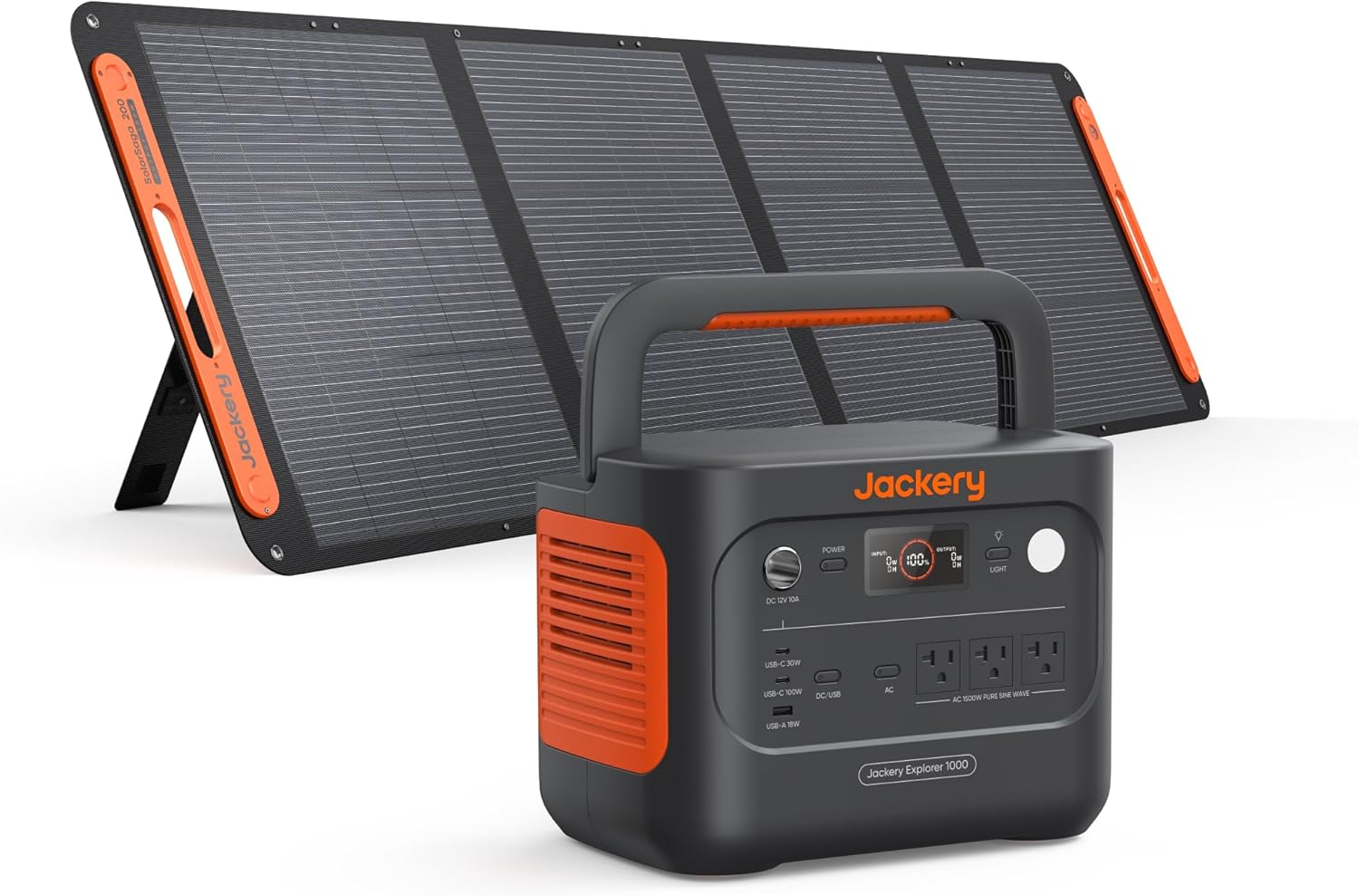
- Best Compact Essentials Option: Jackery Solar Generator 1000 v2 with 200W Panel, 1,070Wh for small home essential loads
- Best Premium Whole-Home System: EcoFlow DELTA Pro 3 with 2 Extra Batteries, 12kWh expandable for sustained multi-day whole-home backup
- Best Automatic Standby Option: Generac Guardian 10kW with 100 Amp Transfer Switch, automatic whole-home backup with no manual setup
- Best Mid-Range Solar Station: GROWATT HELIOS 3600 Electric Solar Generator, 3,600Wh at a mid-range price with AC wall fast-charge
What “Whole House Solar Generator” Actually Means
The phrase “whole house solar generator” covers a wide range of products and capabilities, and the right choice depends entirely on what “whole house” means in your specific situation. A small home with 1,000 square feet running only essential loads (refrigerator, lighting, device charging, modem) during an outage requires fundamentally different equipment than a 3,000 square foot home with central air conditioning, an electric range, and an electric water heater that the homeowner wants to run normally during a grid outage.
For the purposes of this guide, “whole house” means covering the loads that prevent household disruption during an outage: refrigerator, lighting, device charging, fans or window air conditioning, and basic kitchen appliances. True whole-home backup that includes central HVAC, electric range, and water heater simultaneously requires either a gas-powered standby generator (like the Generac Guardian) or a very large battery system (like the EcoFlow DELTA Pro 3 at 12kWh). The products in the middle of this guide serve the more common use case of essential-load backup during typical residential outages.
The 120V/240V split-phase output on the OSCAL PowerMax 6000 is a feature that directly affects which home circuits it can power. Standard portable solar generators output 120V only, which runs common household appliances but cannot power 240V circuits directly (dryers, well pumps, some HVAC systems, EV chargers). A unit with 240V split-phase output can connect to a transfer switch and backfeed the whole home panel, running 240V circuits alongside 120V loads. For homeowners who want a portable solar generator that can actually power their whole home panel rather than running selected appliances via extension cord, 240V output is the key specification to verify.
For homeowners comparing traditional whole-home standby solutions, the best home standby generators covers permanently installed automatic systems. For portable battery-based options across all capacity tiers, the best portable battery generators for home covers the complete range.
In-Depth Reviews: Best Whole House Solar Generators
OSCAL PowerMax 6000 Solar Generator with 3×400W Solar Panels
The OSCAL PowerMax 6000 stands out in this guide for its 120V/240V split-phase output capability, which allows it to connect to a home transfer switch and power 240V circuits alongside standard 120V loads. The three 400W solar panels included in the bundle provide 1,200W of combined solar input, enabling a full recharge from flat in approximately three hours of direct sunlight or extending runtime indefinitely when consumption stays at or below the panel input rate. with panels included, the PowerMax 6000 is the most complete solar-only whole-home backup solution in this guide for homeowners who want 240V output and fast solar recharge. The 3,600Wh LiFePO4 battery provides substantial capacity for overnight outages, and the 240V output enables it to power loads that standard portable solar stations cannot reach.
Jackery Solar Generator 1000 v2 with 200W Solar Panel
For small homes, apartments, or homeowners who define “whole house backup” as keeping the essential loads running during a short outage, the Jackery Solar Generator 1000 v2 provides 1,070Wh and 2,000W AC output. This configuration covers a refrigerator, lighting, device charging, modem and router, and a fan throughout a standard eight to twelve hour outage without requiring solar recharge. The 200W solar panel extends that runtime through daylight hours and enables off-grid use for camping and travel. At 14 pounds for the station unit, the Jackery 1000 v2 is the most portable option in this guide by a significant margin. For homeowners with modest essential loads who want a deployment-ready system at a reasonable price, the 1000 v2 bundle is the practical entry point into whole-home solar backup.
EF EcoFlow DELTA Pro 3 with 2 Extra Batteries
For homeowners who need genuine sustained whole-home backup across multiple days without grid recharge, the EcoFlow DELTA Pro 3 with 2 Extra Batteries provides 12kWh of total energy storage with 120V/240V split-phase output. At a 1,000W continuous household load, 12kWh provides approximately 12 hours of runtime; at 500W it provides 24 hours. With EcoFlow’s smart generator integration and up to 3,600W of solar input on the DELTA Pro 3, this system can sustain indefinite runtime in good sunlight at moderate household consumption levels. The DELTA Pro 3’s smart home panel integration allows it to automatically switch loads and prioritize circuits during extended outages. For homeowners in regions with frequent extended outages who need the most capable portable solar backup available, the DELTA Pro 3 at 12kWh is the benchmark reference system.
Generac Guardian 10kW Home Standby Generator with 100 Amp Transfer Switch
The Generac Guardian 10kW with automatic transfer switch takes a fundamentally different approach from the solar stations in this guide: it runs on natural gas or propane and starts automatically within seconds of detecting a grid outage, without any user action required. The 100 Amp transfer switch covers most residential main panels. At 10kW output, it runs central HVAC, electric range, water heater, refrigerator, and lighting simultaneously without load management, which is what most homeowners mean when they say “whole house backup.” The permanent installation and automatic operation come at a higher total cost (unit plus professional installation, typically installed), but the result is backup power that requires no intervention from the homeowner. For buyers who prioritize automatic activation and full-home coverage over solar sustainability, the Generac Guardian is the traditional reference recommendation.
GROWATT HELIOS 3600 Electric Solar Generator
The GROWATT HELIOS 3600 provides 3,600Wh of LiFePO4 storage and 3,000W AC output which positions it between the entry-level Jackery 1000 v2 and the premium EcoFlow DELTA Pro 3 in capacity and price. AC wall charging reaches full from flat in under 60 minutes via EV-style fast charging, which is the fastest wall recharge speed in this guide and makes it practical for homeowners who want to top up before a forecasted storm quickly. The 3,600W solar input capability allows fast recharge from a matched panel array during daylight hours. For homeowners who want a mid-range capacity solar station with the fastest available wall charging and do not need 240V split-phase output, the HELIOS 3600 provides excellent capacity and recharge speed in the 3,000W class.
Whole House Solar Generator Buying Guide
Calculating what your house actually needs
Before purchasing a whole-home solar generator, list the appliances you need to run simultaneously and their wattage. A standard household essential load is approximately 500 to 800W running (refrigerator at 150W, modem and router at 25W, LED lighting at 50W, device charging at 150W, fan at 75W). Adding a window air conditioner (600 to 900W) brings that to 1,100 to 1,700W. Running a microwave (1,000W) intermittently adds 1,000W peak but not to the continuous total. Most homes can cover their essential backup needs with a 3,000Wh unit at 2,000 to 3,000W output. Only homes with central HVAC or electric cooking in the backup scope need the 5,000Wh+ tier.
Transfer switch vs extension cords for solar generator connection
Running a solar generator via extension cords to individual appliances works without installation cost but requires manually running cords during an outage. A transfer switch (manual or automatic) disconnects the home from the grid and allows the generator to backfeed selected circuits, which is cleaner and covers hardwired appliances like built-in refrigerators and HVAC systems. For solar stations that output 120V only, a 120V interlock or manual transfer switch covers standard circuits. For 240V units like the OSCAL PowerMax 6000, a 240V transfer switch covers the full home panel. Professional installation is required for transfer switch wiring.
FAQs: Whole House Solar Generators
Q: Can a solar generator run a whole house indefinitely?
A solar generator with sufficient panel capacity can run a house’s essential loads indefinitely provided daily solar input matches or exceeds daily consumption. For a 500W continuous essential load, 600 to 800W of solar panel capacity in good-sun regions provides net-positive daily energy balance. Extended cloudy periods require either a larger battery buffer or a supplemental charging source. No portable solar station can run a full-sized home with central AC, electric range, and water heater indefinitely; for those loads, a gas standby generator like the Generac Guardian is the practical long-term solution.
Q: What is the best solar generator for home use during a power outage?
The best choice depends on how long outages last in your area and what loads you need covered. For outages under 24 hours covering essential loads: the GROWATT HELIOS 3600 or OSCAL PowerMax 6000 provide sufficient capacity with fast recharge. For multi-day outages with solar recharge as the primary source: the EcoFlow DELTA Pro 3 at 12kWh is the most capable portable option. For automatic whole-home coverage without any user action: the Generac Guardian with automatic transfer switch is the reference choice regardless of outage duration.
Final Verdict
For homeowners who want a portable solar station with 240V output capable of powering a whole-home transfer switch, the OSCAL PowerMax 6000 with three 400W panels is the most complete 240V solar backup bundle combining split-phase output with the fastest solar recharge rate in this guide.
For homeowners who need the maximum sustained whole-home capacity for extended outages, the EcoFlow DELTA Pro 3 at 12kWh with two extra batteries is the definitive portable solution for multi-day backup at full household loads.
And for homeowners who want automatic standby protection that requires no user intervention and covers the full home including central HVAC and electric appliances, the Generac Guardian 10kW with automatic transfer switch remains the reference installation for whole-home automatic backup power.


Write Your Review
No reviews yet. Be the first to share your experience!